
It deserved a more dignified coda.
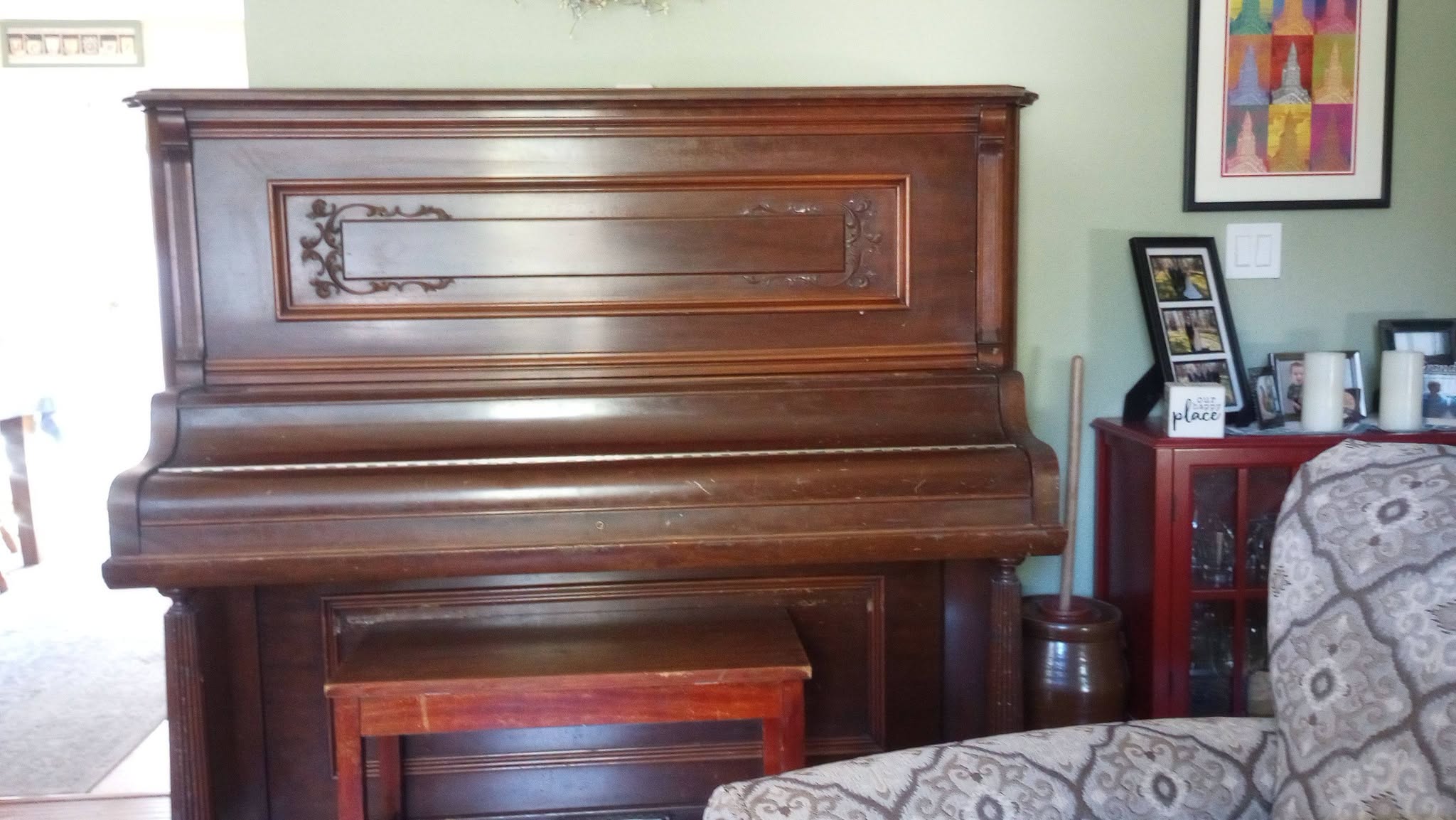
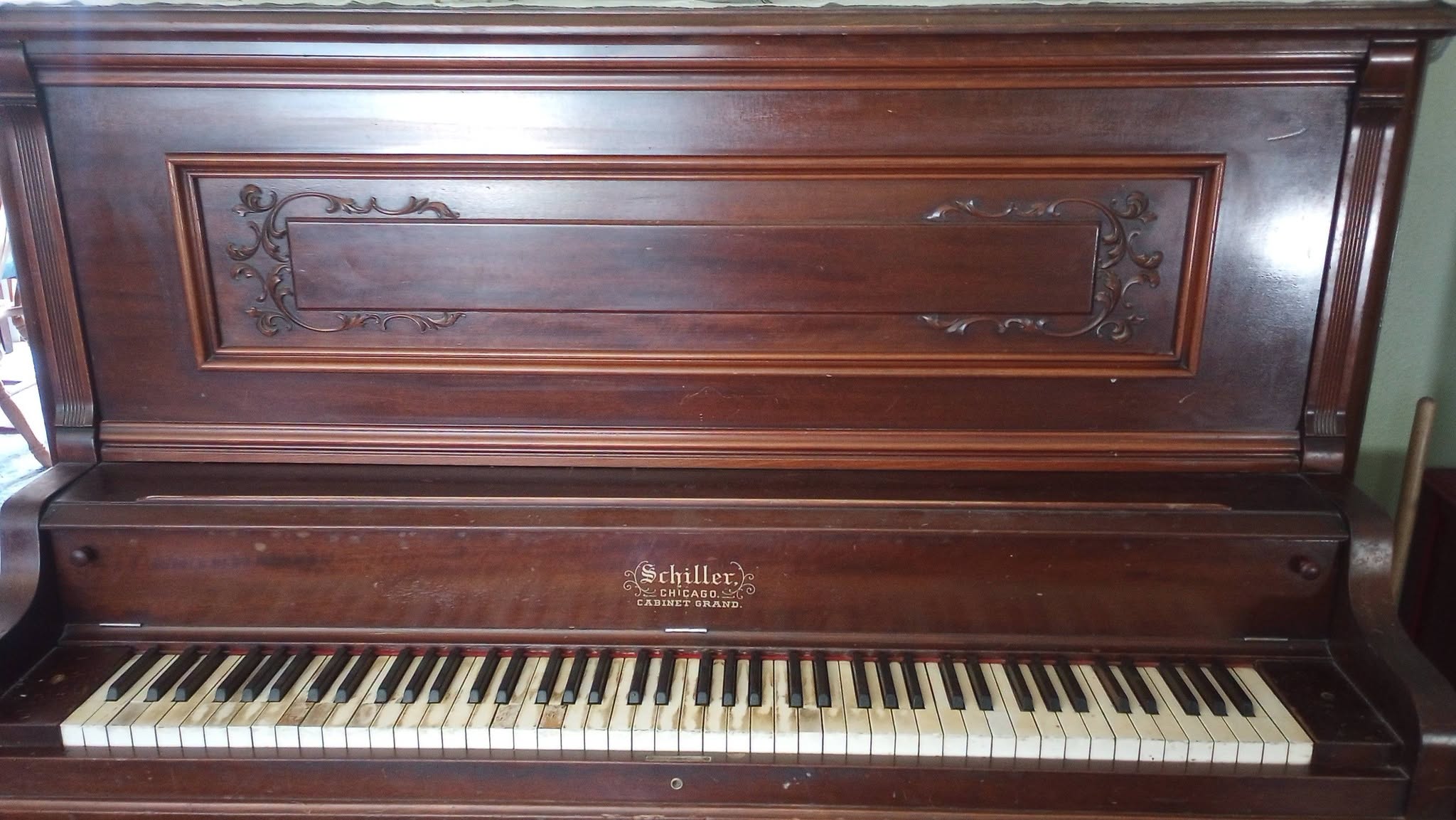
Almost 30 years ago, a friend gifted us her Victorian-era Schiller upright “cabinet grand” piano. An aunt had given it to her several years earlier, and she no longer wanted it.
Though a bit battered and missing some of its ivory key tops, it was a beautiful piece of furniture and kept in perfect tune.
Growing up, I longed to play the piano, but the instrument and money for the lessons were never in our family budget.
When she offered us the gift, we had three young boys at home – and I wanted them to take the lessons I’d always wanted.
Moving a solid walnut upright cabinet piano into a split-level house took Norwegian ingenuity and muscle. Derek, his dad and his brother figured out how to get it up the stairs and into the living room.
“We’re never moving this again,” my husband said.
And until two weeks ago, we didn’t.
Two of our four sons took lessons. Our third son chose guitar and then taught himself some piano, too.
We never had the missing key tops replaced with their plastic counterparts, and the piano picked up more scuffs and scratches.
It served as the backdrop for holiday photos when all four kids could fit on the bench. Its wide top provided the perfect space for autumn, then Christmas décor.
Over the years, our home was always filled with music–just not from the piano.
Zach played acoustic and electric guitars, harmonica, and briefly, the banjo in his downstairs bedroom.
Eventually, Sam asked for a keyboard for his bedroom and usually only played the piano when we were out. We often returned home to hear beautiful music spilling out onto the porch, but he quickly closed the lid when we opened the door.
When he moved out, we were ready to give the piano away, but Zach asked us to keep it. He wanted it in his house when he bought one.
Last year, he and his wife bought their first home.
Guess what? There was no room for the piano.
That’s the tragedy of beautifully made solid pieces of antique furniture – they are big, heavy, and extremely difficult to move.
The bigger tragedy of upright cabinet pianos is that no one wants them anymore. You literally cannot give them away.
Years ago, electronic keyboards with digital bells and whistles – quietly supplanted solid wood pianos in most churches and schools.
Last year, I wrote about a woman who had a carpenter turn her grandmother’s mahogany player piano into a storage bench for her entryway. The cost to repair was prohibitive, and she couldn’t bear to have it hauled off to the dump.
We considered that option, but honestly we were ready to have it gone.
A piano restorer thought maybe he could “part it” for a piece he was restoring, but ultimately declined.
With no takers in sight, I called a moving company, and they hauled a piece of history to the dump.
When a friend knew I’d be writing this column, she cautioned me.
“Everyone will be sure they have a solution or a place for it,” she said. “They’ll mention all the options you’ve tried.”
She’s not wrong. When I posted the Schiller saga on Facebook, many couldn’t believe this fine piece hadn’t found a home and suggested avenues we’d already explored.
The week the haulers came for the piano, we had the friend who gifted it to us over, and she ran her fingers across the battered keys. It was a lovely sound.
As the truck carrying 30 years of family memories and over a century of history pulled out of the driveway, Derek and I thought we’d be sad.
We weren’t. We’re relishing the space created and have enjoyed updating our living room.
Not all beautiful things last forever, but the memories of them do.
The final note has faded from our piano, but its legacy echoes in the music our sons now compose and play in their own homes.


