Columns

The Sounds of Summer

A faint rumbling caught my attention as I carried a load of laundry through the living room.

It sounded almost like a motorcycle but not as loud. The noise tickled a memory as it ebbed and faded.

A breeze drifted through the open windows and rattled the blinds. I set the basket down to raise them and discovered the source of the rumbling.

“It’s a Harley! I got a Harley!” a neighbor kid yelled.

He’d affixed a sports card to his bike spokes, and he pedaled back and forth in front of our house, delighted with the souped-up bike that sounded just like a motorcycle to him.

All four of our sons had done the same thing at one time or another – a simple summertime joy discovered by thousands of kids.

Later that evening, a less pleasant sound floated through the windows. There couldn’t possibly be a more irritating song than “Pop Goes the Weasel.” Why ice cream trucks choose that tune is a mystery.

All around the Mulberry Bush,

The monkey chased the weasel.

The monkey stopped to pull up his sock,

Pop! goes the weasel.

What does this even mean, and what does it have to do with ice cream treats?

While I pondered popping weasels, I looked out the window to see a tragic sight. A kid wearing flip-flops with cash clenched in his upraised fist was huffing and puffing after the disappearing truck.

It reminded me of the “Crabgrass” comic running in our newspaper. Friends Miles and Kevin are consistently thwarted in their efforts to catch the ice cream truck.

Our neighbor kid experienced a similar fate. I watched him trudge back by our house – empty-handed, except for his cash.

My Facebook memories show the last time one of our kids got a treat from the ice cream truck. Eleven years ago, I snapped a photo of 12-year-old Sam running down the street, a frozen Sponge Bob treat held aloft.

Another sound seems uniquely summerish – the thump, thump, thump of a bouncing basketball. Many homes in our neighborhood have curbside hoops. Now that school’s out, I pass several pickup games in progress when I’m on my walk.

Once, a ball bounced off the backboard and into my path.

I picked it up, pivoted and shot.

Let’s just say my high school basketball skills have severely rusted. The ball hit the rim and bounced back to me.

I shrugged and tossed the ball to the nearest kid.

“Try again!” he said, tossing it back.

My second effort didn’t exactly swish, but it went in.

“Sweet!” said the kid.

I grinned and resumed my walk.

A few weeks ago, we added a new sound to our summer. We bought an outdoor Bluetooth speaker/lantern for The Great Gazebo.

This means I had to add a music app to my phone. I’m notoriously app-averse, but the results are lovely.

In the afternoon, I can listen to tunes while I deadhead flowers or work on a crossword puzzle. In the evening, we have lovely soft light to go with our music. The lantern has several settings, from a steady golden glow to a flickering firelight.

Whether the soundtrack of your summer features kids on bikes, ice cream trucks, bouncing basketballs, or the rich sound of Ella Fitzgerald crooning “Summertime,” I hope you’ll find moments to relax and soak it in.

Columns

Blue Light Specials and Zebra Print

The zebra-striped short spring jacket shamed me from the closet.

I hadn’t worn it once in the last two years, so as per my policy, it was time to send it off to Goodwill.

But first I shrugged it on. I’m not going to lie. It’s a cute coat. It’s also one of the last things my mom bought for me while she still enjoyed shopping.

How long have I had it? Well, she purchased it at Kmart in Spokane Valley, a few years before it closed in 2019. She bought herself one, too. One of us was never a fan of “dressing your age.”

Mom had three hobbies, reading, sewing and shopping. I inherited her love of the first, but prolonged exposure to the others only led me to develop a strong antipathy to both.

No matter. Mom loved nothing more than shopping for others. One of her favorite haunts was Kmart. It’s no coincidence that when we moved to North Spokane when I was 16, the store was within easy walking distance of our house.

Even prior to moving nearby, Kmart was a family fixture.

Who can forget the excitement of the blue light special!? Even better if that blue light flashed from the deli.

Long before there was a Subway on every corner, the Kmart deli introduced us to submarine sandwiches. The plastic-wrapped subs featured ham, bologna, salami and American cheese. Topped with thinly sliced tomatoes, a couple of pickle slices and tons of shredded lettuce, these were a real treat because our family didn’t frequent fast food restaurants.

Actually, I preferred the ham sandwiches. Cooked ham, mayo and shredded lettuce on a fluffy white hamburger bun. Yum!

Of course, Mom was there for the bargains. Any kid growing up in the ‘70s likely had a pair of moon boots from Kmart and, probably a pair of knock-off Keds. The white canvas shoes were worn by generations of women and children. Mom still has several pairs of those slip-on shoes in her closet.

By the time I was a teen, I rebelled against any item of clothing purchased at the store. The final straw was when Mom bought me a puffy navy blue parka with a hood. I was 14. I knew a puffy parka with a hood in a BOY color was social suicide.

“It’s Kmart Fall Apart!” I wailed. “I will never leave this house in that coat!”

Sadly, I did leave the house in that coat, but I took it off as soon as I reached the end of the driveway.

Flash forward a few years. I’m an at-home mom with three boys under 5. My now-retired dad would pick Ethan, 4, and Alex, 2, up on Tuesday mornings while baby Zach and I stayed home.

He’d drop Mom off at Bible study, deliver Ethan to preschool, and then he and Alex would head to Kmart. Alex got a spin (or two) on the merry-go-round at the entrance, and then they’d head to the deli, where Dad sipped coffee and Alex munched a big chocolate chip cookie.

Dad died weeks before Alex’s third birthday, but I hope somehow he still remembers his special dates with Papa Tom.

Mom took over dates with her grandsons. She didn’t drive, but she’d pack whichever boy was visiting in an umbrella stroller and set off in search of a blue light special. When they outgrew the stroller, they walked with her, confident they’d get a treat or a new toy when they got to the store.

She doesn’t shop anymore. Alzheimer’s-induced anxiety makes outings stressful, but at 92, she knows all my sons by name and often tells stories about their Kmart adventures.

Who knew so many memories could be triggered by a lightweight zebra-striped jacket with a Jaclyn Smith label?

I pulled it from the donate bag and hung it back in my closet.

There’s no shame in holding onto memories. Especially, when you can touch them and feel once again, the warmth of your mother’s love.

Columns

Don’t Take Me Out to the Ballgame

When I picked up my friend Sarah on a recent Sunday afternoon, she said my timing was perfect because the Seattle Mariners game had just ended.

“Oh, do they usually play on Sundays?” I asked.

She stared at me.

“They play five times a week,” she said. “Next week they’ll play six.”

Speechless, it was my turn to stare.

You may think conversations about politics and religion are divisive, but try telling a good friend that you hate the sport she adores. Actually, we have this same discussion every spring because Sarah knows I don’t like it – she just has difficulty accepting my antipathy.

To wit, the following day, she texted me a link to Mariners tickets and asked me to attend a game with her.

I declined due to a lack of interest. And time.

In 2021, the average nine-inning Major League Baseball game was 3 hours and 10 minutes. That’s bad enough, but each team plays 162 regular-season games. Let’s say we round a game to 3 hours, and you (and Sarah) watch every one of your team’s regular-season games. That’s 486 hours or a little over 20 days of your life! And we aren’t counting postseason games because doing that much math isn’t good for me.

This year, MLB added a pitch clock, and that’s supposed to speed up the games. They may go faster, but there are still way too many of them.

In addition to the time aspect, there’s the danger. I love football, which Sarah loathes, but I pointed out to her that no spectator has been concussed by a stray football in the stands, while hundreds of people each year get popped in the noggin by fly balls at baseball games.

She said that’s why they bring mitts. She said that like it’s actually possible for me to catch a ball with or without a mitt.

Undeterred, Sarah posted a link on my Facebook so that I could read about “the most literary sport in the history of sports.”

I skimmed it. Apparently, there are a lot of novels about baseball. I did know this because my friend, Beth Bollinger, penned one of them, “Until the End of the Ninth,” a lovely book about the 1946 Spokane Indians team.

Additionally, the article listed some baseball lingo that has leaked into our language.

For example, you can strike out on a date, or make it to second base. You can touch base with clients, or knock a column out of the park, and maybe you can even make it to the big leagues.

The article didn’t mention movies, but I’ve enjoyed several films featuring the sport – “The Sandlot,” “Moneyball” and “Field of Dreams” come to mind. Plus, I can watch a movie about it in half the time it takes to watch an actual game.

Having failed to convert me through literary persuasion, Sarah resorted to texting me photos of herself and her husband at a baseball game, her son in a Little League uniform, and finally pictures of Mariners games on her TV.

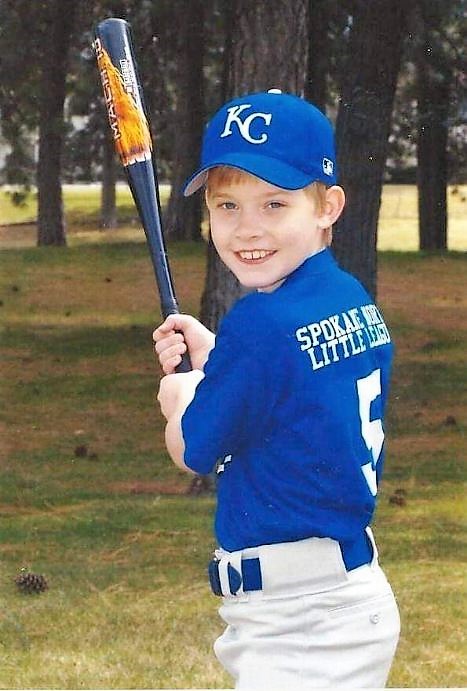
I countered with an adorable photo of our son Zachary during his lone season in Little League. Turns out the kid only wanted to play for the unlimited sunflower seeds and didn’t realize he would be playing two games a week. In his first at-bat, he got nailed in the leg by an errant pitch. We told him he still had to honor his commitment to the team.

“You guys are trying to get me killed!” he said.

Just because I don’t care for Major League Baseball doesn’t mean I don’t enjoy a Spokane Indians game once every few years – especially on fireworks night.

So, even though Sarah thinks I’m an awful person for not sharing her passion for the Mariners, I still believe football fans and baseball lovers can get along. After all, diversity is what makes America great, and having dissimilar friends is educational. For example, while writing this column, I finally understood why baseball is called America’s national pastime.

It’s because so much time passes while you’re watching it.

Columns

Flying the friendlier skies

Sometimes a cookie isn’t a cookie, it’s a quinoa crisp.

And the pretzels? Well, they’re “bioengineered,” at least if you fly United Airlines. Which we do. A lot.

Since our only grandchildren live across the country in Ohio, we’ve racked up our frequent flier miles these past three years. It’s no secret that air travel no longer resembles what it once was, but if you do some research before you go and familiarize yourself with the rules of the air, you can make the friendly skies friendlier. Here are some tips.

No. 1: If you fly more than once a year, TSA Precheck is your best friend. For $85 and some paperwork, you won’t have to remove your shoes, coat, or belt. Additionally, you don’t need to remove your liquids or snacks from your bags and the lines are much shorter at every airport we’ve been to (nine at last count). Plus, it’s good for five years!

That doesn’t mean you won’t be selected for additional screening. Just ask my husband, Random Check. Last month, he got picked for random screening at each stage of our trip, so I temporarily renamed him.

Unlike me, Random Check, aka Derek, is a plane-sleeper. He usually nods off just after takeoff and prefers the window seat, so he can rest his head against the window. On the off chance that I doze off, I prefer to rest my head on Derek. This means I get stuck in the middle seat.

This brings me to tip No. 2: The passenger in the middle seat owns both armrests. This is our only compensation for flying shoulder-to-shoulder with strangers. If you’re an aisle-seater, don’t even think about placing your elbow on mine.

It’s not lost on me that I’m the introverted half of a couple, yet the one compelled to make small talk with a seatmate. So, tip No. 3: If your Serbian seatmate, who now lives in Boise by way of Denmark, wants to lean across you and snap a photo of a really long empty Ohio runway, you let her. It’s one picture (or five) and your husband has the window seat.

Tip No. 4: Reclining your seat. Honestly, those 2 inches don’t make much difference to my 5-foot-8 frame, but for my 6-2 husband with osteoarthritis, that little bit of space can mean a lot. He rarely reclines, but when he does we check to make sure the person behind him is small enough to not be too inconvenienced.

If you haven’t flown in a while, you might be unaware of the continually narrowing times for connecting flights. Usually, we have between 20 and 45 minutes to make it to the next gate.

Tip No. 5: Jumping out of your seat into the aisle the minute your flight lands will not get you off the airplane any quicker. Remember in kindergarten when you learned to line up? That’s exactly what you do as you wait to deplane–one row at a time from the front row to the back row. It’s not complicated, unless you make it so – like the woman seated near the back when we landed in Spokane. She attempted to vault over 25 rows of folks patiently waiting their turn. She may have left the plane a minute or two earlier, but it looked like a couple of travelers bodychecked her with their carry-ons. Ouch!

Speaking of ouch, my last suggestion is simple but important.

Tip No. 6: Obey the rules. Listen to the flight attendants’ instructions and follow them. Last week my friend, Ryan Oelrich, was on a flight and the woman seated in front of him had difficulty comprehending carry-on placement.

He live-posted his experience on Facebook.

“I’m now attempting to calmly explain to the nervous woman seated in front of me that the area under her seat is mine and the area under the seat in front of her is where she needs to move her oversized bag,” he wrote. “She informs me as if I’m 5 years old that this doesn’t make sense and I’m wrong. After all, if this were true where would the people in the front rows put their bags?”

For the record, people seated in the front row place their bags in the overhead bins.

Ryan enlisted the help of a flight attendant who asked the passenger to place her bag under the seat in front of her.

The result?

“The woman speaks louder attempting to enlighten all passengers around her to what she sees as her superior baggage storage method,” Ryan wrote. “Other passengers eye her nervously but entirely ignore her. Her baggage rebellion fails.”

After much effort and some swearing, she wrested her bag from beneath her seat and placed it where it was supposed to be.

Ryan tried to place his bag in front of him, only to find the woman had tucked her feet under her seat, blocking it.

Sounds like she needed the reminder I frequently gave my toddlers, “The happy way is to obey!”

This is true of most things in life, including following the rules of air travel.

As for those quinoa crisps? I tried pawning them off on my grandsons as chocolate cookies. They weren’t fooled either.

Columns

Fit to be Fried

How often we must replace household appliances might reveal more about us than we think.

Take my iron, for example. My parents bought me my first iron when I married 36 years ago. It lasted 20 years until I dropped it and cracked the water reservoir. No, that’s not a testament about how things used to last longer; it’s more an indictment of how little it was used.

I thought about that while doing my biannual ironing atop the same ironing board I received with the original iron all those years ago.

We still have our wedding gift blender, though I haven’t dug it out of the pantry in years. Our coffee makers, however, need replacing on an alarmingly regular basis. We’ve lost count of how many we’ve been through. Of course, we’ve burned up several coffee grinders, as well. And just in case we cannot wait for a pot to brew, we’re on our second Keurig machine.

While raising our four sons, we also wore out several vacuums. Our most notable vacuum-cleaner catastrophe occurred one year just before guests were due to arrive over the Christmas holidays.

My ever-helpful spouse was cleaning up the pine needles beneath the tree and sucked up the tree lights cord. It killed our vacuum and sadly destroyed lights that we’ve never been able to replace. They had three color settings AND played Christmas carols!

Speaking of cleaning, one year for my birthday my mother gave me a steam mop. I didn’t exactly jump up and down when I opened it, but after one use I became a convert and have never looked back. I’m on my second steam mop.

Electric can openers had to be replaced regularly until Derek pointed out that manual openers were easier to operate, didn’t break and didn’t take up coveted counter space.

Some things seem to last forever, no matter how often we use them. The only reason we bought our current slow cooker is because we wanted a newer model. We kept our 20-year-old one as a backup.

Of course, there’s always some new gadget that marketers promise will make our lives easier. Remember the bread machine fad of the early 2000s?

Instant pots have dominated the kitchen scene for a few years, but seem to be losing steam. I didn’t buy into the hoopla. I don’t care that it can cook a pot roast super fast – pot roasts are meant to be cooked slowly – ditto soup.

That’s what Crock-Pots are for. I can dump the ingredients in before I leave for work and come home to a dinner that’s ready to serve.

That’s not to say I’m opposed to change. We recently added two new appliances we didn’t know we needed.

When my sister-in-law started renting out her downstairs as an Airbnb, she said she furnished it with a microwave and an egg cooker.

“An egg cooker?” I said. “That’s what Derek’s for.”

I only eat breakfast on weekends and that’s because he makes it.

She assured me it made perfect poached eggs and soft-boiled them just the way Norwegians love them. I found an inexpensive one and gave it to my husband.

He tried it the same weekend as our other new addition – an air fryer. Our sons all have air fryers, but I couldn’t imagine why we’d need one.

“We don’t eat fried foods,” I’d explained.

But on a trip to Costco, we succumbed to an impulse buy and came home with a 7-quart air fryer.

The next morning, Derek made poached eggs in the egg cooker and bacon in the fryer. Both were fabulous!

I begin looking for other things for him to air fry. Why Derek? Well, I’m terrified of new technology and I also don’t follow printed instructions well. I’m also sexist enough to believe air fryers like grills and smokers are best handled by the male of the species. (Not really, but I have been cooking for men for 36 years, and I’m getting kind of tired.)

Despite the claims of healthier cooking through air frying, our waistlines may be showing the adverse effects of our impulse buy. Our freezer now contains things like chicken wings and what Derek calls fish sticks.

I corrected him. “No, they are beer-battered cod fillets!”

We do plan to try air frying things like Brussels sprouts and cauliflower, but Derek’s already pondering an upgrade.

“I could cook more bacon at one time if we had a bigger basket,” he said.

I’m not sure how much bacon two people need at one time, but I think I’m about to find out.

**********

UPDATE: Dear Reader, It’s been 5 months and we have yet to air fry ANY vegetables– unless you count French fried potatoes and onion rings. Buyer beware!

Columns

Father, Faith, and Friendship

I miss him most in March.

His birthday is March 25, 1927, and he died on March 29, 1995.

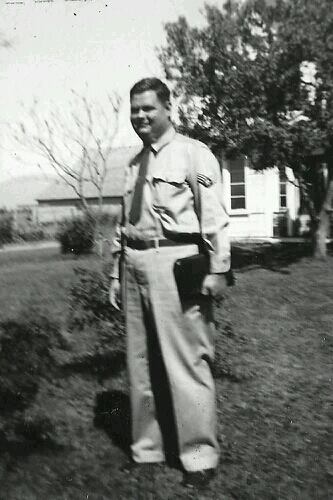
My siblings and I could write volumes about our dad, Tom Burnett. Born in Mississippi and raised in Arkansas, he traveled the world courtesy of the U.S. Air Force but never lost his slow Southern drawl.

While stationed at Fairchild Air Force Base, he met my mom, Shirley Schmidt, who’d grown up in Hayden, Idaho. They both believed it was a “God thing.” He saw her singing in the choir at Glad Tidings Assembly of God and said the Lord told him, “That’s going to be your wife.”

It didn’t take Dad long to convince her.

To know my dad was to love him – and as an unabashed extrovert, he knew a lot of people. Mom and I would leave him on a bench at the mall. By the time we returned he’d say, “Hey girls, I want you to meet my friend …”

Young moms with babies in strollers, teenagers, other dudes waiting for their womenfolk – he’d befriend them all.

When people share their memories of Tom Burnett three things are invariably mentioned: his sense of humor, his devout faith, and his abiding love for my mother.

Recently, I got to see him through someone else’s eyes. While writing a story about a North Central High School reunion I was put in touch with Christine Glenn. Her parents, Chuck and Dorothy Glenn were my parents’ closest friends in the early 1950s.

In fact, if not for my dad, Christine might not even be here.

“My father would often recount his memories of how your father invited him to church and introduced him to the Lord, and also to Dorothy, my mother,” she said.

Mom, Dad, Chuck, and Dorothy

Chuck was from Montana and had enlisted in the Air Force and was sent to Fairchild. He walked into his new quarters and looked for a bunk. The place was empty except for one G.I. relaxing on a bed and reading his Bible. That G.I. was my dad.

“Tom greeted him and said, ‘The top bunk is empty. You can have that one,’ ” Christine recalled her dad saying.

The pair quickly became fast friends though initially, they didn’t seem to have much in common.

“Dad said Tom was always reading his Bible or talking about his Jesus and inviting him to church,” Christine said.

Chuck wasn’t a Christian and always had an excuse to avoid church until one day he didn’t and agreed to attend with Dad.

Two things happened quickly, Chuck became a Christian and he badgered my dad into introducing him to a cute redhead – my mom’s best friend, Dorothy Nicholl.

Mom has a scrapbook filled with photos of the four of them double dating. Picnicking at Manito Park and Tubbs Hill, posing by the falls, dressed up for church, and playing croquet at my grandparent’s Hayden home.

By this time my parents were already engaged and Chuck soon proposed to Dorothy.

“They picked out an engagement ring and Mom loved it,” Christine said.

But then my dad stepped in.

“Tom went with my dad to make a payment on the ring,” she said. “And he said, ‘Oh! I know a place where you can get one a lot cheaper!’ ”

I should mention my father’s Scottish ancestry. Tom Burnett loved a good deal and he always seemed to “know a guy” who could get him deals on everything from autos to asparagus. In this case, he introduced Chuck to the jeweler who’d made my mother’s engagement ring.

“Tom and Dad picked out Mom’s new engagement ring,” Christine said. “She never liked it. She was so disappointed.”

Dorothy died in 2014 and Christine now wears that ring. “Well, I dressed it up a little,” she said.

Another story Chuck liked to tell was how my Dad helped him find his wallet.

The four of them had been on a date at Lincoln Park. After they took the girls home, Chuck realized his wallet was missing.

“He and Tom went back to the park with flashlights and Tom found his wallet,” Christine said.

The two couples were in each other’s weddings but gradually lost touch when my dad made the military his career and was posted everywhere from Kansas to the Philippines.

Dad died in 1995, and Chuck died in July, but he never forgot my dad.

“He always said Tom was his best friend,” Christine said.

I think a lot of people felt that way.

I know I did.

Tom Burnett

Columns

For the love of books

Each note felt like meeting a new friend.

The responses to my previous column about how February is Library Lovers month proved once again that book people are my tribe. I asked readers to share their favorite books from childhood, ones they enjoy revisiting. The replies served as a reminder of how important it is to introduce our children to books and to cultivate an appreciation of the value and importance of public libraries.

For example, Ginny Lathem started reading at 5 and said it remains her best form of escape. She had many childhood books she adored, but her favorite was one she received from folks on her 6th birthday–“Mother West Wind Stories” By Thornton E. Burgess.

“I remember the inscription my Dad wrote to me inside. I remembered that book opened up a portal of wonder, amazement, and comfort to me,” she wrote. “I’m 69 and have a rather extensive library even after donating 13 boxes of books. Even now, opening up a new book brings me joy.”

However, one memory doesn’t bring joy.

“When I was in college my Dad remarried. He and his new wife built a home and they decided to give all my books away,” Lathem recalled. “I’ll always remember his response when I asked why they didn’t save them for me or even ask if I wanted them. ‘Why Gin, they were just old books.’ ”

It seems her dad wasn’t a reader.

Tricia Stone had a similar experience. Growing up in the Bay Ridge neighborhood of Brooklyn, New York, her love of books overrode everything else and libraries offered peaceful reading escapes. Her favorite book was “Strawberry Girl” by Lois Lenski.

“I regret that when we moved to Burbank, CA, books were NOT thought ‘barrel worthy’ and left behind for other cousins,” she said.

Janice Verdugo wrote that her favorite book was “Half Magic” by Edward Eager.

“I’m 70, so it may be out of print!” she said.

And Margo Buckles grew up in a family that like mine cherished public libraries. When she left home her father told her to get a library card because it would save her countless dollars over the years.

“Books were always gifts at our house. Everyone in my family read constantly, she said. “My mother read in the bathroom to avoid children and housework. My father read and reread Patrick O’Brian’s books about Jack Aubrey and the British Navy. I think that reading kept him sane after a debilitating stroke in his late 60s.”

Her aunt’s traditional birthday gifts were books.

“I eagerly awaited the package and was rewarded with books like “The Adventures of Sherlock Holmes” and “The Count of Monte Cristo,” Buckles recalled.

But her favorite is also one of mine.

“My favorite childhood book is “The Secret Garden,” by Frances Hodgson Burnett. The story of two unpleasant children – a spoiled girl and a sickly boy – who find a secret garden where they learn to love nature, themselves and others, speaks to me to this day,” she said. “I read it as a child and have reread it as an adult. It is magical.”

Magic. That’s the essential essence of stories that take us out of our everyday lives and into the realm of pretend and possibilities. So, I wasn’t surprised to learn that other readers enjoyed “The Velvet Room” as much as I did.

“I could not believe you talked about ‘The Velvet Room’ in today’s paper!” wrote Mary Fisher. “My best friend and I read that book at around the age of 10, as well. I became a part of that book, it was the very first book I read that drew me in and made me a reader for life.”

Debbi Irvine-Collins agreed.

“I about fell out of my chair while reading your article today. I was also around 10 years old when in the mid-’60s, I found ‘The Velvet Room’ at the library and fell in love with the story. I wanted to find my own turret library to read in and escape to.”

She discovered a 1975 seventh-edition paperback for $10 on Craigslist.

“I keep it in my nightstand so I’ll never lose it. Thank you for bringing back such a great memory. I’ll read it again.”

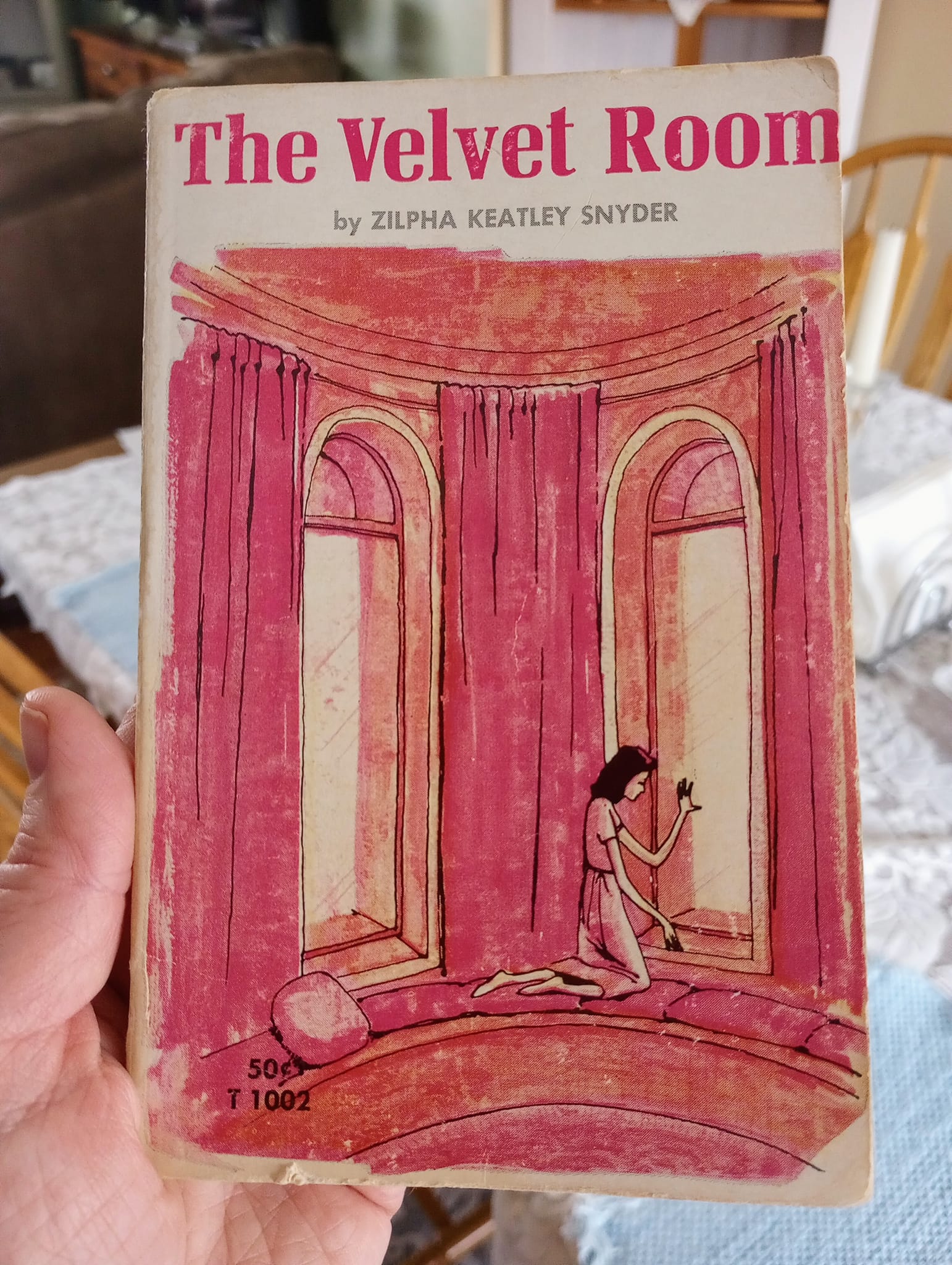
The book she found was the same as the copy I’d purchased at the Scholastic Book Fair in 1975.

Imagine my delight when last week, the day before my birthday, I received a well-read book fair copy of “The Velvet Room” in the mail!

Becky Luther from St. Maries said her sister had stored her copy for years and she was happy to send it on to me.

Tears filled my eyes when I opened the envelope and found my favorite childhood book. It felt like my long-lost best friend had returned.

If you’re a reader, you know exactly what I mean. And honestly, shouldn’t every month be Library Lovers Month?

Cindy Hval can be reached at dchval@juno.com. Hval is the author of “War Bonds: Love Stories from the Greatest Generation” (Casemate Publishers, 2015) available at Auntie’s Bookstore and bookstores nationwide.

Columns

For the love of libraries

An email announcing February is National Library Lovers Month, prompted memories of my favorite childhood book and my lifelong love affair with libraries.

I blame the library for my unfulfilled longing to live in a house with a turreted room crammed with books and a cozy window seat draped with red velvet curtains.

At 10, I checked out a copy of “The Velvet Room” by Zilpha Keatley Snyder. I quickly lost myself in the world of Robin, the middle child in a family of migrant workers traveling across California in their Model T during the Great Depression.

When her family finds work on a ranch, Robin is befriended by Bridget, a kindly old woman who gives her a key to an old, abandoned house. There Robin discovers a beautifully furnished library with a window seat. She gathers books, curls up in the window seat, pulls the drapes around her and finds respite from the harshness of her unstable life.

The book captivated me so much, I begged my parents to buy me a copy when I found one at the Scholastic Book Fair. They agreed, but foolishly as a teen, I gave my treasure away to make room for more sophisticated fare.

That email about Library Lovers Month came from Brainly, an online learning platform and homework help community, and it also featured fun bookish words, like the following:

Bookarazzi: A book lover who excitedly takes photos of the books they read and posts them online. (That’s what #bookstagram on Instagram is all about.)

Shelfrighteous: The feeling of superiority about one’s bookshelf.

Readultery: When a book lover cheats on one book by reading another book simultaneously.

Bibliobibuli: Not a “book bully” just a person who reads too much. (Pretty sure there’s no such thing as reading too much.)

While searching for a replacement copy of “The Velvet Room,” I came across the perfect quote from it for Library Lovers Month.

“There was that special smell made up of paper, ink, and dust; the busy hush; the endless luxury of thousands of unread books. Best of all was the eager itch of anticipation as you went out the door with your arms loaded down with books. Libraries had always seemed almost too good to be true.”

I guess I did find the velvet room I longed for as a child – it just wasn’t in a boarded-up mansion. Instead, I discovered it among the shelves, in quiet corners of public libraries.

Columns

Faith and Football

The saying “there are no atheists in foxholes” might well be amended to “or on football fields.”

On Jan. 2, millions of people watched in horror as Buffalo Bills safety Damar Hamlin, 24, suffered a cardiac arrest and collapsed on the field during a game against the Cincinnati Bengals.

His heart stopped. He had no pulse. Medical personnel used a defibrillator and CPR to resuscitate him.

Players and staff from both teams knelt on the field united in prayer. Strangers in the crowded stands cried and prayed together and many of us watching the game at home did the same.

Instantly, the hashtag #PrayerforDamar began trending on Twitter. All 32 NFL teams changed their Twitter profile pictures to a message reading “PRAY FOR DAMAR.”

The following day, in a moment that quickly went viral on social media, ESPN analyst Dan Orlovsky prayed for Hamlin on air during an edition of “NFL Live.”

“God, we come to you in these moments that we don’t understand, that are hard, because we believe that you’re God, and coming to you and praying to you has impact,” Orlovsky said.

If this surprises you, then you probably aren’t a football fan, because even to a casual observer, football and faith seem inextricably linked.

After all, since 1990, at the end of every NFL game players from both teams kneel in prayer on the 50-yard line. And prayer at high school football games put Washington state in the national spotlight with a recent Supreme Court ruling.

Bremerton High School coach Joseph Kennedy had been fired for his insistence on praying on the field after games. The Supreme Court ruled in his favor and he is to be reinstated to his coaching position on or before March 15.

I’m confident no one watches the game to see the players pray, yet to my knowledge no other professional sport has such overt examples of spirituality. I don’t watch much basketball or baseball, but I know I’ve never seen players gather at center court or midfield to pray.

My affection for football goes back to my childhood when I rooted for the Dallas Cowboys with my dad when Tom Landry coached. We switched our allegiance when Chuck Knox took over for the Seahawks.

The juxtaposition of faith and football makes sense when you watch grown men violently colliding with each other. There’s nothing subtle about tackling or blocking. No matter how well-padded and protected every hit has to hurt and the risk of severe injury is ever present.

And now, on national television, we’ve witnessed an apparently healthy young man drop to the ground in cardiac arrest.

Not all of social media was faith-fueled during those first dramatic hours. Plenty of detractors posted “What about praying for ___?” Or “How come no one publicly prays for ___?” And those who think the sport should be banned weighed in as well.

But for the most part, it seems when confronted by tragedy and our powerlessness to help, there’s an instinctive, almost universal response to cry out for something bigger than our humanity to intervene.

So we prayed.

Even skeptics.

Even unbelievers.

Perhaps in all of us resides a quiet longing to believe.

Nine days after his cardiac arrest, Damar Hamlin was released from the hospital to rehabilitate at home. Did all those heartfelt prayers affect his amazing recovery? Who can tell?

The quick lifesaving response of the Bills’ medical team and the skilled physicians caring for him at the hospital can’t be discounted.

But if we’re going to talk about prayer and miracles, to me the most miraculous thing was watching the social media response to the incident.

For a few hours in the often toxic Twitter environment, civility and compassion ruled. Dividing lines blurred, team loyalties abated, political issues muted, and we were just people hoping and praying for a young man to see another day.

I just wish it didn’t take witnessing near tragedy to bring us to this place.

Cindy Hval can be reached at dchval@juno.com. Hval is the author of “War Bonds: Love Stories from the Greatest Generation” (Casemate Publishers, 2015) available at Auntie’s Bookstore and bookstores nationwide.

Columns

Christmas with chaos, but no jelly

My husband narrowly avoided a “Jelly of the Month Club” situation at work over the holidays.

A couple of weeks before Christmas mail delivery to his Hillyard-area business came to a standstill. A disaster at any time when you depend on getting paid by your customers, so you can pay your employees, but especially concerning over Christmas.

Derek worried that instead of bonuses, he’d have to give his employees memberships to a Jelly of the Month Club just like Clark Griswold received in “National Lampoon’s Christmas Vacation.”

Movie fans know that didn’t end up well for Griswold’s boss.

Equally troubling was the absence of our sons’ Christmas gifts. I’m not an online shopper, so Derek buys gifts the kids put on their Amazon wish lists, while I purchase presents at local stores. He always has the packages delivered to his business because his locked mailbox is more secure than our home curbside box. No mail delivery from USPS meant no packages, either.

When a week passed with nary an envelope in his box, Derek sent an employee to the neighborhood post office to find out what the problem was.

After waiting in a long line of unhappy postal customers, he was able to get a stack of mail, but no packages.

“They’ll come tomorrow,” the harried worker told him.

It seems like many area post offices, the Hillyard branch was critically understaffed and completely overwhelmed.

The packages didn’t arrive the next day. Nor did any mail. Another week went by and Derek went to the post office and picked up a huge stack of mail. The packages?

“They’ll be delivered by Christmas Eve,” the employee assured him.

On Dec. 23, our sons’ gifts arrived (but no mail).

I thought Derek would be relieved, instead, he was sad.

“Your gifts didn’t come,” he said.

I hugged him.

“My birthday’s in February. I bet they’ll be here just in time.”

But the meltdown of mail delivery is no laughing matter. I’m glad Derek was able to pay his bills and his employees, but another customer at the post office was missing needed medication. For those who live on slim margins, the lack of a check can mean no money for rent, utilities or groceries.

As USPS still struggles, another catastrophe loomed. Our son was scheduled to return to Texas via Southwest Airlines on Dec. 29.

On Dec. 27, he woke us with the news that Southwest had canceled his flight and said they couldn’t rebook him until Jan. 13!

His was just one of more than 2,500 flights the airline canceled within four hours that morning. Sam has classes to prepare for and was due back in his office on Thursday. He and Derek found a flight on American Airlines that would get him home on Tuesday.

I couldn’t complain about an extra five days with our youngest, but my heart ached for friends stranded far from home.

Stressful situations like these serve as reminders to check our attitudes. Are we being kind to the airline workers and postal service employees who are on the front line of customer frustration? Are we finding things to be thankful for amid the chaos?

And honestly, a one-year subscription to a Jelly of the Month Club isn’t the worst thing in the world – especially if you’ve stocked up on peanut butter.