All Write, Columns

Framing your story

Meme makers had lots of fun with 2020.

To be clear, there is nothing funny about a global pandemic, murder hornets and horrific wildfires, but honestly, it seemed the year was one disaster after another. The great thing about humans is our ability to use humor to diffuse our angst.

Take this meme for example: “2020 is a unique Leap Year. It has 29 days in February, 300 days in March and five years in April.”

Or this one: “If 2020 was a math problem: If you’re going down a river at two m.p.h. and your canoe loses a wheel, how much pancake mix would you need to re-shingle your roof?”

Everyone is hoping 2021 will be better (I refuse to ask how it could be worse), and signs are promising. The vaccine is rolling out. The election is over. And most of us never saw a single murder hornet.

Someday, we’ll be on the other side of COVID-19, and I wonder what stories we will tell our children and grandchildren about our experience.

Maybe something like this:

“Once upon a time, in 2020, a horrible plague swept over the world. Many people died. Many more got sick. We couldn’t go anywhere. We couldn’t hug people, and everyone wore masks. Stores ran out of toilet paper and flour. Schools closed, and most of us learned to work from home.”

It’s a grim narrative, fit for a grim disease, but it’s not the whole story. In 2020, babies were born, businesses launched, books written, bread baked and outdoor treks enjoyed.

For me, one of the best things about the year has been writing the Pandemic Project series for this newspaper.

The idea started simply. A reader wrote, sending pictures of a quilt she’d finally had time to refurbish and she asked, “I wonder what projects others are tackling during this time?”

My editor forwarded me the note.

“Do you think this could be a series?” she asked.

So, I wrote a call out for stories, and the responses flooded my inbox. People eagerly shared how they’ve been using their unexpected down time.

From small needlework projects, to elegant patios and decks. From quilts, to chicken coops. From flower gardens, to greenhouses, to cookbooks, people proved that staying home didn’t stifle creativity. In fact, it unleashed it.

I think the reason these stories struck such a chord is that they stand in stark contrast against the daily roster of things we can’t do.

We can’t go to concerts.

We can’t go to movies.

We can’t visit our parents in retirement homes.

The ever-changing rules and information often results in fear, an unexpected side effect of the virus. Fear isn’t a bad thing. It’s hardwired into humans and warns us of impending danger. It can keep us safe, but it can also cripple us.

I’ve seen fear-induced rants turn to rage on social media. For example: anger at those who balk at the mask mandate, and anger at those who comply with it. The flip side of the same coin.

It reminds me of what I told my sons about anger when they were small.

“It’s OK to feel mad. Everyone gets mad sometimes. It’s what you do with your angry feelings that matters.”

The same thing applies to fear.

That’s why I enjoy writing the Pandemic Project series so much. Every week I get to talk with people who’ve channeled their worry, their fear, their sadness, into creating something new, or trying something they didn’t have time to pursue until a pandemic slowed their pace.

Perhaps one day I’ll tell my grandchildren this:

“Once upon a time, in 2020, a horrible plague swept over the world. Many people died. Many more got sick. We couldn’t go anywhere. We couldn’t hug people, and everyone wore masks.

But every week we had family dinner, and I fed your uncles the meals they loved when they were little. We watched movies, played cards and made memories.

I couldn’t visit great-grandma Shirley, but we waved at each other from windows while we talked on the phone.

Papa went to work every day, so people could buy the tools they needed to build and fix things, and I wrote stories about the wonderful things people did with their time at home.

It was scary, but in the quiet and slowness of a careful world, we finally had time to appreciate the small things – things that in the busy, noisy times, seemed to slip through our fingers.”

So much of a story is in how it’s framed. Beautiful things shine all the brighter against the darkest backgrounds. Every breath offers an opportunity to add to our story. What will you add to yours?

Columns

Sometimes you just need Christmas to linger awhile longer

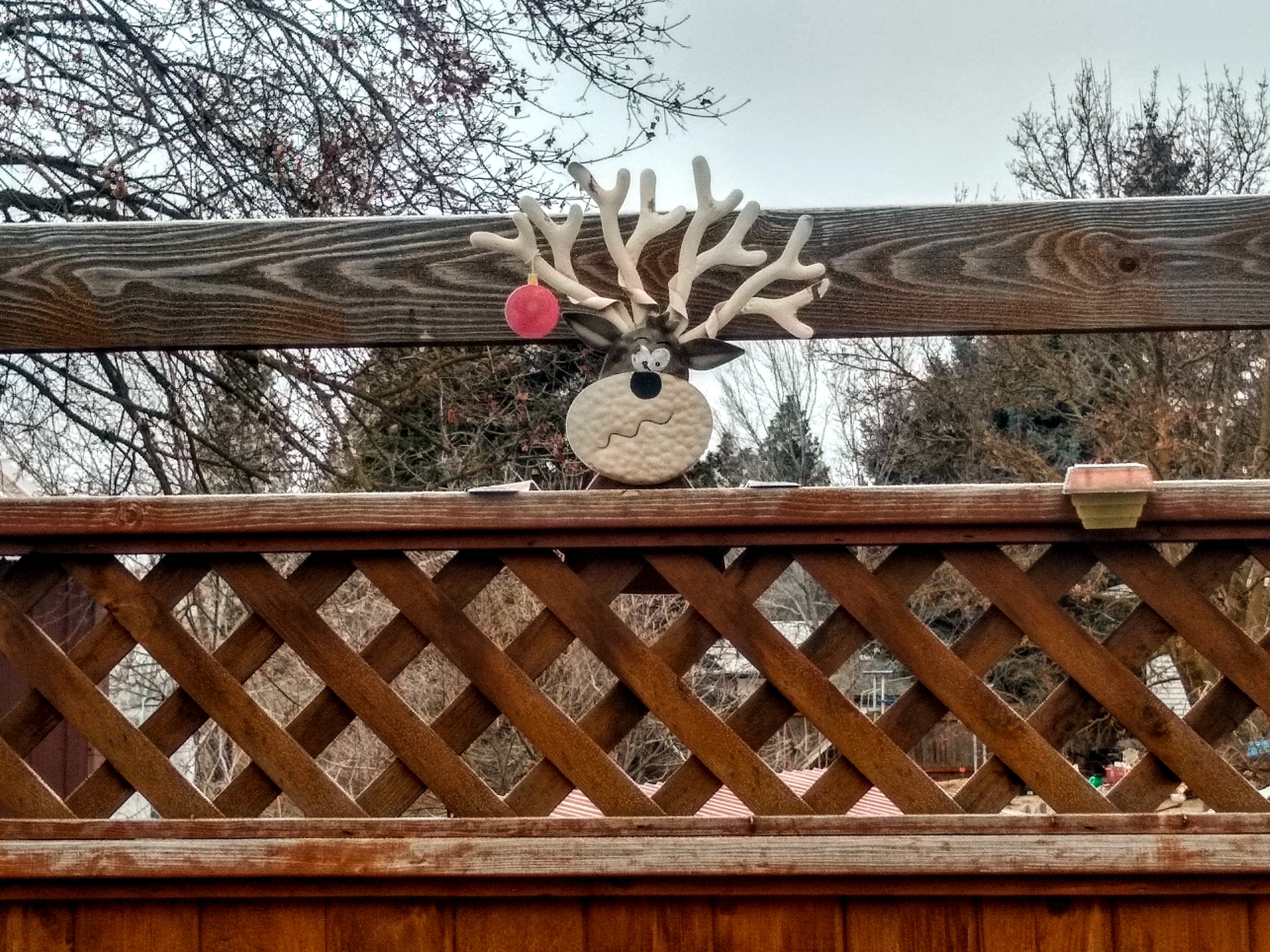
Perplexed, he peers into our dining room from his perch on the deck, a red Christmas ornament dangling from his ear.

Rudy the Reindeer rarely sees this far into January.

That’s because I’m a by-the-book kind of holiday decorator.

In my home, Christmas music, movies, and décor are forbidden until the day after Thanksgiving. That’s when the autumn wreaths go down, and the Christmas greens go up. Our everyday boring, white stoneware dishes are packed away, and my fleet of Pfaltzgraff Winterberry is deployed.

All the artwork on my living room walls is replaced by Santas, skis and holiday prints. I pack away the garland of harvest leaves from atop the piano and unearth evergreen garlands dotted with twinkling white lights.

Out come the Nativities, the Norwegian Christmas candelabra, and of course, the leg lamp replica from our favorite holiday film, “A Christmas Story.”

I’ve finally embraced the artificial – our tree goes up when our sons join us for post-Thanksgiving Turkey Noodle Soup. We appreciate having all hands on deck to trim the tree, not to mention hefting heavy holiday bins from the basement.

The hanging of the greens occurs outdoors as well, with lighted garlands and small wreaths draped along our stair railing and around the front door, a small lighted tree replacing my cat figurine on the front steps, and a wreath with a burgundy bow bedecking the door.

After hanging the snowflake garland above the backdoor slider, Derek affixes Rudy the reindeer to his watchful post on the deck.

But what goes up must come down. Preferably on Jan. 2, and certainly no later than the Feast of Epiphany (Jan. 6 this year for those keeping track at home).

Like I said, I’m a stickler for rules and am counted among those who groan when my neighbors leave limp holiday inflatables in their yards well past the New Year.

However, as 2020, blessedly drew to a close, I surveyed the glimmering green and red warmth of our home. Our sons had untrimmed the tree before the New Year chimed, but I was left to dismantle the rest of Christmas alone, and frankly, for the first time I can remember, I wasn’t done with Christmas.

I wasn’t ready to dim the evergreen lights and quench the candelabra. I love our ski-themed wall, with the cross-country Santa figurine, swooshing on the table below.

And to my surprise, the leg lamp has grown on me, and I enjoy switching it on as darkness falls, knowing Derek will see “the soft glow of electric sex” welcoming him home when he pulls into the driveway.

Since our oldest son’s birthday is Jan. 8, I always keep the Winterberry dishes out until after his cake has been cut. That way he can eat birthday cake from a plate that says, “Joy” or “Cheer” or “Wish.”

But this year, Ethan enjoyed his birthday dinner among all the other Christmas decorations I hadn’t begun removing.

After his celebration, I slowly filled the green and red bins. Walter, our junior tabby, inspected each bin from within, as I carefully wrapped candles, glassware and greenery.

Derek was even slower to remove the outdoor décor, not that there was much to take down. Our youngest son, his usual holiday helper, was busy with work and school this year, so no lighted candy canes, reindeer or trees dotted our front yard. Even so, he was reluctant to remove the garlands and wreaths.

We didn’t talk about it much.

He didn’t complain about the bins stacked in the dining room, even though he knows I’m a creature of order, not clutter.

I didn’t mention the outdoor lighting that lingered until this past week.

Honestly? I think this year with the world so filled with discord, disharmony and despair, had left us drained. But the beauty that is Christmas, reflected in simple lights and cheery decorations, offered a much-needed lift to sagging spirits.

As I write, the holiday bins are neatly stacked in the basement, the greenery gone from the front door. But Rudy still peeks at us from the deck each evening as we sit down to dinner, and I smile when I close the blinds.

To heck with rules.

Rudy can stay as long as he wants.

Columns

Sock-wearing, sweater-toting, vitamin-popping can only mean one thing….

Apparently, I’ve reached the stage of adulthood in which I must wear socks around the house. I’ve always been a barefoot kind of gal, so this came as quite a surprise.

I do wear socks with my walking shoes or boots, but when I get home I shuck my footwear and let my tootsies go au naturel.

But this winter I started feeling the cold.

Last week, I donned some fluffy pink socks that Derek had bought me a while ago, and noticed they said “Kissable” on the sole.

If you have to wear socks, I guess it’s not a bad thing to be kissable.

It’s not just my toes that are noticing the chill. Last summer, I started grabbing a sweater before I left the house.

One evening as we headed out to enjoy patio dining at one of our favorite restaurants, I wondered aloud if I should run back inside and get a sweater.

“It’s 80 degrees!” Derek said.

I paused.

“Yes, but a breeze may come up,” I said. “Or what if we have to sit inside and the air-conditioning is set too high?”

He shook his head.

“You’re the one who insists on sleeping with the bedroom window open all winter long,” he pointed out.

This is true, but sleeping next to my husband is like sleeping with a sturdy old-fashioned furnace (and just as noisy).

While a newfound appreciation for socks and sweaters doesn’t necessarily indicate advancing age, my recent multivitamin purchase is certainly a harbinger of decrepitude to come.

I’ve never been a supplement fan. Other than whopping doses of Vitamin C when the crud is going around, it’s been 20 years since I last took a daily vitamin. That was because I was pregnant, and then nursing our youngest son.

Before that, it was Flintstones chewables.

When my kids were little, I dabbed in gummy vitamins for a while, but the habit didn’t stick.

At my last eye appointment, however, the doctor noted the developing stages of age-related macular degeneration.

“It’s common in nearsighted people as we age,” he said, and he recommended a supplement known to support macular health.

Did he really have to say hurtful things like “age-related,” and “as we age”?

“And of course, you’re taking a daily multivitamin,” he added.

Gulp.

Nevertheless, I took his advice to heart and immediately purchased vitamins specific to eye health. At my next trip to Costco, I looked for a multivitamin suitable for women of a certain age.

It turned out to be the exact supplement I purchase for my 89-year-old mother.

This sock-wearing thing is proving to be a slippery slope!

The good news is, I’m not totally ancient, yet.

I know this because in November my mom had a dental emergency. Now, this is not normally good news, but it gave her an excused absence from her quarantined retirement home, and it gave me the first opportunity to spend time with her since late September.

Mom likes to introduce me wherever I take her, even if it’s to people I’ve previously met on numerous occasions, so she introduced me to the receptionist and to her dentist.

“This is my daughter. She may look young and beautiful, but she’s a GRANDMA! Can you believe it?”

Who knew a mask-wearing benefit is camouflaging mom-induced blushes?

But more important, this goes to prove that I may have advanced to the sock-wearing, sweater-toting, vitamin-popping age, but I’m still not too old for my mom to embarrass me.

All Write, Columns

Readers make writer’s job enjoyable

While tidying up end-of-the-year paperwork, I dislodged an overflowing folder from the top of the filing cabinet.

It was my reader feedback folder, filled with printed emails, cards and letters I’ve received from newspaper readers this year.

Sifting through them, I’m amazed anew at how columns pounded out from my windowless, basement home office, find their way to readers across the region and prompt response.

Before COVID-19, I did a fair number of writing workshops and speaking events, and at almost every one I’m asked, “Where do you get the ideas for your column?”

After all these years, I still haven’t found a pithy answer, because writing a personal column is well, pretty personal. That’s why it’s such a joy to find something I’ve written resonates with others.

Thumbing through the notes, I found a response to a column I’d written when I discovered what the phrase “Netflix and Chill” means in contemporary culture.

The note was from Dean, 73, who said, “You rascal, you!”

I’ve never been called a rascal before. It was epic!

An email from Stan, a fellow author, and former teacher, said, “You really know your vowels and consonants.”

I immediately forwarded that one to my editor, whom I’m sure has wondered at times.

A column about anticipation drew this response from Gina, who said, “I do have the feeling of your words in my soul today.”

No writer could wish for more.

Publishing a segment of my quarantine diary prompted a comparison to Erma Bombeck that absolutely thrilled me.

When I bemoaned in print that the shutdown order had limited my wardrobe to gray yoga pants or gray sweatpants, Bob wrote, “I look forward to Thursday’s for your articles. Please don’t ever stop. Stay healthy and wear whatever you want at home.”

I’m confident, Bob would approve of today’s usual deadline attire – a fluffy pink bathrobe and matching bunny slippers.

Sometimes reader mail offers important validation on critical issues. When I wrote of my horror at discovering my husband had used MY MONDAY MUG, Marcia wrote, “By the way, the mug thing made sense to me.”

I forwarded that one to Derek.

He didn’t reply, but he hasn’t used my Monday mug since.

Cards and letters sent to me at the newsroom are now forwarded to me at home.

When I wrote about a benefit of pandemic life was discovering the joy of the newspaper crosswords, a thoughtful reader enclosed a pencil with her card.

An elegant typewritten note on gold-trimmed stationery proved delightful, especially since it was written in response to a column about my cats.

Arlene wrote, “When there is so much sadness in these difficult times, you brightened my day on October 22 with your cleverly written article about Thor and Walter Scott.”

I don’t know if the column was clever, but I do know that my cats are.

Jan sent an email that made me smile.

“Thanks for your column – one of the few items I can BELIEVE IN THE SPOKESMAN!! (caps courtesy of the writer). Hang in there.”

I’m hanging in there, and I hope Jan is, too.

Bombeck once wrote, “There is a thin line that separates laughter and pain, comedy and tragedy, humor and hurt.”

It’s a line I’m privileged to walk twice a month.

In fact, the column that generated the most feedback this year blurred those lines a bit.

I wrote about my first masked, socially distant outdoor visit with my 89-year-old mom. She lives in a retirement facility just blocks from my home, but six months had passed since I’d been able to see her in person.

Readers shared their own stories of being separated from family members during the pandemic.

Bill wrote he’d been apart from his bride of 53 years for 22 weeks.

“If some of my friends read your article, they may now have a better understanding of what I’m experiencing,” he said.

Humans weren’t made to live in isolation. This year more than ever, I value the feedback of faithful newspaper readers.

Thank you for reminding me that even in the midst of a global pandemic, our stories can still connect us.

Here’s to a brighter, better, and healthier New Year.

Columns

You smell! Making sense of scents.

My hairdresser greeted me at the door of her shop.

“You smell good!” she said.

“Thanks,” I replied. “I showered.”

If there’s anything this pandemic has taught me, it’s to be thankful for small blessings like showering and leaving your house. And since one of the symptoms of COVID-19 is loss of sense of smell, I’m adding enjoying fragrant aromas to my gratitude list.

“Seriously,” my hairdresser said. “You smell so good. What is it?”

“Tangerine-raspberry body wash, I guess,” I said, shrugging.

When I ran out of that body wash, I continued the fruity theme. Now, I smell like blueberries. I showered with blueberry-scented body wash, then slathered blueberry lotion on my winter-worn skin, and had a bowl of blueberries for breakfast. I’m starting to worry I’ll turn blue like Violet in “Charlie and the Chocolate Factory.”

Which got me thinking: Who decided that we should smell like something we had for breakfast?

On the weekends my husband makes me bacon and eggs. I’m sure he and the cats would like it if I smelled like bacon all day, but I’ll pass on the pork-scented soap.

Scented soaps, lotions and candles are bestselling gifts this time of year, but the evolution of fragrance puzzles me.

Perhaps our ancient forebears used their sense of smell to identify food that was safe to eat. Ripened apples, plums and berries smell good, week-old rotting saber-tooth, not so much. But if raw meat smells so good, why aren’t we adding that to our lotions?

If indeed fragrance appeal is based on our ancestors that probably explain men’s bath products. The store where I buy my scented soaps features a men’s line with one-word names. Forest and Ocean, I understand. But Steel and Marble? They also sell Bourbon Body Wash, but I’m afraid my husband might not use it as instructed.

Smell, like taste, is highly subjective. While some folks swoon at a bite of caviar or oyster, others gag, and since the freshness of both is supposed smell like an ocean breeze, what does that mean for our beach breeze-scented candles? I’m quite certain no one wants to walk into an oyster-scented living room, but maybe I’m wrong.

I just don’t get how the fragrance business works. For example, the cheery red candle that flickers in my entryway is called “After Sledding.” As someone who has unwrapped and unlayered four sons, post-sledding, I can assure you, that scent is more sweat than cinnamon.

Likewise, the blue candle in our bedroom is supposed to smell like “Cabana Bay Linen.” I can’t argue with that. I’ve never been to a place called Cabana Bay, nor smelled its linen.

Speaking of fabric, why do many detergents advertise that they smell like mountain air? I may not be a climber, but I have ridden lifts to the tip tops of large mountains, and the air didn’t smell that much different than it did at lower elevations. Of course, I was in tram with teenage boys doused in AXE body spray, so my nostrils may have been compromised.

Apparently, laundry detergent smells so good you can make your whole house smell like it with Gain-scented room spray. Imagine the olfactory confusion that would occur if you washed your clothes in Tide, dried them with Downy Amber Blossom dryer sheets, and spritzed Gain spray around the house?

And I’m all for seasonal themes, but I draw the line when my favorite “smell good” store wants me to smell like a pumpkin spice latte. I will gladly drink one, and enjoy a fresh slice of homemade apple pie with it, but I don’t want to bathe in those fragrances.

I guess the purists among us gravitate to all things unscented, but honestly, who wants their clothes to smell like fabric, their bodies to smell like humans, or their homes to smell like the people who live in them?

Not me.

In fact, I’m going to go hang out in my bathroom for a while.

Currently, it smells like Aloha Hawaii air freshener, which is about as close as I’m going to get to the tropics this year.

All Write, Columns

Pearl Harbor Survivor’s Footlocker Found

Oh, the stories it could tell.

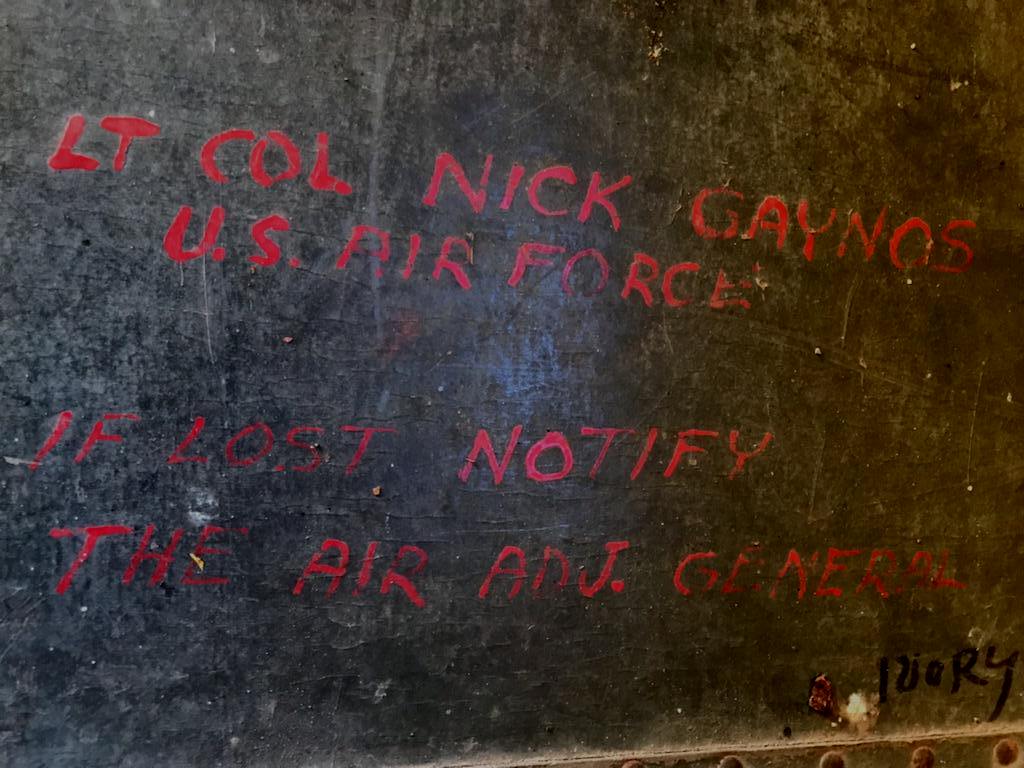
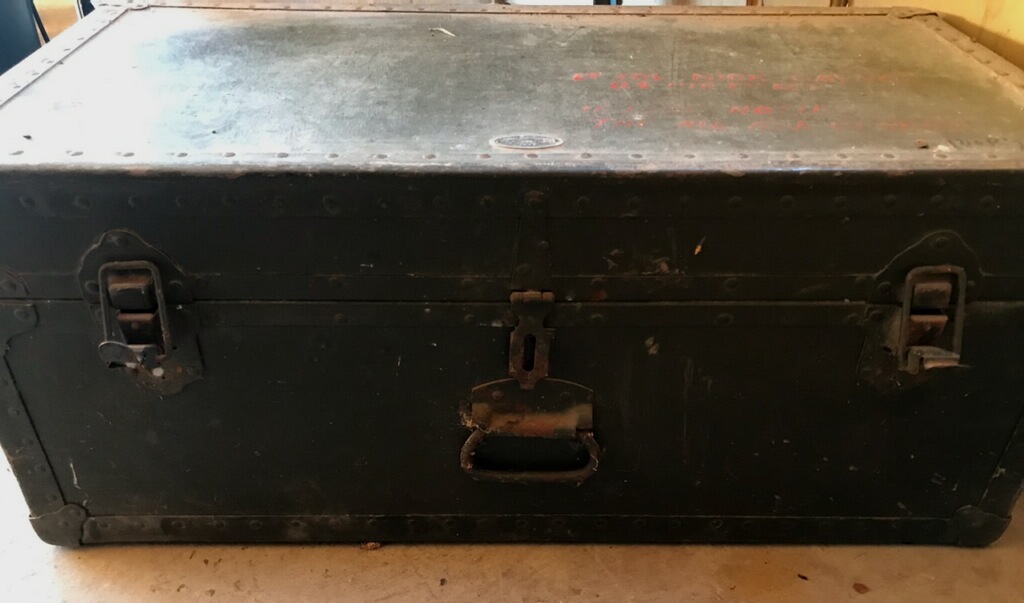
The battered standard-issue World War II footlocker was covered in dust, but a flash of bright red paint caught Rhonda Earley’s eye. She brushed off the grime and read, “Lt. Col. Nick Gaynos, U.S. Air Force. If lost notify the Air Anj. General.”

A few weeks ago, Earley had been helping a friend clean out her deceased parents’ home and garage in Santa Rosa, California. They’d unearthed the battered footlocker in the garage. It was empty, but the word “ivory” had been scrawled in a corner.

“My friend had no idea where the chest had come from,” Earley said. “I took photos to help her sell some of the stuff.”

And there was a lot of stuff, but the footlocker nagged at Earley.

“I decided to do some research to see what I could find out,” she said.

It was Nov. 11, Veteran’s Day.

Soon a message from Earley appeared in my inbox from my website contact form.

“I have a chest that I believe may belong to Lt. Nick Gaynos whom you wrote about in your book. I’d love to find a family member.”

Then my phone pinged with a Facebook message.

“This is a far reach, but I have a chest that may belong to Nick Gaynos who you wrote about.”

Earley’s Google search had led her to my book, “War Bonds: Love Stories from the Greatest Generation,” as well as to newspaper articles I’d written about Gaynos.

“I got chills,” she said. “It was Veteran’s Day, and it just touched my heart. I knew there was a story behind this.”

It’s a story we may never fully know. I was able to connect Earley and her friend with Gaynos’ daughter, Nikki Arana.

She confirmed the footlocker had definitely belonged to Gaynos, who’d lived in Northern California for many years, before retiring to Post Falls to be near Nikki and her children. But Arana had no idea how, or why, the footlocker had been left behind.

“I’d never seen it before,” she said. “I can’t imagine what series of events led to this.”

Arana passed on reclaiming the footlocker, and said like many WWII veterans, her father refused to discuss his battlefield memories for most of his life.

By the time I first interviewed him in 2010, he was ready to talk about what happened to him on Dec. 7, 1941.

“I’d been up until 4 a.m. at my radio station,” Gaynos had told me.

As a young private, he was in charge of air-ground communications at Hickam Air Field.

He was asleep in his bunk when the earsplitting scream of airplane engines and the rat-a-tat sound of bullets strafing the barracks woke him. Grabbing his pants and his helmet, he scrambled out the door.

As he ran down the beach toward his duty station, a Japanese Zero spattered the sand around him. Gaynos hit the ground and covered his head. He said he felt a hot breeze and heard a whistling sound inches from his ears. He looked up and saw the face of the pilot as he flew alongside him. The pilot grinned.

When Gaynos got up he discovered a large piece of shrapnel next to him. “I grabbed it,” he said. “It was still hot from the explosion.”

Nick Gaynos, 1945

One month before his death, Gaynos attended a reading of “War Bonds,” at the Coeur d’Alene Public library.

He brought that shrapnel with him.

But there was so much he didn’t say, like what it was like to gather the mutilated body of a dying friend in his arms. Perhaps there aren’t any words for something like that.

After Pearl Harbor, Gaynos attended Officer Candidate School. He made the military his career, quickly rising through the ranks, before retiring as a colonel.

As per his wishes, in 2015, Gaynos was buried with full military honors at Arlington National Cemetery, alongside his beautiful bride, Tex.

“I’m going to be buried with my buddies,” he told his daughter.

It’s likely that footlocker had traveled the world with him from Japan, to Newfoundland, and points in between.

How it ended up in a dusty garage in Santa Rosa is a mystery.

If only footlockers could talk.

Columns

Goodnight garden, goodnight gazebo…

Like a child resisting bedtime, I balked when my husband mentioned getting our yard and garden ready for winter.

He brought the furniture covers out of the shed. I ignored them.

He took down the deck umbrellas, and rolled up the sun shade in the Great Gazebo.

I edged my chair out from under the gazebo’s shelter and stretched my legs in the waning autumn sun.

As Derek cut back the zucchini, bean and tomato plants last month, he said, “You might want to finish picking the carrots before we leave for Ohio. You never know, it could snow while we’re gone.”

I scoffed, but I needed carrots for the stew I was making, so I went ahead and harvested the rest, pausing to reach over the fence to give some to our neighbor.

Then I plucked the last few tender leaves of basil and a lone green pepper and added them to the pot.

The following week when Derek cut back the ornamental grasses, I grudgingly hauled my flower pots from the front porch, and brought out our fall welcome mat and Happy Harvest outdoor signs.

But I was not happy, not one bit, as the days grew shorter, the air cooler, the sunshine scarcer.

Fall used to be my favorite season. Never a fan of hot weather, I eagerly welcomed blustery, gray days. The fact that September signaled the start of school for my four boys might have had something to do with my avid enjoyment of autumn’s arrival.

Yet, lately I’ve noticed each year I begrudge the battening down of home and yard a bit more. I delay packing away my gardening basket, gloves and shears. When the rain comes, I scoot the gazebo furniture toward the center of the shelter, and cover my plump pillows with a blanket.

I know fighting fall’s arrival is foolish, so on a crisp, sunny October day I gathered garden and gazebo décor, packing them away for the season.

My favorite sign went into the bin last.

“This is my happy place,” it reads. And this year more than ever our back yard provided a soul-satisfying refuge from a pandemic-plagued world.

October sunlight.

For us there were no concerts, no movies, no nights at the theater, or trips to the beach, but every week we enjoyed evening Happy Hours in the Great Gazebo, and delicious family meals on the Delightful Deck.

With galleries and museums closed, we enjoyed nature’s art via window boxes and pots filled with petunias, daisies and geraniums. Derek scattered wildflower seeds around the back fence and erected trellises, coaxing clematis plants upward.

As we prepared for our trip to Ohio, I begged him to leave the deck window boxes up until our return.

“It will be so nice to come home to a spot of cheery color,” I said.

Of course, it snowed while we were gone and we came home to frozen flowers.

This week, as we entered a new round of stay-home orders, I’m missing my outdoor sanctuary even more. On Sunday as my social media accounts filled with photos of pandemic-panic buying shoppers snaking in long lines outside grocery stores, I struggled to maintain an attitude of gratitude.

After a chilly walk through the neighborhood, I stood on our deck as wind-whipped leaves skittered, scattered and caught in my hair. Gazing at our fence line, I suddenly remembered how Derek had planted dozens and dozens of tulip bulbs along its length before the first hard freeze. I pictured those bulbs patiently resting beneath the frost, the rain, the snow, ready to burst into riotous color in the spring.

All living things need rest; soil, seeds and certainly people.

And so with a nod to Margaret Wise Brown:

Goodnight Glorious Garden once verdant and green.

Goodnight Great Gazebo and summer’s sweet scene.

Goodnight Delightful Deck and al fresco dining,

Goodnight brilliant blossoms, I’ll try to stop whining.

Because beauty awaits us just out of sight.

And all will awaken beneath spring’s golden light.

Columns

Sir Walter Scott’s Work Life

Sir Walter Scott, 15 months, takes his responsibilities seriously.

When you’re the junior feline in the family and in charge of entertainment, mischief and cuddles, it’s a full-time job and then some.

Knowing that Thor, the senior tabby in the clan, keeps a scornful eye on him, Walter adheres to a strict daily schedule.

His first job of the day is to assist Thor in obtaining breakfast. Around 7:30 a.m., they take their positions outside my bedroom door and commence polite requests for food. If none is forthcoming, Thor ratchets up the volume and intensity, while Walter sticks his paws under the door and grabs at the carpet. If that doesn’t work, they take turns scratching and banging on the door.

When I emerge, they both enter manic mode, careening through the house and dashing around the kitchen table. Then comes the wrestling.

I have to feed them in separate rooms, because Thor will wolf down his breakfast and finish Walter’s, too, and Walter will just sit and sadly watch his food disappear. Though he passively lets Thor take charge of food once it’s served, before it appears is another matter. As I dish up their kibble, Walter pounces on Thor, attempting epic takedowns.

Thor is a lover, not a fighter, so it’s a good thing he’s bigger and has a longer reach. While Walter sizes up the best way to pin him, Thor bats him away. Undaunted, Walter stretches up into full Godzilla mode and tackles. Thor hisses, which scares both of us.

I’m not sure why Walter decided this was his job, but Thor is not thrilled to find himself headlining these twice-daily bouts.

Walter’s next self-appointed chore of the day is sweeter – morning cuddles with me.

I return to bed after feeding them, because I mean, it’s 7:30 (or 8, but still). By this time, Derek is getting ready for work, so Walter has me all to himself. He jumps up on the bed, lays his head next to mine on my pillow and curls up in my arms. He purrs contentedly, while kneading his sharp little claws under my chin. Usually, he falls asleep and sometimes so do I.

Morning cuddles with Mom

We take turns deciding when it’s time to get out of bed. If I don’t have a deadline or an appointment, I doze until Walter brings me a toy and pats my face to let me know it’s playtime. If I get up first, I bring my coffee and my phone back to bed and check emails and messages. Walter fetches a toy because playtime is next on his agenda.

He usually brings a small white mouse with a rattle and bats it around until I throw it down the hall. Then he tears off and brings it back. Walter is a fetch champion until he gets bored.

After I’m ready to face the day, Walter follows me to work in my downstairs office. His favorite thing is stalking the printer and waiting for it to whir to life. He doesn’t grab the paper, he just likes the hunt.

He takes his editorial responsibilities seriously and prefers to plant himself in front of my screen or on my keyboard.

Obviously, this is not an ideal working situation, at least not for me. I repeatedly scoop him up and put him on the floor until he gets the hint and wanders off to nap.

Walter, the editor

I’m usually out in the afternoon, so Walter takes advantage of my absence to forage for carbs. I’ve previously written about his carb addiction, and I’m sad to report he’s had a relapse. We’ve taken to storing our bread in the microwave and securing any open chips, rolls or baked goods in a cupboard he can’t open. All was well until one afternoon when I went to the pantry for dinner ingredients and found a bag of barbecue potato chips scattered on the floor.

It seems Sam had left the shopping bags on the floor instead of putting the items on the shelves, and Walter got the munchies. He tore open the bag, sampled a few chips, but evidently didn’t care for their tang.

Bedtime brings a nightly dilemma.

My husband likes to sleep with me. So does Walter. I’m usually in bed first, so Walter saunters in and makes himself comfortable. Then Derek arrives.

“Okay, buddy, time to go,” he says.

Walter rolls over on his back and looks at Derek. Upside-down kitty is universally irresistible, but Derek is made of sterner stuff.

Upside down kitty fails to impress Dad

“Night, night, Walter, out you go,” he says.

Walter stretches, then curls up next to me.

Finally, Derek scoops him up and takes him to the living room.

Just as we turn off the light, we hear a faint scratching at the door and the saddest, most forlorn meows.

“Go to sleep, Walter,” Derek says.

And eventually he does. After all, he knows he has a full slate of responsibilities awaiting him in the morning.

All Write, Columns

From Pop Art to Bomber Boys

With so many favorite venues shuttered during the pandemic, each reopening is worthy of celebration. That’s why my husband Derek and I were thrilled to stroll through the new exhibits at the Northwest Museum of Arts and Culture.

The MAC opened its doors again in August at 25% capacity, but Saturday marked our first visit since the shutdown. Enjoying something so normal is a welcome breath of fresh air, even if those breaths are taken behind masks.

The star attraction features the work of pop art icons like Andy Warhol, Roy Lichtenstein and James Rosenquist, as well as contemporary artists including Jeff Koons, Damien Hirst and Takashi Murakami.

“Pop Power from Warhol to Koons: Masterworks from the Collections of Jordan D. Schnitzer and His Family Foundation” continues through Jan. 24.

If you’ve ever wanted to see one of Warhol’s famous Campbell Soup works in person, here’s your opportunity. This colorful chronology of pop art traces the movement from its genesis to the present day, and unlike some art collections, this one offers fun for the younger set, too.

“Mickey! It’s Mickey!” yelled a girl when she discovered prints of the famous mouse.

Derek and I aren’t big fans of pop art, and some of the contemporary creations left us puzzled, which is part of gallery fun. However, he did find something he’d like to hang at home – “Fiesta Pig” by Andy Warhol.

The screen-print pig with his nose in a bowl of food looks like he’s enjoying the aftermath of a great disco party. Speaking of swine, Derek was also taken with Jeff Koons’ portrait of himself with a pig. The work of art is on a plate.

Thankfully, our budget doesn’t stretch to famous pieces of pop art.

Our budget does include an occasional Spokane Symphony concert. “Music Finds a Way: The Spokane Symphony” opened this weekend and continues through Jan. 10.

The exhibit traces the evolution of the symphony, which is celebrating its 75th year.

The Conductors Wall of Fame follows the organization’s sometimes tumultuous relationships with its conductors. Since we haven’t been able to see them in person this year, it was wonderful to see photos of the current symphony members.

But the exhibit that caused us to linger longest was “Bomber Boys: Portraits from the Front,” which continues through May 23.

Bomber Boys at the Northwest Museum of Arts and Culture

The exhibit features photographs of the combat, crew and camp life of the 445th Bomb Squadron of the 12th Army Air Corps, which was based in Washington and stationed on Corsica and in Italy. The images, ephemera and a diary were discovered in the hayloft of a horse barn in 1996, by two daughters of the tail gunner who’d stashed them there.

It’s a fascinating walk through the daily life of a 21-year-old soldier who would eventually fly 59 missions over Europe.

Yet the story we found even more compelling was that of an Idaho boy who was shot down over Yugoslavia and spent nine days behind enemy lines. He documented his harrowing adventure and the story is told in his own words.

The exhibit also features a replica of what a typical airman’s bunk area looked like during the war. Be sure to pick up a photo card of a soldier and see if you can discover his name and rank while you tour the exhibit.

If you haven’t ventured out to the museum yet, you can now do so safely. Masks are required and with the venue still at 25% capacity, social distancing is easy to maintain. In addition, the galleries are cleaned several times a day. Also new: You must purchase tickets online in advance.

In light of the pandemic and election-induced turmoil around us, it’s important to support valuable quiet sanctuaries like the MAC.

Enjoying the vibrancy of pop art, celebrating 75 years of the Spokane Symphony, and honoring those who sacrificed much for our nation during World War II all offer timely much-needed reminders about the creativity and resiliency of the human spirit.

For more information or to purchase tickets visit northwestmuseum.org.

Columns

Bleak bad times can reveal sparkling gems of goodness

I wish whoever keeps asking “what next?” about 2020 would stop it.

Last week the “what next” was thick, choking, hazardous smoke. Each morning, I checked the Spokane air quality before getting out of bed. As the smoke cleared ever so slowly, I’d grimly brush the dusting of ash from my car before heading out.

How bad was it? Well, I actually had to work out at the gym for the first time since it re-opened post-shutdown. Hazardous air is not conducive to long strolls through the neighborhood.

But Saturday morning I woke up to find my husband had opened our living room and kitchen windows. Rain and cooler temperatures cleared the sooty skies. I’ve never before been so giddy about being “moderate,” and cheered as the air quality neared “good.”

Standing on the deck I gulped in the fresh air with my morning coffee and wondered why it so often takes the bad to make us appreciate the good.

This year has certainly given us plenty of opportunities.

During the long weeks of shutdown when just about every place that makes life enjoyable was shuttered, we had to discover new ways to find joy.

Instead of the warm fellowship of Sunday morning church, we cuddled on the couch in our pajamas and streamed the service on Facebook.

In lieu of romantic dinners at upscale bistros, date night morphed into driving to our favorite spot together to pick up food to go.

Weekly meals with our adult sons became regular Sunday Suppers complete with dessert, as we drew our family closer during this worrisome time.

As things slowly opened up, the Sunday Supper tradition became a fixture, and I love having a designated day to spend with my sons.

We haven’t attended in-person church yet, because seating is limited, and we are well aware that for many older folks, Sunday service is as crucial to their emotional and mental health as it is to their spiritual life. We’ll join them when we can all attend.

Date night is on again, though we usually pick a spot that offers outdoor dining. We enjoy eating al fresco in the summer anyway, and it feels amazing to be eating at a venue, instead of taking home Styrofoam boxes.

Yes, sometimes it takes the bad to help us appreciate the good.

That thought sits with me today as we celebrate our youngest son’s 21st birthday. There’s nothing bad about Sam, but his entrance to the world proved incredibly frightening.

On a golden Sept. 24, our grand finale arrived weighing in at a whopping 9 pounds, 9 ounces. He had his father’s broad shoulders, and the trace of a dimple in his chin.

Having given birth to his three older brothers without complication, I assumed we’d be taking our new arrival home the next day. Instead, it was three long weeks.

Within hours of his birth we were told Sam had a congenital diaphragmatic hernia. A hole in his diaphragm hadn’t closed early in gestation. As a result, his internal organs pushed into his chest cavity, squashing his developing lungs. Our newborn was given a 50% chance of survival.

He was airlifted from Holy Family to Sacred Heart and placed in the Neonatal Intensive Care Unit. Twelve hours after his birth, I stood next to his bed. Tubes and wires protruded from the top of his head to the soles of his feet. The ominous whooshing of the ventilator and the beeping and whirring of machines filled the room. He was so fragile that the sound of voice raised above a whisper sent his blood pressure skyrocketing.

When he was 3 days old, he underwent surgery to repair the hole in his diaphragm. And then we watched and we waited, struggling to care for our sons at home, dealing with the unbearable ache of leaving Sam in the hospital night after night.

But at 21 days, he finally came home, healthy and whole in every way, with a pretty impressive scar on his midsection.

Twenty-one years later, he’s our last fledgling in the nest, and having already earned his undergraduate degree, this week he started the quest for his master’s.

He’s filled our home with so much joy; it’s hard to comprehend how close we came to losing him. Those horrible days when his life hung in the balance have made me forever grateful for his presence in our family, and maybe a bit more prone to appreciate the sparkling gems of goodness the bleakness of bad times can reveal.

Sam and Cindy Hval, 2019