Columns

The Space Between Grief and Joy

Bags of Horehound candy and golden butterscotch discs.

Pond’s cold cream and Centrum Silver vitamins.

A pair of soft, brightly colored socks.

In the month since my mom’s passing, I’ve absentmindedly placed these items in my cart.

Turns out shopping for Mom is a hard habit to break.

Grief is a fascinatingly fluid thing. The day I put the cold cream and butterscotch candy in my cart, I realized my mistake, put the items back and left the store without purchasing a thing.

Small things can remind us of big losses, and sadness is sneaky. Meeting with a funeral home director brought nary a tear, but baking Mom’s brown sugar cookies the next day opened the floodgates.

Then I remembered who those cookies were for. Our youngest son was bringing his fiancée home to meet the family. The trip had been planned for months. While Sam was sad that Susan wouldn’t meet his Grandma Shirley, he was excited for her to meet us and to show off his hometown.

Baking is my version of killing the fatted calf. After the brown sugar cookies, I baked chewy chocolate cookies and chocolate chip cake bars. When I discovered Susan would be celebrating her birthday with us and that she loved chocolate, I made sure I had the ingredients for a Texas sheet cake on hand.

With a full freezer and a fuller heart, I welcomed our son and his wife-to-be.

I’ve spent the majority of my adult life in Hval’s House of Boys, so I admit I was a bit nervous and a bit giddy at the thought of having a girl in the house for an eight-day visit. I needn’t have worried because Susan fit effortlessly into our family.

Guess what? You can be sad and miss your mom and still joyfully fall in love with your future daughter-in-law.

It was fun to see Sam in full tour guide mode. In short order, Susan experienced Zip’s fries and tartar sauce, Yoke’s jojos (my kid likes his spuds), followed by a visit to Riverfront Park, including a ride over the falls.

They stopped by Derek’s shop, got a peek at The Spokesman-Review newsroom, and met the gargoyles atop the Chronicle building.
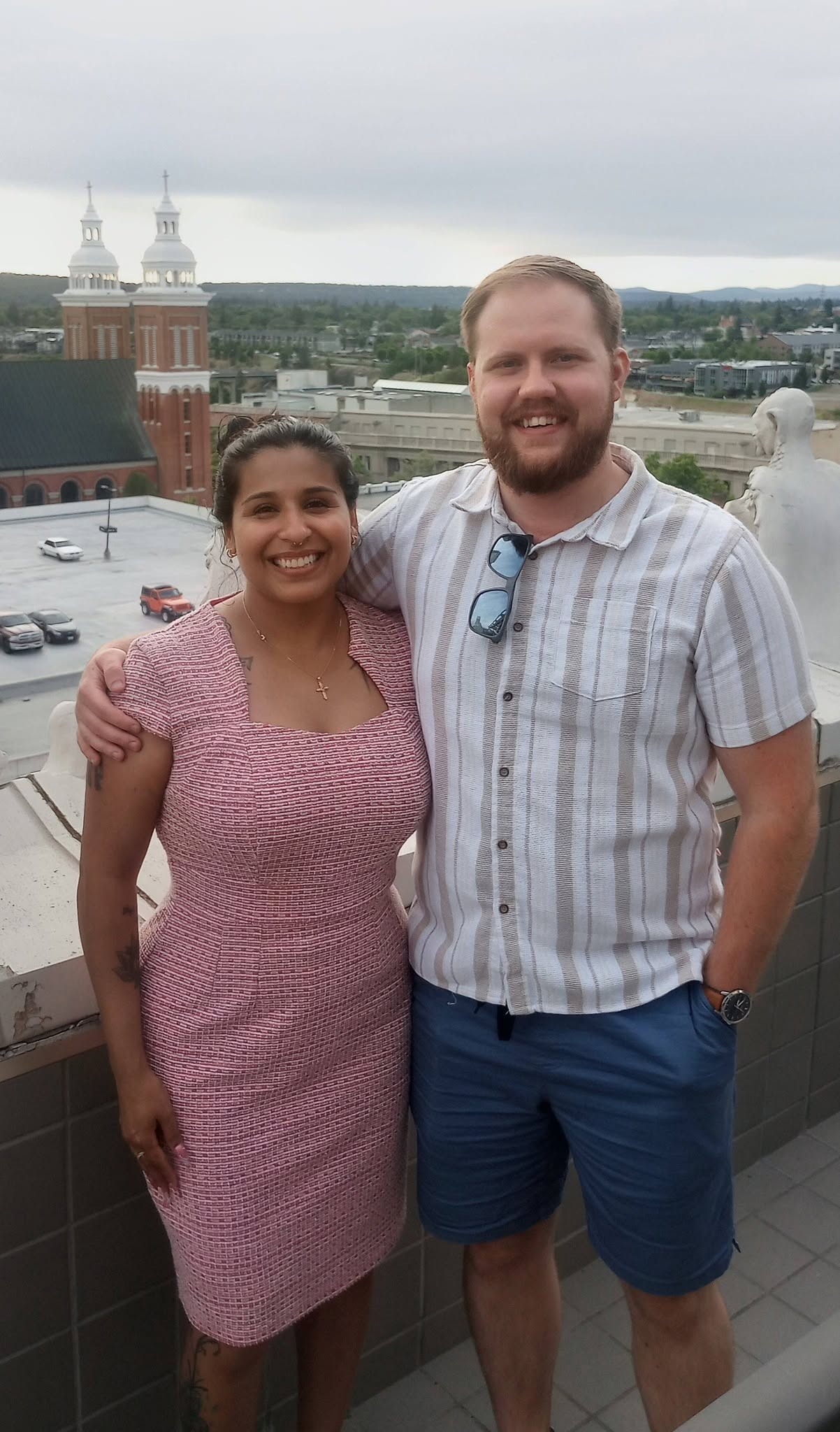
Sam took her to his favorite indie bookstores and showed her the Eastern Washington University campus, where he earned the degrees that brought them together. (They both teach in the English department at Odessa College in Texas.)

His brother, Zach, and his wife, Naselle, took them to Sandpoint on Memorial Day, and Susan survived meeting all of the extended family who live in the area in one epic backyard picnic.

There were board games, s’mores in the Great Gazebo and movie nights, but all too soon, it was time for them to fly home and finalize their wedding plans.

Meanwhile, we had other preparations to make.

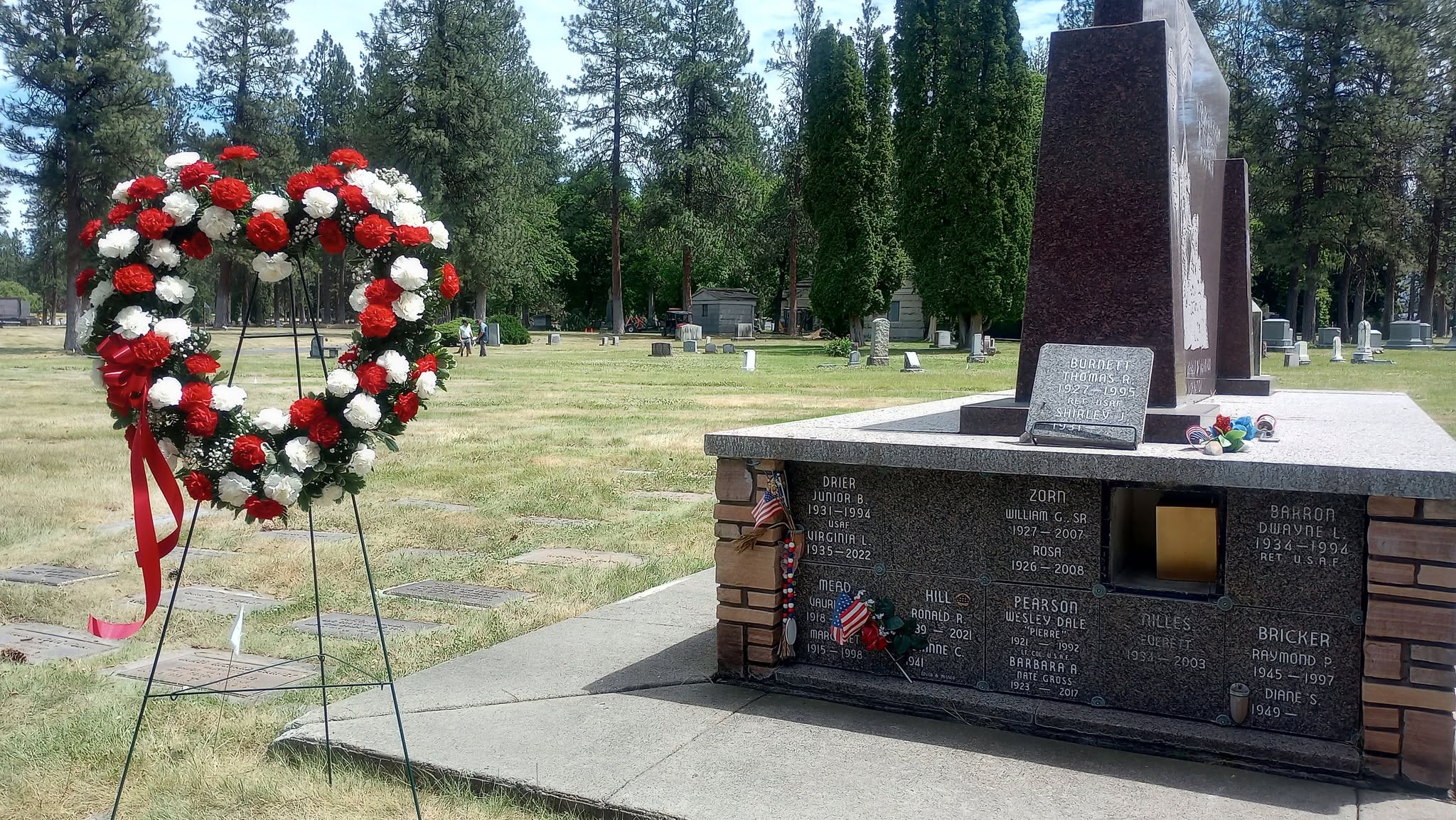
On June 19, we placed Mom’s urn next to my dad’s at Fairmount Memorial Park and celebrated her long, well-loved life. Our family shared memories and “Mom stories,” and while there may have been a smattering of tears, we mostly laughed. Laughter is our family legacy.

As you read this, we are celebrating the wedding of Sam and Susan. I’m confident there will be lots of laughter and perhaps a smattering of happy tears.

The space between grief and joy is whisker-thin.

For me, that space has been filled with peace and a profound thankfulness for the blessings I’ve enjoyed and the delightful anticipation of the love that lies ahead.

All Write, Columns, War Bonds

Diminished by their loss, bolstered by their legacy

On a chilly November afternoon, I said goodbye to another veteran featured in my book “War Bonds: Love Stories From the Greatest Generation.”

James Loer died on Oct. 17. His wife, Helen, preceded him in death four years earlier.

Just as I’d done at her service, I read their chapter “From Sailor to Preacher” at his funeral.

The author at James Loer’s funeral, November 2020.

Theirs was a simple story of plain people who worked hard and served every community they lived in with quiet devotion. As James said in our first interview, “I can tell you right now this isn’t going to be romantic!”

Indeed, romantic might be too flowery a word to describe their lifelong bond. They married in 1948 in a small ceremony at the home of their pastor while James was attending Bible school.

He’d felt called to the ministry after surviving several harrowing skirmishes when he served in the Navy during World War II. The 13 battle stars on the cap he always wore told more of story than James liked to discuss.

During his funeral, the pastor, used a flag, a hammer, a Bible, and a seed to tell James’ story. The flag for the country he loved, the hammer for the work he did as a carpenter, the Bible for the God he served and the seed that represented his farmer’s heart, as well as all that he’d sown into lives during his many years as a pastor.

At 96, James Billy Loer had lived a full, rich life, and longed to be reunited with his bride.

And then, on the first day of the New Year, another “War Bonds” reunion took place.

Zelma Garinger joined her beloved husband of 65 years, David, who passed away in 2014, before “War Bonds” was published.

Unlike James Loer, David Garinger was an avowed romantic.

In fact, this is how he described the first time he kissed Zelma on Valentine’s Day 1947.

“I had my arm around Zelma, sitting close. I smelled her sweetness. Her dark shining hair and sparkling blue eyes worked their magic on me. Our lips met for the very first time … it seemed so right. Truly she was my Valentine.”

David had served in the Marine Corps during World War II, and after returning home and marrying Zelma, he became a pastor, and later a master carpenter and contractor. He loved art, music, poetry and most of all, Zelma. Each morning, he’d deliver a cup of coffee to her bedside.

The years without him had been long. Zelma had chronic respiratory issues and suffered with chronic back pain, but she still made it to a reading of “War Bonds” at the South Hill Library in 2015.

Zelma Garinger with the author, 2015

After Zelma’s death, her daughter, Janice, wrote me a beautiful letter, sharing memories of her mom.

Zelma had returned to college and earned a teaching degree when Becky, her youngest daughter was little.

Janice wrote, “During hard times teaching children of migrant workers in California’s Central Valley, she shared with us that all her efforts were worth it if she could make a difference in the life of even one child. She was always more than just their teacher. She prayed for them and quietly reached out when there was need. Many books and supplies were personally purchased to enrich her students.

We vividly remember a tiny first-grader who was rescued many nights from her alcoholic mother, then put to bed in our parents’ home, so she could attend school the next day.”

Reading Janice’s memories of Zelma and hearing the pastor speak of James Loer’s life of service at his funeral, brought home just how much we lose as a society when another member of the Greatest Generation leaves us.

The lives they led filled with hard work, hope, courage and sacrifice are simply irreplaceable. We would do well to honor their memories by following the examples they set.

I think the inscription on James’ headstone beautifully sums up both he and Zelma’s lives.

“Life’s work well done.”