War Bonds

A Soldier’s Note From the Battle of the Bulge

Seventy years ago today, the Germans launched the last major offensive of  WWII. Known as the Battle of the Bulge, this battle lasted three weeks and resulted in a massive loss of American and civilian life.

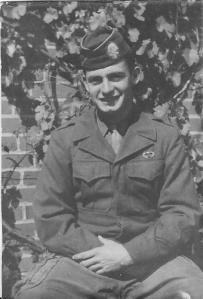
Ray Stone was there. But his thoughts were on the wife he’d  left behind and the friends he was losing.Ray Stone 44 low res

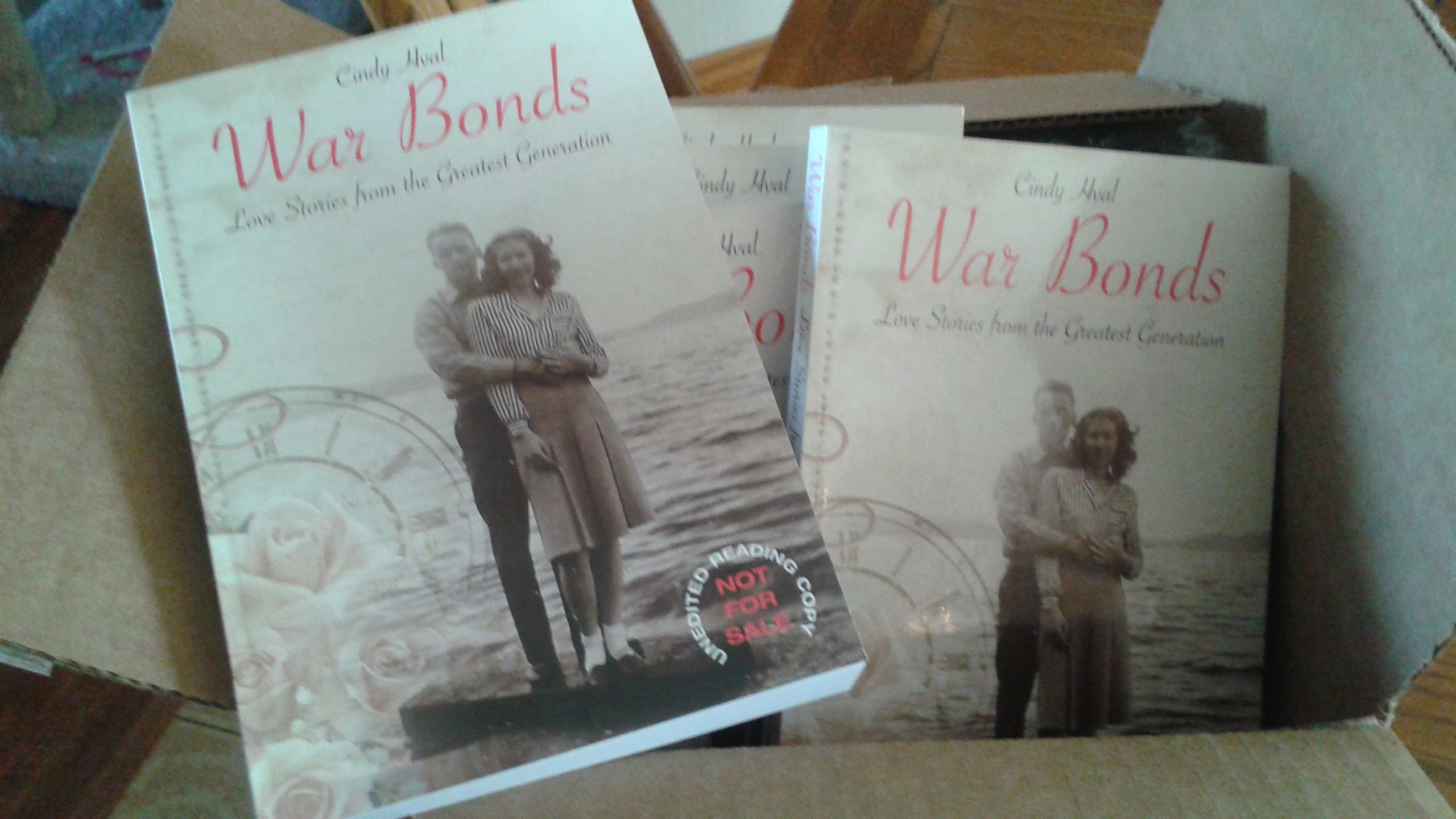
Here’s an excerpt from Chapter 34 of War Bonds, “Fireworks.”

In a V-Mail sent from Belgium during The Battle of the Bulge, Ray wrote: “I think about you always Betty. The feeling and the love I have for you have grown into something much deeper than small talk & sayings.”

The vagaries of fate haunted him. “I’m feeling plenty lucky,” he wrote, “because some of my former friends weren’t so lucky.”

Ray Stone died June 17, 2013


War Bonds

“She’s the other half of me.”

I would have loved to have included the Tucker’s story in War Bonds but I just met them last week. Stories like theirs are so worth telling.

Colin Mulvany, Spokesman Review photo

During the 1940s and ’50s many lasting love stories began in a roller rink. That’s just what happened to Harold “Tom” Tucker and his bride, Shirley.

“I was a sailor stationed at Farragut,” Tom said. “I got liberty and came into Spokane to roller skate.”

It was spring 1944 and he and other sailors on leave often took a bus to Cook’s Roller Rink (now Pattison’s). Shirley, 17, was a senior at North Central High School. When she skated past, Tom noticed.

“I saw her and I though, WOW! I gotta meet that lady!” he said.

They skated together, but Shirley wasn’t swept off her feet. She shrugged. “He was alright.”

Tom laughed. “She just liked sailors,” he teased.

“Oh stop that!” his wife retorted.

A few weeks later he showed up at Cook’s again and quickly sought her out. This time he asked for her address and phone number. They skated every couples skate together and held hands. “Oh boy! That was fun!” Shirley said.

Her parents weren’t thrilled about her dating a sailor, but they figured the youthful romance would quickly blow over.

It didn’t.

After skating, Tom would walk her home from the bus stop. They’d often pause and sit on a wooden fence that surrounded a sand pit. “That’s where I kissed her for the first time,” said Tom. “The wind came up and blew my hat off. Down it went, into the sand pit. She’s a powerful kisser to blow my hat right off!”

In August, Tom asked her father for Shirley’s hand in marriage. “I was madly in love by then,” she said.

Her father’s response? “Absolutely not! You are both too young.”

Shirley was heartbroken, knowing Tom would soon be sent overseas.

“I cried and cried,” she said. But when Tom shipped out for the South Pacific, she still didn’t have a ring on her finger.

A flurry of letters ensued and when Tom got a 10-day leave he bought her a ring and mailed it to her.

“My folks didn’t say anything that time,” Shirley said. “They could see it was serious.”

Also serious was the trauma that Tom was about to endure. The 19-year-old hospital corpsman was stationed aboard the USS LaGrange and anchored at Buckner Bay near Okinawa.

One night, 13 Japanese twin-engine bombers attacked.

“They hit every ship around us, but didn’t hit us,” said Tom. “We were young. We stood on the fantail and cheered the anti-aircraft fire. We hollered every time they shot down a plane.”

Then on Aug. 13, 1945, two days before the war ended, the LaGrange was attacked by two kamikaze pilots. One plane struck the ship and damaged it before crashing into the water. The other, carrying a bomb, plunged through the ship and the bomb detonated.

“I was in the dental office trying to write a letter to Shirley,” Tom said. “I couldn’t think of anything to say, so I went to the mess hall to watch a movie. Five minutes later, the bomb went right through the dental office. The next morning I found my belongings floating in the water.”

In the following hours, Tom did his best to care for the wounded and dying.

“There was fire on the deck – so many men were badly burned. One guy asked for water. I gave him a sip and held his head while he drank. The back of his head came off in my hand. He died 30 minutes later,” said Tom.

“People really don’t know what these guys went through at 18 and 19,” Shirley said.

The LaGrange suffered the war’s last casualties about a U.S. ship.

The event so shook Tom that he wrote Shirley a letter saying, “Forget about the wedding. We’re not getting married.”

Stunned, Shirley wept bitterly. Her father cautioned her to wait before replying, and she did.

Not long after, another letter arrived apologizing for the earlier missive and asking her to make wedding plans.

On Nov. 11, 1945, while on a 30-day leave, Tom and Shirley were married at Pilgrim Lutheran in Spokane. When his leave was up, Tom returned to duty and the couple spent the first six months of married life apart.

After his discharge in spring 1946, they lived for a time in Spokane before Tom said, “I want to go home.”

Home was Illinois. Initially, Tom had a hard time adjusting to the Pacific Northwest. “I thought I was in prison,” he said. “I couldn’t see because of the big trees and mountains!”

But after a few months in Illinois, he turned to Shirley and said, “Honey, I want to go home.” This time home meant Spokane.

In 1950, Tom joined the Spokane Police Department and was assigned to the motorcycle unit. Shirley gave birth to three children; Douglas in 1947, Ronald in 1949 and Pattie in 1951. She worked for many years at a neighborhood pharmacy.

After 25 years on the force, Tom retired and then took a job as an investigator for the state Department of Revenue. He was also very active in the Masonic Lodge, and in his 60s became an ordained minister, serving for a time as interim pastor of the United Church of Christ in north Spokane.

For 69 years, Tuckers have supported and encouraged each other. “We talk about everything and make all our decisions together,” said Shirley. “He has always been there for me – always.”

Tom looked across the room at the girl he first saw at the roller rink so many years ago and said, “She’s the other half of me.”

Cindy Hval, Spokesman Review, December 11, 2014

War Bonds

Pearl Harbor memories burn brightly for this couple

Warren and Betty, low res, 1941

Warren and Betty Schott pictured here in Honolulu, in 1941, had an apartment just up from Battleship Row. Here’s an excerpt from Chapter 11 of War Bonds, describing their eyewitness account of that terrible morning:
The couple was used to noise, but the sounds that woke them on Dec. 7, 1941, were unlike anything they’d heard before. Betty pulled on her robe and looked out the bathroom window.
“Warren!” she called, “there’s smoke and fire at the end of the runway.”
At first he didn’t believe her. But at his wife’s insistence, he went to another window and spotted a plane flying low overhead. “I saw the red balls on the wings of the plane,” he said. “I watched that plane torpedo the USS Utah. I said, ‘Betty, we’re at war!’”
They hustled out of their quarters and stopped to pick up a young mother and her two kids who lived downstairs. “It was total chaos,” said Warren of the surprise attack. “We didn’t know what to do.” The horrific noise of bombs, planes and machine gun fire added to the overwhelming terror.
Warren gathered everyone in the neighbor’s car and took off for the administration building. “Barbara and I were in our nightgowns and robes, and shrapnel was falling from the sky,” Betty said.
“The road was shredded by machine-gun fire,” Warren said, as he recalled their frightening journey. Steering the vehicle away from the strafing fire of a Japanese warplane, he found shelter in a supply building. There Betty, her friend and the children, waited out the first wave of the attack. “They put us to work immediately, Betty said. “We unloaded guns and filled fire extinguishers.”
20141207_140304-1Today, Betty dropped a lei at the new Pearl Harbor Survivors Memorial in Spokane, Washington. Warren passed away in March. They’d been married 76 years when he died.
War Bonds

Hard To Keep Up With the Greatest Generation

Charlie Mitson, hat, low resWent to return some photos to Charlie and Mable Mitson this week. Their story is told in chapter 31 of War Bonds.
Charlie, pictured here in France, 1945, served as a paratrooper during WWII. After the war he entered the newly formed Air Force and became a pilot. He flew combat missions during the Korean and Vietnam War.
When I arrived Mable gave me a hug. I asked where her husband was. She said,”Oh, he’s installing a hot water heater at our grandson’s house.”
Charlie is 90.
There’s a reason we call these folks the Greatest Generation.


War Bonds

Meet an Eyewitness to the Beginning and the End of WWll

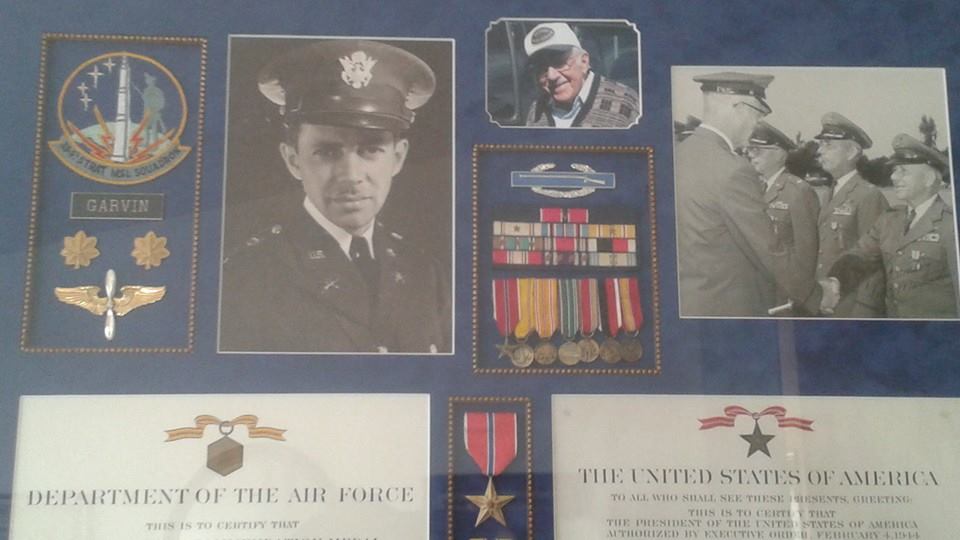
Bud GarvinI had the incredible honor of interviewing Bud Garvin, 99, this week. Bud was eyewitness to the beginning of WWll at Pearl Harbor and was liberating a concentration camp in Germany when the war ended in Europe. BudOmaha Beach– The Battle of the Bulge– Bud was there. Though he’ll celebrate his 100th birthday next month, his recollection of his time of service is still sharp. He is a gracious, funny and generous man and I count myself beyond blessed to have spent time with him.
War Bonds

More wit from the Greatest Generation

This weekend I called the wife of a 99 year-old Pearl Harbor survivor to schedule an interview. She repeated the details back to me and I said, “You’ve got it.”
She laughed and replied, “Honey, I lost it so long ago, I don’t even remember having it!”

When I’m an old woman, I don’t care if I wear purple with a red hat, I just want to be as fun and witty as these folks are. How wonderful to retain the ability to see the humor in life, even when other vision fails.

War Bonds

Thankful for those who serve

This Thanksgiving I’m so very thankful for the 35 World War ll veterans and their wives who shared their stories with me in “War Bonds.”
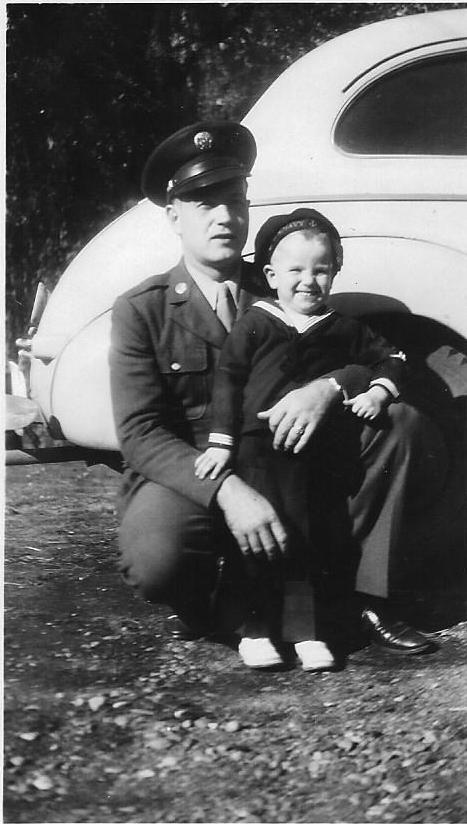
Folks like Melvin Hayes, pictured here with his son, Butch while home on a brief leave.
Hayes on leave with son Butch, 1945, low res
Melvin was 27 when he was drafted and had to leave his wife and son behind. Holidays are an especially difficult time to be separated from loved ones.
Tomorrow, as you gather ’round your tables, perhaps one of the things you might be thankful for are the men and women who served or continue to serve, their country so selflessly.
I know I am.


War Bonds

Amazing Women Served in World War ll

Vi, 1943Violet Shipman Roskelly

Women like Violet Shipman Roskelly donned uniforms and served their countries with grit and determination.

This British war bride met her husband when they were both serving their respective countries. She wasn’t too impressed with American GI’s. “They were a bit too friendly for me,” she said.

That changed when she met Fenton Roskelley while on a walk in Cornwall. You’ll read their story in Chapter 3 of War Bonds, “The Luck of the Draw.”

For years after our initial interview my phone would ring and this lovely British voice would say, “Cindy? Darling, it’s Vi. How ARE you dearest?”


Vi died July 27, 2012.


War Bonds

Dying Vet Rallies

001 The most amazing thing happened yesterday. I’m still processing it. This summer I wrote about my visit to WWII Vet Nick Gaynos. Nick was on his deathbed. Here’s the column I wrote about that visit.

Yesterday, I went to return his photos. His caretaker met me at the door. “Come in,” she said, smiling. Her eyes sparkled. “Nick’s at the kitchen table reading the newspaper. He’ll be so happy to see you!”

Stunned, I just looked at her. “But. He was dying!” I said. Shaking her head she said, “I know! But not anymore. He’s 96 and the only medication he takes is vitamin supplements!”

I walked into the kitchen and there sat Nick, now with a scruffy beard. “Hello, there,” he said. Tears filled my eyes. I said, “Oh, Nick, I came to see in July, but I don’t think you knew I was here. I just held your hand for a bit.”

His eyes clouded. “Tex died, you know.” (His wife had died on June 3rd.) “Yes, I know. I’m so sorry.” He sighed. “She was an amazing woman.” I spread out the photos that will be used in War Bonds.

He lingered over Tex’s picture. “Oh, I knew I was in trouble when I saw her.” I pointed to a photo of him with two other soldiers. “Ah,” he said. “California. Those two had come down from Washington to inspect my operations.”

Laughing, I said, “It sure looks like you were in charge.” He replied, “Well. That’s the way I always looked.”

We visited a bit and I promised to return to bring him his copy of War Bonds. “I’m looking forward to it,” he said.

So am I, Nick. So am I.