All Write, Columns

No more goodbyes for the Gleesings

This time, he had to wait for her—14 long years.

Her wait for him in 1945 may have been shorter, but it was terrifying.

When I interviewed Jerry and Nancy Gleesing in March 2010, they were looking forward to celebrating their 66th anniversary in June.

They’d met in LaMoure, North Dakota, in 1940. Four years later, the high school sweethearts married.

They used Jerry’s two-week leave from the Army Air Force for their honeymoon. When he received orders to deploy to Italy as a flight officer with the 15th Air Force, 459th Bomb Group, Nancy was expecting their first child.

On Jan. 15, 1945, his B-24 was shot down, and he and his crew bailed out over Hungary. It was only his second mission.

 During the interview, Jerry laughed as he described his predicament.

“We never learned how to bail out, just how to fly the plane!”

But he grew somber when recalling how locals armed with pickaxes and shovels quickly surrounded him and his crew.

“I thought they were going to kill us,” he said.

Instead, the captives were handed over to the Germans and taken to a prisoner of war camp in Moosburg, Germany.

Meanwhile, back in North Dakota, Nancy worried.

“The letters stopped on Jan. 5,” she said.

For 10 days, there was no word. Then, a telegram arrived, reporting Jerry as missing in action.

As he was being processed at the POW camp, a guard pointed to his wedding ring and motioned for him to remove it. And that’s where Jerry drew the line.

“You get to the point where the initial fear is gone,” he said. “Whatever happens, happens. I didn’t give up my wedding ring. I said, ‘I vowed to never take it off. I’m not taking it off.’”

The guard let him keep it.

In February 1945, Nancy gave birth to a daughter she wasn’t sure her husband would get to meet. But in April, after 3 ½ months as a prisoner of war, the camp at Moosburg was liberated.

“We saw the tanks come over the hill,” Jerry recalled. “Everyone was whooping and hollering. Then the American flag was raised, and it was dead silent.” His voice broke. “It was like coming home.”

And come home he did, just in time to celebrate their first wedding anniversary. He and Nancy raised seven children together.

Their story ran in the newspaper on March 25, 2010. A month later, Jerry died suddenly.

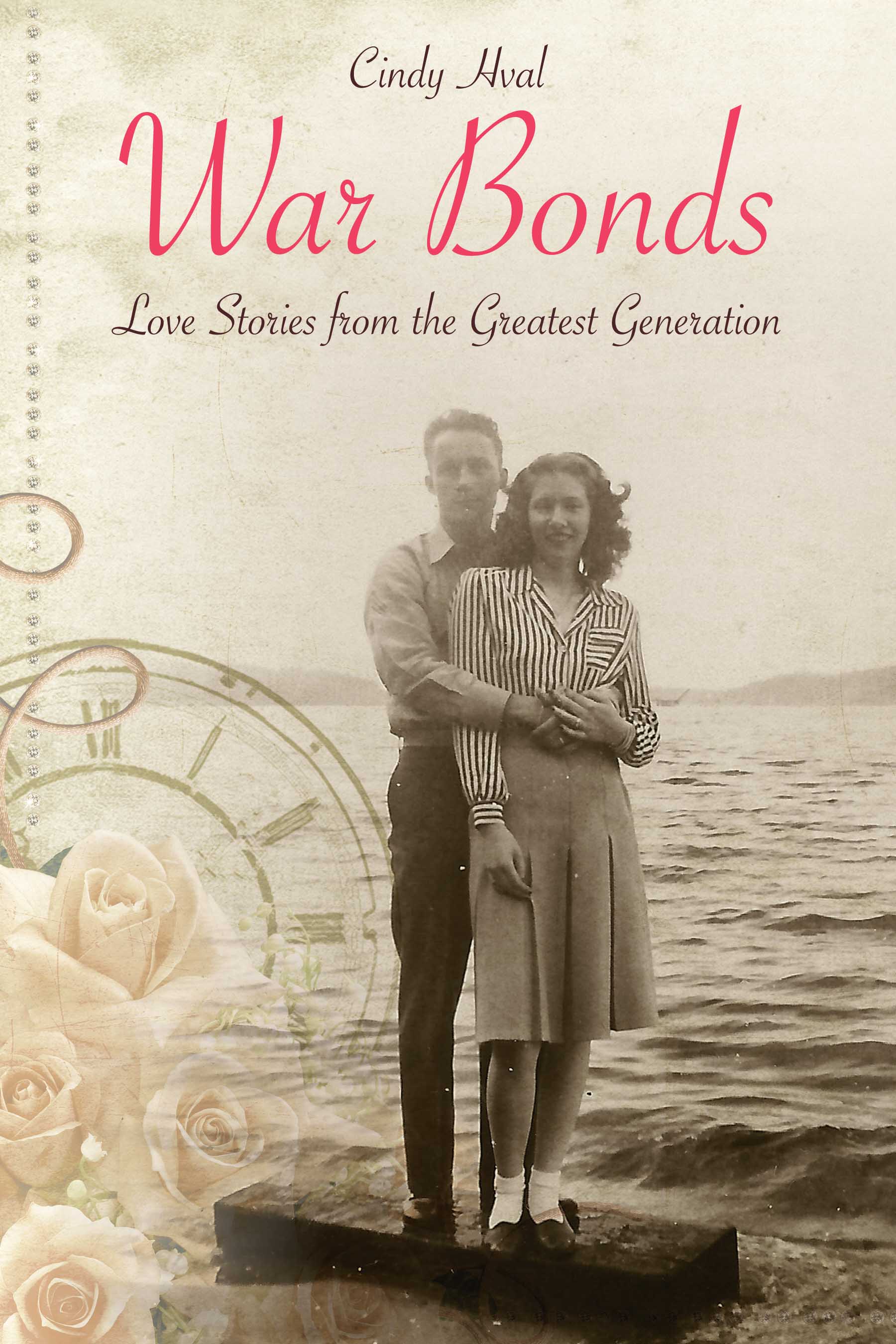
They didn’t get to celebrate their 66th anniversary, but their story stayed with me. In fact, it became chapter one of “War Bonds: Love Stories from the Greatest Generation.”

Since its 2015 publication, I’ve done approximately 100 reading, signing and speaking events and I’ve shared the Gleesings’ story at most of them.

No matter how many times I’ve told it, I can’t get through a reading without tearing up when I share Jerry’s reaction to seeing the American flag raised in that POW camp.

Their chapter ends with him looking at the wedding band he’d refused to remove.

 “It’s still there,” he said. “I’ve never taken it off.”

On Dec. 1, 2024, Nancy died at the age of 100, and his long wait ended.

Something tells me this reunion was even better than the one they had in 1945.

Following Jerry’s death, Nancy had worn his wedding ring on a chain around her neck. I like to think that when Jerry reached out to welcome her, she took his hand and slipped that thin gold band back where it belonged.
All Write, Columns

The Final Reunion

Military spouses are experts at saying goodbye. Separation is a fact of life, and no one knew this better than the men and women featured in my book “War Bonds: Love Stories from the Greatest Generation.”

During World War II, these couples’ farewells were fraught with fear. There would be no emails. No texts. No FaceTime with the family. Letters and scant phone calls or occasional telegrams had to suffice.

But, oh, the reunions! Most of the 36 couples profiled in “War Bonds,” vividly remembered and described the moment they saw their spouses when they finally came home.

In the past six weeks, three of those brides experienced their final reunions with their husbands. This time they won’t have to say goodbye again.

Melba Jeanne Barton died Nov. 30. She and Don were married 67 years before he died in 2013. That eight-year separation marks the longest time they’d spent apart.

She’d met Don at a Grange dance two months after he’d returned from flying B-29s in the Pacific theater. He’d endured a horrific loss when the plane he piloted was hit in battle, and his young navigator was killed. Decades after the experience his eyes still filled with tears when he spoke of it.

“He was a nice kid – a real nice kid,” he’d said.

You might think Melba Jeanne would be immediately smitten by the dashing pilot. After all, he shared her Christian faith, and he was a great dancer. But Don was a farmer, and Melba Jeanne swore she’d never marry a farmer.

“Feeding chickens and milking cows – none of that stuff appealed to me,” she said.

But Don’s patient persistence and promises that she’d never have to do farm chores won her hand and her heart.

They raised three daughters on their family farm. And Melba Jeanne discovered the best benefit to being a farmer’s wife.

“On the farm, your husband is never far away. We’ve always done everything together,” she’d said.

Bonnie Shaw died on Dec. 5. She met her husband, Harvey at Central Valley High School when he was home on leave and visiting his siblings.

Despite his uniform, Harvey was just a boy himself. “I got stupid and quit school right in the middle of my sophomore year,” he recalled. “I just didn’t think. A few months later, I was in the Navy.”

He said goodbye to his family and set sail on the USS Kwajalein, but Bonnie didn’t forget about him. He returned home in 1946, and when Bonnie and her boyfriend broke up, Harvey wasted no time.

“When we finally got together, we just really fell in love,” she recalled.

And just like sailing the Pacific, their courtship wasn’t without bumps. Bonnie was a devout Catholic and Harvey was not. Unbeknownst to her, he began taking instruction at St. John Vianney, and they wed there in August 1950.

They spent 64 years together. Harvey died in 2014, not long before “War Bonds” was published.

When I’d called Bonnie shortly before his death she said. “He’s not doing very well, but he asks me to read him your column, and every time I do, he smiles.”

We both cried a bit then.

Bonnie gave Harvey nightly back rubs and the last words they whispered before falling asleep were “I love you.”

“Harvey is my heart,” she said.

Bonnie and Harvey Shaw, 2014

Lastly, Betty Ratzman died Dec. 26.

To know Betty was to love her. A prolific writer and avid letter-writer, Betty’s fierce intelligence and sharp wit delighted all who knew her. I treasure the letters I received from her.

Bett Ratzman with Cindy Hval at a taping of “Spokane Talks,” 2016.

In fact, she won her husband’s heart through the mail.

They’d met on a blind date in 1943, and when Dean Ratzman shipped out with the Navy, she told him not to get his hopes up.

He ignored her warning and treasured both her photo and the letters she wrote to him while he was at sea.

“You can find so much more about someone in letters,” he’d said.

They married in 1946 and spent 73 years together until Dean died in 2019.

Fit and active, the couple attended many “War Bonds” events, gladly meeting folks who marveled at their lasting love.

The last time I spoke with Betty shortly after Dean’s death, she wanted to know all about my sons and my cats. Then her quavery voice broke a bit.

“Oh, I miss Dean. I miss him so much,” she said.

Betty Ratzman, Cindy Hval, Dean Ratzman at a “War Bonds” event, 2015.

I miss Betty, and Bonnie and Melba Jeanne.

The “War Bonds” brides are at the heart of what made our country great. They endured separations and rationing. They tackled nontraditional jobs and learned new skills, to keep our country going during the war. They gave their husbands something to fight for and a reason to come home.

While I celebrate each couple’s heavenly reunion, I can’t help but think our world is diminished by their absence. I know my little corner of it is.