Blog

Columns

All alone, but not lonely at all

I heard them before I saw them. A small group of kids on the playground, laughing, shouting, jostling as they let off steam in the afternoon chill.

As I walked past the schoolyard, a solitary figure on the swings caught my eye. The boy scuffed at the gravel with his shoes and the swing barely moved.

Slowing my stride, I took in the scene and I wondered at the social dynamics at work. Was the boy on the lower rungs of the grade school popularity ladder? Had he been deemed to have “cooties” by the others? Or was he just grabbing a quiet spot – overwhelmed by the sheer volume a small amount of kids can make during a brief recess?

When I was his age, I could relate to both scenarios.

Because we moved frequently due to my dad’s career, I was always the new kid. The daunting task of finding a spot at the lunch table and navigating new social networks and established hierarchies meant loneliness was a constant companion until we settled in Spokane when I was a teen. I didn’t even have the built-in companionship of siblings because my brothers and sister were much older, and all out of the house by the time I was 12.

That upbringing created a resiliency that has served me well in adulthood. I learned how to adapt, how to forge new connections and how to turn strangers into friends. I also learned self-sufficiency and how to be content with my own company.

There’s a profound difference between being alone and being lonely. Alone is a state of being, while loneliness describes a pain, a sadness, a feeling that something is missing.

I learned to love being alone and have developed a profound need for solitude. That’s something that’s proven hard to come by when married to an extrovert and raising four sons.

As my writing career grew, solitude became even more imperative. I’ve become adept at creating it, whether by renting an office or borrowing a friend’s house.

The writing I do from my friends’ home while they travel south for the winter is different than the writing I do at my desk in the family room at home.

I hammer out columns and news stories at home while family members come and go, the landline rings, the doorbell peals, the cats clamor to be fed. But in my friend’s empty, silent house, books are born, short stories submitted and my craving for solitude is satiated.

My weekly walks are another way of creating quiet for my mind and soul. I was contemplating this when two days later; I again encountered the solitary child.

It was the same time, same place and same scene. A group of kids shouting, laughing and tossing a basketball back and forth. The boy alone on a swing.

And I wondered if instead of listless and lonely, he was enjoying a moment of respite from the noise and crush of elementary school. As he toed at the gravel, perhaps the slight movement of the swing soothed him and allowed him time to think – to dream. Maybe this child, like me, wasn’t lonesome, he was simply alone and relishing it.

This time I paused at the fence and lifted my hand to wave. Just in case he did feel isolated and invisible, I wanted him to know I’d seen him. I’d noticed his existence.

I waited mid-wave until he looked up and saw me. He slowly lifted his hand in acknowledgment, a small smile tilting at the corners of his mouth.

Then I continued my walk while he sat in the gently swaying swing. Two solitary souls – alone, but maybe not lonely.

Contact Cindy Hval at dchval@juno.com. She is the author of “War Bonds: Love Stories From the Greatest Generation.” You can listen to her podcast “Life, Love and Raising Sons” at SpokaneTalksOnline.com. Her previous columns are available online at http://www.spokesman.com/staff/cindy-hval/ Follow her on Twitter at @CindyHval.


War Bonds

The Bomber Pilot’s Secret

Conaways low res

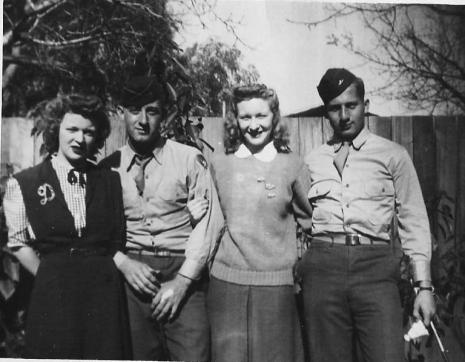
Constance (Connie) and Wilson (Bill) Conaway on right

The first time I interviewed Bill and Connie Conaway, Bill didn’t talk much about serving overseas as a B-17 pilot during WWll, but his eyes lit up when he talked about the planes.

He recalled every aircraft he flew and who trained him on it.

But on a subsequent interview he told stories of harrowing missions over Germany, of how he nearly froze when a piece of shrapnel pierced his flight suit as he soared miles above the ground.

And then he told the story that has haunted him for 70 years.

His radio operator, Lynn, a good friend, was killed on a mission.

“The night before we left, we all had dinner together, and his wife and little baby came– that was the last time she saw him.”

He sighed, shaking his head.

“The airplane floor was covered with his blood,” he said, rubbing his eyes with the back of his hand. “I tried to get in touch with his wife for many, many years. I wanted to tell Lynn’s daughter about her dad.”

He was never able to find her when he returned to the States.

Bill Conaway died January 11.

His widow, Connie who served in the WAVES called to tell me the news. He died just days before their 71st anniversary.

She’s never forgotten how fortunate they’ve been. Many B-17 pilots never returned.  She said, “I’ve told him many times, ‘I’m lucky to have you, honey.'”

And I’m lucky that I was able to include their story in War Bonds: Love Stories from the Greatest Generation. 

But mostly I’m grateful that this gruff pilot, turned school teacher, turned artist, trusted me with his secret.

During an interview he leaned forward in his chair, glanced at Connie and said, “I’ll tell you a secret; I love her more today than I ever have.”

CONAWAY LOVE

Columns

A toast to the expandable house

The Great Toaster Debate revealed the reality of our shrinking household.

When our sturdy four-slicer with extra-large slots for bagels began burning bread on a regular basis, we knew it was time to replace it.

“Buy a two-slicer,” Derek said. “I’ve cut back on carbs, and we’ve only got one kid at home.”

Shocked, I sputtered, “But what if Sam and I both want toast for breakfast and you decide to indulge!?”

He raised an eyebrow.

“When is the last time you actually ate breakfast?”

I started to reply, but he held up a hand.

“In the morning.”

I would’ve asked him to define “morning,” but I knew where that would lead, so I moved on to more pressing concerns.

“What if all the boys come home for Christmas and they all want a bagel at the same time?”

At this, he did his patented eye roll-snort combo, and I knew I’d lost the debate. I also knew I was suffering a bout of Empty Nest Denial Syndrome.

The affliction began last spring when Zachary, our third born, prepared to move to Nashville. He’d been scrimping and saving for the move since he’d earned his associate degree. He didn’t want to continue his education in a university setting. He wanted a real-life immersion music education in the Music City.

I managed to put his departure out of my mind. Then one day he packed up his room, with the exception of his G.I. Joe toys, which still stand sentry around his closet molding and window trim.

That night I found myself on the kitchen floor surrounded by pots, pans, mixing bowls and Tupperware.

Now, I haven’t actually purchased any Tupperware for over 25 years, yet every time a kid moves out, I seem to have plenty to spare. Tupperware is the rabbit brood of household items.

This is the third time I’ve raided the linen cupboard, setting aside towels and washcloths, each item liberally sprinkled with tears, as I help feather a fledgling’s new nest.

This letting go thing doesn’t get any easier.

But in April, Zach loaded his Ford Explorer with all his worldly goods and drove across the country to his new home.

I studiously avoided his empty room. The cats claimed Zach’s bed and windowsill, but I didn’t enter the room until last month when he came home for Christmas.

Then I finally cleaned and dusted it, moved in a chair and a lamp, put fresh bedding on his bed (which made the cats happy) and gladly welcomed his return.

It felt wonderful to have two sons under my roof again. Many nights I fell asleep to the sound of brotherly laughter echoing from downstairs.

“I’ve missed this,” I said to Derek one night as we listened to the raucous noise two Hval boys can make.

Zach plans to return to Spokane in April, having given Nashville a year of his life. He’s not sure what’s next, but his room is waiting for him.

“You know he won’t be staying here long,” Derek cautioned. “Don’t get too used to it. Once guys have a taste of independent living, they’re rarely happy in Mom’s basement for long.”

Which is how the Great Empty Room Debate began.

Actually we have two empty rooms, because after Alex moved to Texas, Derek planned to make a home office for me. That was five years ago. Currently, that room houses all the things that had to be evacuated when Derek built a walk-in closet in our bedroom. The closet isn’t finished, and work on the office hasn’t begun.

“I could use Zach’s room for my home office,” Derek mused, as we settled into bed.

Office space is a sore spot, so I brought up a more pressing point. Our first grandchild is due in March, and I really want Alex to bring his family home for Christmas next year.

“Where will our kids and grandkids sleep when they come to visit?” I asked. “We need a guest room.”

Derek agreed and we began talking about futons and sleeper sofas.

“We should probably buy bunk beds, too,” Derek said.

My heart leapt. A house with bunk beds again!

I fell asleep smiling.

Like a beating heart, a home contracts when kids leave, but it also expands to welcome new arrivals.

And I just may buy a four-slice toaster after all.

Contact Cindy Hval at dchval@juno.com. She is the author of “War Bonds: Love Stories From the Greatest Generation.” You can listen to her podcast “Life, Love and Raising Sons” at SpokaneTalksOnline.com. Her previous columns are available online at www.spokesman.com/staff/cindy-hval/. Follow her on Twitter at @CindyHval.

War Bonds

Good Cooking Fueled 70 Years of Wedded Bliss

26196120_1649405191764768_4694252748791861013_n[2]

Logging in the Olympic Peninsula is hard, hungry work, and hearty meals provide essential tree-felling fuel. If those meals are cooked by a pretty girl, well, that added inspiration can give a young man something to dream about while he works.

At least that was James Hollandsworth’s experience. He’d taken a job felling trees in 1945 and quickly noticed the camp cook.

He recalled thinking, “There’s a gal that when she gets old enough, I might see if I could entice her to marry me, ’cuz I know she can cook.”

Melba Hollandsworth was just 16 at the time. Born in a log cabin, near Osburn, Idaho, she quit school in the sixth grade, plagued by health issues caused by the nearby smelter.

As the oldest of seven from a large extended family, in addition to cooking at the logging camp, Melba traveled from relative to relative, helping out when a new baby was born or when someone was ill.

James’ family knew hers, and he’d see her occasionally at church in Spokane Valley when she was visiting.

“I probably had eyes for him, too,” she admitted.

It would have been hard to miss him, since he and his brother played guitar and sang special numbers at the church.

“When I found out she’d turned 18, I decided to ask her out,” James said.

He called on her at her Aunt Cora’s home and took her for a drive. However, her aunt was concerned that he wasn’t moving quickly enough.

“Aunt Cora knew I thought a lot of Melba,” recalled James. “She told me, you’d better get serious if you want Melba because she’s going to leave the area.”

Indeed, she moved to Kalispell to help another family member, so James drove to Montana to see her.

“She wasn’t expecting me,” he said, smiling. “You don’t want ’em to know you’re coming.”

Melba liked him well enough to ask him to buy her a guitar.

She laughed.

“I got the guitar, but I had to learn to play it.”

On another visit, James said, “Let’s go look at rings.”

Melba agreed to marry him, but with one stipulation.

“I didn’t want kids right away,” she said. “I wanted time to get more acquainted – we didn’t really have a courtship.”

On Dec. 20, 1947, the two married at a relative’s home in north Spokane. There was a lot of snow that winter and family members from Kalispell had a hard time getting off Tea Kettle Mountain to go to the wedding.

“So, they got a logging truck and put a wooden shack on the back of it and made a makeshift camper,” James said, chuckling.

There was no time for a honeymoon as James was due back at work at MorrisonKnudsen Monday morning, but their first breakfast as husband and wife has never been forgotten.

James took his bride out for hamburgers at a diner in Spokane Valley.

“That was a new wrinkle for me,” Melba said, shaking her head. “I’m used to breakfast. I didn’t know what to order because I wasn’t used to restaurants.”

James grinned.

“She was upset, but we lived through it.”

Soon, they bought their first home on East 12th Avenue in the Perry District. The house cost $5,000, and James earned $1 per hour.

Their home came fully furnished.

“I bought it from a widower who was going to live with his son and said all he wanted to take with him was a suitcase,” James said. “He sold me all the furnishings for $500.”

Melba was thrilled.

“It had everything,” she said. “All we needed were groceries.”

They lived there until they bought their present Spokane Valley home in 1955.

Work kept James busy, and Melba was ready to start a family. She’d wanted to wait to have children but had no way of knowing they’d have to wait 11 long years.

“It was baffling to wait so long,” she said. “We saw doctors, had tests. So many people had babies, but I didn’t.”

Finally, in December 1958, their daughter, Cindy, arrived. The proud parents took her everywhere from bowling leagues to backpacking trips.

James loved nothing more than discovering new lakes and places to fish.

“I took a map and laid out all the lakes north of Sandpoint to the Canadian border,” he said. “I wanted to see the country. Each week we went to a different lake. Lots of times there were no roads or trails, so we just bushwhacked.”

And often his wife and daughter went along.

“I wasn’t a very good hiker, but I liked camping,” Melba said.

She enjoyed fishing and marveled at James’ skill.

“He had a feeling about fish – a special touch,” she said.

The irony was he wouldn’t eat fish – couldn’t even stand the smell of fish on his fingers.

He shrugged.

“I got poisoned by canned salmon when I was a kid.”

James worked for MorrisonKnudsen for 20 years and for N.A. Degerstrom for 25, before retiring in 1989.

The first thing they did was buy a motor home and hit the road, crossing the country from Mexico to Alaska. For many years, they traveled thousands of miles, stopping to hike, fish or visit friends and relatives.

Their adventures were curtailed when James, then 85, suffered a heart attack at the bottom of the Grand Canyon. He’d been on the trip with a friend and felt some discomfort but still drove home.

“Melba called the doctor, and the next day I had five bypasses,” he said.

They recently celebrated their 70th anniversary, and Melba, 88, offered this bit of advice to couples: “Learn to go with the flow,” she said. “Learn about each others’ interests.”

For example, when she couldn’t do the hikes James wanted to do, she encouraged his love of photography.

“I enjoyed his pictures when he came back.”

James, 93, said, “She never puts up much of a fuss. She’s got a lot of patience.”

His advice to future husbands?

Grinning at Melba, he said, “Check and see if she cooks.”

26231627_1649405268431427_1621373818153809780_n[1]

War Bonds

This Young Love Didn’t Grow Old

25591901_1630383190333635_5262889521772883972_n[1].jpg

When a California girl with pierced ears met a black sheep boy in tiny Reardan, Washington, sparks flew. Sixty-eight years later, the fire still burns for Betty and Larry Plummer.

“She was a loner and so was I,” recalled Larry.

Though he said he missed more days of school than he attended, he did manage to escort Betty to the junior-senior prom.

“He was panting at the door to take me,” Betty said. “I was one of the first freshmen to go.”

Larry didn’t have enough credits to graduate, and found work in a nearby sawmill. He was sure of just one thing – he wanted to marry Betty.

“I only had one girlfriend. I couldn’t afford any others,” he joked.

At 17 and 18, they knew finding someone to marry them would be difficult, so they decided to elope to Reno.

They made it to Winnemucca, Nevada, where they stopped for gas.

“A guy at the service station told us to wake up the town clerk, so we did,” Larry said. “He gave us a marriage license for $2, and went with us to the justice of the peace. I gave him a $5 tip. The whole trip cost us about $42.”

He only earned $1 an hour at the sawmill.

The clerk asked them how old they were. Several times. That’s when Larry realized they were still too young to marry in Nevada. So they lied about their ages, and on Sept. 4, 1949, they tied the knot.

For their 60th anniversary, their children sent them on a surprise trip to Reno – with a stop in Winnemucca, of course.

In 1949, when the teens returned home, Betty’s mother told her, “Well, you made your bed, you lay in it.”

Their first home had no running water and was small enough to fit in their present Spokane Valley living room.

Larry was in the Naval Reserves, and they’d been married just over a year when he was called up. It was November 1950, and Betty traveled to San Diego to see him before he was sent overseas.

“I stayed at the Harvard Hotel,” she recalled. “I couldn’t afford to eat at the hotel, so I turned the electric iron upside down in a drawer and made soup on it.”

After her husband left for Korea, she returned home and stayed with her mom.

Following his discharge in September 1952, the couple moved to Spokane, where Larry worked at St. Luke’s Hospital as a house attendant in the psych ward.

One evening, as he made his rounds, he saw a box near the nurse’s dorm. He bent over, opened it and discovered a baby inside.

The newspapers dubbed her “Baby X.”

“You should have brought her home,” said Betty, as Larry told the story.

“I thought about it,” he admitted. “But we had our first baby on the way.”

Baby X was adopted by a local family, and many years later, she found the Plummers, and visited their home to thank Larry for rescuing her.

They welcomed their own baby girl, Rhonda, in 1955, followed by Rebecca in 1957. Daughter Ruth completed the family in 1958, and also got her father in the newspaper, again.

By this time, Larry was working the graveyard shift at Eastern State Hospital. Betty called to tell him the baby was on the way. He rushed home, but didn’t make it in time to get her to the hospital.

“Her water broke, and I delivered the baby on the front lawn,” he said.

It wasn’t the first time he’d been present at a birth.

“One time I got on the elevator with a pregnant woman at St. Luke’s,” he recalled. “There were two of us when I got on – three of us when I got off.”

Larry worked several jobs while attending Eastern Washington University. The boy, who didn’t get a high school diploma, earned an accounting degree from the university.

“It took me six years to finish,” he said.

After graduating, he worked for the IRS for seven years, managed a medical clinic for eight, and then worked for Spokane Public Schools for 17 years.

Meanwhile, in addition to raising their three daughters, for many years Betty was a foster mom to newborns.

“I kept them until they got adopted,” she said. “One baby stayed for three months. Then they came and got him at Christmas. That’s when we stopped.”

When she mentioned that she’d like to go to beauty school, Larry came home and told her he’d enrolled her.

Betty did hair for awhile, but then took a job in housekeeping at Providence Sacred Heart, where she worked for 18 years, before retiring as a supervisor in 1998.

It wasn’t all work in the Plummer household. Larry bought a 1957 school bus and retrofitted it as a camper – complete with kitchen and bath. They loaded up the girls and took off for Montana, Colorado and even Disneyland.

“Buying that bus was the best thing I ever did,” he said.

As they talked about their life together, Betty frequently stopped to kiss Larry’s head, or rub his shoulder. She recalled how over the years, he’d walk in the door after working a graveyard shift and ask, “Baby, what can I do for you?”

When she worked at Providence Sacred Heart, he’d stop at downtown store to buy her a gardenia – her favorite flower.

And he kept busy, even after retiring from the school district. For 15 years he worked at the Coeur d’Alene Casino as a ticket seller, finally retiring at 83.

He smiled at Betty.

“The last 68 years have been the happiest,” he said.

She nodded; puzzled that so many marriages don’t last as long.

“Nobody works at it,” she said. “Something goes wrong and people look for someone else.”

She shrugged.

“We just assumed we’d be here together and here we are,” said Betty, 85. “He’s the best man that ever was. I think we’d do it again.”

Larry, 86, agreed, with one caveat.

“I might not have waited so long,” he said.

25550522_1630383277000293_2225425647765710929_n[1]

Columns

In which I WIN the resolution thing. Kind of.

The thing about New Year’s resolutions is they are so boring. Everyone tends to have the same ones – lose weight, exercise more, work less, play more.

More exotic resolutions tend to leave me scratching my head – learn another language, make a new friend, take a dance class.

Listen, I have enough problems wrestling with the English language every week. I don’t see the friends I do have often enough, and I’m not about to start dancing at 52. My plié is played out, the only tapping I do is my fingers on my desk while waiting for a file to download, and I’d much rather eat salsa than dance it.

I haven’t always been so jaded about resolutions. Indeed, in my teens I’d regularly fill a journal with my goals for the New Year.

You might have noticed that I didn’t marry Andy Gibb.

Or join the Bay City Rollers on tour.

Or entertain Johnny Carson on “The Tonight Show” with my witty banter and collection of amusing anecdotes that I dutifully jotted in the aforementioned journals.

Resolutions just never worked out for me. Either they were too lofty or too banal. Even the more creative ways to inspire change or achievement proved unsuccessful.

For example, for several years my high school youth group leader had us write letters to ourselves on New Year’s Eve. We’d then receive these missives in the mail the week after Christmas the following year.

None of those letters remain, but I do vividly remember one that began, “Dear Cindy, Please ALWAYS remember you are AWESOME, no matter what that jerk Donny says.”

Actually, I feel much better just reading that sentence. Perhaps, I’ll tape that above my desk.

Recalling resolutions made me wonder just how this tradition began, so I did a little research. (OK, I Googled it, but research sounds better.)

Apparently, the ancient Babylonians started the ball rolling some 4,000 years ago. During a massive 12-day festival they crowned a new king or reaffirmed their loyalty to the reigning king. They also made promises to the gods to pay their debts and return any objects they had borrowed.

Alas, we can’t hold a presidential election every Jan. 1, though one does wonder why the Founding Fathers didn’t consider this concept. However, it is a good idea to start the year by paying off your library overdue fines, and by returning your mother-in-law’s serving spoon that you’ve had since Thanksgiving 2007. Not that I’d know anything about that.

I told my husband I’d gotten a good start on some manageable goals and wanted to add more.

“Maybe I should get a new hairstyle for the New Year,” I mused.

Derek was dismayed.

“Oh no!” he said. “I love your hair. It’s all Farrah Fawcett-y!”

Obviously, “new hair” is staying on the resolution list.

Scanning an online list of popular resolutions, I considered adding “quit smoking” to mine. Of course, I’d actually have to start smoking and then quit, which seems like way too much work just to chalk something up in the successful resolution column.

I found a list of unusual resolutions that intrigued until I got to “make the usual unusual.” What does that even mean? I usually brush my teeth every morning – should I skip it? I usually look both ways before I cross the street, should I throw caution to the wind?

Also perplexing was the suggestion to “fall in love with life in 2018.” I mean, I like life just fine. You might even say I’m committed to it, but how on earth does one measure the success of falling in love with it?

Speaking of success, further reading revealed just 16 percent of people over 50 achieve their resolutions each year, while 37 percent of people in their twenties do.

It seems resolutions are a younger person’s game.

For me I’m going to stick with the basics. Today, I resolved to get out of bed, get dressed and get this column done.

Hey, two out of three isn’t bad.

Contact Cindy Hval at dchval@juno.com. She is the author of “War Bonds: Love Stories From the Greatest Generation.” You can listen to her podcast “Life, Love and Raising Sons” at SpokaneTalksOnline.com. Her previous columns are available online at spokesman.com/ columnists. Follow her on Twitter at @CindyHval.

War Bonds

The Face that Graced the Book Cover

She never thought her face would be on a book cover.

That a snapshot taken on her honeymoon would become the face of War Bonds: Love Stories From the Greatest Generation. After all, the marriage and the honeymoon might never have happened if Mary Grayhek hadn’t said to heck with vanity, tied a scarf over her hair set in pin curls, and agreed to a blind date.

But at the insistence of her friend, in 1946, Mary agreed to a double date with a handsome Marine. The date with Roy Grayhek changed her life.  Six weeks later, they wed in the Naval Chapel in Bremerton, WA.

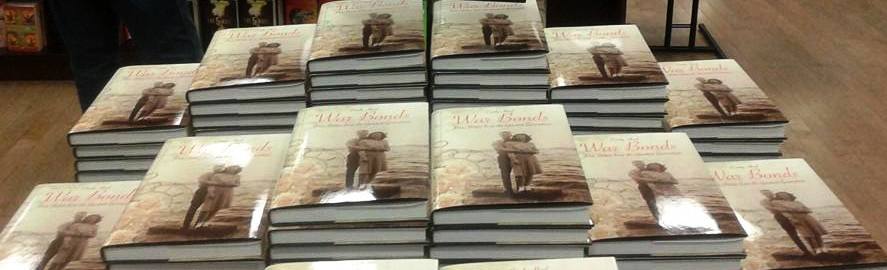
The photo snapped of Roy and Mary standing on a piece of driftwood in the Puget Sound, became the cover of book filled with stories of people who married during, or shortly after World War Two.


War Bonds

The Grayheks enjoyed 68 years of wedded bliss before Roy’s death in 2014.
Sadly, he passed away before the book’s release. But Mary was able to enjoy  seeing their faces on the cover. Even more importantly, she got to see the book in the hands of her great-granddaughter Grace, and her soldier husband, Ryan, shortly before he was deployed.

17343003_10212372518894610_2039309731450254785_n[1]

Mary Grayhek died December 20, surrounded by her family.Grayhek wedding low res

I’m quite confident that Roy was the first one to greet her, and that he hasn’t taken his arm from around her shoulders. And that they picked up their story right where they left off– with happily ever after.


Columns, War Bonds

I Wish You Light

Bitter cold crept through our coats and scarves as my husband and I waited in a line that stretched the length of the building, but the glittering glow in the Gaiser Conservatory at Manito Park beckoned.

Each year Spokane Parks employees turn the greenhouse into a winter wonderland, decorating tropical and subtropical plants with 30,000 twinkling lights.

Once inside, a blast of warm humid air quickly dissipated the winter chill. Cactuses clad in Christmas lights, a shining snowman waving from his sparkling foliage perch, and a Christmas tree made from scarlet poinsettias, dazzled our eyes. We soaked in the sights, absorbing the radiance before heading out into the pitch-black evening.

Making our way down the South Hill, we stopped at Cowley Park just below Providence Sacred Heart Children’s Hospital. That’s where the team from Spokane Winter Glow Spectacular set up a shimmering display complete with an enchanted forest, a gingerbread house and of course, the North Pole.

Children laughed and shouted around us as we walked through the park, their faces illuminated by a multicolored luster.

We returned home to our own festive outdoor display. Derek and our teenage son had worked hard to arrange the deer, candy canes, angel and trees in our yard.

This year more than ever, I crave the glow of Christmas lights. They are a beautiful way to defy the ever encroaching darkness.

December 21 marks Winter Solstice in Spokane. It’s the shortest day of the year in the Northern Hemisphere. Some refer to it as the longest night. It’s also the darkest day as the North Pole is tilted farthest from the sun.

It’s fascinating that this year Hanukkah – the Jewish Festival of Lights – is also observed just when the nights are the longest and darkest.

Hanukkah commemorates the rededication of the Temple in Jerusalem after a group of Jewish warriors defeated the occupying Greek armies. The festival celebrates the triumph of light over darkness.

For eight days, Jewish families lit a candle in a menorah, remembering the ancient miracle of a small vial of oil found by the Maccabees meant to last only a day, but instead lasted for eight.

I think many of us long for a celebration of light in the depths of December. Darkness isn’t always simply a physical absence of light.

A scripture passage our pastor read recently resonates.

“The people walking in darkness have seen a great light; on those living in the land of deep darkness a light has dawned.” Isaiah 9:2.

As I write, the sun sets, though it’s barely 4 p.m. I slip away from my desk to turn on our outdoor display. In the living room, I plug in the Christmas tree’s twinkling lights, and then make my way from candle to candle, switching on 13 tiny, flickering battery-operated votives in their translucent holiday globes. Lastly, I strike a match and breathe in the fragrance of a cinnamon-scented candle.

Tonight my husband and sons won’t need to follow a star to find a miracle. Instead, they’ll return to a home that’s filled with warmth and welcome. Sometimes that’s miraculous enough.

Soon every day will be just a little bit brighter, the sun will rise a tad earlier.

And that’s my holiday wish for you. May your darkness always be dispelled by light.

“The light shines in the darkness, and the darkness has not overcome it.” John 1:5.

Contact Cindy Hval at dchval@juno.com. She is the author of “War Bonds: Love Stories From the Greatest Generation.” You can listen to her podcast “Life, Love and Raising Sons” at SpokaneTalksOnline.com. Her previous columns are available online at spokesman.com/ columnists. Follow her on Twitter at @CindyHval.24909782_1617427588295862_1306281224400973122_n[1]

Columns, War Bonds

Their Stories are Now a Part of Mine

As I sat down at my desk to write this week’s column, an email notification popped up on my screen. I opened it to read of Audrey Bixby’s upcoming funeral.

I’d interviewed Audrey and her husband, Dick, several years ago for my Love Story series, and included their story in my book “War Bonds: Love Stories from the Greatest Generation.”

The timing of the email stunned me. I’d already planned to write about the loss of so many of the people featured in “War Bonds.”

Seventy-two. That’s how many individuals made the final cut of the book.

Twenty-four. That’s how many people died before “War Bonds” made it into print.

Twenty. That’s how many goodbyes I’ve had to say since its 2015 publication.

A colleague shrugged when I bemoaned yet another loss.

“What did you expect when all your subjects are World War ll veterans over 80?” he’d asked.

He has a point.

It’s not that I expected them to live forever; it’s just that I’ve been unprepared for how much each loss affects me.

In the past few months, in addition to Audrey, I’ve said farewell to Jack Rogers, Dick Eastburg, Barbara Anderson and Myrt Powers.

It seems fitting to honor them today on the 76th anniversary of the attack on Pearl Harbor.

Jack Rogers wasn’t at Pearl Harbor, but he enlisted in the Army in 1943, when he was just 19. He had a hard time believing we were at war against Japan.

“I grew up with a bunch of Japanese kids,” he said in “War Bonds.”

Before being shipped out to the Pacific, he traveled to California to see a Japanese friend from high school, only to find his friend and his family had been confined in an internment camp.

I met Jack many years ago when he taught art at Northwest Christian School. He taught all four of my kids, and each one remembers him well.

Eleven years ago, I wrote an article about his art career. Since then, I revisited him in print many times. A story about his 71-year marriage to Fran, a feature about how following a debilitating stroke, he still continued to give back – painting tailgates on Personal Energy Transporters through Inland Northwest PET Project.

And I wrote about one of his final art shows at Spokane Art Supply. That’s where I saw him last. He and Fran sat side by side, as friends, fans and former students perused his paintings, buying a piece of Jack to take home and remember him by.

My own piece of Rogers’ art watches over me as I write. It’s a whimsical print of a terrier that Fran sent as a thank you note, following the funeral.

Next to it is a photo of Louis Anderson and his flight crew taken in 1944, just before they shipped out to Europe.

The last time I saw Louis and Barbara at their retirement center apartment, she insisted I take home a memento – a water glass from Air Force One. She was so proud of her late grandson who served as President Obama’s pilot.

She also kept me grounded in real life. Every time I left their place she’d say, “Do you need to use the restroom? Are you sure?”

Audrey Bixby was strictly down-to-earth as well. When I interviewed her and Dick, he kept me in stitches with jokes and sly puns. While we laughed, Audrey feigned exasperation and then told her own funny stories.

When Dick enumerated her wonderful qualities, he said, “She’s an awfully nice person and she laughs at my jokes!”

Dick died five years ago. I like to think that now they’re laughing together again.

Dale Eastburg passed away last month. He and his wife, Eva, had been married 75 years. When last I spoke to them, they were still going to the gym every week!

They’d been married just a short time before he was sent to China as part of the famed Flying Tigers. The thought of saying goodbye to his bride proved unbearable to Dale, so he didn’t. He slipped out of their apartment while she slept.

I hope this time Dale was able to say goodbye.

And today, I think of darling Myrt Powers. I never thought I’d describe a Marine as darling, but that exactly describes this tiny dynamo.

Though already employed as a teacher, she enlisted in the Marines following the attack on Pearl Harbor, because so many of her students told her they were worried about their fathers who were going off to war.

“I wanted to take care of my students’ dads,” she explained in “War Bonds.”

She met Walt Powers, a sailor stationed at Marine Corps Air Station Santa Barbara. They were married 71 years at the time of her death.

I last saw Myrt two years ago, in Hawaii, of all places.

It was 8:15 in the morning at the Hale Koa Hotel, an Armed Forces Recreation Center resort on Waikiki. My husband and I were preparing to make our first pilgrimage to Pearl Harbor, and stopped for coffee before the tour bus picked us up.

Myrt was grabbing a cup while waiting for Walt to finish his regular swim at the hotel pool.

“Hello, honey,” she said, reaching up to embrace me.

It was the best hug I’ve ever received from a Marine, and sadly it was the last one from Myrt.

Today, while the world remembers the more than 2,000 lives lost at Pearl Harbor, I remember five souls who endured the trauma of a world war. The lives they led in its aftermath, the families they raised, the marriages they cherished, bear witness to the resiliency of the human spirit.

While I’m sad at their passing, I’m so very glad that their stories are now a part of mine.

Contact Cindy Hval at dchval@juno.com. She is the author of “War Bonds: Love Stories From the Greatest Generation.” You can listen to her podcast “Life, Love and Raising Sons” at SpokaneTalksOnline.com. Her previous columns are available online at spokesman.com/ columnists. Follow her on Twitter at @CindyHval

War Bonds

Slinging Books and Shopping Small

DPbZt9KUEAAzyRJ[1]

Take a group of authors. Give them name badges. Turn them loose in a bookstore. That’s the recipe for Indies First held each year on Small Business Saturday.

The event brings together authors, readers, and publishers in support of independent bookstores. Authors and local celebrities volunteer at events across the country, and publishers offer special terms on books and exclusives.

I had a blast as usual at Auntie’s Bookstore. Chatting with readers, helping them find great gift ideas and catching up with these great authors is always fun.

DPgw34rUEAAG8Et[1]

Sam Ligon, Kate Lebo, Cindy Hval, Jack Nisbet

DPgimptVQAEfuSZ[1]

Stephanie Oakes, Cindy Hval, Sharma Shields

One Spokesman Review reader said she came in just to see Jack Nisbet and me, but she walked out with Shop Small shopping bag filled with books. That’s the danger and delight of hanging out in a bookstore!
Another reader stopped by to make sure I was alright. My Thanksgiving column about sometimes finding it hard to be grateful, prompted her concern.

At the end of my shift I rewarded myself with a copy of the delightful anthology Pie & Whiskey: Writers under the Influence of Butter & Booze. My husband and I are reading it aloud every night before bed. It’s a hoot. Honestly, Sam Ligon’s whiskey cocktail recipes are my favorite part. Some drink recipes call for things like a soul, a pistol, a Bible and a sword, but you can still make the drinks without them.

Indies First offers a great way to get customers into independent bookstores, but it’s even more important to support local businesses and Shop Small all year long.

After all, Santa does!

23843069_1602183639820257_6274803145774913316_n[1]