Columns

You smell! Making sense of scents.

My hairdresser greeted me at the door of her shop.

“You smell good!” she said.

“Thanks,” I replied. “I showered.”

If there’s anything this pandemic has taught me, it’s to be thankful for small blessings like showering and leaving your house. And since one of the symptoms of COVID-19 is loss of sense of smell, I’m adding enjoying fragrant aromas to my gratitude list.

“Seriously,” my hairdresser said. “You smell so good. What is it?”

“Tangerine-raspberry body wash, I guess,” I said, shrugging.

When I ran out of that body wash, I continued the fruity theme. Now, I smell like blueberries. I showered with blueberry-scented body wash, then slathered blueberry lotion on my winter-worn skin, and had a bowl of blueberries for breakfast. I’m starting to worry I’ll turn blue like Violet in “Charlie and the Chocolate Factory.”

Which got me thinking: Who decided that we should smell like something we had for breakfast?

On the weekends my husband makes me bacon and eggs. I’m sure he and the cats would like it if I smelled like bacon all day, but I’ll pass on the pork-scented soap.

Scented soaps, lotions and candles are bestselling gifts this time of year, but the evolution of fragrance puzzles me.

Perhaps our ancient forebears used their sense of smell to identify food that was safe to eat. Ripened apples, plums and berries smell good, week-old rotting saber-tooth, not so much. But if raw meat smells so good, why aren’t we adding that to our lotions?

If indeed fragrance appeal is based on our ancestors that probably explain men’s bath products. The store where I buy my scented soaps features a men’s line with one-word names. Forest and Ocean, I understand. But Steel and Marble? They also sell Bourbon Body Wash, but I’m afraid my husband might not use it as instructed.

Smell, like taste, is highly subjective. While some folks swoon at a bite of caviar or oyster, others gag, and since the freshness of both is supposed smell like an ocean breeze, what does that mean for our beach breeze-scented candles? I’m quite certain no one wants to walk into an oyster-scented living room, but maybe I’m wrong.

I just don’t get how the fragrance business works. For example, the cheery red candle that flickers in my entryway is called “After Sledding.” As someone who has unwrapped and unlayered four sons, post-sledding, I can assure you, that scent is more sweat than cinnamon.

Likewise, the blue candle in our bedroom is supposed to smell like “Cabana Bay Linen.” I can’t argue with that. I’ve never been to a place called Cabana Bay, nor smelled its linen.

Speaking of fabric, why do many detergents advertise that they smell like mountain air? I may not be a climber, but I have ridden lifts to the tip tops of large mountains, and the air didn’t smell that much different than it did at lower elevations. Of course, I was in tram with teenage boys doused in AXE body spray, so my nostrils may have been compromised.

Apparently, laundry detergent smells so good you can make your whole house smell like it with Gain-scented room spray. Imagine the olfactory confusion that would occur if you washed your clothes in Tide, dried them with Downy Amber Blossom dryer sheets, and spritzed Gain spray around the house?

And I’m all for seasonal themes, but I draw the line when my favorite “smell good” store wants me to smell like a pumpkin spice latte. I will gladly drink one, and enjoy a fresh slice of homemade apple pie with it, but I don’t want to bathe in those fragrances.

I guess the purists among us gravitate to all things unscented, but honestly, who wants their clothes to smell like fabric, their bodies to smell like humans, or their homes to smell like the people who live in them?

Not me.

In fact, I’m going to go hang out in my bathroom for a while.

Currently, it smells like Aloha Hawaii air freshener, which is about as close as I’m going to get to the tropics this year.
All Write, Columns

Pearl Harbor Survivor’s Footlocker Found

Oh, the stories it could tell.

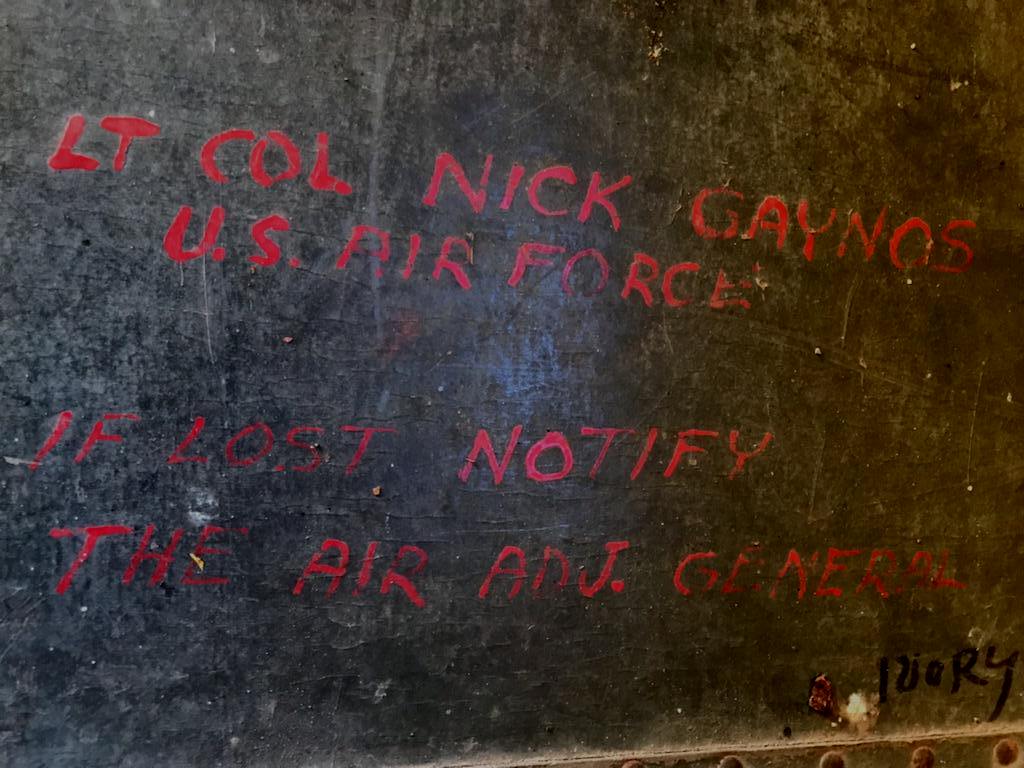
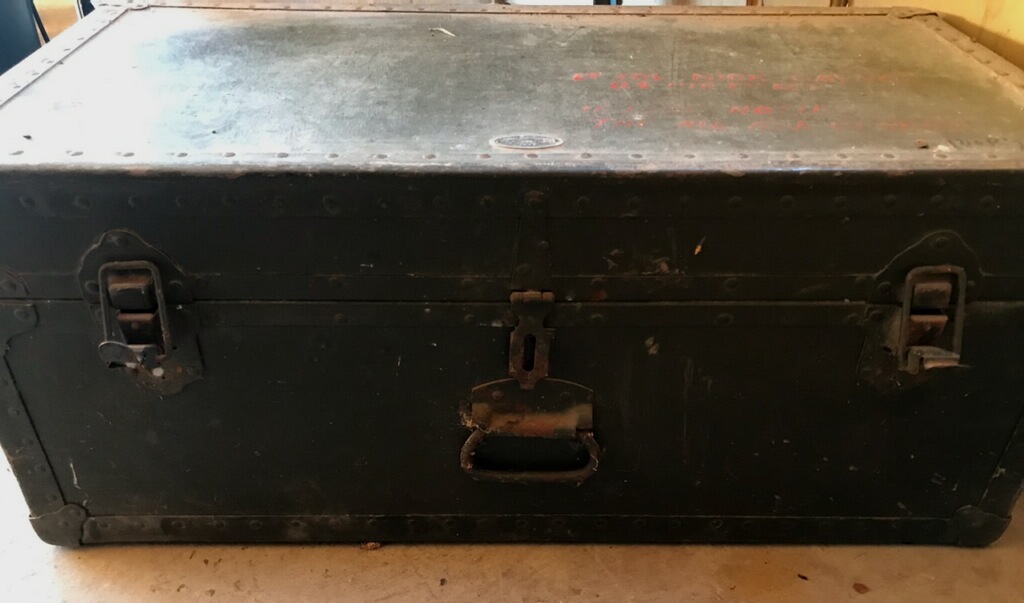
The battered standard-issue World War II footlocker was covered in dust, but a flash of bright red paint caught Rhonda Earley’s eye. She brushed off the grime and read, “Lt. Col. Nick Gaynos, U.S. Air Force. If lost notify the Air Anj. General.”

A few weeks ago, Earley had been helping a friend clean out her deceased parents’ home and garage in Santa Rosa, California. They’d unearthed the battered footlocker in the garage. It was empty, but the word “ivory” had been scrawled in a corner.

“My friend had no idea where the chest had come from,” Earley said. “I took photos to help her sell some of the stuff.”

And there was a lot of stuff, but the footlocker nagged at Earley.

“I decided to do some research to see what I could find out,” she said.

It was Nov. 11, Veteran’s Day.

Soon a message from Earley appeared in my inbox from my website contact form.

“I have a chest that I believe may belong to Lt. Nick Gaynos whom you wrote about in your book. I’d love to find a family member.”

Then my phone pinged with a Facebook message.

“This is a far reach, but I have a chest that may belong to Nick Gaynos who you wrote about.”

Earley’s Google search had led her to my book, “War Bonds: Love Stories from the Greatest Generation,” as well as to newspaper articles I’d written about Gaynos.

“I got chills,” she said. “It was Veteran’s Day, and it just touched my heart. I knew there was a story behind this.”

It’s a story we may never fully know. I was able to connect Earley and her friend with Gaynos’ daughter, Nikki Arana.

She confirmed the footlocker had definitely belonged to Gaynos, who’d lived in Northern California for many years, before retiring to Post Falls to be near Nikki and her children. But Arana had no idea how, or why, the footlocker had been left behind.

“I’d never seen it before,” she said. “I can’t imagine what series of events led to this.”

Arana passed on reclaiming the footlocker, and said like many WWII veterans, her father refused to discuss his battlefield memories for most of his life.

By the time I first interviewed him in 2010, he was ready to talk about what happened to him on Dec. 7, 1941.

“I’d been up until 4 a.m. at my radio station,” Gaynos had told me.

As a young private, he was in charge of air-ground communications at Hickam Air Field.

He was asleep in his bunk when the earsplitting scream of airplane engines and the rat-a-tat sound of bullets strafing the barracks woke him. Grabbing his pants and his helmet, he scrambled out the door.

As he ran down the beach toward his duty station, a Japanese Zero spattered the sand around him. Gaynos hit the ground and covered his head. He said he felt a hot breeze and heard a whistling sound inches from his ears. He looked up and saw the face of the pilot as he flew alongside him. The pilot grinned.

When Gaynos got up he discovered a large piece of shrapnel next to him. “I grabbed it,” he said. “It was still hot from the explosion.”

Nick Gaynos, 1945

One month before his death, Gaynos attended a reading of “War Bonds,” at the Coeur d’Alene Public library.

He brought that shrapnel with him.

But there was so much he didn’t say, like what it was like to gather the mutilated body of a dying friend in his arms. Perhaps there aren’t any words for something like that.

After Pearl Harbor, Gaynos attended Officer Candidate School. He made the military his career, quickly rising through the ranks, before retiring as a colonel.

As per his wishes, in 2015, Gaynos was buried with full military honors at Arlington National Cemetery, alongside his beautiful bride, Tex.

“I’m going to be buried with my buddies,” he told his daughter.

It’s likely that footlocker had traveled the world with him from Japan, to Newfoundland, and points in between.

How it ended up in a dusty garage in Santa Rosa is a mystery.

If only footlockers could talk.

Columns

Goodnight garden, goodnight gazebo…

Like a child resisting bedtime, I balked when my husband mentioned getting our yard and garden ready for winter.

He brought the furniture covers out of the shed. I ignored them.

He took down the deck umbrellas, and rolled up the sun shade in the Great Gazebo.

I edged my chair out from under the gazebo’s shelter and stretched my legs in the waning autumn sun.

As Derek cut back the zucchini, bean and tomato plants last month, he said, “You might want to finish picking the carrots before we leave for Ohio. You never know, it could snow while we’re gone.”

I scoffed, but I needed carrots for the stew I was making, so I went ahead and harvested the rest, pausing to reach over the fence to give some to our neighbor.

Then I plucked the last few tender leaves of basil and a lone green pepper and added them to the pot.

The following week when Derek cut back the ornamental grasses, I grudgingly hauled my flower pots from the front porch, and brought out our fall welcome mat and Happy Harvest outdoor signs.

But I was not happy, not one bit, as the days grew shorter, the air cooler, the sunshine scarcer.

Fall used to be my favorite season. Never a fan of hot weather, I eagerly welcomed blustery, gray days. The fact that September signaled the start of school for my four boys might have had something to do with my avid enjoyment of autumn’s arrival.

Yet, lately I’ve noticed each year I begrudge the battening down of home and yard a bit more. I delay packing away my gardening basket, gloves and shears. When the rain comes, I scoot the gazebo furniture toward the center of the shelter, and cover my plump pillows with a blanket.

I know fighting fall’s arrival is foolish, so on a crisp, sunny October day I gathered garden and gazebo décor, packing them away for the season.

My favorite sign went into the bin last.

“This is my happy place,” it reads. And this year more than ever our back yard provided a soul-satisfying refuge from a pandemic-plagued world.

October sunlight.

For us there were no concerts, no movies, no nights at the theater, or trips to the beach, but every week we enjoyed evening Happy Hours in the Great Gazebo, and delicious family meals on the Delightful Deck.

With galleries and museums closed, we enjoyed nature’s art via window boxes and pots filled with petunias, daisies and geraniums. Derek scattered wildflower seeds around the back fence and erected trellises, coaxing clematis plants upward.

As we prepared for our trip to Ohio, I begged him to leave the deck window boxes up until our return.

“It will be so nice to come home to a spot of cheery color,” I said.

Of course, it snowed while we were gone and we came home to frozen flowers.

This week, as we entered a new round of stay-home orders, I’m missing my outdoor sanctuary even more. On Sunday as my social media accounts filled with photos of pandemic-panic buying shoppers snaking in long lines outside grocery stores, I struggled to maintain an attitude of gratitude.

After a chilly walk through the neighborhood, I stood on our deck as wind-whipped leaves skittered, scattered and caught in my hair. Gazing at our fence line, I suddenly remembered how Derek had planted dozens and dozens of tulip bulbs along its length before the first hard freeze. I pictured those bulbs patiently resting beneath the frost, the rain, the snow, ready to burst into riotous color in the spring.

All living things need rest; soil, seeds and certainly people.

And so with a nod to Margaret Wise Brown:

Goodnight Glorious Garden once verdant and green.

Goodnight Great Gazebo and summer’s sweet scene.

Goodnight Delightful Deck and al fresco dining,

Goodnight brilliant blossoms, I’ll try to stop whining.

Because beauty awaits us just out of sight.

And all will awaken beneath spring’s golden light.

Columns

Bleak bad times can reveal sparkling gems of goodness

I wish whoever keeps asking “what next?” about 2020 would stop it.

Last week the “what next” was thick, choking, hazardous smoke. Each morning, I checked the Spokane air quality before getting out of bed. As the smoke cleared ever so slowly, I’d grimly brush the dusting of ash from my car before heading out.

How bad was it? Well, I actually had to work out at the gym for the first time since it re-opened post-shutdown. Hazardous air is not conducive to long strolls through the neighborhood.

But Saturday morning I woke up to find my husband had opened our living room and kitchen windows. Rain and cooler temperatures cleared the sooty skies. I’ve never before been so giddy about being “moderate,” and cheered as the air quality neared “good.”

Standing on the deck I gulped in the fresh air with my morning coffee and wondered why it so often takes the bad to make us appreciate the good.

This year has certainly given us plenty of opportunities.

During the long weeks of shutdown when just about every place that makes life enjoyable was shuttered, we had to discover new ways to find joy.

Instead of the warm fellowship of Sunday morning church, we cuddled on the couch in our pajamas and streamed the service on Facebook.

In lieu of romantic dinners at upscale bistros, date night morphed into driving to our favorite spot together to pick up food to go.

Weekly meals with our adult sons became regular Sunday Suppers complete with dessert, as we drew our family closer during this worrisome time.

As things slowly opened up, the Sunday Supper tradition became a fixture, and I love having a designated day to spend with my sons.

We haven’t attended in-person church yet, because seating is limited, and we are well aware that for many older folks, Sunday service is as crucial to their emotional and mental health as it is to their spiritual life. We’ll join them when we can all attend.

Date night is on again, though we usually pick a spot that offers outdoor dining. We enjoy eating al fresco in the summer anyway, and it feels amazing to be eating at a venue, instead of taking home Styrofoam boxes.

Yes, sometimes it takes the bad to help us appreciate the good.

That thought sits with me today as we celebrate our youngest son’s 21st birthday. There’s nothing bad about Sam, but his entrance to the world proved incredibly frightening.

On a golden Sept. 24, our grand finale arrived weighing in at a whopping 9 pounds, 9 ounces. He had his father’s broad shoulders, and the trace of a dimple in his chin.

Having given birth to his three older brothers without complication, I assumed we’d be taking our new arrival home the next day. Instead, it was three long weeks.

Within hours of his birth we were told Sam had a congenital diaphragmatic hernia. A hole in his diaphragm hadn’t closed early in gestation. As a result, his internal organs pushed into his chest cavity, squashing his developing lungs. Our newborn was given a 50% chance of survival.

He was airlifted from Holy Family to Sacred Heart and placed in the Neonatal Intensive Care Unit. Twelve hours after his birth, I stood next to his bed. Tubes and wires protruded from the top of his head to the soles of his feet. The ominous whooshing of the ventilator and the beeping and whirring of machines filled the room. He was so fragile that the sound of voice raised above a whisper sent his blood pressure skyrocketing.

When he was 3 days old, he underwent surgery to repair the hole in his diaphragm. And then we watched and we waited, struggling to care for our sons at home, dealing with the unbearable ache of leaving Sam in the hospital night after night.

But at 21 days, he finally came home, healthy and whole in every way, with a pretty impressive scar on his midsection.

Twenty-one years later, he’s our last fledgling in the nest, and having already earned his undergraduate degree, this week he started the quest for his master’s.

He’s filled our home with so much joy; it’s hard to comprehend how close we came to losing him. Those horrible days when his life hung in the balance have made me forever grateful for his presence in our family, and maybe a bit more prone to appreciate the sparkling gems of goodness the bleakness of bad times can reveal.

Sam and Cindy Hval, 2019

Columns

Seeing Mom

If I’d known I wouldn’t see her again for six months, I’d have given her an extra hug.

When I left my mom’s assisted living apartment on Feb. 29, I assumed I’d see her when I returned from visiting my grandsons. COVID-19 proved that assumption wrong.

Phone calls took the place of weekly visits, and instead of loving celebrations on her birthday and Mother’s Day, we stood in the parking lot below her second-floor window and held up signs that her failing eyes could barely see.

Mom has Alzheimer’s, so phone calls are often challenging. She still knows all of us, but her memories of the distant past are much sharper than say, remembering what she had for lunch. Or remembering why no one has come to visit her.

“My mom used to send me to my room when I was bad. Have I been bad?” she asked.

So, I remind her of the pandemic and how her facility is trying to keep everyone healthy, and she says, “Oh, yes. I saw that on the news.”

The next time I called she said, “I tried to go to the dining room for lunch today, but I got caught at the elevator and sent back to my room. I finally made some friends here, and I’m worried they’ve all forgotten me.”

She doesn’t have much of an appetite, and eating all her meals alone in her room, hasn’t improved it. Recently, I was on the phone with her when her dinner was delivered, so I asked her to tell me what room service had provided. She obligingly took the lid off her plate.

“0h, for the love of Pete, not again! It’s macaroni and cheese with what looks like birthday sprinkles on it!”

I tried to convince her it was some kind of vegetable garnish, but she wouldn’t buy it.

“It’s birthday sprinkles,” she insisted.

Some days she’s in better spirits than others. One morning she told me she was up and dressed, had breakfast, made her bed and even curled her hair.

“Of course, I have two curlers in the front which I’ll probably forget to take out like I usually do,” she said. “Also, I’m all out of hard candy. I can’t figure out who keeps eating it all!”

I didn’t feel the need to remind her she hasn’t had any visitors since the first of March.

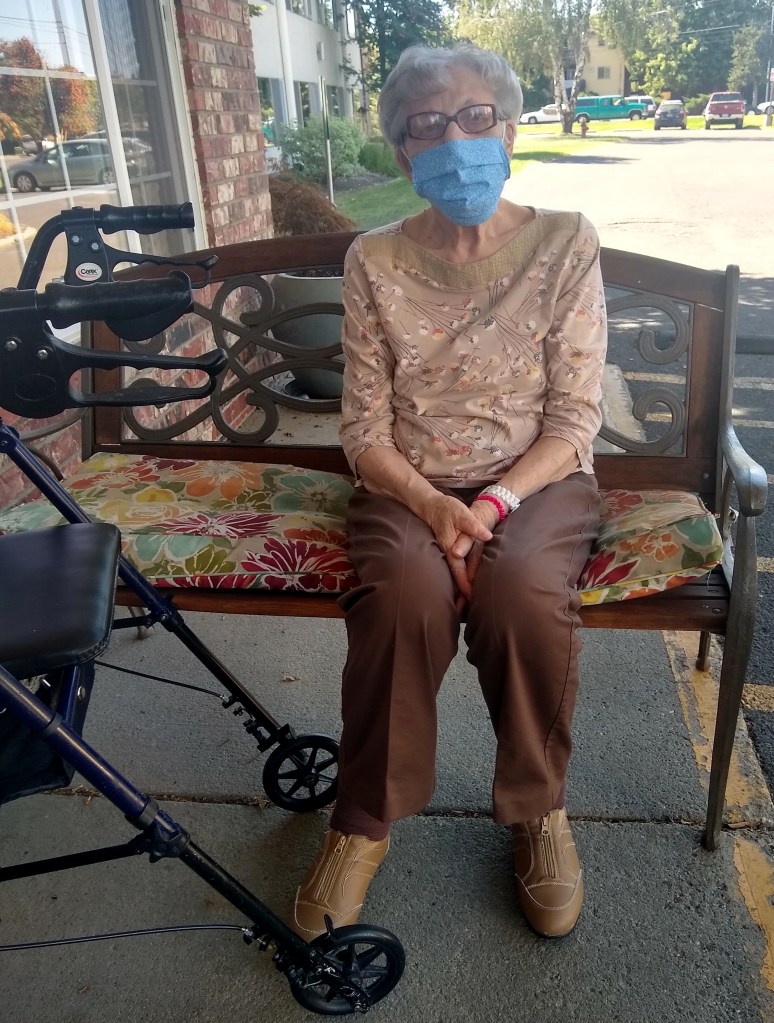
Finally, on Aug. 26, I got to have an outdoor socially distant visit with her. She scooted her walker out the facility’s front door, and even though her face mask was in place, I could tell she was smiling.

“Oh, I can’t tell you how beautiful you look to me,” she said.

So we got the crying out of the way first thing.

Mom, August 2020.

She reached out for a hug, and I had to back away.

“We can’t hug yet,” I told her.

What a thing to tell a mother, especially my mother.

Mom is a hugger and a kisser. She grew up longing for physical affection that she didn’t receive from her mother, so when she had children and grandchildren, she lavished them with all the affection she’d craved.

Still, I’m so thankful to be able to sit across from her and visit. Being out of her room and in the fresh summer air is so good for her, but hugs are healing, too.

Countless studies have shown the importance of physical touch. It reduces stress, boosts the immune system, and calms the heart rate and blood pressure.

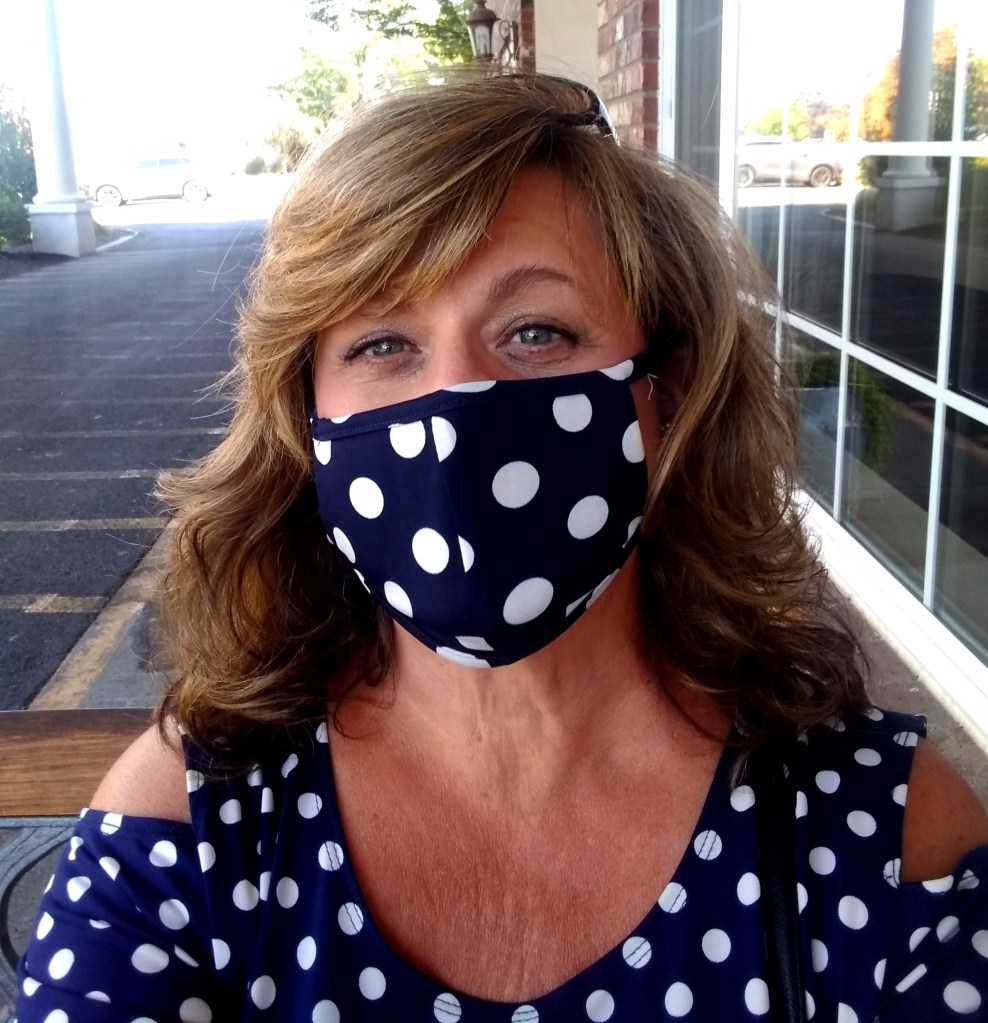
For now, I’m focused on making our outdoor visits as enjoyable as possible. Last week, I wore a mask that matched my navy and white polka dot blouse. I knew Mom would get a kick out of it. She was quite the fashion plate in her day.

When I snapped a photo of her, she insisted I take a selfie of my matching ensemble.

“I taught her that,” she told everyone who passed by.

Matchy, matchy made Mom happy!

In-person visits do both our hearts good. The results of social isolation and touch deprivation can be devastating, especially for elderly parents. And honestly? It’s not great for their kids, either.

This pandemic has taught me not to take anything for granted – the professional handshake at the outset of business meetings, the quick hugs from friends, a mother’s warm embrace. That’s why I’m doing everything I can to comply with mandated health protocols.

I really want to hug my mom again.

Columns

Finding truth in movies about boys

A little boy in World War II-ravaged Germany whose invisible friend is Adolph Hitler.

A young man with Down syndrome yearns to become a professional wrestler like his idol, the Salt Water Redneck.

And a boy’s battle with addiction baffles his doting father.

Recently, we watched three movies in one week. An unexpected COVID-19 gift is ample time to catch up on films we’d intended to see in the theater.

I had no idea that “Jojo Rabbit,” “The Peanut Butter Falcon” and “Beautiful Boy” would share a common theme. Each film features boys surviving the best way they can in an often cruel and unforgiving world.

When our youngest son raved about “Jojo Rabbit,” I was skeptical.

“It’s really funny,” Sam insisted.

I didn’t think Hitler as an invisible friend would offer much comedic gold. I was wrong.

The movie is equal parts hilarious and heart-rending, because no matter how many laughs you can mine from a wacky Adolph (“I gotta go, we’re having unicorn for dinner at my place tonight!”) the reality is Jojo and his mother are struggling to survive.

The 10-year-old is enamored with Nazi ideals, and pledges his life to the cause. Then he finds out his mother is hiding Elsa, a Jewish girl, in their attic. It’s a terrible secret to keep, but Jojo discovers as Elsa says, “We’re (Jews) like you, but human.”

He’s just a child, so when his mother tells him that love is more powerful than warped ideologies and is the strongest thing in the world, he replies, “I think you’ll find that metal is the strongest thing on Earth, followed by dynamite and then muscles.”

Slowly, Jojo’s belief in Nazism crumbles as the cause disintegrates in the rubble of bombed-out cities.

“The Peanut Butter Falcon” refers to the name the main character chooses to call himself as he makes his way to a North Carolina wrestling school run by his favorite professional wrestler, the Salt Water Redneck.

The actor Zack Gottsagen and the character (Zak) he plays have Down syndrome. Zak has been placed in a nursing home after the death of his mother, even though he says, “I am young. And I am not old.”

He makes his escape, determined to meet his wrestling hero, and encounters a grieving crab fisherman along the way, striking up an unlikely friendship.

“Maybe we could be friends and buddies … bro dogs … and chill. Have a good time!” Zak says.

When his caregiver from the retirement home catches up to him, she has some decisions to make about the nature of family, and what really makes life worth living.

Far more sobering (literally) “Beautiful Boy” traces the havoc addiction creates in family. Based on the memoirs “Beautiful Boy: A Father’s Journey Through His Son’s Addiction,” by David Sheff, and “Tweak: Growing Up on Methamphetamines,” by Nic Sheff, it’s a brutally honest look at how a kid who seemingly had everything loses it all to addiction.

“I need to find a way to fill this black hole in me,” Nic says.

His divorced parents send him to treatment program after treatment program, but sobriety is fleeting.

“There are moments that I look at him, this kid that I raised, who I thought I knew inside and out, and I wonder who he is,” says the grieving father, played by Steve Carell.

He holds on to the memory of the beautiful boy his broken son used to be.

“If you could take all the words in the language, it still wouldn’t describe how much I love you. And if you could gather all those words together, it still wouldn’t describe what I feel for you. What I feel for you is everything. I love you more than everything,” he tells Nic.

As the mother of four sons, movies about boyhood tug at my tender heart.

This world is often hard on little boys and raising them into men isn’t a task for the weak-willed. So many bumps along the way, so many times my husband and I looked at each other and wondered what the heck are we doing?

Let’s just say there are myriad parenting issues that aren’t covered in “What to Expect When You’re Expecting.”

A boy survives the cruelty and carnage of the Nazi regime and discovers a well of compassion and empathy for the “other” among us.

A young man meets his wrestling idol and creates a new family along the way.

And a broken boy survives years of addiction, while he and his father learn to make peace with their journeys.

Only one of these stories is true.

But the themes of resilience, compassion and courage mirror my own experience in raising sons.

Beautiful boys, every single one.

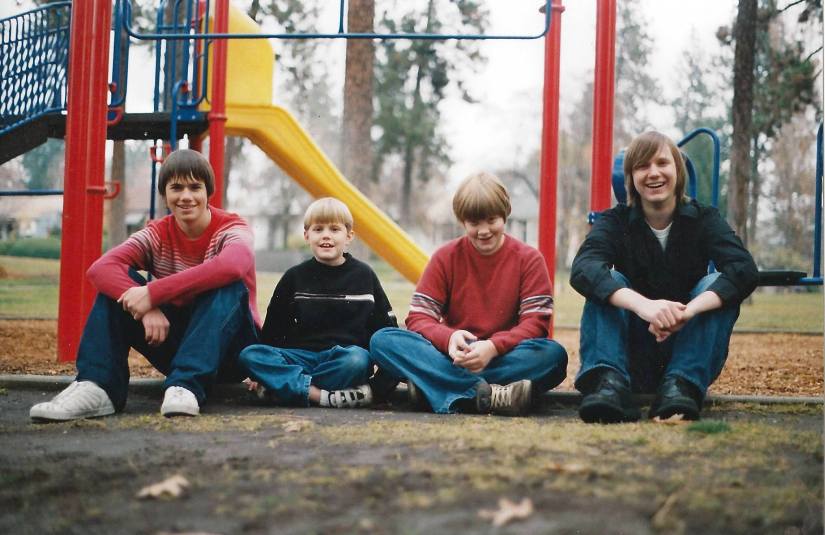
                                                                  Hval Boys circa 2008
Columns

Back-to-school one way or another

Stacks of notebook paper, piles of pencils, boxes of crayons jumbled with packages of highlighters and erasers spilling out across our bed; it used to feel like Christmas in September.

With four kids, shopping for school supplies was no small undertaking. We lived on one income until our youngest entered kindergarten, and our budget was chronically tight. But I loved school, and I wanted our boys to love it, too, so when it came to back-to-school shopping I splurged.

Then the day before school started, I’d invite the boys, one at a time, to come into my bedroom and fill their new backpacks. We’d go over the grade-level list of supplies provided by the school, and carefully organize each backpack. That was usually the last time my kids’ school stuff was well-organized, so I liked to make the most of it.

We’d chat about classes, teachers and friends. I got to hear what they were nervous about and what they were most excited about.

Of course, by the time they reached middle school, I’d just toss pencils and notebooks in their bedrooms and prayed they’d remember to take them. Power Ranger and Super Mario backpacks had given way to serviceable black or gray items from Costco, and no one needed a Spider-Man lunchbox.

I’ve been thinking a lot about our back-to-school traditions, because for many families it’s still unclear what school will look like this year. In my neighborhood one thing is certain; the big yellow school bus won’t be rumbling down our street and squealing to a stop to pick up waiting students.

The schoolyard I pass on my daily walk will most likely retain its summertime vacancy. No shouting kids playing tag, no friendly faces rushing up to the fence to wave, and empty listless swings.

I’m worried.

I’m a mother – it’s what I do. If I’m not concerned about my kids, then I’m worried about someone else’s.

When schools shut down this spring, our street filled with kids, riding bikes, skateboarding and bouncing basketballs.

“Aren’t they supposed to be doing distance learning, or something?” I asked my husband.

He shrugged.

As someone who once regularly battled her kids about too much screen time, it seems so surreal that screen time is now school time.

I’m sure many families will handle virtual learning well, but I’m worried about the ones who won’t.

Honestly? I’m not sure I would have been able to swing it with my pack of wild boys.

When our youngest son had a rough day at school, he’d say, “Why can’t I be home-schooled?”

“Because you weren’t blessed with a saint for a mother,” I’d reply.

This year, he finally got his wish. Sam will have all online classes. Of course, he’s a 20-year-old graduate student at EWU, but hey, he’s finally home-schooled.

In Ohio where my son and his family live, the district decided to do 100% remote learning. His 7-year-old stepdaughter is devastated. She’s a sociable kid, and was so excited to go back and see her friends, but her mom is glad she won’t have to wear a mask all day or bring home germs to her twin brothers.

Many of my teacher friends are eager to get back into their classrooms, while others are fearful of worsening the pandemic by opening schools too early.

There are no easy answers, just adults working together, trying to make the wisest decisions for our children.

This I know: Kids are resilient. Learning doesn’t happen on exact calendar days. Most younger students absorb new routines quickly and soak up knowledge in myriad ways.

I wonder what stories they’ll recount to their children and grandchildren about The Year We All Stayed Home.

Only time will tell what was lost and what was gained.

For now, when I pass that empty schoolyard I pray for the children who used to swarm the playground. I pray they are safe, healthy and learning, and that someday soon the echoes of their happy shouts will be replaced by the real thing.

Columns

Silver linings in cloudy COVID-19 world

My doorknobs and light switches have never been cleaner.

The banister absolutely gleams.

Four months into the COVID-19 pandemic, I’m working hard at counting my blessings, and having much-touched areas of our home that rarely got a wipe-down, sparkling is one of them.

With no end in sight to restrictions and shutdowns, it’s easy to be overwhelmed by daily helpings of bad news.

I still haven’t been able to visit my mother. If I’d known when I saw her in February how many months would pass before I could see her again, I would have moved her spring and summer clothes to the front of her closet, so she could easily find them.

“Getting dressed every day is hard when I can’t go anywhere,” she said. “But I’m not staying in my bathrobe.”

And I’d looked forward to a quick break out of town when Derek had to go to the Tri-Cities on business. Last summer, I lounged by the pool when he worked, and we visited wineries and enjoyed a river cruise when he was done.

When I called the hotel to make the reservation, I was told the hotel pool and all its restaurants were closed.

I stayed home while Derek traveled to COVID Central and back.

Such small complaints when compared to those who’ve been sick, or lost jobs, or loved ones because of the virus.

So, I’m committed to counting my blessings, even though a recent grocery store visit vexed me.

How the heck do you open those darn plastic produce bags without licking your finger first? I spent most of my shopping trip trying to open them. I even rubbed them between my hands, but all I got was wrinkly bags.

When I posted my lament on social media, a friend suggested swiping my finger across damp lettuce or celery.

I tried it on my next shopping trip. Success! It worked like a charm, but I’m sure the produce clerks wondered why I was fondling the lettuces without buying any. Also, this is why you should always, always, wash your produce at home.

On the same outing my irreverent sense of humor caused me some embarrassment when a woman across the aisle from me sneezed. At home, I’ve taken to saying “Corona” instead of “Bless you,” when someone sneezes. Luckily, my mask muffled my response, and hopefully her mask muffled her sneeze.

Also, I learned the hard way that folks can get somewhat panicky when you say you’re not going somewhere because you feel a bit “corona-y.”

One of the biggest complaints about COVID-19 restrictions is folks feeling stuck or trapped at home. This is where introverts like me have it made. I love being at home – especially when I have it all to myself. Our son has been back at work for the past month, and Derek’s business is essential, so now at least a couple of days a week I have stretches of solitude.

When I’m done with work, I take my daily walk, and then relax in our backyard gazebo. Then I harvest zucchini, radishes, raspberries, blueberries and strawberries from our garden. Soon there’ll be tomatoes, green beans, beets and carrots.

Our garden goodies fill our plates every Sunday when our three sons join us for supper – and since corona we’ve revived our family game night tradition.

Another coronavirus blessing is library curbside pick up.

I’ve always selected my books online and then picked them up at the library, but now I don’t even have to leave my car! It’s like a literary drive-thru.

While I am doing more in-person interviews for work, I still do a lot more phone interviews than before. The time saved on driving is a boon.

In fact, I actually picked up a new hobby – the daily crossword. My mom always did the newspaper puzzles and had books of crosswords, but I never felt like I had the time.

Now, I take the puzzle page with me out to the gazebo every afternoon. No New York Times in ink for me – just the Daily Commuter. It’s easy enough to finish quickly, which makes me feel accomplished and smart.

The daily puzzle reawakened my love for pencils. I hadn’t used a pencil since I was in college, and it’s such a delight to rediscover the joy of good old No. 2’s. Even better, the Chic and Shab shop on North Monroe has a whole line of pencils with edgy sayings etched on them.

The beautiful thing about pencils is that anything can be erased – mistakes, misspelled words, incorrect answers.

It’s really too bad 2020 wasn’t written in pencil.

5f1f1d127b8cd.hires_t1200

All Write, War Bonds

Last ‘War Bonds’-featured couple die 18 days apart

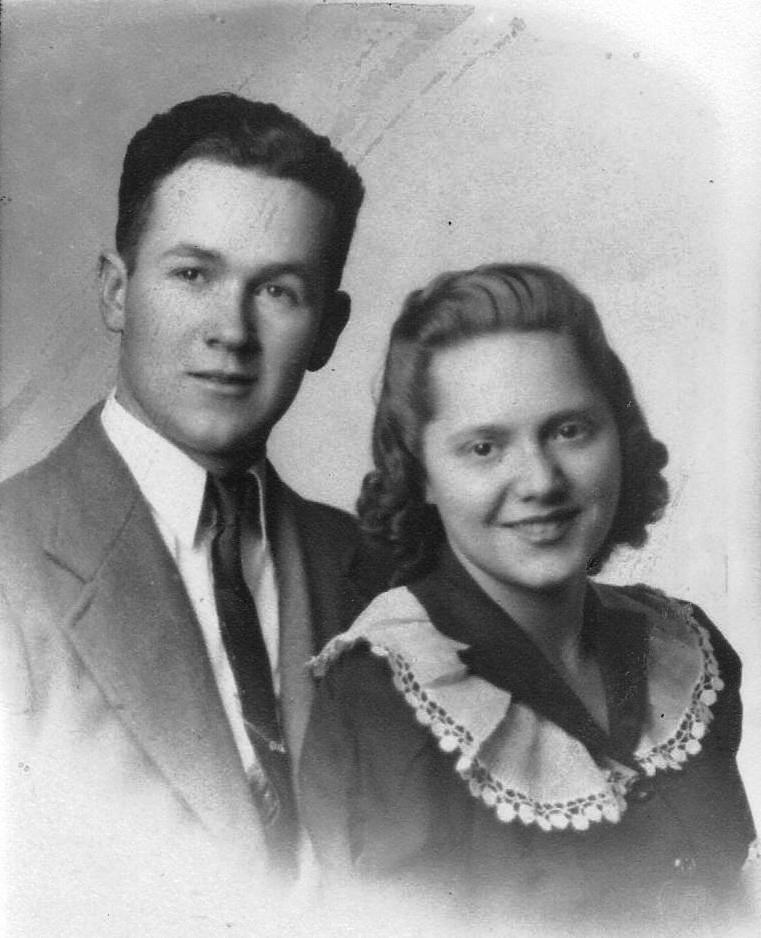
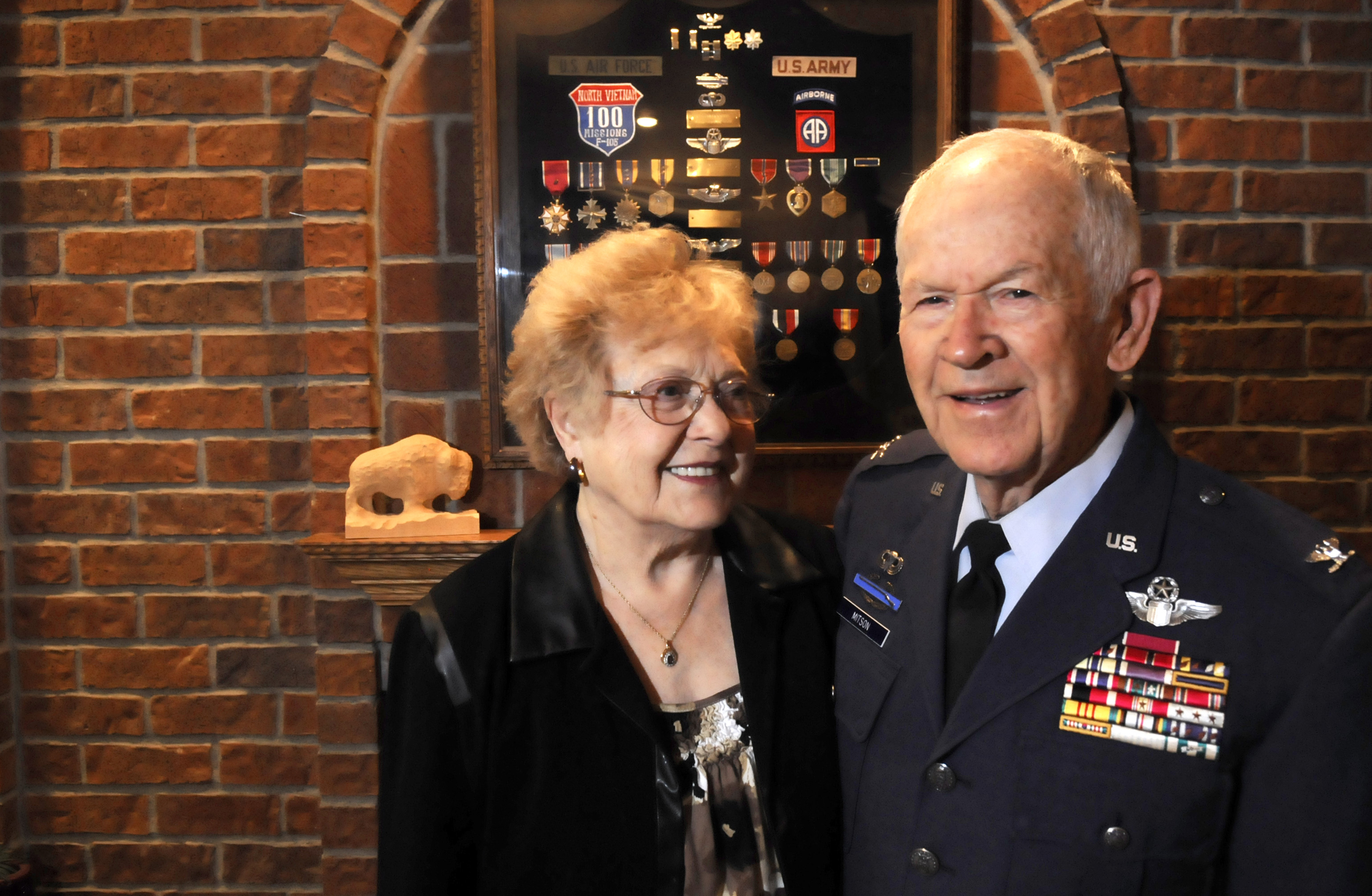
Mitson wedding photo low res

He thought she was a skinny kid, and he didn’t want to be seen with her.

She thought he was “just another boy.”

But first impressions aren’t always lasting. On July 11, Charlie and Mable Mitson would have celebrated their 78th wedding anniversary – and for all we know they did, just not here on this earth.

Mable died on June 3 and Charlie followed 18 days later on June 21. Finally, Mable got to go somewhere new before her husband. After all, she’d followed him through 22 moves, during his many years of military service.

I first met the Mitsons in 2010 when I featured them in my “Love Story” series for The Spokesman Review. I followed up with them a few years later, when I included their story in my book “War Bonds: Love Stories from the Greatest Generation.”

Visiting them in their South Hill home was always a delight. They were both quick with a quip, finishing each other’s stories, and teasing each other when one remembered something differently.

Charlie sometimes deferred to her because he said, “she’s older than me.”

Mable was born in July 1924, Charlie in September.

They met at church in Coeur d’ Alene, and when those first impressions wore off, they quickly became a couple. They married when they were both just 17.

Charlie had landed a $40 per week job at the newly opened Farragut Naval Station and said, “I decided I could afford to get married.”

He was drafted into the U.S. Army in 1943, leaving his wife and infant son behind.

Charlie served with the 517th Parachute Regimental Combat Team. His World War II service included a grueling Italian ground fight, the invasion of Southern France, the Battle of the Bulge and the occupation of Berlin at war’s end.

Mable said, “I remember him telling me, ‘You just had to go over the dead and dying and keep moving.’”

Still, Charlie counted himself lucky. His only injury came from a piece of shrapnel that struck his leg. He shrugged. “I didn’t even know I was hit, ’til someone said, ‘You’re bleeding!’ They put a bandage on it, and I just kept going.”

He mustered out in 1945, but he didn’t stay out long. In 1949, he was accepted into the Air Force Aviation Cadet program and launched a 30-year career as a military fighter pilot. He flew 100 combat missions as an F-86 pilot during the Korean War, and 100 combat missions over North Vietnam as an F-105 pilot, before retiring as a colonel at 54.

And Mable?

“I followed him everywhere,” she said.

She did more than just follow. She was a consummate hostess, often entertaining military personnel all over the globe. And she was the ever-present centerpiece of their family, which grew to include five children.

Their retirement years were just as busy as their military years, as they deeply invested in their church, their grandchildren and in numerous volunteer activities.

Charlie credited their abiding friendship as the key to their loving marriage.

“Make sure you have a good solid friendship before you get married,” he’d advised.

Mable said having a positive attitude helped her endure their many wartime separations.

“Wherever he was I always knew he was coming home,” she said.

So, I’ve no doubt she was expecting Charlie to arrive at any moment during the 18 days that passed between their deaths.

In “War Bonds” Mable recalled how they were separated for a year and a half during World War ll. She went to meet him at the train station, wondering how the war had changed him, wondering if she’d recognize him.

“Did you spot him among all those soldiers?” I’d asked.

Her face lit up.

“I did. Oh, I did!”

And Charlie never forgot that first glimpse of her after their long separation.

Though the station must have been bustling with travelers, he said, “I saw her standing on the staircase. As I remember it, she was the only one there.”

I can’t help but wonder if that’s exactly what Charlie experienced on June 21 when once again he was reunited with his bride.

CHARLIE AND MABEL
Mabel and Charlie Mitson Nov. 16, 2010. JESSE TINSLEY jesset@spokesman.com

Order your copy of War Bonds: Love Stories from the Greatest Generation here. 


Columns

Cat’s in doghouse after hot, sleepless night

It’s a good thing he’s so cute.

It’s also a good thing I have the Facebook Memories app to remind me of how utterly sweet and tiny Sir Walter Scott was when we first met him last year in June.Baby Walter Love at First Sight

Love at first sight. June 11, 2019

I needed those reminders, because recently Walter (no longer tiny) was the cause of a very long sleepless night.

To be fair, it wasn’t entirely his fault. On May 29, the temperature soared, reaching 90 degrees for the first time this year. Derek and I weren’t prepared for the sudden warmth. We don’t have central air and since we were both out all day, we didn’t turn on our dining room air conditioner until we got home. Our bedroom window unit was still out in the shed. Even with fans running, our house was hot and stuffy.

“We’re going to have to sleep with the bedroom door open,” I said.

My husband eyed Thor and Walter.

“Great,” he said. “You know we’ll have company.”

I wasn’t too worried. After our older cat Milo died, we let Thor sleep with us whenever he wanted. He’s a placid fellow, and just drapes himself at our feet and snores. Derek can outsnore both man and beast, so Thor’s nasally rumblings didn’t bother me.

Walter is a different cat – he’s all about the action. Apparently, he didn’t get the memo that kittens sleep 16 to 20 hours a day, because from the time we brought him home at 8 weeks, it was clear he could catnap, but long stretches of sleep were not in his wheelhouse.

It also became clear that Walter is a fervent Mama’s boy. My son paraphrased a Bible verse to describe his devotion thusly: “Where Mama is, there Walter will be also.”

And he’s a cuddly cat. While he’s not allowed to spend the night in our room, he does curl up in bed with me every morning after breakfast. We both catch a brief bit of shuteye before embracing the day in earnest.

He also knows the nighttime drill. Each evening I get into bed to read before Derek joins me. Well, joins us, because as I mentioned, Walter is rather attached to me. He likes Derek, too, but not at bedtime. Derek’s arrival means Walter’s exit.

Our furry feline tries to circumvent his ouster by feigning death or hiding under the bed.

“Walter, it’s night-night time,” Derek would say to the prone cat.

No response.

Walter squeezes his eyes shut and won’t budge when Derek pokes him. If he doesn’t make a sudden dash under the bed, my husband picks up the tabby’s inert body, carries him from the room and deposits him on the sofa. Then it’s a sprint to see which of them will make it back to the bedroom first. Personally, I think the exercise is good for both of them.

On the hot night in question, after cranking up the fans, we let sleeping cats lie. Thor slumbered on when we turned off the light. Walter trilled questioningly.

“Go back to sleep,” I said.

So, he sunk his head into my pillow and snuggled up next to me. A few minutes later, he patted my face.

I ignored him.

He licked my eyelids.

ignored him.

He laid his whiskery chin on my nose.

I couldn’t breathe, so I nudged him off.

A slight thud and the tinkling of his bell, notified me he’d left the room.

I’d just nodded off, when I felt a soft body land at my side. Then a wet, slobbery piece of felt hit my cheek. Having taken his required catnap, Walter decided it was playtime and brought his beloved gray mouse to bed. The mouse is attached to a string, and usually I wave it around while he chases it and pounces on it.

“One a.m. is not playtime Walter,” I whispered, tossing the toy toward the door as hard as I could.

Big mistake.

Walter loves a good game of fetch. He had the mouse back in bed before I could close my eyes. I refused to throw it again, so Walter found someone else to annoy. He discovered Thor, sound asleep on Derek’s feet and launched himself toward the unsuspecting senior tabby.

Hissing, growling and mayhem ensued as Thor fled from his tormentor.

“One cat down, one to go,” Derek mumbled.

His mumble alerted Walter to his next victim. He sprang from Derek’s feet, landing with a thunk on Derek’s stomach.

“Oof! Get him off of me!” Derek roared.

And so went the rest of the long night. Sometime around 5 a.m. I noticed the house had cooled considerably, but my head was sweating due to Walter’s proximity to my pillow.

I scooped him up, put him in the hallway and shut the door.

Piteous, heartbreaking, tiny meows poured from the hallway.

I put my cat-warmed pillow over my head.

“You’re in the doghouse, Walter,” I said.

A few hours later I opened the door, and Walter came running. Weaving in and around my ankles, stretching up his paws, eager to be in my embrace.

Like I said, it’s a good thing he’s so cute. It’s also a good thing Derek has our window air conditioner ready to go. Who knows? We may see 90 degrees again someday, and this time we’ll be ready. No more cats on hot, sleeping Hvals.

Walter Scott Not a Bit Sorry

Walter the morning after. Not one bit sorry.