Recently I had to take my 87 year-old mother to the oral surgeon.
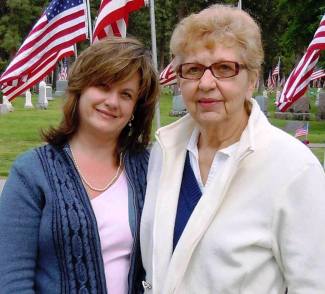
The tooth extraction went fine. The paperwork, not so much.
Here’s the latest episode of my Front Porch.

Author
Recently I had to take my 87 year-old mother to the oral surgeon.
The tooth extraction went fine. The paperwork, not so much.
Here’s the latest episode of my Front Porch.
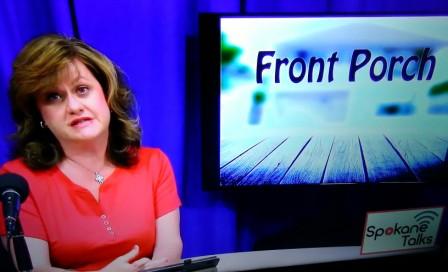
The great folk at Spokane Talks have made the Front Porch segments their own YouTube spots. Plus they’ll be posting a direct Front Porch link on their website.
So, if you happen to fail to tune in to Fox 28 on Sunday nights at 6 PM, now you’ll have a handy link and never have to miss the view from my Front Porch.
Here’s last Sunday’s episode about my rock-n-roll journey and how I found out what the “rock-n-roll sign” actually meant. And why you should never try to connect the dots on a Ritz cracker.


Now, that’s a great question.
When the folks at Spokane Talks invited me to try my hand at television commentary. I thought about how I’d fit this in with my weekly newspaper deadlines, monthly deadlines for a marketing client, finishing up my second book (Tiaras & Testosterone), and keeping up with my husband, sons and two cats.
Two episodes in and I’m still thinking about it. Obviously, I’m thinking on air:)

This week I tallied the results of my childhood wish list. If you want to hear about ’70’s fashion, bikes with banana seats, and the Second Coming click here. The Front Porch starts at the 22 minute mark.
Next week I’ll tackle the devil’s music!
Tune into Spokane Talks, Sunday nights at 6 on KAYU Fox 28.

August 12 marked my network television debut on Spokane Talks on KAYU Fox 28.
Let me tell you, nothing prepares you for seeing your face on a big screen TV! It’s enough to make one want to stick to the blessed anonymity of keyboards and newspaper columns.

Honestly, taping my Front Porch segments aren’t as painful as they appear on TV.
If you missed the program you can watch it here. The Front Porch segment starts around the 21:45 mark.
Then maybe you can interpret what was happening here:

It’s all fun and games ’til that camera starts rolling!
Tune into Spokane Talks, Sundays at 6 PM on KAYU FOX 28.
Lightning McQueen has definitely seen better days.
His front wheels are missing, as are both headlights. His rear tires are packed with dirt and his big eyes on the windshield peer through a layer of dust. His red paint job has faded into orange, and his plastic body is cracked in places. Years of exposure to sun and snow will do that to a car.
My husband is building a retaining wall at the back edge of our property, and his shovel had unearthed the abandoned toy.
“Look what I found,” Derek said, cradling the car in his hands.
![38017318_1889217127783572_2169214348566724608_n[1]](https://cindyhval.com/wp-content/uploads/2018/08/38017318_1889217127783572_2169214348566724608_n1.jpg?w=1086)
Like an archeologist on a dig, he’s discovered the remains of a previous civilization. He’s been working hard to eradicate the evidence that small boys once roamed wild in our backyard, but this is something he’d missed.
When we moved into our home in 1993, both the front and back yards were a mess of weeds and clover.
Derek focused his attention on the front first, so our boys took possession of the back. That summer, my dad bought them a swing set, and we installed the first of many plastic wading pools.
Very little swinging happened on that swing set. Instead, the slide was used as a launching point for cars, toys and boys. The tandem swing made it easier for them to scale to the top of the set, the better to terrify their mother.
The boys grew. The grass came back. The swing set fell apart. And a series of bigger pools kept them occupied during the summer.
Squirt guns, bicycles, skateboards and toys littered the yard making navigation perilous for parents.
When our four boys grew bored with toys and things with wheels, they took up digging in the barren patch of ground where the previous owner had attempted to garden. Bordered by railroad ties, the spot offered ample space for industrious boys to play in the dirt.
I worried about the holes they dug with plastic shovels getting too deep, the tunnels getting too long, but Derek just said, “Boys gotta dig.”
However, even he was surprised to find they’d used a few of his two-by-fours to shore up a gaping gash in the ground.
The boys grew. They mowed the grass. They stopped playing in the dirt. And Derek built a beautiful cedar shed where the swing set once stood.
Our two oldest sons moved out and their dad built a beautiful deck, and we added a gazebo, and raised bed gardens. The retaining wall is just another step in the beautification of our kids’ former playground, and it seems Derek had stumbled upon a toy graveyard while constructing it.
“I’ve been finding a lot of green army men,” he said. “I rebury them with full honors.”
But it didn’t seem right to leave Lightning in an unmarked grave, especially since it looks like he’d been the victim of violent crime. Someone had used permanent marker to print “Help Me…” on his hood, leading us to conclude the toy had been carjacked and possibly held for ransom.
The printing looks exactly like our second son’s writing, and our youngest son, Sam, was a huge fan of the movie “Cars.” He was 6 when the first movie was released, and he went “Cars” crazy.
He had a Radiator Springs play set and the full fleet of cars from the film. But Lightning was always his favorite. In fact, if I venture into his teenage lair, I know I’ll still find at least two versions of Lightning McQueen that he’s not ready to part with.
Derek went back to work on the wall, leaving the dirt-encrusted car on the deck railing. Weeks later, it’s still there, parked facing our outdoor dining area, where Lightning can watch the boy who loved him come and go.
Last night, I swear I saw his eyes shining through their dusty coating when Sam sat down to dinner.
And then old Lightning smiled.

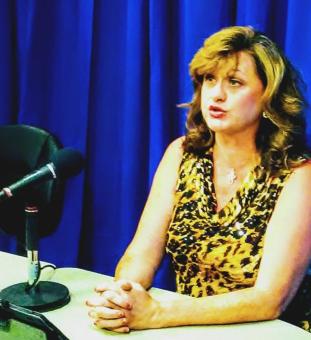
I’m really excited about my latest adventure!
Beginning August 12, I’ll be part of the program Spokane Talks on Fox 28 Spokane.
Every Sunday at 6 PM, the half hour show offers news, views and conversation.
My three-minute Front Porch segments will end each program. Kind of like Andy Rooney on 60-minutes, but with well-groomed eyebrows and no, “Didya ever wonder…”

I hope you’ll tune in to find out what the view from my Front Porch is like.
It’s usually rather sunny!
I heard them before I saw them. A small group of kids on the playground, laughing, shouting, jostling as they let off steam in the afternoon chill.
As I walked past the schoolyard, a solitary figure on the swings caught my eye. The boy scuffed at the gravel with his shoes and the swing barely moved.
Slowing my stride, I took in the scene and I wondered at the social dynamics at work. Was the boy on the lower rungs of the grade school popularity ladder? Had he been deemed to have “cooties” by the others? Or was he just grabbing a quiet spot – overwhelmed by the sheer volume a small amount of kids can make during a brief recess?
When I was his age, I could relate to both scenarios.
Because we moved frequently due to my dad’s career, I was always the new kid. The daunting task of finding a spot at the lunch table and navigating new social networks and established hierarchies meant loneliness was a constant companion until we settled in Spokane when I was a teen. I didn’t even have the built-in companionship of siblings because my brothers and sister were much older, and all out of the house by the time I was 12.
That upbringing created a resiliency that has served me well in adulthood. I learned how to adapt, how to forge new connections and how to turn strangers into friends. I also learned self-sufficiency and how to be content with my own company.
There’s a profound difference between being alone and being lonely. Alone is a state of being, while loneliness describes a pain, a sadness, a feeling that something is missing.
I learned to love being alone and have developed a profound need for solitude. That’s something that’s proven hard to come by when married to an extrovert and raising four sons.
As my writing career grew, solitude became even more imperative. I’ve become adept at creating it, whether by renting an office or borrowing a friend’s house.
The writing I do from my friends’ home while they travel south for the winter is different than the writing I do at my desk in the family room at home.
I hammer out columns and news stories at home while family members come and go, the landline rings, the doorbell peals, the cats clamor to be fed. But in my friend’s empty, silent house, books are born, short stories submitted and my craving for solitude is satiated.
My weekly walks are another way of creating quiet for my mind and soul. I was contemplating this when two days later; I again encountered the solitary child.
It was the same time, same place and same scene. A group of kids shouting, laughing and tossing a basketball back and forth. The boy alone on a swing.
And I wondered if instead of listless and lonely, he was enjoying a moment of respite from the noise and crush of elementary school. As he toed at the gravel, perhaps the slight movement of the swing soothed him and allowed him time to think – to dream. Maybe this child, like me, wasn’t lonesome, he was simply alone and relishing it.
This time I paused at the fence and lifted my hand to wave. Just in case he did feel isolated and invisible, I wanted him to know I’d seen him. I’d noticed his existence.
I waited mid-wave until he looked up and saw me. He slowly lifted his hand in acknowledgment, a small smile tilting at the corners of his mouth.
Then I continued my walk while he sat in the gently swaying swing. Two solitary souls – alone, but maybe not lonely.
Contact Cindy Hval at dchval@juno.com. She is the author of “War Bonds: Love Stories From the Greatest Generation.” You can listen to her podcast “Life, Love and Raising Sons” at SpokaneTalksOnline.com. Her previous columns are available online at http://www.spokesman.com/staff/cindy-hval/ Follow her on Twitter at @CindyHval.
The thing about New Year’s resolutions is they are so boring. Everyone tends to have the same ones – lose weight, exercise more, work less, play more.
More exotic resolutions tend to leave me scratching my head – learn another language, make a new friend, take a dance class.
Listen, I have enough problems wrestling with the English language every week. I don’t see the friends I do have often enough, and I’m not about to start dancing at 52. My plié is played out, the only tapping I do is my fingers on my desk while waiting for a file to download, and I’d much rather eat salsa than dance it.
I haven’t always been so jaded about resolutions. Indeed, in my teens I’d regularly fill a journal with my goals for the New Year.
You might have noticed that I didn’t marry Andy Gibb.
Or join the Bay City Rollers on tour.
Or entertain Johnny Carson on “The Tonight Show” with my witty banter and collection of amusing anecdotes that I dutifully jotted in the aforementioned journals.
Resolutions just never worked out for me. Either they were too lofty or too banal. Even the more creative ways to inspire change or achievement proved unsuccessful.
For example, for several years my high school youth group leader had us write letters to ourselves on New Year’s Eve. We’d then receive these missives in the mail the week after Christmas the following year.
None of those letters remain, but I do vividly remember one that began, “Dear Cindy, Please ALWAYS remember you are AWESOME, no matter what that jerk Donny says.”
Actually, I feel much better just reading that sentence. Perhaps, I’ll tape that above my desk.
Recalling resolutions made me wonder just how this tradition began, so I did a little research. (OK, I Googled it, but research sounds better.)
Apparently, the ancient Babylonians started the ball rolling some 4,000 years ago. During a massive 12-day festival they crowned a new king or reaffirmed their loyalty to the reigning king. They also made promises to the gods to pay their debts and return any objects they had borrowed.
Alas, we can’t hold a presidential election every Jan. 1, though one does wonder why the Founding Fathers didn’t consider this concept. However, it is a good idea to start the year by paying off your library overdue fines, and by returning your mother-in-law’s serving spoon that you’ve had since Thanksgiving 2007. Not that I’d know anything about that.
I told my husband I’d gotten a good start on some manageable goals and wanted to add more.
“Maybe I should get a new hairstyle for the New Year,” I mused.
Derek was dismayed.
“Oh no!” he said. “I love your hair. It’s all Farrah Fawcett-y!”
Obviously, “new hair” is staying on the resolution list.
Scanning an online list of popular resolutions, I considered adding “quit smoking” to mine. Of course, I’d actually have to start smoking and then quit, which seems like way too much work just to chalk something up in the successful resolution column.
I found a list of unusual resolutions that intrigued until I got to “make the usual unusual.” What does that even mean? I usually brush my teeth every morning – should I skip it? I usually look both ways before I cross the street, should I throw caution to the wind?
Also perplexing was the suggestion to “fall in love with life in 2018.” I mean, I like life just fine. You might even say I’m committed to it, but how on earth does one measure the success of falling in love with it?
Speaking of success, further reading revealed just 16 percent of people over 50 achieve their resolutions each year, while 37 percent of people in their twenties do.
It seems resolutions are a younger person’s game.
For me I’m going to stick with the basics. Today, I resolved to get out of bed, get dressed and get this column done.
Hey, two out of three isn’t bad.
Contact Cindy Hval at dchval@juno.com. She is the author of “War Bonds: Love Stories From the Greatest Generation.” You can listen to her podcast “Life, Love and Raising Sons” at SpokaneTalksOnline.com. Her previous columns are available online at spokesman.com/ columnists. Follow her on Twitter at @CindyHval.
As I sat down at my desk to write this week’s column, an email notification popped up on my screen. I opened it to read of Audrey Bixby’s upcoming funeral.
I’d interviewed Audrey and her husband, Dick, several years ago for my Love Story series, and included their story in my book “War Bonds: Love Stories from the Greatest Generation.”
The timing of the email stunned me. I’d already planned to write about the loss of so many of the people featured in “War Bonds.”
Seventy-two. That’s how many individuals made the final cut of the book.
Twenty-four. That’s how many people died before “War Bonds” made it into print.
Twenty. That’s how many goodbyes I’ve had to say since its 2015 publication.
A colleague shrugged when I bemoaned yet another loss.
“What did you expect when all your subjects are World War ll veterans over 80?” he’d asked.
He has a point.
It’s not that I expected them to live forever; it’s just that I’ve been unprepared for how much each loss affects me.
In the past few months, in addition to Audrey, I’ve said farewell to Jack Rogers, Dick Eastburg, Barbara Anderson and Myrt Powers.
It seems fitting to honor them today on the 76th anniversary of the attack on Pearl Harbor.
Jack Rogers wasn’t at Pearl Harbor, but he enlisted in the Army in 1943, when he was just 19. He had a hard time believing we were at war against Japan.
“I grew up with a bunch of Japanese kids,” he said in “War Bonds.”
Before being shipped out to the Pacific, he traveled to California to see a Japanese friend from high school, only to find his friend and his family had been confined in an internment camp.
I met Jack many years ago when he taught art at Northwest Christian School. He taught all four of my kids, and each one remembers him well.
Eleven years ago, I wrote an article about his art career. Since then, I revisited him in print many times. A story about his 71-year marriage to Fran, a feature about how following a debilitating stroke, he still continued to give back – painting tailgates on Personal Energy Transporters through Inland Northwest PET Project.
And I wrote about one of his final art shows at Spokane Art Supply. That’s where I saw him last. He and Fran sat side by side, as friends, fans and former students perused his paintings, buying a piece of Jack to take home and remember him by.
My own piece of Rogers’ art watches over me as I write. It’s a whimsical print of a terrier that Fran sent as a thank you note, following the funeral.
Next to it is a photo of Louis Anderson and his flight crew taken in 1944, just before they shipped out to Europe.
The last time I saw Louis and Barbara at their retirement center apartment, she insisted I take home a memento – a water glass from Air Force One. She was so proud of her late grandson who served as President Obama’s pilot.
She also kept me grounded in real life. Every time I left their place she’d say, “Do you need to use the restroom? Are you sure?”
Audrey Bixby was strictly down-to-earth as well. When I interviewed her and Dick, he kept me in stitches with jokes and sly puns. While we laughed, Audrey feigned exasperation and then told her own funny stories.
When Dick enumerated her wonderful qualities, he said, “She’s an awfully nice person and she laughs at my jokes!”
Dick died five years ago. I like to think that now they’re laughing together again.
Dale Eastburg passed away last month. He and his wife, Eva, had been married 75 years. When last I spoke to them, they were still going to the gym every week!
They’d been married just a short time before he was sent to China as part of the famed Flying Tigers. The thought of saying goodbye to his bride proved unbearable to Dale, so he didn’t. He slipped out of their apartment while she slept.
I hope this time Dale was able to say goodbye.
And today, I think of darling Myrt Powers. I never thought I’d describe a Marine as darling, but that exactly describes this tiny dynamo.
Though already employed as a teacher, she enlisted in the Marines following the attack on Pearl Harbor, because so many of her students told her they were worried about their fathers who were going off to war.
“I wanted to take care of my students’ dads,” she explained in “War Bonds.”
She met Walt Powers, a sailor stationed at Marine Corps Air Station Santa Barbara. They were married 71 years at the time of her death.
I last saw Myrt two years ago, in Hawaii, of all places.
It was 8:15 in the morning at the Hale Koa Hotel, an Armed Forces Recreation Center resort on Waikiki. My husband and I were preparing to make our first pilgrimage to Pearl Harbor, and stopped for coffee before the tour bus picked us up.
Myrt was grabbing a cup while waiting for Walt to finish his regular swim at the hotel pool.
“Hello, honey,” she said, reaching up to embrace me.
It was the best hug I’ve ever received from a Marine, and sadly it was the last one from Myrt.
Today, while the world remembers the more than 2,000 lives lost at Pearl Harbor, I remember five souls who endured the trauma of a world war. The lives they led in its aftermath, the families they raised, the marriages they cherished, bear witness to the resiliency of the human spirit.
While I’m sad at their passing, I’m so very glad that their stories are now a part of mine.
Contact Cindy Hval at dchval@juno.com. She is the author of “War Bonds: Love Stories From the Greatest Generation.” You can listen to her podcast “Life, Love and Raising Sons” at SpokaneTalksOnline.com. Her previous columns are available online at spokesman.com/ columnists. Follow her on Twitter at @CindyHval
The For Sale sign swung wildly in the blustery October wind, and though I’d known it was coming, the sign startled me.
I pulled over in front of what used to be my house and let the memories wash over me.
Growing up in a military family, I moved a lot. Nine houses in 16 years, until we finally returned to Spokane to stay.
This house represented permanence to my parents, who’d grown weary of years of moving. It welcomed my best friends and high school sweethearts. My first day of college photo was taken on its front steps.
On my wedding day, I woke in my twin bed, in my blue bedroom with the switch plate that reads “Cindy’s Room.” The switch plate is still there, though it hasn’t been my room for 31 years.
A few years later, a photo taken in the entryway shows my dad proudly holding my firstborn son – his namesake, Ethan Thomas. It was Ethan’s first visit to what was now known as Grandma’s house.
Dad is wearing a sportcoat and tie, so he must be home for lunch. After he retired from the Air Force, he went to work for the Department of Social and Health Services, and his office was within walking distance – a huge selling point when they bought the house.
By the time our sons Alex and Zach were born, Dad had retired, and my husband and I had bought a home nearby. Dad delighted in dropping in to “check on the babies.” I always thought he meant my sons, but chances are he meant me, too.
When he died 22 years ago, my mom remained in their home – happy to know I was close. And when after several years of widowhood, our last son arrived, she was especially glad she’d stayed in the neighborhood.
Grandma’s house became a rite of passage. When boys anxious for independence wanted to venture from my nest, unsupervised – it was to her house they went. Sometime after the magic age of 10, I’d let them walk the six blocks to her house. This was long before every kid had a cellphone, so the kid had to first call Grandma to let her know he was on the way, then immediately call me when he arrived, and then call me again when he left.
Freedom had a laborious cost back in the day.
As Mom aged, the split-level design of the house proved daunting, and one spring she took a tumble down the stairs, breaking her ankle.
Still she wouldn’t move. Wouldn’t hear of it. This was her home – the place she and Dad ceased their wanderings, and besides, I lived just a few blocks away.
We worried that when the time finally came for her to move, she wouldn’t be able to help us choose her new home. And that’s just what happened.
This summer her mental and physical health failed at an alarming rate. Suddenly, my siblings and I had to make major decisions with no input from Mom.
Thankfully, my brother David and his wife, Becky, had retired to Spokane several years ago. They were able to find Mom a nice apartment in an assisted living facility, arrange for movers and an estate sale, and last week they sold the house.
Mom is 86, and doing better than she was this summer, but she’s still confused about what happened to her home, to her things.
Her new residence is just two blocks from her old one, so the landscape of her neighborhood is familiar. Her grandsons visit more frequently, now that she doesn’t have to come down any stairs to open the door. And when they visit they talk about the happiness and love they always found at Grandma’s house. The location may have changed, but the love hasn’t.
I pull away from the house, and I don’t think I’ll drive by again for a while.
It’s someone else’s turn to make memories on Standard Street. My own are locked safely in my heart, and there isn’t a house anywhere big enough to contain them.
 Cindy Hval