Columns

Thor’s final days a lesson in listening

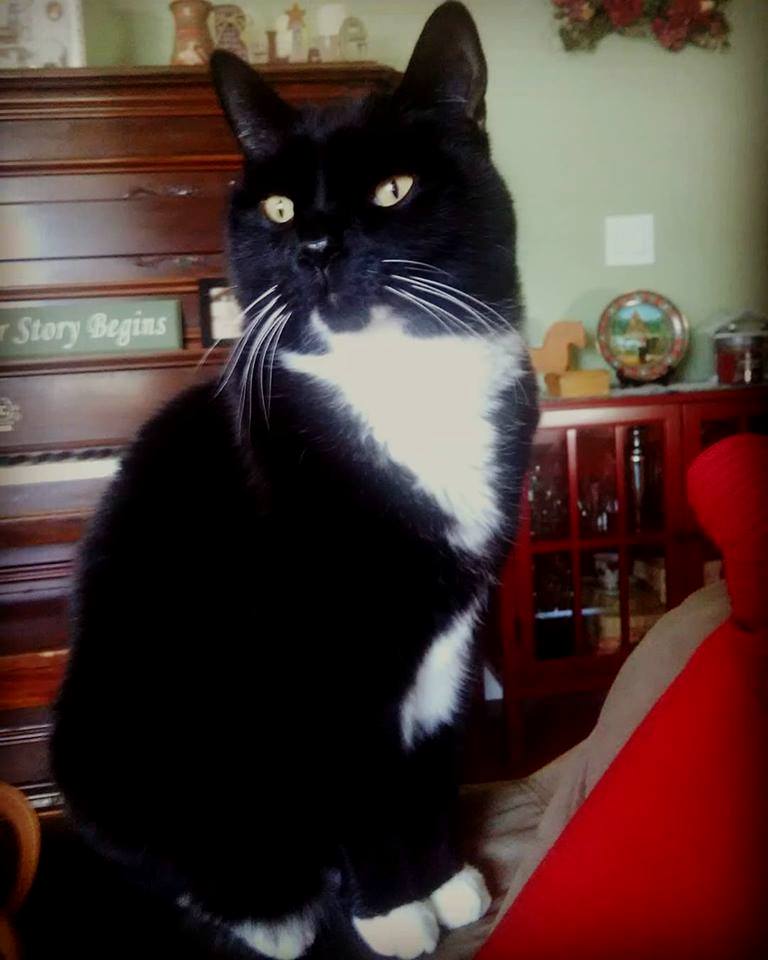
n May 30, we found out our beloved cat Thor had a nonoperable tumor, and his nine lives were about to run out.

When I shared the news in a previous column and on social media, people responded with great compassion. Many wrote that they had enjoyed my accounts of his adventures over the years and felt like they knew him. Others shared their heartbreaking stories of pet loss. Each missive provided connection and comfort.

What I’ve learned over the past month is this – despite their solitary, independent nature, cats absolutely do communicate with their humans. In his last two weeks, Thor let us know exactly what he wanted.

Moist deli-roasted chicken breast?

Yes, please.

Canned cat food?

No, thank you.

Tender smoked turkey breast?

More, please.

A once-favored kibble?

Nope.

Special cat treats from Trader Joe’s?

Yum!

Loving words and soft pats from me and Derek?

Aaaaah.

A comfy spot on a soft blanket on the foot or our bed?

Purrrr …

He was equally clear about activities.

The slick Houdini, who often bolted through every open door, enjoyed one last warm evening in the backyard. Cat harness and leash attached, he basked in the sun, rolling over and over in the comforting grass. He nibbled on a blade or two, but he mainly just soaked up the rays that bathed his suddenly fragile bones.

But when next we tried to take him outdoors, he sat by the back door and refused to budge. Derek carried him out to the yard, but Thor declined to wander.

Derek carried him back to the deck and removed the leash. Thor went straight to the door and asked to go inside.

I suspect he felt his frailty and knew the wild outdoors was no longer safe for his ailing body.

What do you say when there are no words?

Taking a note from Thor’s book, we showed him how we felt. We held him. We stroked his once lush, now straggly fur. We looked into his eyes and slowly blinked.

And when he hid under our bed, we listened. We understood he was saying, no more, please.

Even rambunctious Walter heard the message. Our junior tabby usually delights in pouncing on an unsuspecting Thor, but he seemed to understand that pouncing was out. Instead, he scooted under the bed and crouched next to Thor in silent solidarity.

A short time later, Thor took refuge beneath the dining room table. Derek didn’t try to coax him out. Instead, he stretched his 6-foot-2 frame beside him on the floor.

Thor mewed.

“I know, buddy,” Derek replied, tears coursing down his cheeks. “It’s time.”

I called the vet to schedule Thor’s last visit for later that afternoon. As I ended the call, thunder cracked, and a heavy rain fell. A fitting finale for a cat named for the god of thunder.

When I pulled into the driveway after work, he was perched on Sam’s windowsill, watching – waiting for me to come home. As sick as he was, he still managed to climb up to his favorite lookout on the window ledge.

Out of habit, I quickly shut the door behind me lest he make a run for it. But his sprinting days were done. Instead, Thor waited for me to pick him up at the entryway.

There would be no dreaded cat carrier for this trip. I wrapped his frail frame in an old beach towel and carried him to the car.

His ears perked, and his nose wiggled as he sniffed the rain-scented air. As we drove, he tucked his head under my chin, his eyes wide while he watched the passing scenery.

We kept our promise. The last thing he saw before he closed his eyes for the final time was the faces of the people who loved him.
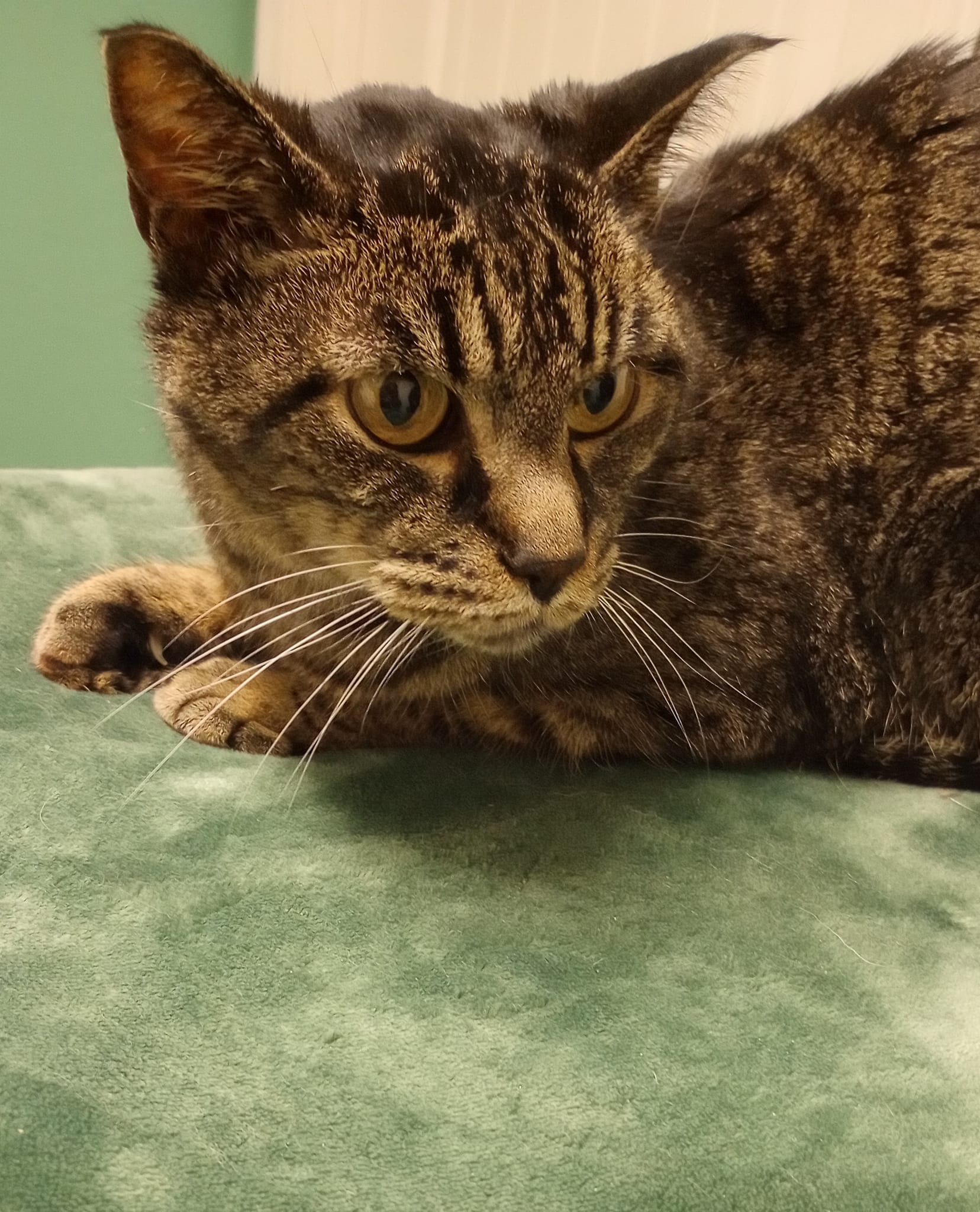
When we left the vet’s office, Derek silently pointed to a rainbow shimmering across the horizon. It seemed the heavens offered Rainbow Bridge just for Thor.

Oh, yes, cats communicate with their people.

And it’s important to listen – even when they say things we don’t want to hear.

Things like goodbye.

RIP Thor Heyerdahl Hval, Feb. 5, 2011, to June 18, 2024.

Columns

Kindness is the best gift

A few days before Thanksgiving, I had one of those too-much-too-little days.

Too much traffic, too many crowded stores and too little time between appointments. I pulled into my bank’s parking lot and noticed the drive-thru line was several cars deep. I decided to park and go inside. Both tellers were helping people, but I was next in line.

While I tapped my foot and glanced at my watch, the teller nearest me engaged in a long conversation with an older gentleman named Jimmy. Honestly, I was annoyed that they were still chatting when his business concluded, and the line grew behind me.

Then I tuned into their conversation. It sounded like Jimmy’s wife was dying and might not make it to Christmas.

“I’m so sorry, Jimmy,” the teller said, patting his hand.

The urgency of my errands and appointments paled as I thought of a friend facing her first Christmas without her husband. Another just lost her dad. Yet another is grieving his mom.

And Jimmy?

Maybe this was the first time he’d been able to tell someone what his holidays looked like. Maybe this was the first time someone slowed down enough to listen.

Blinking back tears, I finished my banking and left, but not before noting the teller’s name.

I’m thankful for kind people like Rayna at Chase Bank. And I’m grateful for humbling encounters like this to remind me that while I’m rushing from one appointment to the next, hurting people are all around me, and there’s no greater calling than kindness.

As soon as I had a break that day, I phoned and asked to speak to the branch manager. Too often, we’re quick to call to complain instead of compliment. I wanted to let them know about their stellar employee.

The manager was gone for the week, so I sent an email. But Rayna answered the phone, and I got to tell her how much witnessing her kindness inspired me.

During the holidays, many of us feel the pinch of those too-much-too-little days, but kindness is one thing we can never have too much of.

Columns

Grace and the Angel Gowns

For someone who never opened her eyes or drew a breath, Grace Susie Bain, continues to make a difference in the world she didn’t get to explore.

On June 1, 2003, my friend, Sarah Bain, gave birth to Grace, knowing the baby had died in her womb on May 29.

Two years ago, I wrote a column about how Sarah marked what would have been Grace’s 16th birthday, by having her wedding dress made into “angel gowns.”

The Angel Gown program has chapters and affiliates across the U.S. Volunteer seamstresses take donated wedding dresses and create gowns for stillborn infants or babies who die soon after birth.

In Spokane, retired registered nurse and health care executive Peggy Mangiaracina, has been making tiny gowns, tuxedos and cocoons since 2017. Sarah asked me to be present when she gave her wedding dress to Mangiaracina, and shared Grace’s story.

That column prompted an amazing response. Since its publication on May 16, 2019, Mangiaracina has received 56 donated dresses, and turned them into 1,600 angel gowns.

“Sixty percent of those donating the dresses have lost a child,” Mangiaracina said. “And most had never heard about angel gowns until your column came out.”

She said Sarah’s story has resonated with many.

“They told me, ‘Sarah’s story allowed me to feel and share my own.’ ”

Mangiaracina told of a man in Puyallup, who came across the column. His wife died, and he decided to donate her wedding dress.

“They’d lost a daughter long ago, and he could relate to Sarah’s experience of all the birthdays and special events they didn’t get to share with their child,” said Mangiaracina.

Hospitals in Spokane and Coeur d’Alene welcome the gowns, but Mangiaracina is also supplying them to hospitals in California, Texas, Oregon, Minnesota, Montana and Colorado.

“I get as much out of doing this as the parents who choose the gowns, or the people who donate their dresses,” she said. “I’ve found my niche.”

And soon she’ll have more help in this labor of love.

RoxAnn Walker, of Spokane, started making angel gowns in 2019. She made the first one for her granddaughter, Madelina.

“My daughter had a baby with a terminal birth defect and had to end her pregnancy at 20 weeks,” said Walker. “Madelina was too small for any outfit, so I went online and stumbled onto Angel Gowns.”

Walker bought a wedding dress at a thrift store and made a gown for her granddaughter. Her daughter lives in Texas, so Walker asked the hospital there if they’d like to receive angel gowns. They welcomed her gift, and she’s made 80 gowns, so far.

She has wanted to make gowns for Spokane area hospitals, too, but didn’t know whom to contact. I put her in touch with Mangiaracina, and the women plan to pool their talents and expertise.

“I like making something that’s helping make the worst situation in the world better,” Walker said. “The gowns say ‘You’re a little person. You’re here and you’re important.’”

So many lives had been touched by Sarah’s willingness to share Grace’s story. But Grace’s legacy is more than angel gowns

“When Grace was born we were told we couldn’t file a birth certificate because she hadn’t been born breathing. However, we were required by the state to file a death certificate,” Sarah recalled. “The first words out of my mouth and the mouths of so many other mothers who give birth to a stillborn baby were: How can you require me to file a death certificate for my daughter yet you won’t allow her to have a birth certificate? How is this even possible?’ ”

For grieving families, it often feels like one more cruel blow.

In 2005, Sarah, along with many others, embarked on a journey to ensure stillborn children receive birth certificates in Washington state. Finally, after seemingly endless hurdles and delays, on April 6, the state Senate passed HB 1031 allowing the issuance of a certificate of birth resulting in stillbirth. The governor signed it into law on April 16.

Because of the pandemic and resulting backlog, the certificates won’t be available for families to request until October 2022. They will be retroactive, so families can request one for a child that died in years past.

Sarah said the psychological implications of this are huge.

“Before, the state of Washington basically said: We won’t give you a birth certificate because your baby wasn’t born living. but since your baby was born dead, you must file a death certificate. Now they say. ’We see you, we acknowledge you, we honor your child,’ ” said Sarah. “After 18 years with a death certificate tucked away in a drawer for my daughter, I can soon request her birth certificate. Grace matters.”

Columns

Missing Milo

He joined our family on a beautiful spring evening. Nine years later, he left us on a cold November morning.

None of us have gotten used to the silence his absence left behind.

Milo James, a svelte tuxedo cat, was our family’s first pet – unless you count sea monkeys and goldfish.

We’d intended to adopt an older female cat. Preferably a white, fluffy, princess-y type feline, because I’d grown tired of being the only girl in our house.

But a hyperactive ball of dusty gray fluff caught my eye at the pet adoption event. He was literally bouncing off the walls.

“My goodness!” I said. “This little guy needs Ritalin.”

He jumped. He hopped. He spun in circles. In short, he was just like the rest of the boys in my house.

“No,” Derek said. “Not that one.”

I dutifully looked at the other cats, but I couldn’t help wondering if all Milo’s frantic activity was just a desperate plea for attention.

“I want to hold him,” I said.

“Not a good idea,” Derek replied.

But a store employee unlocked Milo’s cage. I picked him up, fully expecting him to squirm, or scratch, or climb up my hair, but instead he laid his head on my shoulder and sighed.

“Let’s go pick out a bed for our new cat,” Derek told the boys.

That playful kitten grew into a sleek, bossy cat who quickly took charge of the household. He was a creature of order and habit. He expected breakfast to be on time, at the same time every morning, and the ruckus he raised if it wasn’t, was impossible to sleep through.

When it was bedtime, all I had to say was, “Night night, Milo,” and he ran downstairs to the boy’s room he’d chosen as his own.

He never slept in that fancy cat bed. Not once. Why would he when the other beds in the house were bigger and contained warm humans to snuggle with?

Milo appointed himself the household greeter. His was the first face each of us saw when we returned from work or school.

Milo James (2)

But he did have some less charming habits.

He was a committed and dedicated swiper, and he focused his attention on my desk. Anything left unsecured was fair game. Most mornings I come down to my desk and find my notebooks, calendar, pens, post-it notes and mouse on the floor.

Sam would catch him in the act and yell, “Milo! Leave Mom’s desk alone!”

Milo would gaze at him, unblinking, and proceed to knock everything to the floor.

He was also a prodigious and sloppy sneezer. Few things are more disgusting than stepping on a spot of cat snot in your bare feet first thing in the morning.

For someone with sneezing issues, he was mightily offended if anyone in his vicinity did the same. A sneeze from one of us prompted a loud yowling lecture, followed by an annoyed exit.

He didn’t like change of any kind. Re-arranging the furniture elicited anxious mutterings, so imagine his reaction seven years ago when we brought home a tiny tabby kitten named Thor.

Milo sulked for days. He hid under our bed and refused to come out, until hunger finally made slink downstairs.

Thor became his devoted, annoying acolyte, and Milo eventually tolerated his presence.

Two weeks ago Milo got sick. Really sick. I rushed him to the vet and was told his bladder was completely blocked. Urinary problems are common in boy cats who only eat dry food, and Milo turned up his nose at wet food or treats. He was a stubborn creature of habit.

His illness resulted in a four-night stay at the Pet Emergency Hospital. He seemed to rally, and we brought him home on a Monday evening.

He made his rounds. Cuddled with each of us, and spent the night on the couch curled up with Thor. But in the morning he was worse. Much worse. He hid under Zach’s bed or in his laundry basket. He refused to eat.

A miserable week passed, with daily trips to the vet. It was too much for Milo, who hated any kind of disruption to his schedule.

He grew silent. We grew sad.

And one evening the four of us made the choice to let him go. It was an agonizing decision, but Milo let us know he was done. He was sick. He was tired. He wanted to go.

So, on a Friday morning we gathered around him in the vet’s office. We held him. Kissed him. Told him how much we loved him.

He laid his head in my hand as the vet gave him the first injection. My face was the last thing he saw and the last thing he heard was my voice telling him what a good boy he was.

Turns out Milo didn’t have nine lives. He only had one. And we are forever grateful that he spent it with us.

War Bonds

Every Time We Say Goodbye

72.

That’s how many individuals made the final cut of War Bonds: Love Stories from the Greatest Generation.

24.

That’s how many people died before the book went to print.

19.

That’s how many goodbyes I’ve had to say since War Bonds 2015 publication.

In the past month, Barbara Anderson and Dale Eastburg passed away.

Barbara’s loss hit me especially hard. The Anderson’s story is featured in chapter 28 “Keeping Time.” They  met in 1945 when Louis came into her father’s jewelry store to get his watch repaired. When War Bonds was published, he still wore the watch and it still kept time.

The Love Lesson Barbara shared at the end of the chapter resonates.

“You can’t take back bad words. We’ve never said one thing we’ve had to take back.”

.facebook_1510783440734

This photo was taken 11/16/16, the last time I saw Barbara. She wanted more signed copies of the book to send to a family that was grieving the loss of a wife/mom/grandma.

She always thought of others. When I left she insisted I on giving me a water glass from Air Force One. Her late grandson had served as pilot for President Obama.

She also always asked if I needed to use the restroom before I left!

Her spirit and generosity are simply irreplaceable and I worry how Louie will do without his bride.

Dale and Eva Eastburg had been married for 75 years when he died earlier this month. When last I spoke with them, they were still going to the gym regularly!

009

The title of their chapter seems especially poignant today. It’s titled “Hard to Say Goodbye.”

And it is. It really is.

War Bonds

Death Diminishes War Bonds Roster

Sometimes I run out of words. A dire problem for a writer, but gut-wrenching loss will do that to you.

Within the span of a few weeks, two precious people featured  in War Bonds: Love Stories From the Greatest Generation have passed away.

First my beloved Marine, Myrt Powers, died. The story of her marriage to sailor, Walt Powers, is featured in chapter 30– and is unusual because both she and her husband served in World War ll. This couple were also featured on the television show Northwest Profiles and shared their story at a local veterans support group, following the book’s publication.

I last saw Myrt in March 2016 when my husband and I ran into her waiting in line for coffee in Hawaii! She and her husband wintered on Oahu for many years.

Feisty, upbeat and absolutely adorable, Myrt is everything I want to be when I grow up. My heart aches for Walt and for all of us who knew and loved her. Though she was tiny, her absence leaves a huge hole.

14090_890795544292407_8952799764996575077_n[1]Cindy Hval with Myrt and Walt Powers, 2015.
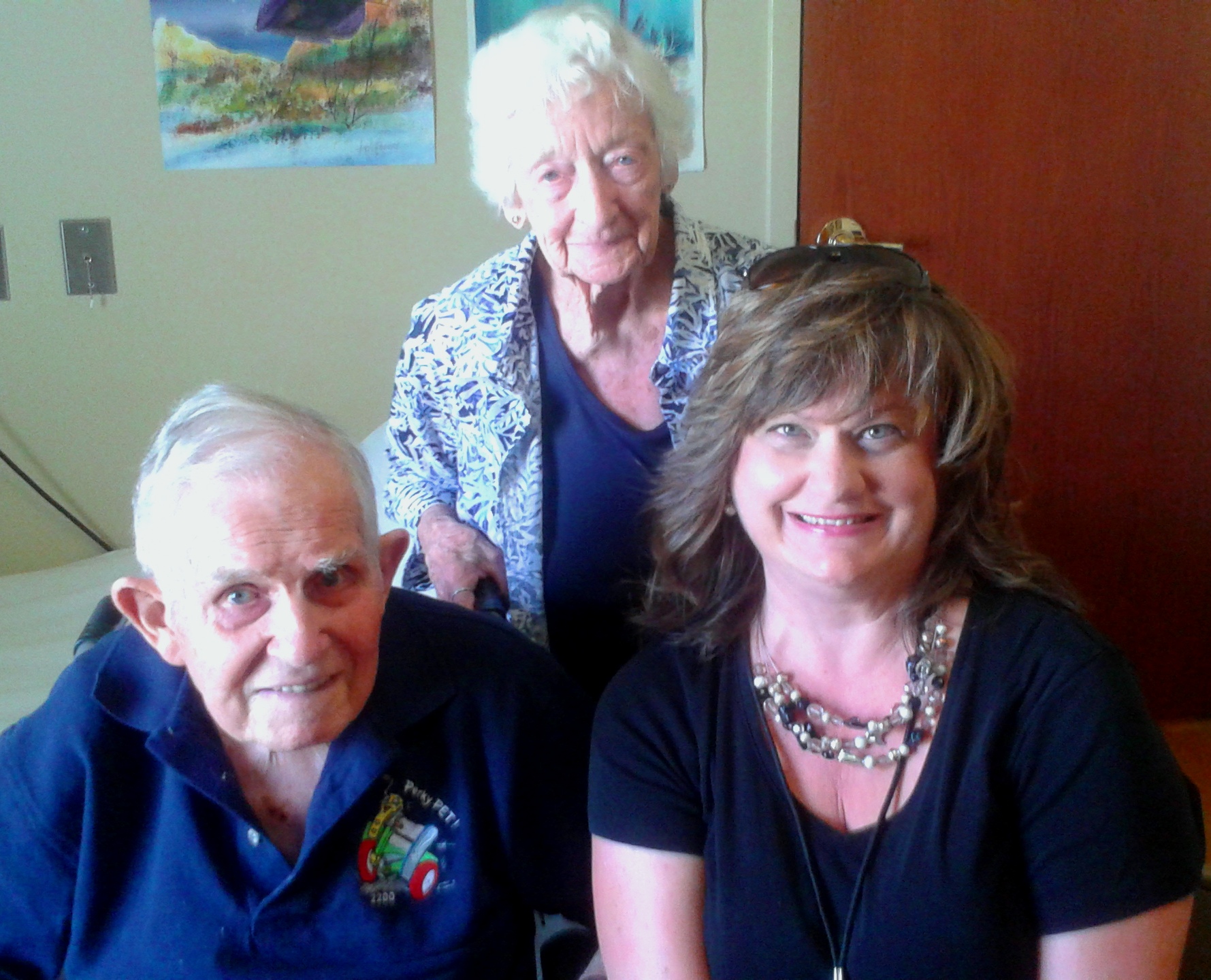
And then last week, Jack Rogers died. A lifelong, prolific artist, Rogers taught all four of my sons during his tenure as art teacher at Northwest Christian School.

The story of his courtship and enduring marriage to his wife, Fran, is featured in chapter 20 of War Bonds.

He was still painting up until the last week of his life as he decorated wooden tailgates for Personal Energy Transporters for the PET Project.

In November, I was privileged to cover one of his last art shows.

“I was given a gift and I want to share it,” he said.

And here’s where words fail.

How can I possibly convey the depth of my admiration and love for these people? How do I sum up the gratitude I feel for having been a small part of their lives and for being entrusted to share their stories with the world?

I can’t.

But I can say I will miss them and treasure the memories of the hours spent with Myrt Powers and Jack Rogers.

I hope that I’ve given readers of War Bonds a snapshot of how they made the post World War ll world, a place of hope.

Rest in peace, beloveds, for you have surely earned it.


20160720_142938
Jack and Fran Rogers, with Cindy Hval, 2016.