War Bonds

Seizing serendipity: WWII vet publishes novel

14021667_1144536465584979_1889335700444087371_n[1]

I was privileged to interview Stan Parks, 92, for this Saturday feature in the Spokesman Review.

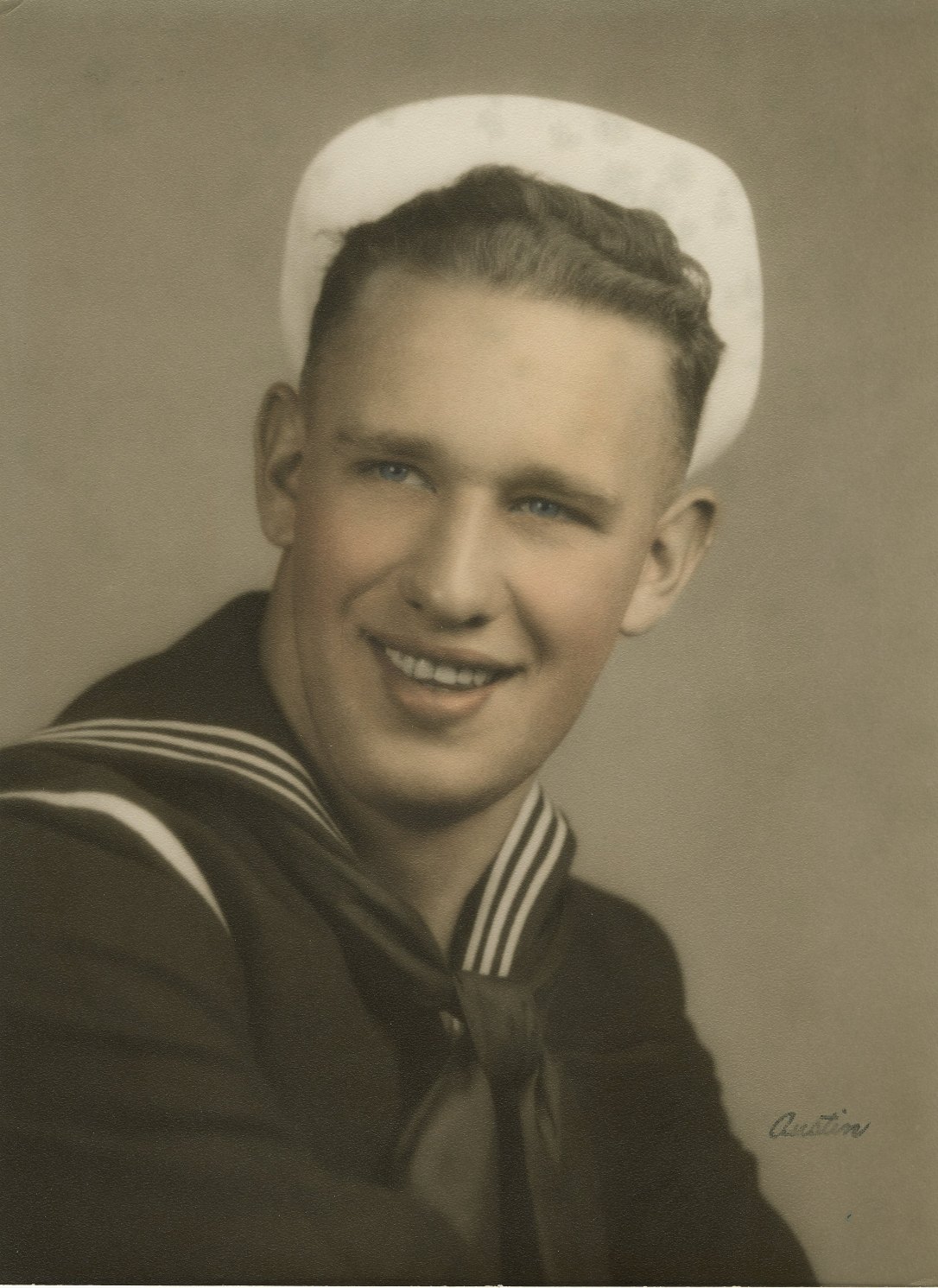
Stan Parks, 92, has been many things: sailor, dentist, world traveler, husband, father, grandfather, photographer, sculptor, civic leader. Recently, he added a new title to his resume: author.

In March he published his first novel, “Jakob’s Ladies,” through Gray Dog Press.

Tackling new projects is second nature to Parks, who also serves as president of the Spokane Downtown Kiwanis Club.

“I retired in 1982,” he said. Then he grinned. “But I didn’t really retire.”

 “Serendipity” is a word he uses often to describe the many opportunities he’s been able to embrace during his lifetime.

Born and raised in Chicago, Parks left his studies at Loyola University to join the Navy in 1942.

“Well, they let me finish my year at Loyola because I was part of the V-12 program,” he said.

The V-12 program was designed to supplement the force of commissioned officers in the U.S. Navy during WWII.

The newly commissioned lieutenant junior grade was assigned to the USS LST-53, a tank landing ship, recently returned from the invasion of Normandy. Parks and his crew and were sent to the Pacific theater.

“When the war ended we were given the job of returning occupied troops to Japan,” he recalled. “I saw quite a bit of Japan. We picked up Japanese from outlying islands and brought them home so they could rebuild the country.”

After the war, he resumed his studies at Loyola. One evening a friend invited Parks to join him and his wife for dinner. Unbeknownst to Parks, he wasn’t the only guest.

“Serendipity,” he said, smiling. “I chatted with my friend for awhile and then his wife called us into dinner. I walked into the dining room and saw this beautiful young lady. Her name was Eleanor, but I called her Norie.”

More than six decades have passed since that fateful meeting, but his eyes still light up at the mention of her name.

“We married on Dec. 28, 1947,” he said.

They settled in Aurora where Parks established a thriving dental practice and where they raised their four children.

In 1978, he visited Guatemala, volunteering his time to provide dental services at a medical mission run by the Benedictines. The trip proved eye-opening for Parks, who mostly cared for the students at the mission school.

“They had absolutely nothing,” he said. “No dental care at all.”

He knew he’d have to return, which he did almost every year until 2004. With other dentists, he established a modern dental clinic, complete with everything they’d need to care for patients.

“The office is still there,” said Parks. “And dentists still go.”

When asked why he returned to Guatemala so many times he replied, “The satisfaction of helping those people. You can’t believe how little they had.”

After 32 years, Parks retired and he and Norie moved to Fort Meyers, Florida. His retirement from dentistry allowed him to pursue other passions.

“I did a lot of acting,” he said. “My wife and I joined the Peninsula Players. I really enjoyed it. My wife was a great actress.”

And there were the boats. The Norie 1, 2 and 3.

“They got bigger each time,” Parks said, laughing. “We spent a lot of time in the Bahamas, living on the boat.”

When their son moved to Spokane, Parks and his wife enjoyed visiting the area so much, they purchased a condo so they could spend more time here.

He’s always had an artist’s eye; framed photographs he’s taken throughout the years line the walls of his South Hill home. But he also likes to work with his hands, so when an opportunity to take a sculpting class from Sister Paula Turnbull came, he seized it.

“Talk about serendipity,” he said, pointing to several busts that he created under her tutelage.

One of those pieces is a bas relief featuring the face of his beloved Norie, who died five years ago.

Tears fill his eyes when he says her name.

“We were married 63 years. She was fabulous. As gorgeous as she was physically, she was that way on the inside, too. It’s hard without her.”

After her death, he moved to Spokane permanently to be near his son.

He went to see Turnbull upon his return to find out if she was offering more classes.

“She said she was too busy to teach, but she said I could work in her studio,” said Parks. “I loved it.”

When he heard about a writing class at the Sinto Senior Activity Center he decided to take it. He’d already penned his memoir.

“Well, it’s not really finished,” he said.

But he wanted to try his hand at fiction.

“If you don’t know how to do something, you can learn! It sharpens your mind.”

With encouragement from his writing group, he wrote “Jakob’s Ladies,” a historical novel set in 1895, about a dentist who goes out west to Sheridan, Wyoming, to launch his practice.

Parks did quite a bit of research, even traveling to Sheridan.

“I was in love with my characters. When one of them died – that was the hardest part to write.”

The book is dedicated to Norie, “My lady, my first mate, my only mate.”

He’s pondering a sequel, but he has plenty to keep him busy. He’s always been part of civic groups, so his leadership of the Downtown Kiwanis is a good fit.

“I can’t become a philanthropist and give away a fortune, but I can join a club like Kiwanis and give away pretty big chunks of money.”

At 92, he’s not resting on any laurels.

“There’s so much to be done and so many opportunities to do it,” said Parks. “I need 100 more years to do all the things I want to do.”

War Bonds

One dance was all it took

Last week I was privileged to interview Leon and Dorothy Williams, who celebrated their 69th anniversary in April.

The Huntington Park Ballroom was awash in men in uniform in 1946, but Dorothy Wunderlich, 17, had eyes for only one.

A tall, handsome sailor with piercing blue eyes had shown up late, but still managed to secure a dance with Dorothy.

“We danced to ‘Goodnight Ladies,’ ” she recalled. “It was the last dance of the night.”

From their log home in Elk, Dorothy smiled at her husband, Leon Williams.

 “I called him my boyfriend after one dance,” she said. “I already had him cornered.”

Leon didn’t mind a bit. The 19-year-old had survived a rough childhood and already spent months at sea while serving with the Pacific fleet.

He never knew his father, and his stepfather was abusive. When he was 8, his stepfather was beating him and Leon’s 11-year-old brother Bud jumped on his back to try to end the beating.

Their stepfather kicked them out.

“My grandparents raised me and my brother,” Leon said.

The boys grew up in Milford, Utah. Bud dropped out of school his senior year to join the Navy, and Leon followed suit at 16 and was sent to Farragut Naval Training Station.

“You had to be 17 by the time you finished boot camp,” he explained. “I had my 17th birthday at Farragut.”

Hunting skills honed in Utah came in handy. His marksmanship earned him a spot as a gunner’s mate aboard the USS Ammen. He also served on the USS St. Paul.

Dorothy pulled a yellowed and stained Japanese flag from a box.

“This is proof he was there,” she said.

Leon explained that a fellow sailor had given him the flag during the invasion of Okinawa.

She also saved his blue wool sailor’s cap and every letter he wrote to her. And there were letters – because Leon was smitten after that single dance, and when he next had liberty, he hustled to the ballroom to meet Dorothy.

“He took me home on the bus afterward,” she said.

Leon was transferred to San Francisco, so letters flew back and forth. When he accrued enough leave time and knew he was eligible for discharge, he called her and told her to set a date for the wedding.

To his surprise, he had to get his mother’s written permission to marry because he wasn’t 21.

“I couldn’t understand it,” he said. “I’d been in the Navy for four years!”

They married April 6, 1947, and honeymooned in Las Vegas at his mother’s house. Leon’s brother and uncle came to Vegas to pick up a tractor and took the newlyweds back with them to Milford.

“The four of us were crammed into a tiny cab of a truck, hauling a tractor,” Dorothy said.

When asked how she felt about her unconventional honeymoon journey, she laughed and said, “I just shut up and went along. How do you think I’ve stayed married for 69 years?”

Leon took a job as the night marshal in Milford, but when an opportunity arose to work for the railroad, he jumped at the chance. He didn’t have a high school diploma, but a friend wrote “equivalent to” on the space for education and that was good enough. The pay was better and he needed the money.

The first two of their nine children had been born in 1948 and 1949.

In 1952, Union Pacific Railroad moved the family to Norwalk, California.

“I started as brakeman and was later promoted to conductor,” Leon said.

After several years in Norwalk, they bought a small ranch in Mira Loma, where their family flourished. Dorothy had been the oldest of nine, so she was used to a big family. However, replicating her family of origin was far from her mind when she married.

“I only wanted two!” she said.

But Leon relished being surrounded by four sons and five daughters.

“If I could do it over again, I’d have two or three more,” he said. “I wanted each and every one of them.”

Ranch life suited the family.

“We had chickens, pigs, horses and a garden,” Dorothy said.

Feeding her crew was a full-time job, especially since most evenings a neighbor kid or two would join the family.

“She always fixed good meals,” Leon said. “And every night we had dessert – cookies, pie or ice cream.”

They even had family vacations. The kids joked that they camped wherever there were railroad tracks. The family would cram into a 1957 Dodge station wagon and set off. It was common for hobos riding the rails to find their campsite. Instead of shooing them away, Dorothy welcomed them and shared whatever meal she’d prepared with the hungry men.

“They were so polite to our kids,” she recalled.

Once, when they’d graduated from station wagon to truck and camper, a hobo expressed a longing for apple pie.

“You bring me some apples, and I’ll bake you a pie,” Dorothy told him.

The next day he returned to the campsite with a big box of apples he “found” in a nearby orchard and Dorothy baked an apple pie in the oven in the camper, just as she’d promised.

After 38 years with Union Pacific, Leon retired, and he and Dorothy already knew where they wanted to spend their retirement years.

One of their sons had moved to Spokane and when Leon and Dorothy came to visit him, they fell in love with the area.

“This is heaven on Earth,” Dorothy said of their 40 acres in Elk.

All nine of their children live nearby, as do many of their 36 grandchildren and 55 great-grandchildren.

And last summer Leon and his brother Bud traveled back to Milford, Utah, where they finally received their high school diplomas. Forty-five students had dropped out of school to serve their country during World War II. Only four are still living, and only Bud and Leon were there to receive their long-awaited diplomas.

For Dorothy, 87, the reason for their long marriage is simple.

“I loved him, and that was it!”

Leon, 90, was equally succinct. He smiled at his bride and said, “You’ve just got to believe in each other.”


War Bonds

WWII veteran uses art talent to help disabled people around world

20160720_140851

Jack Rogers, 93, is featured in War Bonds: Love Stories from the Greatest Generation with his wife Fran. The couple celebrated 70 years of marriage in April.

In this article for the Spokesman Review, I share how Rogers hasn’t let a series of strokes slow his desire or ability to help those indeed.

Greatest Generation indeed!

Rolling his wheelchair to his desk beneath a window, Jack Rogers picked up his pen and added deft strokes to a picture of a lone cross-country skier traversing a snowy landscape.

Rogers, 93, has always said he won’t retire. And despite suffering a series of strokes in October, he’s kept his word, though these days his desk is in a North Side care and rehabilitation facility.

Looking up from his work he smiled and said, “Old age creeps up on you.”

He has spent a lot of time in and out of hospitals and rehab facilities following the strokes, but he still participated via wheelchair in his 40th Bloomsday race. He hasn’t missed one since the race began in 1977.

A founding member of the Spokane Watercolor Society, Rogers started the art department at Spokane Falls Community College in 1963 and taught there for 26 years.

Though he retired from the college, his schedule was still packed. In October, he was teaching a private student in his home when he suffered a stroke.

The past few months have been difficult, as the always-active man chafed at the limitations forced on him by his health.

“I need to make a contribution in this world by helping others,” he said.

Thankfully, his longtime friend Joe Kramarz found a way for Rogers to do just that.

Kramarz volunteers with Inland Northwest PET Project. Since 2005, the organization has been creating and distributing Personal Energy Transporters from a hillside shop in Colbert.

A PET is a hand-pedaled vehicle made of lumber and steel. The sturdy parts and solid-core rubber wheels provide transportation in terrain that would prove difficult for traditional wheelchairs to navigate.

The PETs are sent throughout the world to those who have lost use of their legs due to injury, birth defects, land mines, polio and other causes.

The organization has grown from a half-dozen volunteers to 100, scattered across the region from British Columbia to Alaska. Now Jack Rogers is one of them.

Kramarz came up with the idea to have Rogers paint customized tailgates for the PETs.

“We used to have Northwest-themed stencils on the tailgates,” he said. “Now we have Jack’s art.”

Kramarz knows how important it is for his friend to be useful. He takes the tailgates to Rogers and picks them up when he’s done.

“Jack’s told me many times, ‘If you’re not producing and helping other people, you’re not living,’ ” he said.

From a fly fisherman casting his line in a river, to snow-capped mountains, each scene Rogers creates has the unique flavor of the Inland Northwest.

“We just shipped 140 to Guatemala,” Kramarz said. “Jack’s done about 18, now.”

Dick Carpenter, founder of Inland Northwest PET Project, is happy to count Rogers as one of the many volunteers who make up the nonprofit.

“Absolutely incredible men and women come together as a team to make this happen,” he said. “It’s astonishing to me how committed these people are.”

The motto of the organization is, “Lifting people out of the dirt into a life of dignity and hope.”

Carpenter said the PETs have the ability to instantly change lives.

“In shame-based countries people with disabilities are hidden away,” he said. “Mobility makes all the difference – it erases the shame.”

As Rogers worked on a tailgate he said, “It takes me about two to three hours to finish one. My part is small; all the other volunteers make this happen.”

In addition to working with the PET Project, Rogers is still teaching private students and is illustrating a book for an author in Los Angeles.

The book is set in the Philippines – a place Rogers knows something about. During World War II his Army unit was the first one back into Manila, after Gen. Douglas MacArthur’s famous landing.

“I’m very fortunate God gave me a talent,” he said. “I have a duty to share it.”

Rogers still has no plans to retire.

“My point is not what I’ve done,” he said, “but what I’ve done for someone else.”

To help

Inland Northwest PET Project accepts donations.

Tax-deductible donations may be mailed to WCPC PET Project, 15123 Little Spokane Drive, Spokane, WA 99208. Donation form and more information available online at petspokane.org.

In addition to funding, current needs include donation of hard board, 11 feet by 5 feet or 10 feet by 4 feet, 1/4-inch thickness preferred.

For more information call, (509) 466-3425.

War Bonds

Stroke slows but doesn’t stop Jack Rogers

While out on assignment a few weeks ago, I found out the folks I was interviewing were good friends of Jack and Fran Rogers, whose story is told in a chapter titled “Can’t Take My Eyes Off of You” in War Bonds: Love Stories From the Greatest Generation.

I knew Jack, 93, had a stroke in October and his recovery process has been slow.

Imagine my delight when I heard that Jack, an art instructor for many years, was still painting! He paints Personal Energy Transporters (PETs). PETs are shipped to countries all over the world to provide personal mobility to amputees who are often victims of land mines and IEDs.  I wrote  about this great program here :http://www.spokesman.com/stories/2012/sep/27/pet-project-spreads-mobility/

Sadly, his health has had another setback, but I’m hoping to catch up with him soon.

Even a stroke can’t stop this WWll vet from wanting to do work that makes the world a better place.

20160617_164905
An example of Jack’s work on a PET
20160617_164942
Jack Rogers sits on a PET
War Bonds

70th anniversary: ‘I’m not quite finished’

20160622_115324-1

Today War Bonds couple Dean and Betty Ratzman appeared with me on Spokane Talks Online.

You can watch the program here.

The Ratzmans are celebrating their 70th wedding anniversary on June 23!
My favorite moment of today’s program occurred when host, Kent Adams, said to Betty, “You put up with him for 70 years! Did it take that long to train him?

Betty, 91,  quickly replied, “I’m not quite finished.”

The wit of the Greatest Generation remains undiminished by age.
How I love these people!

War Bonds

The thrill ain’t gone

13254332_1088081834563776_7878354948230130632_n[2]

Even a year after publication, it’s still a thrill to be asked to sign a stack of books! So grateful readers and booksellers are valuing War Bonds and the stories shared within.

13266071_1088081817897111_2872651087086270262_n[1]

A recent reading at a local Barnes & Noble prompted a slew of interest and phone calls, so I was delighted to stop in and sign more copies.

As we head into Memorial Day weekend I’m even more conscious of the privilege I’ve had in being allowed to share these stories before they were lost.

I feel like “thankful” should be part of my signature.

War Bonds

Reading in the Hundred Acre Wood

13267776_1082785828426710_8004627206616391344_n[1]

Spent a delightful evening at Barnes & Noble last night. I was joined by fabulous poet Zan Agzigian and amazing blues/jazz songstress Heather Villa for an evening of poetry, prose and song.

The reading was held in the children’s area of the store because that’s where they have the stage, so it was fun to read from Pooh’s Hundred Acre Wood!

In addition to reading from War Bonds, I shared a portion of my work-in-progress, and the reception was warm and enthusiastic. A much-needed boost in the slow-going labor of writing my next book.

Even more fun was having my youngest son, 16-year-old Sam, in the audience.
“I love to hear you read,” he said. And he snapped the above photo.

At the signing afterward, a woman approached and asked me to sign a copy of War Bonds .

“It’s not my copy,” she explained. “It’s my 17-year-old daughter’s. She’s already read it several times and she often reads the stories aloud to me. She wants she and her fiance to be like the couples in your book, growing old together.”

How cool is that? A teenager who values the stories of the Greatest Generation! Nothing, makes me happier or more hopeful then know these stories are appreciated by the next generation.


War Bonds

Eight bells, the end of Charlie’s watch

20160423_133346
Patriot Guard Riders

Cindy Hval, Spokesman Review, April 24, 2016

The Patriot Guard Riders stood silently, their flags held aloft as a light rain fell at St. Mary’s Catholic Church in Spokane Valley on Saturday.

They’d come to honor Charles Boyer, 95, who died April 15.

As a 21-year-old sailor stationed at Naval Air Station Kaneohe, Boyer had earned membership into an exclusive club: the Pearl Harbor Survivors Association.

Though he was an aviation machinist’s mate, Boyer was assigned to service and drive the Navy’s trucks at Kaneohe. The morning of Dec. 7, 1941, he’d just dropped off some sailors at church and was on his way back, when he saw several khaki-colored planes approaching fast and low.

 In newspaper interviews, Boyer shared his memories of the horrific attack.

“I said, ‘Look at the show the Army’s putting on! Then I saw the big ol’ red meatballs on the wings of the plane and I said, ‘Army, hell!’ ” he recalled. “The planes were coming over us, shooting at us and dropping bombs.”

With the truck still moving, Boyer dove out and took shelter under another truck parked a few yards away.

He stayed under that truck until the enemy planes passed, then he ran to a large tin shed that served as a garage for the trucks at Kaneohe.

“Time seemed like forever,” he said. “I was pretty scared.”

He wasn’t the only one frightened. He told of a fellow sailor on guard duty who shot at a fence post. “He swore it moved,” he recalled, grinning.

But he didn’t smile when he talked about the results of the attack. Twenty Americans died on the base at Kaneohe that day, and as for the aircraft – “they did a hell of job,” Boyer said. “They got every warplane on Kaneohe.”

Four years and one day after the attack on Pearl Harbor, he married Irene Britton. They celebrated their 70th anniversary in December.

After 20 years, Boyer retired as a chief petty officer, but he couldn’t quite leave Navy life behind. He spent the next 22 years working in civil service for the Navy.

Upon moving to Spokane Valley in 1998, he joined the Lilac City Chapter of the national Pearl Harbor Survivors Association. He was especially close to fellow survivor John (Sid) Kennedy, whom he’d met in 1941 at aviation machinist school in San Diego. Later they were both sent to Kaneohe. Kennedy died July 7, 2015, and at his funeral Boyer told a friend, “I guess he went on ahead without me.”

At one time there were 125 active members of the Lilac City Chapter of the Pearl Harbor Survivors Association. Only one, Ray Garland, 93, remains.

Garland attended Boyer’s funeral on Saturday.

“It’s kind of a lonely feeling,” he said.

Carol Edgemon Hipperson, author of the Ray Daves biography, “Radioman: An Eyewitness Account of Pearl Harbor and World War II in the Pacific,” also feels Boyer’s loss keenly.

“Charlie was much like Ray Daves to me,” she said. “Of all the Pearl Harbor survivors those two were the ones most like my own father: kind, gentle, soft-spoken, humble, voracious readers, towering intellects.”

She admired his cheerful spirit and compassion.

“Most people get cranky when they don’t feel well or things don’t go right. Charlie never did. It was just his nature to smile and speak softly to everyone around him.”

Boyer’s son, Steve, agreed.

Three weeks ago as his father signed papers for hospice care, Steve Boyer choked up. His dad noticed his distress and said, “Don’t feel bad. I’ve had a great life – and a very, very long life.”

While many knew Charlie Boyer as a Pearl Harbor survivor, to his son, he was just Dad.

“I didn’t even know he was a Pearl Harbor survivor until he moved to Spokane Valley,” he said. “He never talked about it. He was just my dad and always will be. I’m going to miss him.”

20160423_133633-1


War Bonds

And then there was one….

PIES_for_HX_01-17-2010_K8HQCF9_t1860[1]

From left, standing, are Betty Schott, Sid Kennedy, Charlie Boyer, seated, Bud Colburn, Ray Daves, Warren Schott and Denis Mikkelsen.

I took this photo six years ago when the local chapter of Pearl Harbor Survivors were gifted with pies from Cyrus O’ Leary when they honored hometown heroes on National Pie Day.
Sadly, today I learned that Charlie Boyer (seated) passed away on April 15.
In six short years we’ve lost every one of these precious people.

Now, only 93-year-old Ray Garland (not pictured) remains as the sole member of the Lilac City Chapter of Pearl Harbor Survivors.

I interviewed Charlie many times over the years, including a story about his love for his bride, Irene.

On Dec. 7, 1941, he was a 21-year-old seaman stationed at Naval Air Station Kaneohe. He was driving a truck, bringing someone back from church when he saw an airplane flying toward them. “I said, ‘Look at the show the Army’s putting on,’ ” he recalled. “Then I saw the big ol’ red meatballs on the wings of the plane. I said, ‘Army, hell!’ ”

Here are a few more Charlie quotes:

“The planes were coming over us, shooting at us and dropping bombs.They did a hell of job,” he said of the Japanese pilots. “They got every warplane on Kaneohe.”

Of the  attack he said, “Time seemed like forever. I’d say a few of us were pretty scared.” He told of a fellow soldier on guard duty who shot at a fence post. “He swore it moved,” he recalled with a grin.

Rest in peace, Charlie. Rest in peace.

13-SFCC-charlie boyer, basic


War Bonds

Making Pearl Harbor Personal

12744683_1047458598626100_4087895596289870672_n[1]

I knew I was in trouble when I read the sign for Ford Island and starting crying.After many years of interviewing and writing about Pearl Harbor Survivors I was for the first time,  walking where they walked.

My husband and I were celebrating our 30th anniversary on Oahu and Pearl Harbor was one of our first stops.

Chapter 11 of War Bonds: Love Stories From the Greatest Generation tells the story of Warren and Betty Schott who lived on Ford Island and both survived the horrific attack.

I pictured Warren’s desperate drive to get his wife to safety. They’d spoken of shrapnel falling from the skies– of the road shredded by machine gun fire– of the terror and the noise.

We watched a short film featuring actual footage of the attack. A scene of sailors and soldiers pulling the wounded and dead from the Harbor made me gasp. That’s what Warren had done in the aftermath– it was the one thing he didn’t want to discuss with me over the course of many interviews. It was the only thing he refused to speak of with his wife and best friend of 76 years.

1913753_1047614618610498_5611130893995793483_n[1]


As we boarded the boat that took us to the USS Arizona, I thought of Pearl Harbor Survivor Ray Daves, who died in 2011. His friend George Maybee perished aboard the Arizona. His remains are entombed in the waters below the memorial. The throng of tourists quieted. The only sound was the snapping of the flag in the wind as I found Maybee’s name among the more than 1,000 names engraved. I wished I could tell Ray.

All of the stories, all of the interviews over the years in no way prepared me for the magnitude, the solemness of this sacred place.

Remember Pearl Harbor. Indeed, I will never forget this place, these people, their sacrifice.

Here are links some of the stories I’ve written about those who survived the Day That Will Live in Infamy.

World War ll Vets Remember

World War ll Vets Educate Students

A Sailor Remembers

Fond Memories of Ray Daves Endure

Survivors of 1941 Attack Bring History to Life

Grateful for Vet’s Story

Pearl Harbor Survivors Mark 73rd Anniversary in Spokane

The World has Lost Yet Another WWll Hero

Pearl Harbor Survivor’s Story Comes to an End

Pearl Harbor Witness: ‘It was so scary!’