Columns, War Bonds

Sometimes the next chapters aren’t yours to write

Writer’s fall in love with their characters. It’s just a fact. But sometimes the rest of the story isn’t yours to write– especially when it’s the true, ever-unfolding story of your children.

When it comes to books I’m a sucker for a good title, but it’s the opening lines that determine whether I’ll delve into the depths of the story.

There’s something satisfying about cracking open a book when the first few chapters are so engrossing and engaging that you know you’re in for a good read.

I’m to the midway point of writing my second book, so my thinking is fogged by pages, outlines, indexes and introductions.

Perhaps that’s why when a new friend commented that it must be hard having my two oldest sons gone from the nest and completely independent, a book metaphor immediately sprung to mind.

“Not really,” I said. “I’m blessed to have been able to write their introduction and the first few chapters, the rest of their stories are their own to tell.”

Those words have stayed with me as I watched two close friends send sons off to college recently.

It’s been eight years since my firstborn flew the coop, and it wasn’t an easy transition for any of us. But he was home so often to do laundry or eat dinner that aside from his empty room it was hard to tell he’d really gone. Our youngest quickly moved into the empty room, delighted to no longer have to bunk with a brother. Plus we got a cat, so there were still five living things for me to take care of.

Six years ago our second son moved out. Again, it wasn’t far and again there were laundry visits and family dinners and yes, another cat. Then Alex moved to Houston. No more popping in for food. An empty place at the table on Thanksgiving. And Christmas. And his birthday.

Happy that he was flourishing in his new place, I encouraged and applauded from afar, but the first time he admitted to being homesick, I hung up the phone, went to my room, shut my door and wept.

My tears were not only for his loneliness and for the ache in my heart from missing him, but also because I knew his homesickness was probably temporary. And it was.

Now our third son is preparing to move to Nashville this spring to pursue his dream of a music career. I try not to think about it too much, but my husband has already vetoed any additional cats.

I’ve done some reading and I looked at a map. There are 2,112.82 car miles between Spokane and Nashville. I’m pretty sure Zach won’t be coming home to do laundry or eat dinner.

Number two son is also on the move again. Next month he’ll move from Houston to Columbus, Ohio. Columbus is where his girlfriend is from. She’s the one who eased his homesickness. I haven’t met her in person yet, but I already love her because Alex is so happy.

At first I was excited. I’m geographically challenged and assumed Columbus would be closer to Spokane than Houston. Columbus is 2,117.27 miles by car from Spokane.

It’s not any closer.

If I was the author of my sons’ stories, I would write them successful careers and happy relationships here in Spokane, with homes just a few miles away – not quite within walking distance.

I didn’t lie when I said it wasn’t hard to see them living independent lives. After all, the goal of parenting is to release competent contributors into the world, not to keep them dependent on their parents.

I’m truly thrilled when my sons embrace new opportunities. But perhaps I should have added that sometimes I struggle with wanting to take out my red pen and edit certain parts of their stories, and occasionally I long to rewrite entire sections.

Yet, I’ve relinquished creative control of these characters I helped create. They’re writing the storyline now, and I can’t wait to see what happens next.

Contact Cindy Hval at dchval@juno.com. Follow her on Twitter at @CindyHval.

12525368_1014088885296405_4349807580375693106_o1

My sons. My heart. 2008.

War Bonds

Bicycle Built for Two

They rode through life together.

When Chuck and Harriet began dating, he didn’t have a car, so she’d perch on the handlebars of his bike and off they’d go. That’s why I titled their chapter in War Bonds, “Bicycle Built for Two.”

They were married January 16, 1944 by a Navy chaplain at a YMCA and a dozen eager sailors served as their witnesses. After two months together, Chuck was sent to France and they spent 17 months apart. That was too much for both of them.

And so for the next 72 years they were inseparable.

Chuck died August 7 and Harriet passed away September 10th.

Today I received this note from their family.

Your book was such a blessing to our family. We had several copies that we passed around at their celebration Sunday. A copy always sat on their dressing table which we showed to all their many health care providers. If Mom was having a bad day, they would sing “Bicycle Built for Two” and that would cheer her up. Thank you for writing such a meaningful book.

But I’m the one who has been blessed to meet such amazing people and to share just a small part of their lives.

Their stories have become part of my own story and I’m forever thankful.

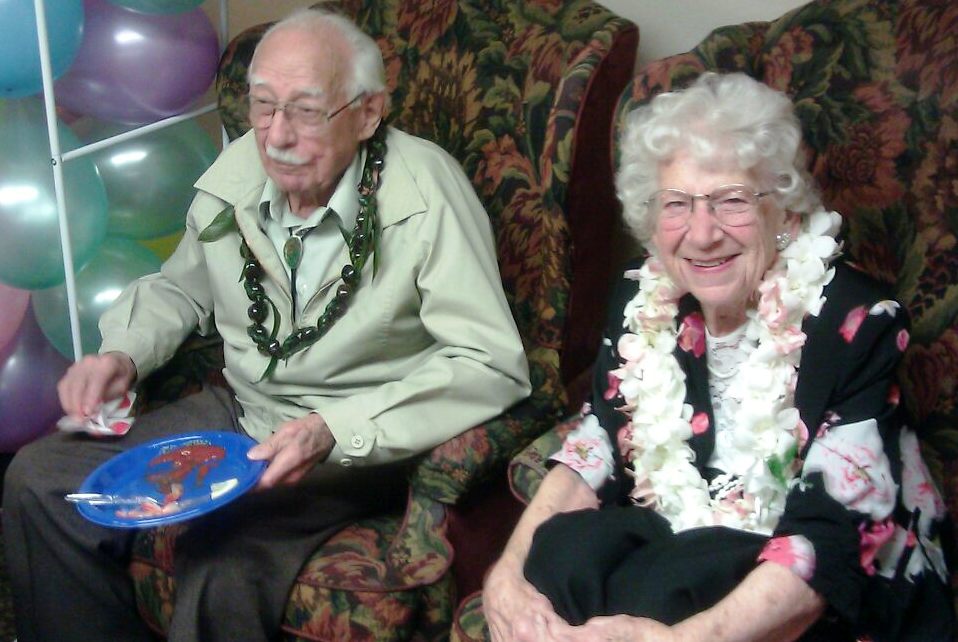
soliday-honeymoon-low-res

Chuck and Harriet Soliday, 1945

War Bonds

Hey! I’m collectible!

I hadn’t checked my Amazon author page in awhile, but two new reviews prompted me to take a look.

While I’m thrilled War Bonds: Love Stories From the Greatest Generation  is still generating reviews 18 months after publication, what caught my eye was that the list of copies available from Amazon now includes “collectible” editions!

Having no clue as to what makes recently-published books, collectible, I clicked on the copies offered.

To my delight it was the signed copies that were deemed collectible and offered at higher prices than the unsigned copies.

This first-time author is tickled to find the signature that graces school report cards and field trip permission slips is now “value-added.”

What a wonderful world 🙂13254332_1088081834563776_7878354948230130632_n[2]

Columns

A visit from the Frown Fairy

12642565_1014045538634073_7230048434747330907_n2

In which I’ve come unglued. Or something. Seriously, aging isn’t for the faint of heart– or weak of ankle.

Squinting at my phone, I rubbed my thumb across the screen, certain there was a smudge on it marring the photo I’d just taken of my friend and me.

After posting it on Facebook, I checked the enlarged photo on my computer and that shadow I’d seen between both of our brows was still there. Only it wasn’t a shadow – it was most definitely a crease. How had we both suddenly developed frown lines right between our eyes? Neither of us is prone to frowning.

And not for the first time, I realized I should have listened to my mother.

Sometime in her late 40s in an effort to combat wrinkles, my mother came up with an innovative solution to prevent pesky frown lines. Before going to bed at night, she affixed a corn plaster right between her eyes. She dubbed them “frownies” and was confident the plaster would prevent wrinkles from creasing her forehead while she slept.

 The only problem was sometimes those frownies migrated during the night. She’d come to the breakfast table with one in her hair or on her cheek. This was the subject of great mirth to me and my siblings. To Mom, not so much.

I’ve noticed other signs of increasing decrepitude. A few months back I started having severe pain in my right elbow that radiated down my forearm.

“How could I have tennis elbow?” I moaned to my husband. “I haven’t played tennis in 25 years!”

I took ibuprofen and soldiered on, unwilling to spend time or money on a doctor visit. A colleague heard my groans and diagnosed the issue. Turns out it wasn’t tennis elbow – it was “mouse elbow,” a common problem for people who work at computers all day.

She sent me a chart about how to sit at my desk to help alleviate the pain. I adjusted my chair and desk, bought an elbow brace and before long, the pain was gone. Who needs a doctor when you’ve got a journalist?

It’s a good thing my elbow felt better, because lately I’ve been limping. The pain radiates from my Achilles tendon, making walking miserable. This is not good news because I walk several miles three to four times a week and need this exercise for both my physical and mental health.

Achilles tendinitis is most common in runners, and I can assure you I only run if something or someone is chasing me. Baffled, I tried ice and heat and ibuprofen. Nothing seemed to work.

I took several weeks off from my walking routine, but it’s not like I can go through life without walking anywhere.

Even my journalist friends were baffled.

Then one day while sitting at my desk, I discovered the source of my strain. While writing, I often cross my legs and push my right foot against the back of my desk, flexing my Achilles. I also often tuck my legs behind me, flexing my right foot against the chair leg.

Bingo! Pain solved. Kind of.

Keeping my feet on the ground while working has fixed the source of the problem, and I’ve been able to resume my walking routine, but hills are still painful and if I walk too much, the limp returns.

According to Google, this type of injury can take up to two years to heal. Google further said this problem is also associated with the aging process.

Sometimes I really hate the internet.

So, there you have it. Apparently, I’ve reached the age where frown fairies sneak into my room and slap a crease between my brows while I’m sleeping. I can hurt my elbow by typing and my Achilles by sitting at my desk.

This morning I woke up, stretched my arms over my head and sighed when I heard my shoulders snap, crackle and pop. I didn’t bound out of bed, I cautiously tested my tendon and groaned when I felt the familiar ache that told me I’d walked too many miles yesterday.

I took the stairs to my office one at a time and carefully adjusted my mouse pad, keyboard and chair before I began writing.

As I type my feet are firmly on the ground. At this rate, they’re going to be the only firm thing about me.

Like Bette Davis famously said, “Old age ain’t no place for sissies.”

Which could be why she also said, “There comes a time in every woman’s life when the only thing that helps is a glass of Champagne.”

Contact Cindy Hval at dchval@juno.com. She is the author of “War Bonds: Love Stories From the Greatest Generation.” You can listen to her podcast “Life, Love and Raising Sons” at SpokaneTalksOnline.com. Her previous columns are available online at spokesman.com/ columnists. Follow her on Twitter at @CindyHval.

War Bonds

Author Podcasts: Would you? Could you? Should you?

I have a confession to make. I’ve never listened to a podcast. My sons have played bits and blurbs of their favorite podcast for me, but I’ve never actually listened to one.

Until now.

I’m right in the  middle of writing my second book, Life, Love and Raising Sons (Not Necessarily in That Order) and the opportunity to host a podcast about the same topics featured in my book opened up.

Never one to wade in and test the waters, I jumped in and drug 2 of my 4 sons with me.

In the first episode we talk about spoilers and ruin Star Wars, Santa and a classic novel or two. Undaunted, in the next episode we talk about summer movies, and board games you shouldn’t play with the family.

Produced by Spokane Talks Online, the forum offers a behind-the-scenes look at the fodder for my Spokesman Review columns, magazine articles and of course my inspiration for the new book. The podcast can be downloaded at Spokane Talks Online and iTunes etc.

It’s been a bit of learning curve, but awfully fun to hang out with my sons and spill the family secrets.

I’m not yet sure if a podcast is a valuable marketing tool for a fairly new author in the middle of writing her second book. Time will tell.

In the meanwhile, I’d love to hear your thoughts about your favorite podcasts– especially if you listen to any author podcasts!
And please tune in to Love, Life & Raising Sons here http://www.spokanetalksonline.com/category/podcasts/life-love-and-raising-sons/

img_3022

Sam Hval, Cindy Hval, Zach Hval

War Bonds

The house that love built

The other night I had a reading/signing event at Touchmark Retirement Community.

An employee approached me and said while she hadn’t read War Bonds: Love Stories From the Greatest Generation, her daughter had.

It seems her daughter and her husband were looking for home and found one they really wanted in Millwood, WA.

“It wasn’t the house so much, it was what they felt when they were inside it,” the woman said. “There was such love in that house.”

A neighbor chatted with them and told them the couple who had lived there had built the house and had been married for more than 70 years.

“Their story is in a book,” he said.

Alas, the couple didn’t get the house, but they did buy a copy of War Bonds. And they fell in love with Warren and Betty Schott, just like the rest of us.

Betty 3

Warren and Betty on their 75th anniversary


War Bonds

Seizing serendipity: WWII vet publishes novel

14021667_1144536465584979_1889335700444087371_n[1]

I was privileged to interview Stan Parks, 92, for this Saturday feature in the Spokesman Review.

Stan Parks, 92, has been many things: sailor, dentist, world traveler, husband, father, grandfather, photographer, sculptor, civic leader. Recently, he added a new title to his resume: author.

In March he published his first novel, “Jakob’s Ladies,” through Gray Dog Press.

Tackling new projects is second nature to Parks, who also serves as president of the Spokane Downtown Kiwanis Club.

“I retired in 1982,” he said. Then he grinned. “But I didn’t really retire.”

 “Serendipity” is a word he uses often to describe the many opportunities he’s been able to embrace during his lifetime.

Born and raised in Chicago, Parks left his studies at Loyola University to join the Navy in 1942.

“Well, they let me finish my year at Loyola because I was part of the V-12 program,” he said.

The V-12 program was designed to supplement the force of commissioned officers in the U.S. Navy during WWII.

The newly commissioned lieutenant junior grade was assigned to the USS LST-53, a tank landing ship, recently returned from the invasion of Normandy. Parks and his crew and were sent to the Pacific theater.

“When the war ended we were given the job of returning occupied troops to Japan,” he recalled. “I saw quite a bit of Japan. We picked up Japanese from outlying islands and brought them home so they could rebuild the country.”

After the war, he resumed his studies at Loyola. One evening a friend invited Parks to join him and his wife for dinner. Unbeknownst to Parks, he wasn’t the only guest.

“Serendipity,” he said, smiling. “I chatted with my friend for awhile and then his wife called us into dinner. I walked into the dining room and saw this beautiful young lady. Her name was Eleanor, but I called her Norie.”

More than six decades have passed since that fateful meeting, but his eyes still light up at the mention of her name.

“We married on Dec. 28, 1947,” he said.

They settled in Aurora where Parks established a thriving dental practice and where they raised their four children.

In 1978, he visited Guatemala, volunteering his time to provide dental services at a medical mission run by the Benedictines. The trip proved eye-opening for Parks, who mostly cared for the students at the mission school.

“They had absolutely nothing,” he said. “No dental care at all.”

He knew he’d have to return, which he did almost every year until 2004. With other dentists, he established a modern dental clinic, complete with everything they’d need to care for patients.

“The office is still there,” said Parks. “And dentists still go.”

When asked why he returned to Guatemala so many times he replied, “The satisfaction of helping those people. You can’t believe how little they had.”

After 32 years, Parks retired and he and Norie moved to Fort Meyers, Florida. His retirement from dentistry allowed him to pursue other passions.

“I did a lot of acting,” he said. “My wife and I joined the Peninsula Players. I really enjoyed it. My wife was a great actress.”

And there were the boats. The Norie 1, 2 and 3.

“They got bigger each time,” Parks said, laughing. “We spent a lot of time in the Bahamas, living on the boat.”

When their son moved to Spokane, Parks and his wife enjoyed visiting the area so much, they purchased a condo so they could spend more time here.

He’s always had an artist’s eye; framed photographs he’s taken throughout the years line the walls of his South Hill home. But he also likes to work with his hands, so when an opportunity to take a sculpting class from Sister Paula Turnbull came, he seized it.

“Talk about serendipity,” he said, pointing to several busts that he created under her tutelage.

One of those pieces is a bas relief featuring the face of his beloved Norie, who died five years ago.

Tears fill his eyes when he says her name.

“We were married 63 years. She was fabulous. As gorgeous as she was physically, she was that way on the inside, too. It’s hard without her.”

After her death, he moved to Spokane permanently to be near his son.

He went to see Turnbull upon his return to find out if she was offering more classes.

“She said she was too busy to teach, but she said I could work in her studio,” said Parks. “I loved it.”

When he heard about a writing class at the Sinto Senior Activity Center he decided to take it. He’d already penned his memoir.

“Well, it’s not really finished,” he said.

But he wanted to try his hand at fiction.

“If you don’t know how to do something, you can learn! It sharpens your mind.”

With encouragement from his writing group, he wrote “Jakob’s Ladies,” a historical novel set in 1895, about a dentist who goes out west to Sheridan, Wyoming, to launch his practice.

Parks did quite a bit of research, even traveling to Sheridan.

“I was in love with my characters. When one of them died – that was the hardest part to write.”

The book is dedicated to Norie, “My lady, my first mate, my only mate.”

He’s pondering a sequel, but he has plenty to keep him busy. He’s always been part of civic groups, so his leadership of the Downtown Kiwanis is a good fit.

“I can’t become a philanthropist and give away a fortune, but I can join a club like Kiwanis and give away pretty big chunks of money.”

At 92, he’s not resting on any laurels.

“There’s so much to be done and so many opportunities to do it,” said Parks. “I need 100 more years to do all the things I want to do.”

Columns

The road to enlightenment

In which we travel, see beautiful things, drive past enlightenment, do not catch Pokémon, but a lot make memories.

Scenic mountain vistas, mighty locomotives, a dash of dogs and a sprinkling of enlightenment – our recent road trip had it all.

After an enjoyable visit to Olympia a couple of years ago, we decided we wanted to take our youngest to the state Capitol. The torture of an Interstate 5 drive had been lost in the haze of more pleasant memories.

We arrived in time for a late dinner at the hotel restaurant, and our spirits were revived with food, drink and a view that didn’t involve asphalt.

“Look at the lady with the cute dog,” Sam said, as we gazed out the window. “I think it’s a corgi.”

 A few minutes later, Derek said, “Hey! There’s a lady with two of them!”

Bemused, we watched a parade of corgis and their owners, taking a slow stroll around the hotel grounds.

“Must be a corgi convention,” I speculated.

In the morning we found out a corgi dog show was being held at the hotel.

With coffees in hand we braved I-5 again for a few miles before heading to Elbe, Washington, for a steam train excursion. Aside from the train at Silverwood, none of us had been aboard a genuine steam-powered train.

On the way, we drove through Yelm and right past Ramtha’s School of Enlightenment. To our surprise, Sam had never heard of JZ Knight. Or Linda Evans. Or New Age anything.

Derek attempted to educate him: “A bunch of people sold their dogs, their cats, their kids and followed this guru chick who claimed to channel a dude named Ramtha.”

“Dad, you can’t do that,” said Sam.

“Do what?” asked Derek.

“Sell your kids,” Sam replied.

“Well, they did,” said Derek, who then attempted to explain Linda Evans and the 1980s. We believe travel should be as educational as possible.

While explaining “Dynasty” and really big hair, he also confidently negotiated a seemingly endless series of double roundabouts.

“Boy, all I’ve been doing is making right turns,” he mused. “I hope we’re getting somewhere.”

But get somewhere we did. We enjoyed the 14-mile excursion via First Class passenger car. Brilliant blue skies framed Mount Rainier, and we disembarked at Mineral to tour the Logging Museum, which is set up like a railroad logging camp. We explored the camp and the steam locomotive exhibits before boarding for the return trip.

The next day Sam announced he wanted to see some waterfalls, so we laced up our walking shoes and hiked Tumwater Falls Park. The 15-acre park features a network of trails and footbridges offering expansive views of the tumbling falls.

Of course, the point of our visit was to tour the state Capitol. We knew our politically aware son would appreciate the rich history of the building and sitting in the Senate and House galleries. Our visit concluded with a stop at the gift shop, where we discovered that our state is still firmly in the grip of a two-party system. You can purchase Democrat Merlot and Republican Merlot, but if you’re looking for a Libertarian Pinot Gris, you’re out of luck. You can also get Donald Trump, Hillary Clinton and Bernie Sanders paper dolls, but there was nary a Gary Johnson paper doll to be found.

While Sam enjoyed the Capitol, he was unimpressed with the slogan we read on a sign: “City of Olympia: Working together to make a difference.”

“I feel like it should be, ‘Working together to make a more clichéd tagline,’ ” he said.

The snark is strong with this one.

After dinner at Budd Bay Café we were eager to stroll along the boardwalk with Sam. The lovely views of the marina and harbor were a highlight of our last trip. To our surprise, the boardwalk teemed with people milling about looking at their phones. Couples, singles and families ambled along, heads down, staring at their screens, oblivious to the sunlight reflected on the water, heedless of the lovely displays of public art and tone deaf to the lone street musician who strummed his guitar.

My suspicions were confirmed when I stopped at Harbor House.

“Is this a Pokemon Go stop?” I asked.

He nodded.

“It’s right out there,” he said, pointing toward the harbor. Then he shrugged. “It’s an epidemic.”

We watched as couples ignored the delighted squeals of their toddlers pointing at the boats bobbing in the water, instead intently scanning their phones for a Squirtle in the wild.

Saddened, we escaped the crowds and climbed the lookout tower, which offers stunning views of the harbor crowned by the Capitol dome.

Gazing down I saw a lone family on the beach. None of them had smartphones out. The preteen brother and sister were skipping stones across the water while their parents watched.

I looked for Derek and Sam to show them another family untethered from technology. I found them standing side by side, talking quietly, watching the sun slowly sink into the horizon. Their broad shoulders and height are so alike now, it took my breath away.

Quietly, I sat on a bench behind them and dug my phone out of my purse. I didn’t use it to search for a Pokemon, I used it to snap a photo and capture a memory.

I’d seen a lot of lovely things on our trip, but nothing as beautiful as this.

13900235_1140759745962651_2061252563433272046_n[2]

Contact Cindy Hval at dchval@juno.com. She is the author of “War Bonds: Love Stories From the Greatest Generation.” Her previous columns are available online at spokesman.com/ columnists. Follow her on Twitter at @CindyHval.


War Bonds

One dance was all it took

Last week I was privileged to interview Leon and Dorothy Williams, who celebrated their 69th anniversary in April.

The Huntington Park Ballroom was awash in men in uniform in 1946, but Dorothy Wunderlich, 17, had eyes for only one.

A tall, handsome sailor with piercing blue eyes had shown up late, but still managed to secure a dance with Dorothy.

“We danced to ‘Goodnight Ladies,’ ” she recalled. “It was the last dance of the night.”

From their log home in Elk, Dorothy smiled at her husband, Leon Williams.

 “I called him my boyfriend after one dance,” she said. “I already had him cornered.”

Leon didn’t mind a bit. The 19-year-old had survived a rough childhood and already spent months at sea while serving with the Pacific fleet.

He never knew his father, and his stepfather was abusive. When he was 8, his stepfather was beating him and Leon’s 11-year-old brother Bud jumped on his back to try to end the beating.

Their stepfather kicked them out.

“My grandparents raised me and my brother,” Leon said.

The boys grew up in Milford, Utah. Bud dropped out of school his senior year to join the Navy, and Leon followed suit at 16 and was sent to Farragut Naval Training Station.

“You had to be 17 by the time you finished boot camp,” he explained. “I had my 17th birthday at Farragut.”

Hunting skills honed in Utah came in handy. His marksmanship earned him a spot as a gunner’s mate aboard the USS Ammen. He also served on the USS St. Paul.

Dorothy pulled a yellowed and stained Japanese flag from a box.

“This is proof he was there,” she said.

Leon explained that a fellow sailor had given him the flag during the invasion of Okinawa.

She also saved his blue wool sailor’s cap and every letter he wrote to her. And there were letters – because Leon was smitten after that single dance, and when he next had liberty, he hustled to the ballroom to meet Dorothy.

“He took me home on the bus afterward,” she said.

Leon was transferred to San Francisco, so letters flew back and forth. When he accrued enough leave time and knew he was eligible for discharge, he called her and told her to set a date for the wedding.

To his surprise, he had to get his mother’s written permission to marry because he wasn’t 21.

“I couldn’t understand it,” he said. “I’d been in the Navy for four years!”

They married April 6, 1947, and honeymooned in Las Vegas at his mother’s house. Leon’s brother and uncle came to Vegas to pick up a tractor and took the newlyweds back with them to Milford.

“The four of us were crammed into a tiny cab of a truck, hauling a tractor,” Dorothy said.

When asked how she felt about her unconventional honeymoon journey, she laughed and said, “I just shut up and went along. How do you think I’ve stayed married for 69 years?”

Leon took a job as the night marshal in Milford, but when an opportunity arose to work for the railroad, he jumped at the chance. He didn’t have a high school diploma, but a friend wrote “equivalent to” on the space for education and that was good enough. The pay was better and he needed the money.

The first two of their nine children had been born in 1948 and 1949.

In 1952, Union Pacific Railroad moved the family to Norwalk, California.

“I started as brakeman and was later promoted to conductor,” Leon said.

After several years in Norwalk, they bought a small ranch in Mira Loma, where their family flourished. Dorothy had been the oldest of nine, so she was used to a big family. However, replicating her family of origin was far from her mind when she married.

“I only wanted two!” she said.

But Leon relished being surrounded by four sons and five daughters.

“If I could do it over again, I’d have two or three more,” he said. “I wanted each and every one of them.”

Ranch life suited the family.

“We had chickens, pigs, horses and a garden,” Dorothy said.

Feeding her crew was a full-time job, especially since most evenings a neighbor kid or two would join the family.

“She always fixed good meals,” Leon said. “And every night we had dessert – cookies, pie or ice cream.”

They even had family vacations. The kids joked that they camped wherever there were railroad tracks. The family would cram into a 1957 Dodge station wagon and set off. It was common for hobos riding the rails to find their campsite. Instead of shooing them away, Dorothy welcomed them and shared whatever meal she’d prepared with the hungry men.

“They were so polite to our kids,” she recalled.

Once, when they’d graduated from station wagon to truck and camper, a hobo expressed a longing for apple pie.

“You bring me some apples, and I’ll bake you a pie,” Dorothy told him.

The next day he returned to the campsite with a big box of apples he “found” in a nearby orchard and Dorothy baked an apple pie in the oven in the camper, just as she’d promised.

After 38 years with Union Pacific, Leon retired, and he and Dorothy already knew where they wanted to spend their retirement years.

One of their sons had moved to Spokane and when Leon and Dorothy came to visit him, they fell in love with the area.

“This is heaven on Earth,” Dorothy said of their 40 acres in Elk.

All nine of their children live nearby, as do many of their 36 grandchildren and 55 great-grandchildren.

And last summer Leon and his brother Bud traveled back to Milford, Utah, where they finally received their high school diplomas. Forty-five students had dropped out of school to serve their country during World War II. Only four are still living, and only Bud and Leon were there to receive their long-awaited diplomas.

For Dorothy, 87, the reason for their long marriage is simple.

“I loved him, and that was it!”

Leon, 90, was equally succinct. He smiled at his bride and said, “You’ve just got to believe in each other.”


Columns

So, this is August?

In my most recent column, I bemoan the fleeting days of summer. And what happened to July anyway?

Apparently, I blinked and missed July. How can a month with 31 days just vanish? I feel like I’m in an alternate version of a John Lennon song: “So this is August and what have you done? Another month over and a new one just begun.”

I spent much of last summer out of town for “War Bonds” readings or events, so this summer I planned to make the most of the longer days. My list of things to conquer seemed so manageable back in June. But now it’s August and I still haven’t even worn the swimsuit that arrived too late for our Hawaii anniversary trip in March.

June was a blur of end-of-school activities, and by the time we celebrated Sam’s stellar report card and Zack’s graduation from Spokane Falls Community College, the month was mostly gone. But July stretched languorously out before me and I’d planned to squeeze the most out of those summer hours.

At the top of the to-do list? Get braces for Sam, which seemed a simple enough task. After all, I’ve been down the orthodontia route with his oldest brother. But the orthodontist we used back then has long since retired. Finding time to take him to visit at least three specialists to get quotes has proved impossible.

 Sam’s been busy stripping and painting his grandmother’s deck and volunteering at the North Spokane Library. When I have time – he doesn’t. When he has time – I don’t.

At this rate, he’ll be in college by the time his teeth are straightened. Actually, he will be in college because while we haven’t done the orthodontic visits, we did enroll him at Eastern Washington University. This fall he’ll be a Running Start student at his dad’s alma mater.

I’d hoped to take day trips around the area, but the farthest I’ve ventured is my backyard. Why waste gas when the garden is glorious, the flowers in bloom and hours drift by while I devour a great “beach read” beneath the Great Gazebo’s generous shade?

Instead of exploring area day hikes, I’ve stuck to my regular neighborhood walking route, despite the challenge of navigating massive roadwork projects.

The other day as I approached some work in progress, a kind flagger escorted me across the street. Apparently, I look like the type of person who might fall into a 5-foot crater, even though it was filled with three guys in hard hats and marked by orange traffic cones.

Taking the cats to the vet is always on my summer list. Because I’m no glutton for punishment, I always schedule separate visits and insist one of the boys accompany us. Milo and Thor have plenty of time for a car ride. Zack and Sam do not.

Last year at this time, we were inundated with zucchini. In anticipation of this year’s bounty, I spent quite a bit of time finding and organizing recipes to showcase our squash crop. My mouth watered with thoughts of zucchini casserole, cookies, breads and fritters. But so far our zucchini crop has been a bust. We’re awash in tomatoes, carrots and onions, but nary a squash.

Writing during the summer is always difficult. My rarely quiet home gets even noisier with kids and company. I’d hoped to be to the halfway point on the first draft of my second book, but, alas, I’m nowhere close to making that goal.

I did however record several episodes of my new podcast “Life, Love & Raising Sons,” which debuts next week at SpokaneTalksOnline.com. The program shares the title of my second book, so I count it as progress.

Even more fun, Zack and Sam joined me for the first two episodes. If you’ve ever wondered what a Hval family dinner table conversation sounds like, you can tune in or download the podcast once it’s posted.

So this is August and what have you done? Me? I just ripped up that pesky summer to-do list and put on my new swimsuit. The month is looking sunnier already.

Contact Cindy Hval at dchval@juno.com. She is the author of “War Bonds: Love Stories From the Greatest Generation.” Her previous columns are available online at spokesman.com/ columnists. Follow her on Twitter at @CindyHval.