Columns

A baby changes everything

In the midst of unearthing Christmas decorations, I surveyed the downstairs family room. Actually, “wreck” room is a more apt description. Green and red bins burgeoning with tinsel and ornaments perched precariously on tabletops. Blue bins overflowing with winter garb towered with ominous instability in opposite corners. And stacks of paper on the floor revealed last year’s resolution to stay current with filing has been a dismal failure.

Overwhelmed, I looked for a place to sit. And then I saw it – my rocking chair. Banished to the basement when my youngest grew too big to cuddle comfortably with me in its confines.rocking-chair-cushions[1]

I removed the mountain of snow pants and ski gloves that had buried it and sat down and began to rock. As I swayed, I remembered the first time I saw this chair, on a Christmas morning 20 years ago.

Our first baby was due Dec. 31. We’d prepared a blue and yellow nursery to welcome our little one. A bassinet covered with lacy white netting waited in one corner. Under the window, a changing table stocked with diapers and soft blankets stood ready. But one thing was missing – a rocking chair.

Money had been tight as we prepared to live on one income, and we’d cut back on our Christmas spending. After exchanging gifts, my husband said, “Oh, I almost forgot! I left a present downstairs.”

Bewildered, I followed him to the basement, and there it sat – an oak rocking chair. Derek had purchased it unfinished. Each night after work, he’d lovingly labored on it, smoothing rough edges and coating it with a warm brown lacquer. Somehow, he’d sneaked it into the house without my knowledge.

I threw my arms around him and sobbed. “Better try it out,” he said. So I sat down and began to rock. It was perfect. I don’t think I stopped smiling the rest of the day.

Late that Christmas night, I awoke with that vague discomfort all expectant mothers feel as their time draws near. I heaved my hugely pregnant form out of bed and waddled to the nursery. The rocking chair beckoned, bathed in the glow of the moonlight.

As I sat down and began to rock, the baby responded, squirming, stretching, his small feet doing a tap dance on my ribcage. I whispered words of welcome and wonder to him and prayed for his safe arrival.

I knew life would be different after this child’s birth, but all those Christmases ago I couldn’t have imagined the many ways I’d never be the same.

A baby changes everything.

Through the nursery window on that Christmas night, I watched snowflakes drift lazily down, illuminated by the yellow glow of the streetlight. And I thought of another mother 2,000 years ago, who swayed on a donkey’s back as she traveled to Bethlehem.

Her discomfort must have been magnified by the harshness of her journey. Surely, just like me, she must have contemplated her child’s birth. She must have whispered to him and wondered about him, while her back ached with every passing mile. And like all mothers, she couldn’t have imagined how different her life would be the moment she held him in her arms.

A baby changes everything – sometimes even the world.

Merry Christmas.

War Bonds

Together again for Christmas

Christmas without Walter, low res

So, sad to learn this War Bonds bride passed away earlier this month.
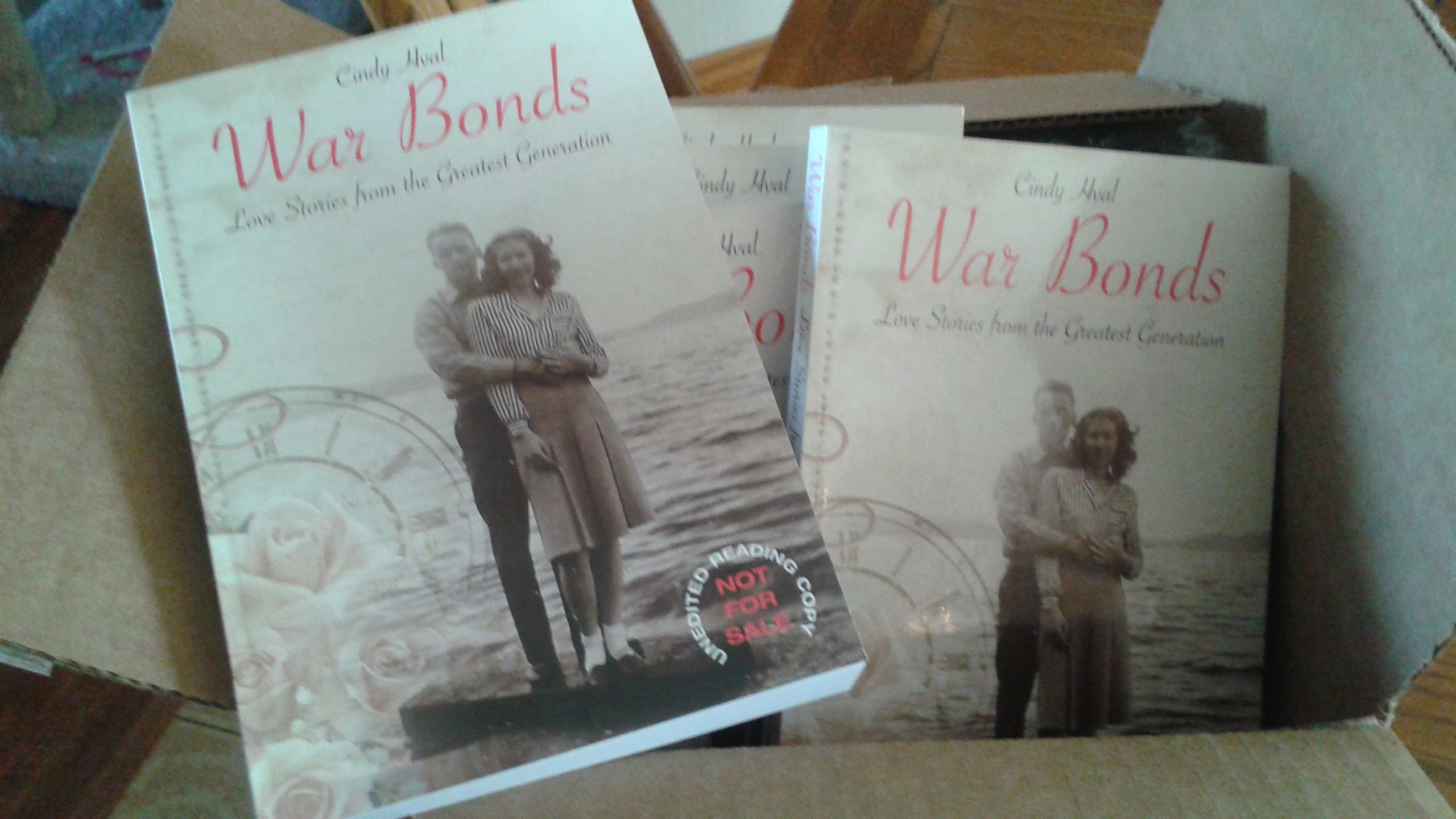
Laura and Walter Stewart’s story is featured in Chapter 13 of War Bonds, “A Seat Next to You.”
This picture was taken Christmas 1943. Walter was in the Navy and stationed in Hawaii.
Walter passed away last year and Laura hated to spend Christmas without him. I’m glad she won’t have to this year.
“I knew in my heart that the love we had for one another was something you don’t find in many marriages.” Laura Stewart


Columns

Christmas Traditions Grow Along With Kids

10363967_808050315900264_1669020257946437512_n[1]When Tevye and the cast belt out “Tradition” in “Fiddler on the Roof,’ they’re singing my song.

I, especially, love the ritual, familiarity and comfort of holiday traditions. For me, it begins on the day after Thanksgiving. While many folks shop til they drop on Black Friday, I decorate til I drop.

My sons unearth the red and green plastic tubs bulging with garlands, angels, Santas and candles, and lug them to the living room. Then I pop a Christmas CD in the stereo and spend the day awash in memories of Christmas past.

Each item from the Play-Doh nativity set, to the Homer Simpson Santa Claus, to the chipped and scratched snowman dishes has a story.

This year I’m making room for new stories by learning to hold less tightly to treasured traditions.

Actually, the process began a couple of years ago with the Christmas tree. Since our boys were tiny, Derek has taken them to Green Bluff to cut down a tree. But our sons are now 21, 19, 17 and 12. Finding a time when everyone has the day off from work to make the trek to the tree farm became impossible.

Derek eyed fake trees, but the younger boys and I rebelled. We reached a compromise: a freshly cut tree from a local tree lot. We also gave up trying to find a night that everyone would be around to trim the tree. I don’t feel too bad about that. Six people, two cats and one tree can create a lot of Christmas chaos.

Other changes have been more difficult to embrace. For 26 years I’ve celebrated a traditional Norwegian Christmas Eve with my in-laws. The feast is a smorgasbord of Norwegian foods and delicacies, but the real flavor comes from the gathering of extended family.

My father-in-law loved Christmas Eve. He was in his element at the head of the table with his wife by his side, surrounded by his four children, their spouses, and his 14 grandchildren. His booming laugh and warm bear hugs made everyone smile.

This was our first Christmas since his death. Instead of ignoring the empty space his absence has left, family members shared their favorite Papa memories. And in the light that shone from his grandchildren’s eyes – in the echoes of their laughter – Papa’s presence was felt once again.

When we got home, no one mentioned leaving cookies out for Santa. That’s OK, Santa’s trying to slim down. Besides, I’m pretty sure our kitty, Thor, would eat them before Santa got a chance.

Christmas morning is different now, too. Santa still leaves filled stockings outside each boys’ bedroom door, but our oldest has to drive over from his apartment to get his.

In years past, four little boys would clamber on our bed at the crack of dawn on Christmas morning and dump their stocking bounty out for us to see.

I don’t miss the crack of dawn part.

And Sam, 12, informed me last year, “You know we all open our stockings while you’re sleeping and then stuff everything back in and take them to your room. You do know that, don’t you?”

Yes, I know that, because my sister and I did the same thing when we were kids.

The six of us still gather around the tree and read the Christmas story from the Bible before the unwrapping begins, but now there’s less unwrapping. I’ve discovered the older the kids – the smaller the presents. Unfortunately, smaller tends to equal more expensive.

Even so, I don’t really miss hundreds of Legos strewn across the floor, or tiny GI Joe guns getting sucked up the vacuum cleaner.

Clinging to traditions no longer current, is like trying to squeeze a squirming toddler into last year’s snowsuit. It won’t fit and someone will end up in tears.

This new year, I’m going to hold on to traditions that fit our family and let go of the ones we’ve outgrown. I don’t want to cling so tightly to the past that my hands are too full to embrace the present.

This column first ran December 29, 2011

War Bonds

A Soldier’s Note From the Battle of the Bulge

Seventy years ago today, the Germans launched the last major offensive of  WWII. Known as the Battle of the Bulge, this battle lasted three weeks and resulted in a massive loss of American and civilian life.

Ray Stone was there. But his thoughts were on the wife he’d  left behind and the friends he was losing.Ray Stone 44 low res

Here’s an excerpt from Chapter 34 of War Bonds, “Fireworks.”

In a V-Mail sent from Belgium during The Battle of the Bulge, Ray wrote: “I think about you always Betty. The feeling and the love I have for you have grown into something much deeper than small talk & sayings.”

The vagaries of fate haunted him. “I’m feeling plenty lucky,” he wrote, “because some of my former friends weren’t so lucky.”

Ray Stone died June 17, 2013


Columns

Remembering the children of Newtown

20141214_130929This column first ran in the Spokesman Review, December 20, 2012

By the time you read this it will be almost a week since the horrific shootings in Newtown, Conn. Columnists, pundits and politicians will have opined, analyzed and commented. Graves will have been dug. Memorial services held.

The initial shock and horror has faded, muted by holiday happenings. After all, life goes on and sorrow dims.

As the reports unfolded Friday I sat stunned at my desk – each detail more heartbreaking than the last. Finally, I got up, put on my coat and headed out. I had Christmas shopping to do.

I stopped to watch the children laughing and shrieking in the play area at NorthTown Mall. Usually, I bypass the raucous place as quickly as possible, feeling profound gratitude that I no longer have to pause in my errands to let wiggly toddlers blow off steam. But on Friday the sight of their exuberant energy gladdened me.

Then I caught sight of a glittering Christmas tree with gaily wrapped packages beneath it. Suddenly, all I could think of were the festive packages lying forever unopened under Christmas trees in Connecticut. I quickly left the mall and went home, anxious to be there to greet my kids when they returned from school.

It was a rare day because I saw all four of my sons. My oldest stopped by to do laundry, and my second-born dropped off a vehicle he’d borrowed. I drank in the sight of them, bearded stubble and all, remembering their smooth baby faces that I once covered with kisses.

My heart broke yet again, thinking of eight mothers whose sons didn’t live to hear them nag, “Are you ever going to shave?”

Somehow we all got through the day didn’t we? We made it through the unending media reports. We hugged our children tighter. We cried communal tears. We prayed. We lit candles. We raged. We wondered. For a brief moment our nation was united. Sorrow can have that effect.

But the days wore on. The details offered no rhyme, no reason. The pro- and anti-gun folks hurled invectives and recriminations at each other. Politicians seized platforms, and many of us just wished the nightmare would go away.

And it will. Unless you lost a loved one in Newtown, Conn., the memory of this event will blend into a collage of other senseless tragedies. However, one name will be etched in our collective memory: Adam Lanza.

This is what haunts me the most. Why do we remember the killers when the victims and their families deserve to be forever enshrined in our consciousness?

Do you remember the names of anyone who died at Columbine, aside from the shooters? Have the faces of those who perished in Oklahoma City vanished from your memory while the face of Timothy McVeigh burns brightly?

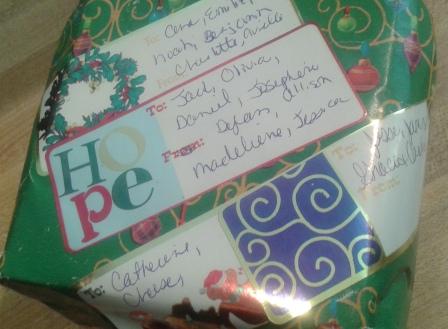
So, Friday I went back out. I bought a 2012-dated ornament, wrapped it and placed it under our tree. On Saturday, when the names of the victims were released, I covered the small package with glittery name tags. The tags read: For Benjamin, Emilie, Grace, Noah and so on – 20 names in all.

On Christmas morning, this gift will remain under our tree. It isn’t meant to be opened. It’s a memorial of sorts. I will pack it away with the Christmas decorations and place it under the tree next year, and the year after that.

I don’t want to forget what happened on Dec. 14, 2012.

The children who died deserve to be remembered. It’s the only gift I have to offer them.

Columns

Critiquing Christmas carols filled with peril

First, let me be perfectly clear. I do not hate John Lennon. Just because I opined that “Happy Xmas (War is Over)” is one of the worst Christmas songs ever, does not make me a Lennon-hater – or worse a Beatles-basher.

I also loathe “I Want a Hippopotamus for Christmas,” but no one has accused me of being a hippo-hater. Yet.

The brouhaha began when I posted my opinion about the worst Christmas songs via various social media sites. One Facebook friend wrote, “Nothing any member of The Beatles has ever done is the worst of anything. Ever. Period. The end.”

Many agreed, but one friend remarked that Paul McCartney’s “Wonderful Christmastime” is pretty dreadful.

The situation worsened when I attempted to explain my disdain for “Happy Xmas.” I wrote, “Every time I hear the refrain ‘So this is Christmas and what have you done,’ I want to scream, WHAT HAVE I DONE!? I have baked, cleaned, shopped, wrapped, mailed, cooked, cleaned, baked and shopped like a madwoman. THAT’S WHAT I’VE DONE.”

To which a commenter at Huckleberries Online replied, “Um, I think John meant “What have you done FOR OUR EARTH AND MANKIND AS A WHOLE.”

I am pretty sure this commenter wasn’t trying to make me feel better.

But it wasn’t all bitter bickering in social media land. In fact, many posted Christmas songs far worse than the two I’d mentioned.

Notably, “Please Daddy (Don’t Get Drunk This Christmas),” a truly terrible twangy John Denver nightmare featuring the refrain, “Please Daddy, don’t get drunk this Christmas, I don’t wanna see my Mama cry.”

Not exactly “Joy to the World,” is it?

Others mentioned least favorites included anything by Alvin and the Chipmunks, “Grandma Got Run Over by a Reindeer” and “Dominick the Italian Christmas Donkey.”

I could swear my ears began bleeding after listening to Dominick hee haw his way through the first verse.

Some folks’ choices surprised me. For instance, a couple of people referred to “Baby It’s Cold Outside” as the holiday “date rape” song. While I love this duet, I concur that it definitely has a creepy element. Listen, if your date says she has to leave, it really doesn’t matter how cold it is outside, let her go.

But for sheer tragedy, “I Saw Mommy Kissing Santa Claus” is pretty hard to beat. So many horrible issues raised for an innocent tot. Is Santa cheating on Mrs. Claus? Or worse yet is Mommy cheating on Daddy? If Mommy and Santa get married will I have to move to the North Pole?

Don’t even get me started on “Then I saw mommy tickle Santa Claus, underneath his beard so snowy white.”

Talk about inappropriate. Who knew Christmas tunes could be filled with such morally questionable messages?

Sometimes songs with even the most positive of messages are disliked. One blog commenter expressed disdain for the Band Aid classic “Do They Know It’s Christmas?” The commenter wrote, “Answer: No, because they are starving African non-Christians, you moron.”

Even sentimental contemporary ballads aren’t universally liked. “The Christmas Shoes,” for instance. This sad song tells the tale of a little boy who wants to buy a pair of shoes for his dying mother. “I want her to look beautiful if Mama meets Jesus tonight,” he explains.

Apparently, disliking this song is almost as unpopular as not enjoying “Happy Xmas.” A blog commenter wrote, “… saying that you aren’t moved to tears by ‘The Christmas Shoes’ is like saying you and the devil operate a dog fighting ring together.”

Lesson learned: Opining on Christmas music can be as combustible as decorating a dried out tree with lighted candles. The next time I ponder posting musical opinions; perhaps I should just leave it a “Silent Night.”

War Bonds

“She’s the other half of me.”

I would have loved to have included the Tucker’s story in War Bonds but I just met them last week. Stories like theirs are so worth telling.

Colin Mulvany, Spokesman Review photo

During the 1940s and ’50s many lasting love stories began in a roller rink. That’s just what happened to Harold “Tom” Tucker and his bride, Shirley.

“I was a sailor stationed at Farragut,” Tom said. “I got liberty and came into Spokane to roller skate.”

It was spring 1944 and he and other sailors on leave often took a bus to Cook’s Roller Rink (now Pattison’s). Shirley, 17, was a senior at North Central High School. When she skated past, Tom noticed.

“I saw her and I though, WOW! I gotta meet that lady!” he said.

They skated together, but Shirley wasn’t swept off her feet. She shrugged. “He was alright.”

Tom laughed. “She just liked sailors,” he teased.

“Oh stop that!” his wife retorted.

A few weeks later he showed up at Cook’s again and quickly sought her out. This time he asked for her address and phone number. They skated every couples skate together and held hands. “Oh boy! That was fun!” Shirley said.

Her parents weren’t thrilled about her dating a sailor, but they figured the youthful romance would quickly blow over.

It didn’t.

After skating, Tom would walk her home from the bus stop. They’d often pause and sit on a wooden fence that surrounded a sand pit. “That’s where I kissed her for the first time,” said Tom. “The wind came up and blew my hat off. Down it went, into the sand pit. She’s a powerful kisser to blow my hat right off!”

In August, Tom asked her father for Shirley’s hand in marriage. “I was madly in love by then,” she said.

Her father’s response? “Absolutely not! You are both too young.”

Shirley was heartbroken, knowing Tom would soon be sent overseas.

“I cried and cried,” she said. But when Tom shipped out for the South Pacific, she still didn’t have a ring on her finger.

A flurry of letters ensued and when Tom got a 10-day leave he bought her a ring and mailed it to her.

“My folks didn’t say anything that time,” Shirley said. “They could see it was serious.”

Also serious was the trauma that Tom was about to endure. The 19-year-old hospital corpsman was stationed aboard the USS LaGrange and anchored at Buckner Bay near Okinawa.

One night, 13 Japanese twin-engine bombers attacked.

“They hit every ship around us, but didn’t hit us,” said Tom. “We were young. We stood on the fantail and cheered the anti-aircraft fire. We hollered every time they shot down a plane.”

Then on Aug. 13, 1945, two days before the war ended, the LaGrange was attacked by two kamikaze pilots. One plane struck the ship and damaged it before crashing into the water. The other, carrying a bomb, plunged through the ship and the bomb detonated.

“I was in the dental office trying to write a letter to Shirley,” Tom said. “I couldn’t think of anything to say, so I went to the mess hall to watch a movie. Five minutes later, the bomb went right through the dental office. The next morning I found my belongings floating in the water.”

In the following hours, Tom did his best to care for the wounded and dying.

“There was fire on the deck – so many men were badly burned. One guy asked for water. I gave him a sip and held his head while he drank. The back of his head came off in my hand. He died 30 minutes later,” said Tom.

“People really don’t know what these guys went through at 18 and 19,” Shirley said.

The LaGrange suffered the war’s last casualties about a U.S. ship.

The event so shook Tom that he wrote Shirley a letter saying, “Forget about the wedding. We’re not getting married.”

Stunned, Shirley wept bitterly. Her father cautioned her to wait before replying, and she did.

Not long after, another letter arrived apologizing for the earlier missive and asking her to make wedding plans.

On Nov. 11, 1945, while on a 30-day leave, Tom and Shirley were married at Pilgrim Lutheran in Spokane. When his leave was up, Tom returned to duty and the couple spent the first six months of married life apart.

After his discharge in spring 1946, they lived for a time in Spokane before Tom said, “I want to go home.”

Home was Illinois. Initially, Tom had a hard time adjusting to the Pacific Northwest. “I thought I was in prison,” he said. “I couldn’t see because of the big trees and mountains!”

But after a few months in Illinois, he turned to Shirley and said, “Honey, I want to go home.” This time home meant Spokane.

In 1950, Tom joined the Spokane Police Department and was assigned to the motorcycle unit. Shirley gave birth to three children; Douglas in 1947, Ronald in 1949 and Pattie in 1951. She worked for many years at a neighborhood pharmacy.

After 25 years on the force, Tom retired and then took a job as an investigator for the state Department of Revenue. He was also very active in the Masonic Lodge, and in his 60s became an ordained minister, serving for a time as interim pastor of the United Church of Christ in north Spokane.

For 69 years, Tuckers have supported and encouraged each other. “We talk about everything and make all our decisions together,” said Shirley. “He has always been there for me – always.”

Tom looked across the room at the girl he first saw at the roller rink so many years ago and said, “She’s the other half of me.”

Cindy Hval, Spokesman Review, December 11, 2014

War Bonds

Pearl Harbor memories burn brightly for this couple

Warren and Betty, low res, 1941

Warren and Betty Schott pictured here in Honolulu, in 1941, had an apartment just up from Battleship Row. Here’s an excerpt from Chapter 11 of War Bonds, describing their eyewitness account of that terrible morning:
The couple was used to noise, but the sounds that woke them on Dec. 7, 1941, were unlike anything they’d heard before. Betty pulled on her robe and looked out the bathroom window.
“Warren!” she called, “there’s smoke and fire at the end of the runway.”
At first he didn’t believe her. But at his wife’s insistence, he went to another window and spotted a plane flying low overhead. “I saw the red balls on the wings of the plane,” he said. “I watched that plane torpedo the USS Utah. I said, ‘Betty, we’re at war!’”
They hustled out of their quarters and stopped to pick up a young mother and her two kids who lived downstairs. “It was total chaos,” said Warren of the surprise attack. “We didn’t know what to do.” The horrific noise of bombs, planes and machine gun fire added to the overwhelming terror.
Warren gathered everyone in the neighbor’s car and took off for the administration building. “Barbara and I were in our nightgowns and robes, and shrapnel was falling from the sky,” Betty said.
“The road was shredded by machine-gun fire,” Warren said, as he recalled their frightening journey. Steering the vehicle away from the strafing fire of a Japanese warplane, he found shelter in a supply building. There Betty, her friend and the children, waited out the first wave of the attack. “They put us to work immediately, Betty said. “We unloaded guns and filled fire extinguishers.”
20141207_140304-1Today, Betty dropped a lei at the new Pearl Harbor Survivors Memorial in Spokane, Washington. Warren passed away in March. They’d been married 76 years when he died.
War Bonds

Hard To Keep Up With the Greatest Generation

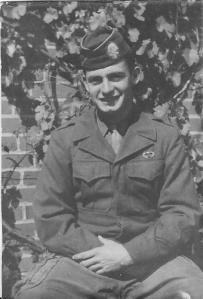
Charlie Mitson, hat, low resWent to return some photos to Charlie and Mable Mitson this week. Their story is told in chapter 31 of War Bonds.
Charlie, pictured here in France, 1945, served as a paratrooper during WWII. After the war he entered the newly formed Air Force and became a pilot. He flew combat missions during the Korean and Vietnam War.
When I arrived Mable gave me a hug. I asked where her husband was. She said,”Oh, he’s installing a hot water heater at our grandson’s house.”
Charlie is 90.
There’s a reason we call these folks the Greatest Generation.