Columns

Thankful for Every Milestone

Two weeks ago we sat in a classroom at Eastern Washington University, my husband’s alma mater.

“These chairs are way more comfortable than the ones we used to have,” Derek whispered.

I shushed him as the lecturer stepped to the front of the room and introduced himself.

Even though we know him quite well, we sat forward in our seats so as not to miss a word. The speaker was our youngest son, Sam, and we were there to watch him defend his master’s thesis.
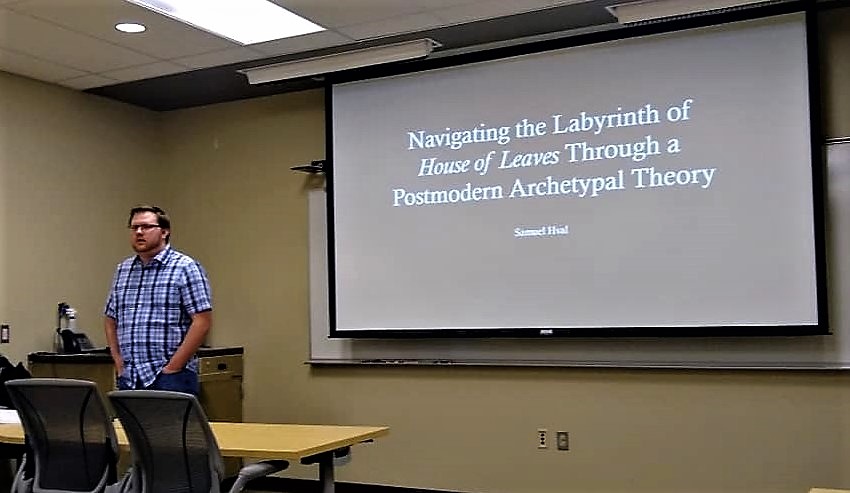
Sam Hval defends his master’s thesis at EWU.

It was the final step to earning his master’s degree in English with an emphasis on literature and writing. Did I mention that Sam is just 22?

He started at EWU as a 16-year-old Running Start student. In six years, he graduated from high school, earned his bachelor’s degree, and now his master’s–and he didn’t incur a penny of debt.

The only help Derek and I gave him was housing him, feeding him and paying for his gas and car insurance. And maybe I threw in a few extra hugs and a listening ear when he decided to switch from education major to English.

As Sam introduced his thesis, “Navigating the Labyrinth of ‘House of Leaves’ Through a Postmodern Archetypal Theory,” I was stunned by his poise. In front of a panel of three professors and a handful of fellow grad students, he eloquently explained a new theory of literary criticism that he’s developed.

This from the kid who in first grade was sent to the reading resource room because his teacher felt he was lagging in reading skills.

This surprised me. Sam’s three older brothers and I had read to him since his birth and he was reading independently by kindergarten.

It turned out Sam found the first-grade reading material “boring.” When he understood the faster he progressed through “The Cat Sat on the Mat,” the sooner he could read chapter books, he suddenly didn’t need additional tutoring.

Our fourth son has been surprising us since birth.

He arrived on a golden September morning within an hour of our arrival at Holy Family Hospital. Weighing in at a hearty Norwegian 9 pounds, 9 ounces, Sam had his father’s broad shoulders and the trace of a dimple in his chin.

Soon after his birth we were told his time with us might be brief. Sam was airlifted to Sacred Heart Medical Center where he was diagnosed with congenital diaphragmatic hernia. A hole in his diaphragm hadn’t closed early in gestation. As a result, his internal organs pushed into his chest cavity, squashing his developing lungs. Only his right lung was fully formed. Our newborn was given a 50/50 chance of survival.

Twenty-two years later, the grief and terror I felt when I saw him in the Neonatal Intensive Care Unit hasn’t abated. It’s still as sharp as the moment I was told he was so fragile, I could only touch his toe with my finger, and even my whispered “Mama’s here,” elevated his blood pressure to dangerous levels.

Obviously, this story has a happy ending. Sam survived. He grew. He thrived.

And he’d prepared us for the outcome of his thesis defense.

“I’ll either fail, pass with revisions, or pass,” he’d said.

After his presentation, attendees were invited to pose questions or offer comments. I may or may not have shared that after Sam had his wisdom teeth pulled, he’d asserted that the anesthesia had a minimum effect on him.

“It’s because I have a really big brain,” he’d slurred.

Honestly, when you invite your mother to this sort of thing, these kinds of comments are inevitable. As Sam’s older brother said, “Mom’s gotta mom, whether we like it or not.”

I may have been a teensy bit anxious as we waited in the hallway while the panel debated Sam’s fate. I needn’t have worried. He passed with no revisions.

After attending college for six years, Sam isn’t interested in pursuing a doctorate right now. Ideally, he’d like to teach at a community college or private university.

Who knows what the next year will bring?

But this I do know–the students who attend Mr. Hval’s classes will be blessed by a passionate instructor whose love of literature and language stems from both his intellect and his heart.

His time in our nest is drawing to a close. Over the years, I’ve battled the urge to smother, hover and over-mother, but I’ve not taken a moment of his childhood, nor his early adulthood for granted.

Each milestone is a gift I was never sure I’d be granted.
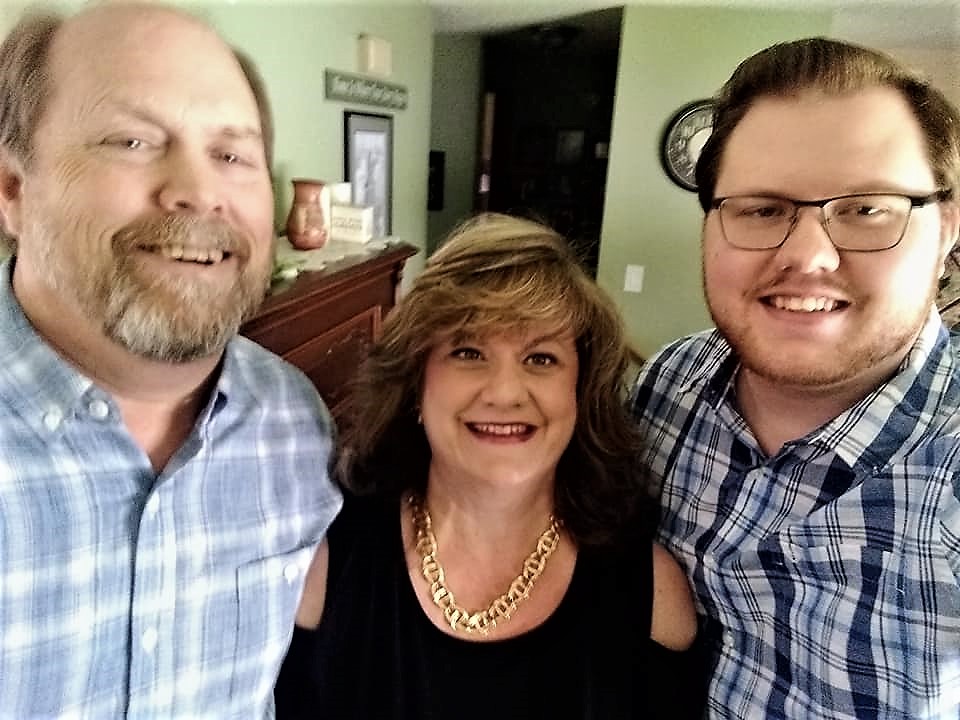
Derek, Cindy and Sam Hval

Cindy Hval can be reached at dchval@juno.com. Hval is the author of “War Bonds: Love Stories from the Greatest Generation” (Casemate Publishers, 2015) available on Amazon.
Columns

A love letter to teachers

We’ve all struggled during the COVID-19 pandemic.

We’ve had to learn new ways to work while constantly adapting to ever-changing pandemic restrictions. But it often seems like educators bear the brunt of community ire, as they try to safely navigate the return of students to in-person school.

Perhaps that’s why the response to my recent column recalling an SFCC instructor who influenced my decision to pursue writing struck a chord. I wrote of my hopes that our son, Sam, now teaching English 101 at Eastern Washington University, might also be an encouraging influence on his students, and I asked readers to share memories of an educator who impacted them.

Here are some of the responses I received.

When Cheri Moore attended Northwest Christian College (now Bushnell University) in Eugene in 1979, she was married, pregnant and a full-time student.

She loved her 7 a.m. New Testament Exegesis class until morning sickness hit.

“After missing several classes in a row, I went to see the professor during his office hours and explained the situation,” Cheri wrote. “He told me to do the best I could and to find someone to get class notes and assignments from when I missed a class. The next time I missed a class the prof popped into the cafeteria during lunch, dropped his class notes, including the assignment for the next class, on the table in front of me, then leaned over and whispered in a stage whisper ‘Don’t tell Dr. Root, I hear he’s a stickler about note sharing.’ Every class I missed from then on found Dr, Root handing me his notes at lunchtime.”

• • •

Bill Reuter’s most influential educator was his fifth-grade teacher at Finch Elementary in Spokane during the 1949-1950 school year.

“She was hard on me, expecting better from me the entire year, no excuses accepted,” he recalled. “I still remember once being in tears after a very trying lesson. My report card grades were lower than in previous years, but I kept trying. I later realized how a teacher can set you on a career path to something that can be rewarding. After graduating from North Central High, I attended Eastern Washington College of Education and followed in her footsteps. I was then employed by Spokane schools as a teacher and principal for 33 years.”

His teacher? Emma Reuter, who also happened to be his mother.

• • •

Michael Groves recently visited the Seattle area to see his former Shorecrest High School history teacher, Bruce MacDougall, now 88. Groves graduated in 1976 but stayed in touch with his teacher. MacDougall’s love of travel rubbed off on his student in a big way.

“From 1980 through 2005, I was fortunate to make around three dozen trips abroad, strictly as a tourist,” wrote Groves.

He visited six of seven continents during that time with Antarctica being the only holdout.

“Because of his (MacDougall’s) influence on me, I’ve had a chance to go into Red China on that opening journey in 1980,” he wrote.

Other trips included: Christmas Eve and morning in Bethlehem’s Manger Square; his 30th birthday at the Taj Mahal; his 40th at the Vatican in Rome; riding a camel in the Gobi Desert on his 45th; and witnessing a new century unfold in Australia on New Year’s Eve 1999.

“I don’t think that any teacher, anywhere, had as much influence on a single student like he did in my case, both in my personal life, and my time away from my job in traveling the globe,” Groves said. “Thank you, teach!”

• • •

Judy Felgenhauer gave a special shoutout to her Susanville, California, fourth-grade teacher, Mrs. Marguerite Crane.

“She gave me my first ‘C’ ever – in handwriting,” Felgenhauer recalled. “But she encouraged me to practice and provided much support. She also helped cement my love of reading. Each day she read to us from a children’s classic.”

They stayed in touch over the years and when she graduated from medical school, Mrs. Crane sent her former student a pair of earrings that Felgenhauer still treasures.

Felgenhauer is the pediatric divisional lead physician at Providence Medical Group and is medical director of Pediatric Hematology/Oncology at Providence Sacred Heart Medical Center and Children’s Hospital.

“Whenever someone tells me I can’t possibly be a doctor because they can read my handwriting, I credit Mrs. Crane,” she said.

So here’s to you, teachers, school board members, professors and support staff.

We see you. And most of us are profoundly thankful you keep showing up for our kids.

Columns

Still afloat on the pond of English 101

I am absolutely not going to tell you how many years ago I took English 101.

For one thing, I’m not good at math – something my college transcript verifies. For another thing, it was a really long time ago. How long ago? Well, let’s just say all of my essays were handwritten. In cursive. In pen. No, not with quill and ink.

Memories of that class were triggered when our youngest son headed out the door to Eastern Washington University last week. He’s not taking 101 – he’s teaching it.

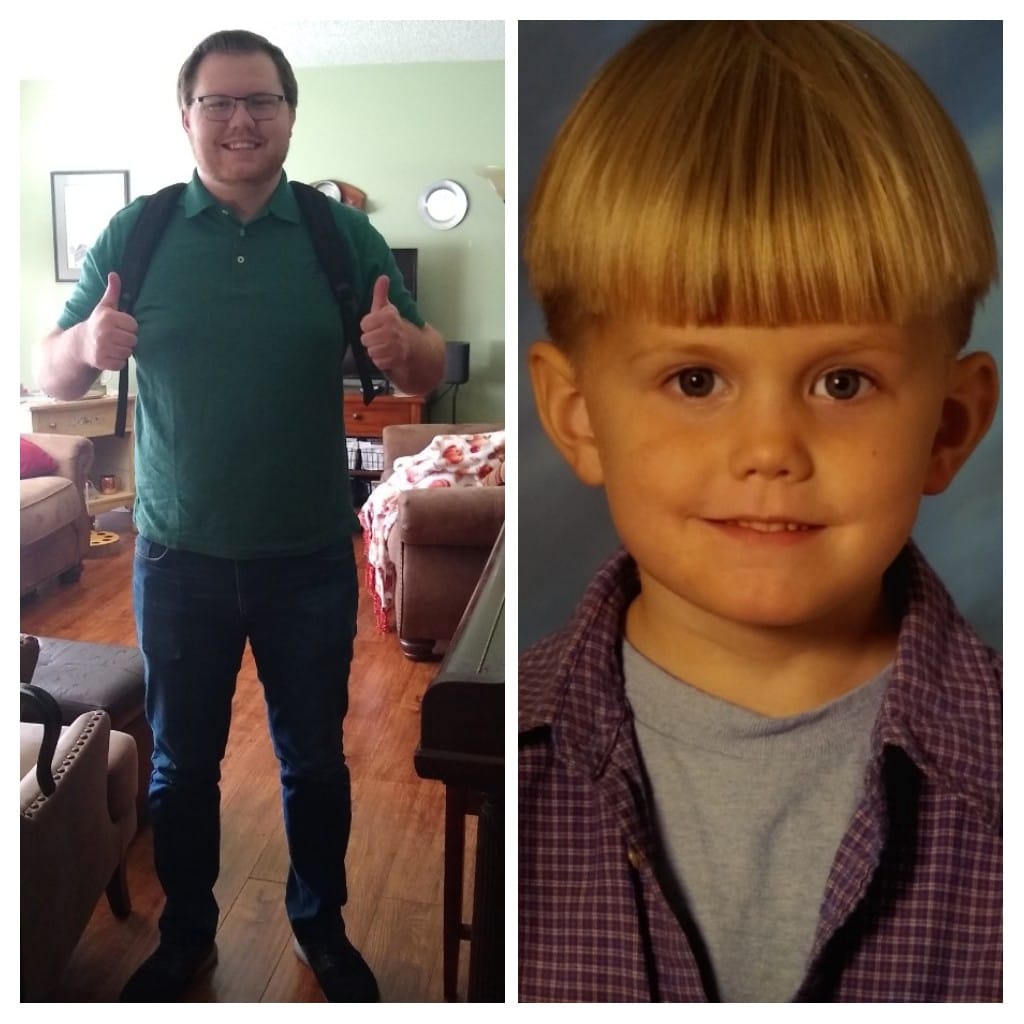
Sam’s first day of teaching English 101/First day of kindergarten.

Sam is in the final year of his graduate degree and is a composition instructor in the English Graduate Student Assistantship Program. His 22nd birthday was Friday, but he’s already teaching a class of 24 students.

He’s relishing his new role, and I’m sure his students will benefit from his enthusiasm. For many of them, English 101 will be just another required class to get out of the way, but perhaps for some the class will trigger a desire to learn more about writing.

That’s exactly what happened to me at Spokane Falls Community College.

At 18, I still wasn’t sure what I wanted to be when I grew up. The career aptitude tests I took my senior year of high school pointed me toward fashion merchandising. I’m pretty sure that’s just a fancy way to say retail sales clerk, but I could be wrong.

Dad said college would be a better place to discover my aptitudes and paid for my first quarter at SFCC. I’d been the editor of our school newspaper and co-editor of the yearbook, so English classes didn’t scare me. I was far more terrified of classes involving math – a justified fear as evidenced in the above-mentioned transcripts.

I’m sorry to say, I don’t remember the name of my English 101 instructor. I do remember he was also the tennis coach and often wore his tennis whites to class. Maybe fashion merchandising should have been my thing, after all.

Yet, he’s the one who lit the spark of interest – who first made me wonder if perhaps writing was something I could actually be good at. To be sure, 101 is the most basic of college classes. Students typically learn the different stages of writing: gathering material, drafting ideas, revising drafts, editing and proofreading.

Sitting on my desk is one of the first essays I wrote for that class. The title? “From Duckling to Swan,” in which I related my middle school to high school transformation.

Honestly, reading it now is cringe-inducing, but I’ve saved it all these years because of the comment the instructor wrote in pencil on the title page.

“An essay like this can keep you afloat in the pond of 101.”

When that paper landed on my desk, after he first read it to the class, it was an a-ha moment for me. I thought, “This is it! This is what I want to do. I want to write and I want people to read what I’ve written.”

And here we are.

Now, it’s Sam’s turn to make a difference.

Who knows? Maybe someday a writer will sit down to pen a newspaper column or write a book, and remember an English 101 class at EWU, and the instructor who encouraged her to believe that she had a way with words. And perhaps that teacher’s name will be Sam Hval.

It wouldn’t surprise me a bit.

Columns

Sometimes the Simplest Prayers Mean Most

We eagerly scanned the swarms of blue-robed students filing into the McCarthey Athletic Center on Friday evening. The strains of “Pomp and Circumstance” swelled, and then we spotted our baby boy – not much of a baby anymore.

As Sam received his diploma and was recognized as an honors student who’s already earned 87 credits through the Running Start program at Eastern Washington University, another chapter in our parenting lives closed.

Our fourth and final son graduated from high school.

It was an occasion I couldn’t even imagine 18 years ago when he struggled for every breath in the Neonatal Intensive Care Unit at now-Providence Sacred Heart Medical Center.

On a golden September day, Sam, our grand finale, had entered the world weighing in at a whopping 9 pounds, 9 ounces. He had his father’s broad shoulders and the trace of a dimple in his chin.

He also had a hole in his diaphragm.

Within hours of his birth we were told our baby had congenital diaphragmatic hernia. A hole in his diaphragm hadn’t closed early in gestation. As a result, his internal organs pushed into his chest cavity, squashing his developing lungs. Only Sam’s right lung was fully formed. Our newborn was given a 50/50 chance of survival.

Milestones like a commencement ceremony remind us of how close we came to losing this child.

Late Friday night following the celebration, while the rest of the household slept, Derek and I quietly recalled Sam’s desperate first days.

He’d been flown by helicopter from Holy Family Hospital to Sacred Heart Medical Center an hour after his birth. Having just given birth I was forced to stay behind while Derek drove downtown.

“When I walked into the NICU, they had Sam restrained on a table,” he recalled. “His back was arched, his face red. He was screaming his head off. They told me he was a fighter, but that I needed to leave the room for a minute. They said they were going to sedate him, that his blood pressure was dangerously high. When they let me back in, Sam was silent and still. So very still.”

And 18 years later, the tears fell as he remembered his helplessness in the face of his son’s need.

My own memories of that day still haunt.

Twelve hours after his birth, I stood next to Sam’s bed. Tubes and wires protruded from the top of his head to the soles of his feet. The ominous whooshing of the ventilator and the beeping and whirring of machines filled the room. He was so fragile that the sound of a voice raised above a whisper sent his blood pressure skyrocketing.

I believe in the power of prayer. I always have. But that morning I could find no words. So I reached two fingers under the maze of wires, rested them on his laboring chest and whispered, please. When he exhaled I whispered thank you.

In the weeks that followed those words became a ritual.

Even as he grew healthy and strong, with no lingering complications, each breath simply seemed miraculous to me. Life is a gift, but how casually we treat it, until we’re forced to confront its fragility.

More nights than I can count, I’d slip into Sam’s room, lay my hand on his chest and whisper please and thank you as he breathed. Over the years that prayer grew to encompass much more than his physical health.

Like his dad, Sam’s going to continue his education at EWU. He plans to become a high school English teacher and will live at home for a while, so our nest won’t be empty anytime soon.

Following the commencement ceremony, we posed for photos. Sam now towers above me, and when I wrap my arms around him, my head rests near his heart.

Once again I found myself whispering please when he inhaled, thank you when he exhaled.

It’s a prayer that’s served me well.

Sam's graduation

War Bonds

She found love in the right place

When Janet Hegdahl, 16, found out her family was moving from Portland to Spokane in the fall of 1955, she didn’t jump for joy.

“I’d just gotten a job at the library,” she recalled.

She’d also discovered boys.

“I was really interested in boys, a little too interested,” Janet said. “I was looking for boyfriends in all the wrong places.”

Her unhappiness about the move melted away the first Sunday her family attended Trinity United Presbyterian Church. That’s when she saw Jack Arkills singing in the choir and thought church just might be the right place to meet a guy.

Jack noticed her as well and made a beeline for her as soon as the service ended. He was the youth director and Sunday School superintendent, and he wanted to invite her to the youth meeting that evening.

“The Italians have what they call a thunderbolt,” Jack said. “It’s when you see someone, and it’s instant recognition.”

He smiled at Janet.

“It was instant for me,” he said.

She felt the same way.

They both attended Lewis and Clark High School and saw each other between classes and after school. On one of their first dates, they saw the movie “High Society,” and when Bing Crosby crooned “True Love” to Grace Kelly, it became their song.

From their Riverview Retirement Community apartment in Spokane, Jack sang, “I give to you and you give to me, true love, true love …”

Jack already had a connection to Bing Crosby – he’d caddied for Crosby at Indian Canyon in the late ’40s.

“Bing was a big tipper,” he recalled.

In May 1957, Jack dashed into the downtown library where Janet was working. It was the day of the Armed Forces Torchlight Parade, and he was scheduled to march with his National Guard unit.

It was also Janet’s 18th birthday.

“I had a ring in my pocket,” Jack said.

He proposed.

She said yes.

And off he ran to march in the parade.

Jack had graduated from high school and was working for the Great Northern Railroad.

“I wanted to go to Whitworth and be a minister, but pretty soon I was making more than my friends who were teachers,” he said.

Janet had received a scholarship to Eastern Washington University, so they married March 21, 1958, during spring break.

She sewed her tea-length lace wedding gown, and they said their wedding was the last one held at Trinity United Presbyterian, which soon closed its doors.

They settled in an apartment in Browne’s Addition, and almost a year after their wedding, their son, Chris, was born.

“We had a 2-week-old on our first anniversary,” Janet said, smiling.

Thirteen months later, son Scott arrived and Janet’s college education was put on hold.

Daughter, Amy, completed the family in 1962, and they settled into a house in the Garland District.

The family made First Presbyterian their church and it quickly became the center of their lives. Janet became the church librarian, a position she still holds, 55 years later, and Jack joined the choir, and yes, he still sings in it.

Their lives took a drastic turn in 1966 when Jack was severely injured in a train derailment. He was on top of the train to tie a handbrake and got knocked off during the derailment.

“I landed on my back on the track,” he said.

He broke his arm and had six fractures in his sacrum. For two long weeks, he had no sensation in his legs.

“They said I’d never walk again.”

Janet, 25, didn’t know how to drive, but a neighbor taught her during her frequent trips to the hospital.

With three children, a mortgage and her husband’s recuperation uncertain, Janet returned to work at Spokane Public Library. She ended up working at all three Shadle branch locations, as well as the Indian Trail branch.

“I’ve always been addicted to reading and to studying,” she said.

Indeed. She started night school, picking up a class here and there, until 25 years after she began her college career, she graduated from EWU.

Meanwhile, Jack was able to return to work on the railroad. Not only was he able to walk, he started to run. And run. And run some more. Eventually, he ran five marathons.

The family moved to the South Hill in 1979, and when the kids flew the nest, Jack and Janet built their dream house – a passive solar home on Moran Prairie.

In 1987, Jack was diagnosed with polymyostis, a rare inflammatory disease that causes muscle weakness. He retired from the railroad in 1991, though the disease eventually went into remission.

He’s always been the head cook in the family.

Janet laughed.

“I’d put something on and go off and read and wouldn’t you know it? It burned,” she said.

She retired from the library in 2004. Her career spanned the years from handwritten check out cards, to bar codes. From card catalogs to digital catalogs, and she relished every minute.

For many years, the couple have been members of Friendship Force International, a nonprofit organization and hospitality service with the mission of improving intercultural relations, cultural diplomacy, and intercultural competence via homestays.

The Arkills have traveled across the globe, including stops in Australia, France, Germany and Tasmania.

“We love to travel,” Janet said. “We’re both extroverts, so we love to host people here, too.”

Jack survived a bout of esophageal cancer, and 14 years ago they moved to Riverview, where they continue to be active and involved.

Janet marvels that the move to Spokane which she so despaired of, ended up giving her the love of her life, and she sees the hand of the Divine at work.

“The Lord led us together and He’s kept us together,” she said.

Looking at Jack, she smiled.

“We’re best friends.”

As for Jack, the thunderbolt that hit him more than 60 years ago, hasn’t worn off.

“So many couples say they fall out of love,” he said. “I don’t get it. I guess I never fell out of love.”

War Bonds

This Young Love Didn’t Grow Old

25591901_1630383190333635_5262889521772883972_n[1].jpg

When a California girl with pierced ears met a black sheep boy in tiny Reardan, Washington, sparks flew. Sixty-eight years later, the fire still burns for Betty and Larry Plummer.

“She was a loner and so was I,” recalled Larry.

Though he said he missed more days of school than he attended, he did manage to escort Betty to the junior-senior prom.

“He was panting at the door to take me,” Betty said. “I was one of the first freshmen to go.”

Larry didn’t have enough credits to graduate, and found work in a nearby sawmill. He was sure of just one thing – he wanted to marry Betty.

“I only had one girlfriend. I couldn’t afford any others,” he joked.

At 17 and 18, they knew finding someone to marry them would be difficult, so they decided to elope to Reno.

They made it to Winnemucca, Nevada, where they stopped for gas.

“A guy at the service station told us to wake up the town clerk, so we did,” Larry said. “He gave us a marriage license for $2, and went with us to the justice of the peace. I gave him a $5 tip. The whole trip cost us about $42.”

He only earned $1 an hour at the sawmill.

The clerk asked them how old they were. Several times. That’s when Larry realized they were still too young to marry in Nevada. So they lied about their ages, and on Sept. 4, 1949, they tied the knot.

For their 60th anniversary, their children sent them on a surprise trip to Reno – with a stop in Winnemucca, of course.

In 1949, when the teens returned home, Betty’s mother told her, “Well, you made your bed, you lay in it.”

Their first home had no running water and was small enough to fit in their present Spokane Valley living room.

Larry was in the Naval Reserves, and they’d been married just over a year when he was called up. It was November 1950, and Betty traveled to San Diego to see him before he was sent overseas.

“I stayed at the Harvard Hotel,” she recalled. “I couldn’t afford to eat at the hotel, so I turned the electric iron upside down in a drawer and made soup on it.”

After her husband left for Korea, she returned home and stayed with her mom.

Following his discharge in September 1952, the couple moved to Spokane, where Larry worked at St. Luke’s Hospital as a house attendant in the psych ward.

One evening, as he made his rounds, he saw a box near the nurse’s dorm. He bent over, opened it and discovered a baby inside.

The newspapers dubbed her “Baby X.”

“You should have brought her home,” said Betty, as Larry told the story.

“I thought about it,” he admitted. “But we had our first baby on the way.”

Baby X was adopted by a local family, and many years later, she found the Plummers, and visited their home to thank Larry for rescuing her.

They welcomed their own baby girl, Rhonda, in 1955, followed by Rebecca in 1957. Daughter Ruth completed the family in 1958, and also got her father in the newspaper, again.

By this time, Larry was working the graveyard shift at Eastern State Hospital. Betty called to tell him the baby was on the way. He rushed home, but didn’t make it in time to get her to the hospital.

“Her water broke, and I delivered the baby on the front lawn,” he said.

It wasn’t the first time he’d been present at a birth.

“One time I got on the elevator with a pregnant woman at St. Luke’s,” he recalled. “There were two of us when I got on – three of us when I got off.”

Larry worked several jobs while attending Eastern Washington University. The boy, who didn’t get a high school diploma, earned an accounting degree from the university.

“It took me six years to finish,” he said.

After graduating, he worked for the IRS for seven years, managed a medical clinic for eight, and then worked for Spokane Public Schools for 17 years.

Meanwhile, in addition to raising their three daughters, for many years Betty was a foster mom to newborns.

“I kept them until they got adopted,” she said. “One baby stayed for three months. Then they came and got him at Christmas. That’s when we stopped.”

When she mentioned that she’d like to go to beauty school, Larry came home and told her he’d enrolled her.

Betty did hair for awhile, but then took a job in housekeeping at Providence Sacred Heart, where she worked for 18 years, before retiring as a supervisor in 1998.

It wasn’t all work in the Plummer household. Larry bought a 1957 school bus and retrofitted it as a camper – complete with kitchen and bath. They loaded up the girls and took off for Montana, Colorado and even Disneyland.

“Buying that bus was the best thing I ever did,” he said.

As they talked about their life together, Betty frequently stopped to kiss Larry’s head, or rub his shoulder. She recalled how over the years, he’d walk in the door after working a graveyard shift and ask, “Baby, what can I do for you?”

When she worked at Providence Sacred Heart, he’d stop at downtown store to buy her a gardenia – her favorite flower.

And he kept busy, even after retiring from the school district. For 15 years he worked at the Coeur d’Alene Casino as a ticket seller, finally retiring at 83.

He smiled at Betty.

“The last 68 years have been the happiest,” he said.

She nodded; puzzled that so many marriages don’t last as long.

“Nobody works at it,” she said. “Something goes wrong and people look for someone else.”

She shrugged.

“We just assumed we’d be here together and here we are,” said Betty, 85. “He’s the best man that ever was. I think we’d do it again.”

Larry, 86, agreed, with one caveat.

“I might not have waited so long,” he said.

25550522_1630383277000293_2225425647765710929_n[1]