All Write, Columns

No more goodbyes for the Gleesings

This time, he had to wait for her—14 long years.

Her wait for him in 1945 may have been shorter, but it was terrifying.

When I interviewed Jerry and Nancy Gleesing in March 2010, they were looking forward to celebrating their 66th anniversary in June.

They’d met in LaMoure, North Dakota, in 1940. Four years later, the high school sweethearts married.

They used Jerry’s two-week leave from the Army Air Force for their honeymoon. When he received orders to deploy to Italy as a flight officer with the 15th Air Force, 459th Bomb Group, Nancy was expecting their first child.

On Jan. 15, 1945, his B-24 was shot down, and he and his crew bailed out over Hungary. It was only his second mission.

 During the interview, Jerry laughed as he described his predicament.

“We never learned how to bail out, just how to fly the plane!”

But he grew somber when recalling how locals armed with pickaxes and shovels quickly surrounded him and his crew.

“I thought they were going to kill us,” he said.

Instead, the captives were handed over to the Germans and taken to a prisoner of war camp in Moosburg, Germany.

Meanwhile, back in North Dakota, Nancy worried.

“The letters stopped on Jan. 5,” she said.

For 10 days, there was no word. Then, a telegram arrived, reporting Jerry as missing in action.

As he was being processed at the POW camp, a guard pointed to his wedding ring and motioned for him to remove it. And that’s where Jerry drew the line.

“You get to the point where the initial fear is gone,” he said. “Whatever happens, happens. I didn’t give up my wedding ring. I said, ‘I vowed to never take it off. I’m not taking it off.’”

The guard let him keep it.

In February 1945, Nancy gave birth to a daughter she wasn’t sure her husband would get to meet. But in April, after 3 ½ months as a prisoner of war, the camp at Moosburg was liberated.

“We saw the tanks come over the hill,” Jerry recalled. “Everyone was whooping and hollering. Then the American flag was raised, and it was dead silent.” His voice broke. “It was like coming home.”

And come home he did, just in time to celebrate their first wedding anniversary. He and Nancy raised seven children together.

Their story ran in the newspaper on March 25, 2010. A month later, Jerry died suddenly.

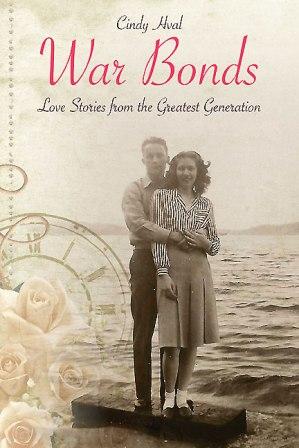
They didn’t get to celebrate their 66th anniversary, but their story stayed with me. In fact, it became chapter one of “War Bonds: Love Stories from the Greatest Generation.”

Since its 2015 publication, I’ve done approximately 100 reading, signing and speaking events and I’ve shared the Gleesings’ story at most of them.

No matter how many times I’ve told it, I can’t get through a reading without tearing up when I share Jerry’s reaction to seeing the American flag raised in that POW camp.

Their chapter ends with him looking at the wedding band he’d refused to remove.

 “It’s still there,” he said. “I’ve never taken it off.”

On Dec. 1, 2024, Nancy died at the age of 100, and his long wait ended.

Something tells me this reunion was even better than the one they had in 1945.

Following Jerry’s death, Nancy had worn his wedding ring on a chain around her neck. I like to think that when Jerry reached out to welcome her, she took his hand and slipped that thin gold band back where it belonged.
All Write

War Bonds Reaches New Zealand

I got a note from my publisher this morning forwarding me this message from a reader in New Zealand. Still in awe that “War Bonds” is being read around the world!

“Could you please pass on my thanks to Mrs. Hval for this book?
It was a privilege to read the stories of ordinary couples living through and doing extraordinary things.

My late father was an ordinary soldier in WWII who fortunately left a memoir (which I didn’t know about till after his death) and together with my mother they left behind their wartime letters which have been wonderful to read.I wonder if she knows about the US Marine War Memorial here in New Zealand at Queen Elizabeth Park, Paraparaumu, Wellington. The Marines were based there, training, before going to fight in the Pacific. Sadly ten of them drowned in a landing practice.”

Yours sincerely,
Julie

All Write

What Better Way to Say I Love You?

My publisher tweeted this sweet blurb.

Happy Valentine’s Day! Be inspired by the romantic love stories of America’s greatest generation in ‘War Bonds’ by @CindyHval.

🛒Order -> https://t.co/CKQZunJl8N
#ww2#historyhttps://t.co/C04PN4TnTM

All Write, Columns

The Final Reunion

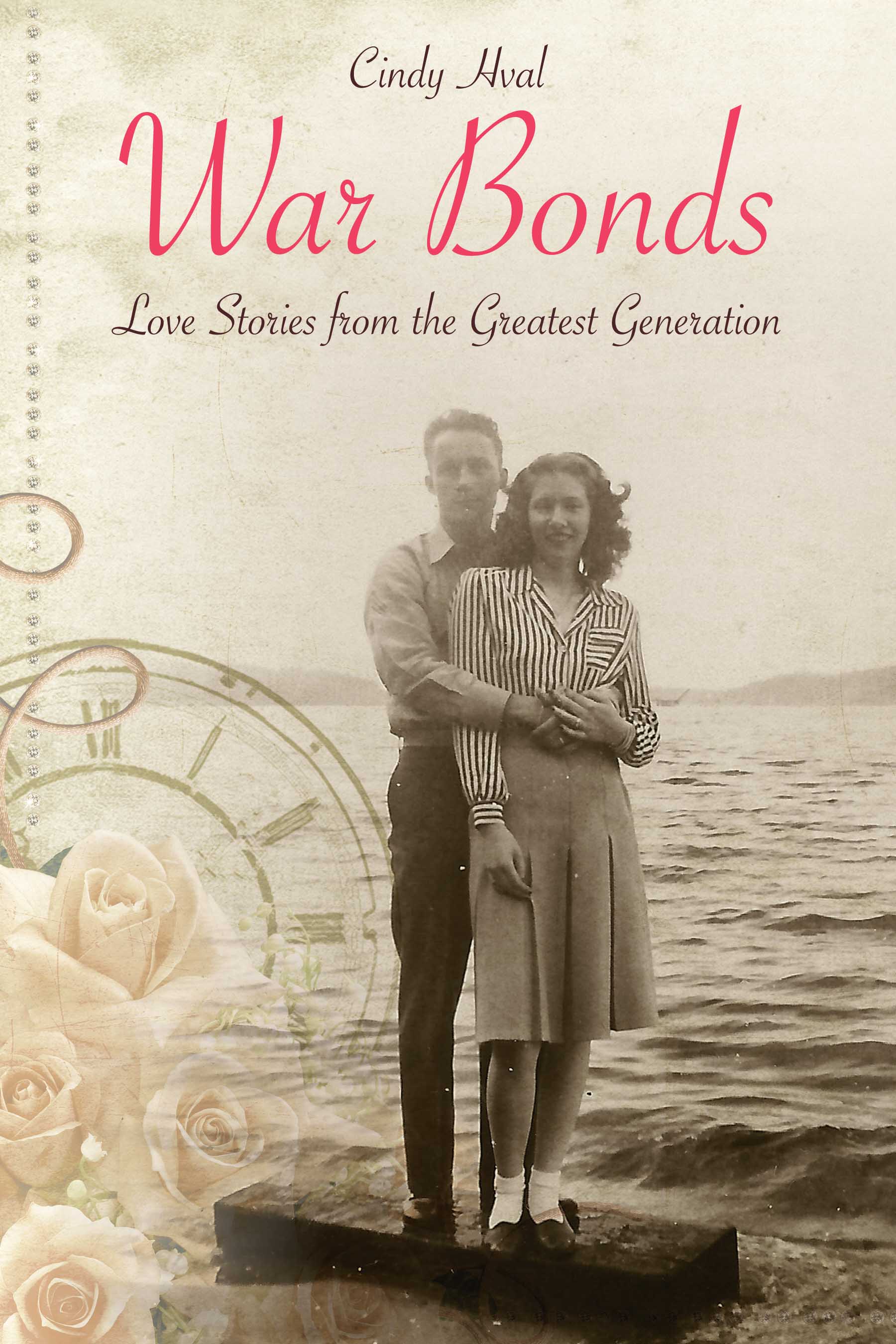
Military spouses are experts at saying goodbye. Separation is a fact of life, and no one knew this better than the men and women featured in my book “War Bonds: Love Stories from the Greatest Generation.”

During World War II, these couples’ farewells were fraught with fear. There would be no emails. No texts. No FaceTime with the family. Letters and scant phone calls or occasional telegrams had to suffice.

But, oh, the reunions! Most of the 36 couples profiled in “War Bonds,” vividly remembered and described the moment they saw their spouses when they finally came home.

In the past six weeks, three of those brides experienced their final reunions with their husbands. This time they won’t have to say goodbye again.

Melba Jeanne Barton died Nov. 30. She and Don were married 67 years before he died in 2013. That eight-year separation marks the longest time they’d spent apart.

She’d met Don at a Grange dance two months after he’d returned from flying B-29s in the Pacific theater. He’d endured a horrific loss when the plane he piloted was hit in battle, and his young navigator was killed. Decades after the experience his eyes still filled with tears when he spoke of it.

“He was a nice kid – a real nice kid,” he’d said.

You might think Melba Jeanne would be immediately smitten by the dashing pilot. After all, he shared her Christian faith, and he was a great dancer. But Don was a farmer, and Melba Jeanne swore she’d never marry a farmer.

“Feeding chickens and milking cows – none of that stuff appealed to me,” she said.

But Don’s patient persistence and promises that she’d never have to do farm chores won her hand and her heart.

They raised three daughters on their family farm. And Melba Jeanne discovered the best benefit to being a farmer’s wife.

“On the farm, your husband is never far away. We’ve always done everything together,” she’d said.

Bonnie Shaw died on Dec. 5. She met her husband, Harvey at Central Valley High School when he was home on leave and visiting his siblings.

Despite his uniform, Harvey was just a boy himself. “I got stupid and quit school right in the middle of my sophomore year,” he recalled. “I just didn’t think. A few months later, I was in the Navy.”

He said goodbye to his family and set sail on the USS Kwajalein, but Bonnie didn’t forget about him. He returned home in 1946, and when Bonnie and her boyfriend broke up, Harvey wasted no time.

“When we finally got together, we just really fell in love,” she recalled.

And just like sailing the Pacific, their courtship wasn’t without bumps. Bonnie was a devout Catholic and Harvey was not. Unbeknownst to her, he began taking instruction at St. John Vianney, and they wed there in August 1950.

They spent 64 years together. Harvey died in 2014, not long before “War Bonds” was published.

When I’d called Bonnie shortly before his death she said. “He’s not doing very well, but he asks me to read him your column, and every time I do, he smiles.”

We both cried a bit then.

Bonnie gave Harvey nightly back rubs and the last words they whispered before falling asleep were “I love you.”

“Harvey is my heart,” she said.

Bonnie and Harvey Shaw, 2014

Lastly, Betty Ratzman died Dec. 26.

To know Betty was to love her. A prolific writer and avid letter-writer, Betty’s fierce intelligence and sharp wit delighted all who knew her. I treasure the letters I received from her.

Bett Ratzman with Cindy Hval at a taping of “Spokane Talks,” 2016.

In fact, she won her husband’s heart through the mail.

They’d met on a blind date in 1943, and when Dean Ratzman shipped out with the Navy, she told him not to get his hopes up.

He ignored her warning and treasured both her photo and the letters she wrote to him while he was at sea.

“You can find so much more about someone in letters,” he’d said.

They married in 1946 and spent 73 years together until Dean died in 2019.

Fit and active, the couple attended many “War Bonds” events, gladly meeting folks who marveled at their lasting love.

The last time I spoke with Betty shortly after Dean’s death, she wanted to know all about my sons and my cats. Then her quavery voice broke a bit.

“Oh, I miss Dean. I miss him so much,” she said.

Betty Ratzman, Cindy Hval, Dean Ratzman at a “War Bonds” event, 2015.

I miss Betty, and Bonnie and Melba Jeanne.

The “War Bonds” brides are at the heart of what made our country great. They endured separations and rationing. They tackled nontraditional jobs and learned new skills, to keep our country going during the war. They gave their husbands something to fight for and a reason to come home.

While I celebrate each couple’s heavenly reunion, I can’t help but think our world is diminished by their absence. I know my little corner of it is.

All Write, War Bonds

Last ‘War Bonds’-featured couple die 18 days apart

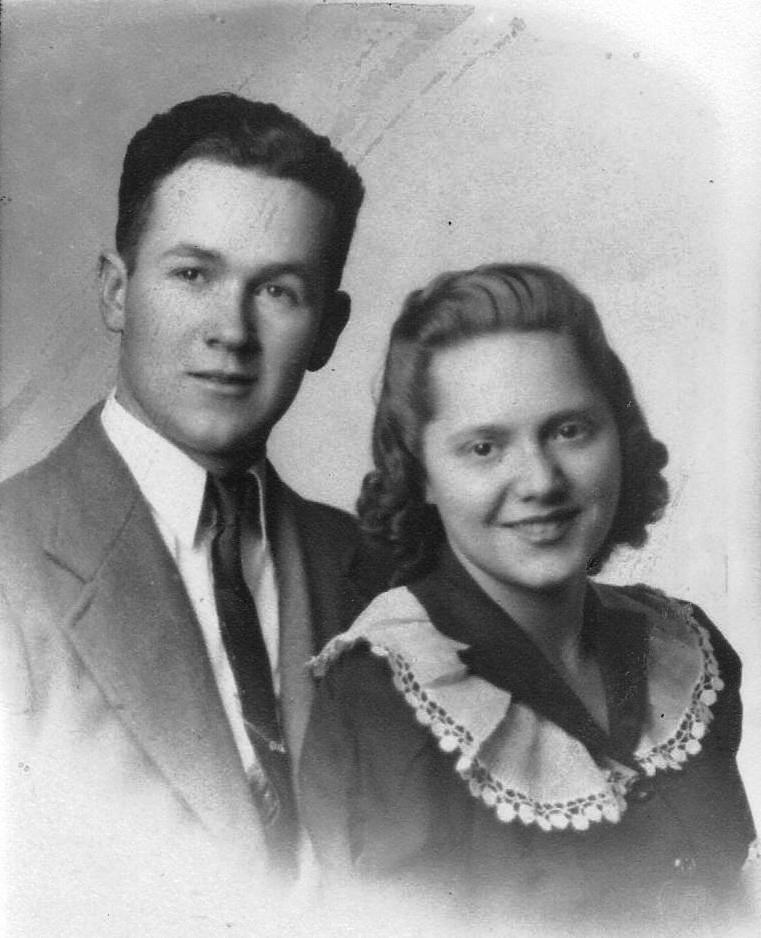
Mitson wedding photo low res

He thought she was a skinny kid, and he didn’t want to be seen with her.

She thought he was “just another boy.”

But first impressions aren’t always lasting. On July 11, Charlie and Mable Mitson would have celebrated their 78th wedding anniversary – and for all we know they did, just not here on this earth.

Mable died on June 3 and Charlie followed 18 days later on June 21. Finally, Mable got to go somewhere new before her husband. After all, she’d followed him through 22 moves, during his many years of military service.

I first met the Mitsons in 2010 when I featured them in my “Love Story” series for The Spokesman Review. I followed up with them a few years later, when I included their story in my book “War Bonds: Love Stories from the Greatest Generation.”

Visiting them in their South Hill home was always a delight. They were both quick with a quip, finishing each other’s stories, and teasing each other when one remembered something differently.

Charlie sometimes deferred to her because he said, “she’s older than me.”

Mable was born in July 1924, Charlie in September.

They met at church in Coeur d’ Alene, and when those first impressions wore off, they quickly became a couple. They married when they were both just 17.

Charlie had landed a $40 per week job at the newly opened Farragut Naval Station and said, “I decided I could afford to get married.”

He was drafted into the U.S. Army in 1943, leaving his wife and infant son behind.

Charlie served with the 517th Parachute Regimental Combat Team. His World War II service included a grueling Italian ground fight, the invasion of Southern France, the Battle of the Bulge and the occupation of Berlin at war’s end.

Mable said, “I remember him telling me, ‘You just had to go over the dead and dying and keep moving.’”

Still, Charlie counted himself lucky. His only injury came from a piece of shrapnel that struck his leg. He shrugged. “I didn’t even know I was hit, ’til someone said, ‘You’re bleeding!’ They put a bandage on it, and I just kept going.”

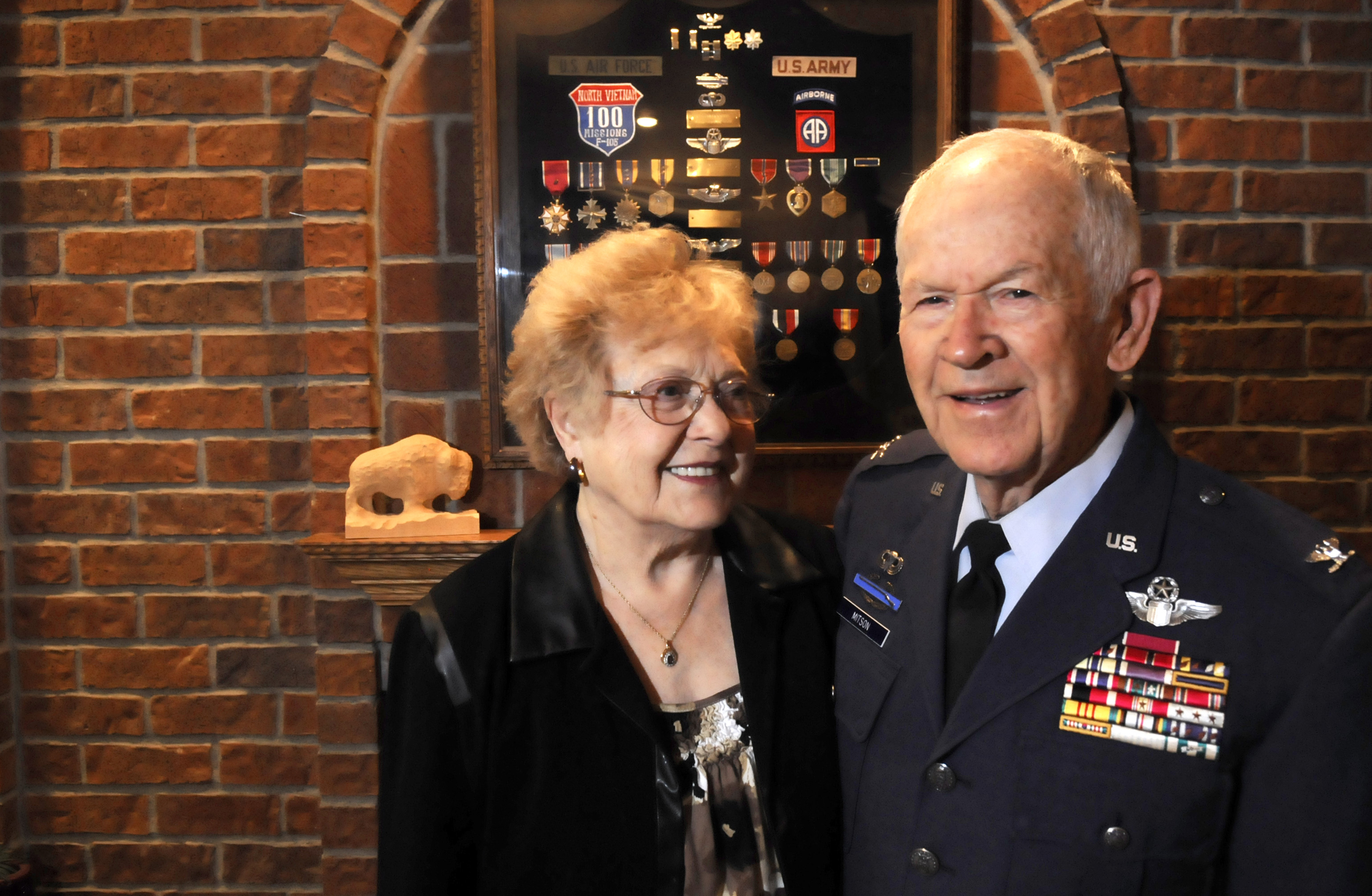
He mustered out in 1945, but he didn’t stay out long. In 1949, he was accepted into the Air Force Aviation Cadet program and launched a 30-year career as a military fighter pilot. He flew 100 combat missions as an F-86 pilot during the Korean War, and 100 combat missions over North Vietnam as an F-105 pilot, before retiring as a colonel at 54.

And Mable?

“I followed him everywhere,” she said.

She did more than just follow. She was a consummate hostess, often entertaining military personnel all over the globe. And she was the ever-present centerpiece of their family, which grew to include five children.

Their retirement years were just as busy as their military years, as they deeply invested in their church, their grandchildren and in numerous volunteer activities.

Charlie credited their abiding friendship as the key to their loving marriage.

“Make sure you have a good solid friendship before you get married,” he’d advised.

Mable said having a positive attitude helped her endure their many wartime separations.

“Wherever he was I always knew he was coming home,” she said.

So, I’ve no doubt she was expecting Charlie to arrive at any moment during the 18 days that passed between their deaths.

In “War Bonds” Mable recalled how they were separated for a year and a half during World War ll. She went to meet him at the train station, wondering how the war had changed him, wondering if she’d recognize him.

“Did you spot him among all those soldiers?” I’d asked.

Her face lit up.

“I did. Oh, I did!”

And Charlie never forgot that first glimpse of her after their long separation.

Though the station must have been bustling with travelers, he said, “I saw her standing on the staircase. As I remember it, she was the only one there.”

I can’t help but wonder if that’s exactly what Charlie experienced on June 21 when once again he was reunited with his bride.

CHARLIE AND MABEL
Mabel and Charlie Mitson Nov. 16, 2010. JESSE TINSLEY jesset@spokesman.com

Order your copy of War Bonds: Love Stories from the Greatest Generation here. 


All Write, War Bonds

Oh my stars! Love Goodreads reviews!

I’ve been working so hard on my latest book project that sometimes I neglect to check on my first book baby.

Thankfully, my youngest son is a Goodreads user and prompted me to read this latest review.

Here’s an excerpt:

I started reading War Bonds a few weeks ago, and began to read just one story each night as a way to end the day on a happy note. Cindy Hval wrote a series about the Pearl Harbor Survivors Associations for the Spokane Spokesman Review. What people couldn’t get enough of were the stories that featured couples married 6 or 7 decades, so she compiled 30 of these stories into a book. These are couples who met or married during or shortly after WWII, building a life together and keeping love alive in their marriages. Each story is only a few pages (with wonderful then and now pictures), but each speaks volumes. These are people who lived through uncertain times, but knew what they wanted, what they needed and pursued it. They were brave and courageous in tumultuous times, and faced adversity matter of factly. Most importantly, they did all this together. This was indeed the Greatest Generation, and maybe they still have something to teach us. The advice seems so simplistic, maybe we really do overthink things sometimes. Some advice:

When you get married, you stay married.
Be considerate and respectful of each other, but don’t forget to have some joy and laugh a little.
Why squabble with the love of your life?

You can read the full review on Candy’s Planet or on Goodreads.

Thank you for taking the time to post your thoughts about War Bonds: Love Stories from the Greatest Generation. 

And for readers who just post stars– those are fantastic, too!

It’s wonderful to know War Bonds is being read, enjoyed and talked about.

All Write, Columns

Losing my heroes

Ray, Milt, Dean, Harold.

Their names are as old-fashioned as the values they held dear – patriotism, service, commitment and lifelong love.

In the past few months, four members of the Greatest Generation died. Three of them are featured in my book, “War Bonds: Love Stories from the Greatest Generation.”

“I’m losing all my heroes,” I said to my husband.

“But aren’t you glad you found them?” he replied.

Actually, most of them found me whether through the newspaper or mutual friends. And one by one they shared their stories with me and with my readers. Stories of war, wounds, absence and loss, as well as tales of love found, new generations birthed, homes built and communities enriched.

Ray Garland’s recent death generated a lot of media coverage and rightly so. He was the last surviving military member of the Lilac City Chapter of the Pearl Harbor Survivor’s Association. His eyewitness account of the attack on Pearl Harbor, and his compelling memories of surviving brutal battles and freezing cold during the Korean War are a vital part of our historical narrative.

On the day the story I wrote about Ray’s death was published, I got a note from a pastor in Coeur d’Alene telling me about the death of Milt Stafford.

Stafford, who before the war had never set foot outside of Idaho, served in Africa and Italy during World War ll. In “War Bonds,” he recalled the invasion of Sicily – the first time he saw dead bodies strewn across a battlefield.

“I saw a lot of stuff I didn’t want to see,” he said. “It was hell on wheels.”

But it wasn’t battle memories that made the combat vet cry, it was the memory of a little girl.

“Her parents had been killed by the Germans, and she came to the camp begging for food,” Stafford recalled.

He thought she was about 3 or 4 years old, and he and his buddy Willard “adopted” her. They fed her, clothed her and when the shelling started (which it did most every day) they made sure she was in the foxhole with them. They never knew her name.

When the war ended, Stafford took her to the U.S. embassy in Milan. He never saw her again, but she haunted him.

“I think about her every day,” he told me. “I wonder, did she find a family? Is she alive?”

Chpt 2 Milt with little girl, Italy, 194

Milt Stafford with little girl. Italy 1944.

I would have been honored to attend Stafford’s memorial, but I had another funeral to attend that day.

Dean Ratzman, another “War Bonds” alum, had died.

Spending time with Ratzman and his wife, Betty, always involved lively banter and engaging conversation.

Several bouts of dengue fever while serving in the South Pacific had damaged Dean’s heart, and when he proposed to Betty, he told her that doctors said he likely wouldn’t live past middle age.

“He told me the doctors said he wouldn’t live past 40,” Betty recalled. “Then he asked me to marry him. I told him, ‘You’re not going to get out of it that easily!’”

As I hugged Betty at the funeral, I could only imagine the enormity of her loss. The couple would have celebrated their 74th wedding anniversary in June.

CHpt 18 Dean Ratzman 1943

Dean Ratzman, 1943

Some months earlier, I’d read about the death of Harold Smart.

When I interviewed Harold and Peggy Smart in their Pullman home, Harold was still so smitten with her, that even after 70 years together, he didn’t let go of her hand, and frequently interrupted our conversation to say, “Isn’t she beautiful?”

Sadly, Peggy died before “War Bonds” was published. Harold was nervous about loaning me their photos to copy for use in the book.

“You’ll bring them right back?” he asked. “They’re precious to me.”

Reading his obituary, I was delighted to discover a sweet connection. When Harold had moved to Orchard Crest in Spokane, he met Louise McKay, a “War Bonds” widow, and they became friends.

Chpt 22 Harold Smart, 1943Harold Smart, 1943

How wonderful to know these two with so much in common had found comfort in their friendship.

While the loss of these men saddens me, I know how lucky I’ve been to have met them. Heroes can be hard to find, but I’ve been blessed to know so many.

All Write, War Bonds

New War Bonds Review on Goodreads

I’m so appreciative of readers who take the time to share their thoughts about War Bonds: Love Stories from the Greatest Generation on sites like Goodreads or Amazon.

Mar 14, 2019 Mel rated it really liked it

Each chapter of this book is based on a couple; how they met, how they became engaged, married, experience in WWII, and how they’ve made their marriages last 60-70 years.
With each couple photos are shown in black and white, and a song that means something to them. I started listening to the songs while reading about the couple.
pg.203 The weight of the explosives made an already tricky landing more difficult, and as they made their approach, Robbie knew they were in trouble. “Without warning th
Each chapter of this book is based on a couple; how they met, how they became engaged, married, experience in WWII, and how they’ve made their marriages last 60-70 years.
With each couple photos are shown in black and white, and a song that means something to them. I started listening to the songs while reading about the couple.
pg.203 The weight of the explosives made an already tricky landing more difficult, and as they made their approach, Robbie knew they were in trouble. “Without warning the plane lurched and trembled. Like a goose hit in the wing by a volley of shot, we plummeted into the Pacific with terrifying finality.”
The plane smashed into the water, shattering on impact. Cascades of water tossed him about like limp seaweed…..
Some gruesome details are shared, but not many. Obviously some of the men had PTSD, something that wasn’t really known about or properly dealt with back then.
pg. 207 Tom says, “That’s where I kissed her for the first time. The wind came up and blew my hat off. Down it went, into the sand pit. She’s a powerful kisser to blow my hat right off!”

In the Afterward, the author tries to define what is so special about these couples. She says she found several qualities the couples shared: friendship, respect and commitment.

The couples definitely had a mettle that couples today do not seem to have. We currently, sadly, live in a throw away society and that seems to go for relationships as well; not just marriages, but long lasting friendships. Something that also stuck out to me in this book, was the strong familial relationships, which I think also reflected in the strong marriages. Also, the women didn’t freely give themselves away, if you know what I mean.

I highly recommend this book.

All Write, War Bonds

The Guernsey Literary and Potato Peel Pie Society

 39832183[1]

I rarely blog book reviews, but this lovely book has a World War II theme and I adore a good love story with some deeper historical contexts.

Plus, we just watched the recently-released Netflix movie and to my joy the movie was wonderful and very much in keeping with the book.

Until I sat down to write this, I hadn’t realized that the author, Mary Ann Shaffer, died before the book was published and that her niece helped her finish it.

The added poignancy made the story feel that much sweeter.

So. Surprise!

This isn’t a book review. Just a recommendation to read The Guernsey Literary and Potato Peel Pie Society AND watch the movie. You’ll be glad you did.


War Bonds

War Bonds Hero Dies on Memorial Day Weekend

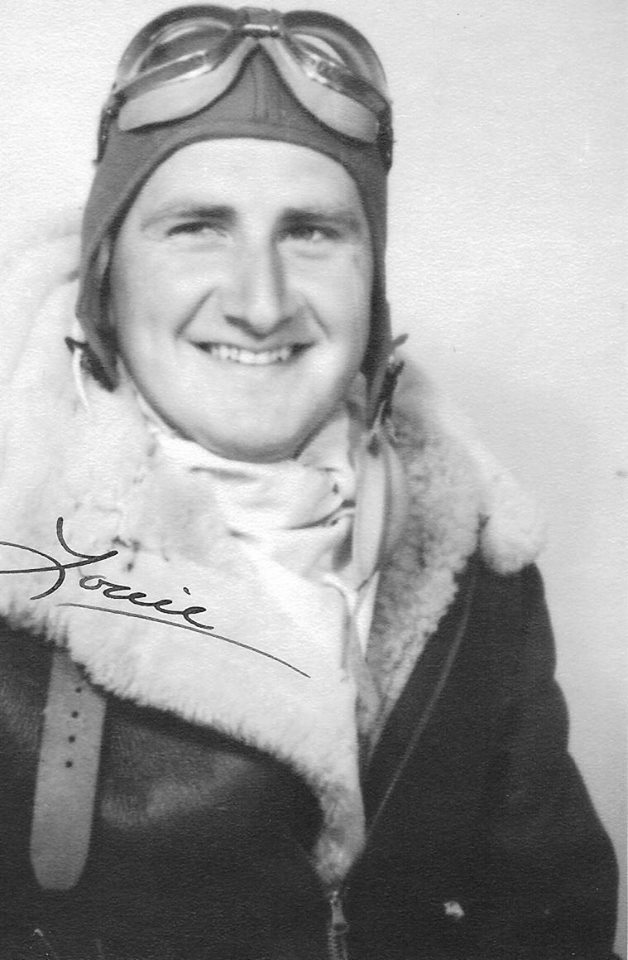
War Bonds Louie Anderson

On Sunday, May 27, Louie Anderson slipped the bonds of Earth and flew to be with his beloved Barb.

He and Barbara enjoyed 71 years of marriage and because they lived close to my home, I got to spend quite a bit of time with them.

The photo below watched over me from my filing cabinet as I wrote War Bonds: Love Stories from the Greatest Generation.

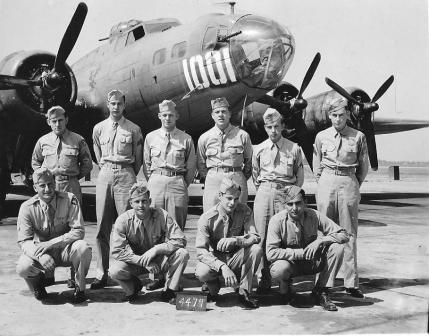
Louis and flight crew 1944 low res

It shows Louie and his flight crew looking impossibly young and irrepressibly confident. Their 22-year-old leader, first pilot Louis Anderson sits on his haunches in the front row, far left. The photo was snapped as the 10 young men prepared to depart for Chelveston, England. It was May 1944 and the crew of the G-model Flying Fortress eagerly anticipated getting their licks in against the enemy.

Thirty-five missions later, Louis returned home, having lost only one of his original crew. Amazing because he said, “There was only one mission that we didn’t get shot at.”

Below is an excerpt from their chapter, “Keeping Time.”

“A ship in our left wing got hit,” Louis said. He and his men watched in dismay as the ball turret gunner fell from his turret and hung suspended by his foot. Many B-17 crew members considered the ball turret the worst position on the aircraft. The gunner was confined in a sphere fastened to the underside of the plane.

Louis cleared his throat. “I had to explain to the fellows that he was no longer with us.” After 45 seconds the gunner fell from the aircraft.

“We had quite a bit of difficulty talking the crew into getting back in the plane to fly a mission the next day,” he continued. “We had to have several conferences with the chaplain to explain that the gunner hadn’t been hanging there, suffering.”

When Barbara died in November, Louie’s already declining health, worsened.

He just wanted to be with her.

And he got his wish, but not before he was awarded a special Quilt of Valor made by the quilting group at Fairwood Retirement Community. Barbara was an avid quilter and she would be delighted to know of Louie’s gift.
He received the quilt, Saturday. He passed away Sunday.

And on Memorial Day I will be thinking of them both.

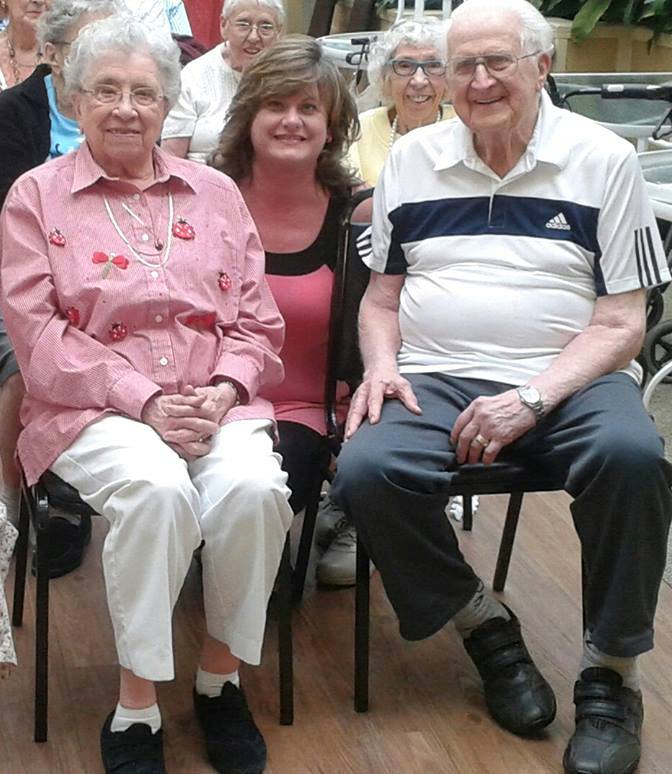
War Bonds with the Andersons at Fairwood