War Bonds

Still Celebrating

23456584_1750195468387694_7681833426586637853_o[1]

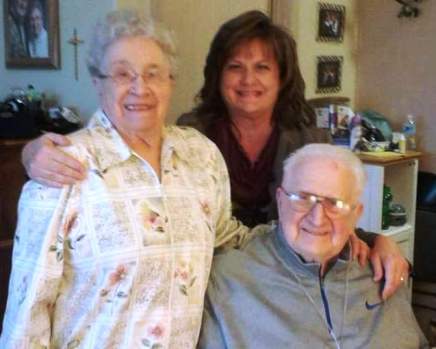
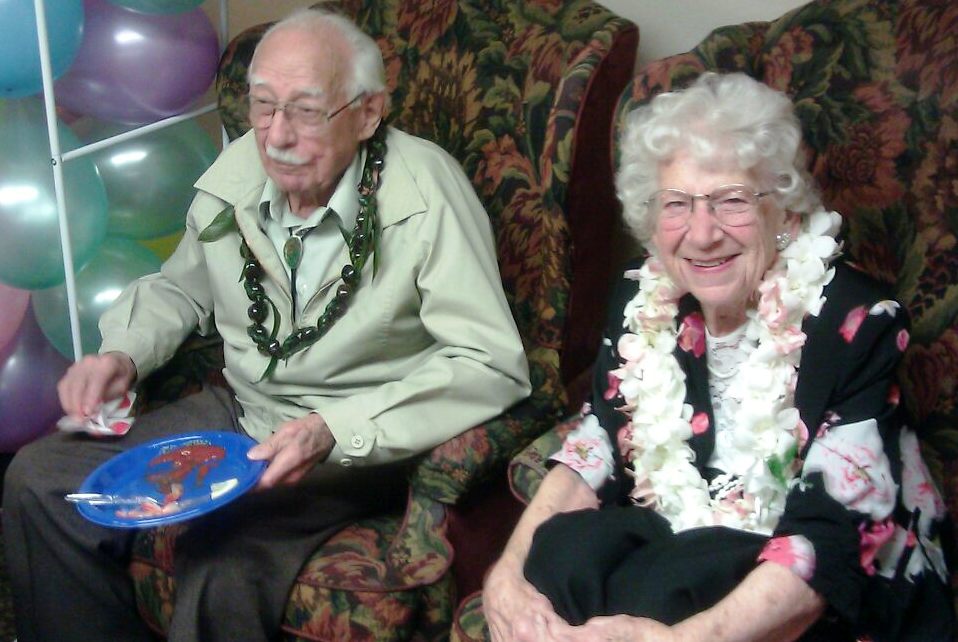
I was so delighted to see this photo of Harold (Tom) and Shirley Tucker celebrating their 72nd wedding anniversary on November 12 at North Hill Christian Church in Spokane.

The Tuckers are featured in chapter 36 of War Bonds: Love Stories From the Greatest Generation.

Long may they love!

War Bonds

Every Time We Say Goodbye

72.

That’s how many individuals made the final cut of War Bonds: Love Stories from the Greatest Generation.

24.

That’s how many people died before the book went to print.

19.

That’s how many goodbyes I’ve had to say since War Bonds 2015 publication.

In the past month, Barbara Anderson and Dale Eastburg passed away.

Barbara’s loss hit me especially hard. The Anderson’s story is featured in chapter 28 “Keeping Time.” They  met in 1945 when Louis came into her father’s jewelry store to get his watch repaired. When War Bonds was published, he still wore the watch and it still kept time.

The Love Lesson Barbara shared at the end of the chapter resonates.

“You can’t take back bad words. We’ve never said one thing we’ve had to take back.”

.facebook_1510783440734

This photo was taken 11/16/16, the last time I saw Barbara. She wanted more signed copies of the book to send to a family that was grieving the loss of a wife/mom/grandma.

She always thought of others. When I left she insisted I on giving me a water glass from Air Force One. Her late grandson had served as pilot for President Obama.

She also always asked if I needed to use the restroom before I left!

Her spirit and generosity are simply irreplaceable and I worry how Louie will do without his bride.

Dale and Eva Eastburg had been married for 75 years when he died earlier this month. When last I spoke with them, they were still going to the gym regularly!

009

The title of their chapter seems especially poignant today. It’s titled “Hard to Say Goodbye.”

And it is. It really is.

Columns, War Bonds

Who Needs Prince Charming?

I didn’t really think he’d show up on a white horse. I’ve never been a great rider and city streets aren’t welcoming to skittish steeds.

Instead, my Prince Charming borrowed his father’s Ford Tempo for our first date. “I’m in the middle of restoring a ’67 Mustang,” he explained.

Thirty-one years later, he’s still in the middle of restoring that same ’67 Mustang. I no longer sing “Someday My Prince Will Come;” instead I mutter, “Someday my prince will be done – with something. Anything!”

After three decades of marriage I’ve had ample time to rethink my original dreams of Prince Charming.

My prince has never waltzed me around glittering ballrooms, and I’m not in the habit of losing any shoes. But sometimes he sneaks into the kitchen while I’m cooking, takes my hand, and spins me into a slow dance across the dining room floor.

“There they go again,” one of our sons will say, groaning with embarrassment.

As if dining room dancing wasn’t enough, several years ago, Derek decided to add guitar-playing to his romantic resume.

“I’m going to learn to play ‘Can’t Help Falling in Love With You’ for your birthday,” he announced.

My birthday came and went. As did Valentine’s Day, our anniversary and Christmas.

Finally, I schlepped the two guitars and the amp he’d purchased downstairs, and shoved them in a closet. His musical ardor may have dimmed, but his passion for me has yet to wane.

I know this, because several times a month he’ll text me: Date night?

He makes reservations at one of our favorite restaurants. And we don’t stare at our phones over dinner – we talk about anything and everything. We’ve yet to run out of words.

It turns out my prince didn’t have a castle to offer me, but that’s OK . I’ve heard the upkeep on palaces is brutal. And I’ve never been a damsel in distress in need of rescue.

In fact, the demur, soft-spoken girl in white satin he married, grew up into a confident woman with opinions that often differ from his, and a newspaper column in which to express them.

Instead of being threatened, Derek applauded and encouraged my evolution. Willingly, he picked up the slack at home when my work took me out of town – or more often inside my head.

Writers are rarely easy to live with, especially when a new project swallows every waking thought and even haunts our dreams. But he is uncomplaining, knowing that my glazed eyes will eventually light on him, recognition will dawn, and I will invariably smile.

He hasn’t ruled a kingdom. His birthright is more plastic spork than silver spoon, but for over 20 years he’s run a successful small business. His reputation for integrity remains sterling, even in tough economic times.

When our children grew, and rebellion brewed with teens eager to topple the home regime, he handled those painful transitions with grace, dignity and infinite patience. Watching him parent our sons made me fall in love with him all over again.

Time has changed us. My prince has lost some hair, gained some weight, lost that weight and gained some wrinkles. And I’ve done the same, except my hair has grayed instead of thinned.

His unfinished projects still drive me crazy. The Mustang rusts in our driveway; the guitars gather dust in the closet, and the long-promised home office remains elusive. I never know what he’ll start next, but I’m confident it probably won’t be completed.

And just when my frustration reaches its zenith, I catch his eye across a crowded room (all of our rooms are crowded, now) and my heart skips a beat.

He holds out his hand to me. I take it and he pulls me into an embrace that still takes my breath away.

We sway together, and he hums in my ear. “Wise men say, only fools rush in, but I can’t help falling in love with you.”

I don’t need Prince Charming. Or a ballroom. I don’t really even need the tiara he bought me.

I just need this man.

And I’m profoundly grateful that our marriage is still an unfinished project.

23131848_1580341082004513_2624145754997905891_n[2]

Contact Cindy Hval at dchval@juno.com. She is the author of “War Bonds: Love Stories From the Greatest Generation.” You can listen to her podcast “Life, Love and Raising Sons” at SpokaneTalksOnline.com. Her previous columns are available online at spokesman.com/ columnists. Follow her on Twitter at @CindyHval.

War Bonds

70 Years of Adventure

20708109_1498992003472755_632359020316113008_n[1]John and Amy Roberson

Amy and John Roberson grew up in the same small community of Woodland, Washington, on farms about 2 miles apart. They attended the same school grades K-12, yet it took a world war to bring the couple together.

That’s not to say Amy went unnoticed by John.

“I had my eye on her,” he said. “She was very attractive.”

In their Greenacres home, Amy shushed him.

“Now, now,” she said, smiling.

But neither of them can recall a single conversation between them until they met again in 1945 in Washington, D.C., where both were serving in the Navy.

John had been accepted to the V-12 Navy College Training Program in 1943. The program was designed to supplement the force of commissioned officers in the Navy during World War II.

He thought the Navy would be a great fit for him.

“I loved the water,” he said. “I built my own boat on the Columbia River.”

It came as quite a surprise when the first place the Navy sent him was to the University of Kansas.

He shrugged.

“I studied engineering at the University of Kansas.”

Amy had to wait until she was 20 to enlist.

“My uncle was in the Navy in World War I,” she said. “I wanted to join the Navy, too.”

After basic training, she was sent to the U.S. capital to study decoding. Meanwhile, John was stationed nearby, in Norfolk, Virginia.

A mail carrier in Woodland kept track of the local youths in the service. He discovered there were eight Woodland youths in the Washington, D.C., area where his daughter was stationed, and he connected them.

They all got together and had a great time talking about home, and that’s when Amy truly noticed John.

“John asked me for a date,” she recalled. “We were supposed to meet at the movie theater. It was pouring rain, and I showed up with drippy hair.”

Wet hair didn’t deter him from asking for another date.

Soon John left for what would be the only cruise of his Navy stint.

“My sea duty consisted of taking a ship from San Diego to Charleston (South Carolina),” he said.

They stayed in touch and both returned to Woodland when they were discharged in 1946.

“We both qualified for the GI Bill, and I told him I was going to WSU,” Amy recalled. “John said, ‘I think I will, too.’ ”

They got engaged in April 1947 and returned home in August for their wedding.

Amy made her wedding gown and bridesmaid dresses from parachute silk.

“I got a whole bolt for $10, so we all wore white,” she said.

On Aug. 17, 1947, they were married at the Presbyterian church in Woodland. They honeymooned in British Columbia and then returned to WSU where John received a Bachelor of Science in civil engineering in 1948.

Amy, too, would eventually earn a degree in home economics, but first busy years ensued.

Son, Roger, arrived in 1950, followed by twins David and Janice in 1951.

The young family moved numerous times as John pursued a master’s degree, followed by a doctorate.

“It was hectic,” Amy said.

She recalled many late nights and early mornings when John would place Janice across his knees and jiggle her to sleep while he studied.

He taught at WSU, and their children were active in Camp Fire and Boy Scouts.

In 1963, they moved to Thailand when John accepted a teaching position with the SEATO Graduate School of Engineering.

Two years later the family set out to visit the famous Bridge over the River Kwai and the POW Memorial. As they crossed the bridge used by pedestrians, carts and bicycles, a train approached.

Roger and David took refuge on a pedestrian platform on one side of the bridge while Amy, Janice and John perched on the other side. As the train drew near, John reached out to help a Thai man on bicycle with a large metal ice cream box balanced on the back. As the train passed it hit the metal box which knocked the bicycle into the three of them. Amy, Janice and John were thrown against the bridge railing which broke, sending them plunging into the dry riverbed beneath.

“We hit hard,” John recalled.

Their sons scrambled to help.

“The first aid training they received in Scouts really paid off,” Amy said.

The boys cautioned the locals not to move them, checked for bleeding and signs of concussion and summoned an ambulance.

“I do think they saved our lives or at least made our injuries less severe,” said Amy.

As it was their injuries were substantial. All three suffered numerous broken bones. Janice recovered first, but her parents were in for a long hospital stay.

“We shared a tiny hospital room for 90 days and 90 nights,” Amy recalled. Then she grinned. “And we came out as friends.”

The severity of John’s injuries curtailed their stay in Thailand and the family returned to Pullman, where more surgery awaited. He was bedridden for months as his battered body healed. Amy took care of him and their three teenagers while her own broken bones mended.

Eventually, he resumed his teaching career at WSU and authored two textbooks: “Engineering Fluid Mechanics,” with Clayton Crowe and “Hydraulic Engineering.” Both books are still in print and used in universities here and abroad.

“Without Amy’s typing, editing and encouraging, the books may never have been completed,” he said.

For several years Amy taught ESL classes in Pullman for wives of foreign students.

Their adventures continued when John retired in 1980. They enjoyed more than 50 Elderhostel trips and visited 45 countries and all 50 states.

As they celebrate their 70th anniversary Thursday, the Robersons, both 92, marvel at the way the years have flown.

“She’s been a tremendous partner – we’re good friends,” said John. “I could not have been luckier.”

Amy smiled at him.

“I learn new things about him every day.”


War Bonds

War Bonds as seen in the wild

image

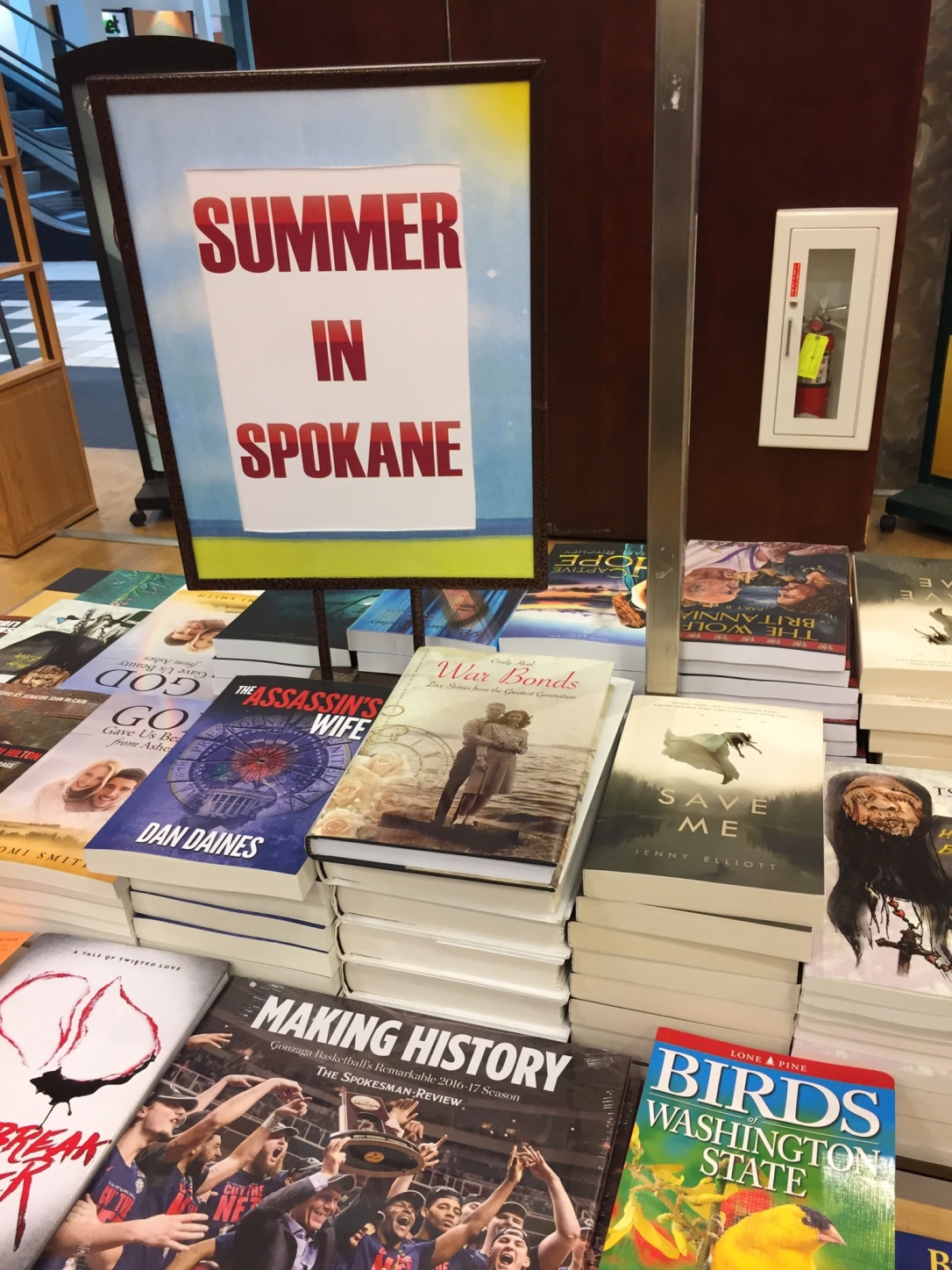
My oldest son sent this photo of War Bonds as part of a Summer Reading display at Barnes & Noble Northtown in Spokane.

Makes me happy to think someone may pick up a copy for a summer read!

I’d love to see more photos of War Bonds in the wild. Feel free to email me photos at dchval@juno.com

Meanwhile enjoy your summer reads!


War Bonds

Nostalgia? There’s an app for that.

Hungry for history? In love with the past?
Now you can indulge that interest anytime and anywhere.
My friends at Nostalgia Magazine recently launched an app available for android and iOS devices.

They’ve also included an excerpt from War Bonds: Love Stories from the Greatest Generation.

“The Luck of the Draw” can be accessed via the app or the website.

vi-shipman-and-fenton-ross-roskelley-d

Happy scrolling!


War Bonds

It Never Gets Easier

It never gets easier.
The notes from friends. From family. From readers.

“Dear Cindy, We just wanted you to know….”

And I learn another beloved person featured in War Bonds: Love Stories From the Greatest Generation has died.

Recently, two lovely War Bonds brides passed away within a month of each other.

Christine Jasley died on September 16th. She was anxious to be reunited with her husband, John, who died in October of last year.

jasley-wedding-low-res

Christine and John Jasley, 1944

Their story is told in Chapter 4 “Have a Little Faith.” A friend wrote, “Their marriage was truly a blueprint for all of us to follow.”

Then last week I learned of the death of Helen Loer.

chpt-7-helen-miller-19

Helen Miller Loer

On Saturday I will be at her Memorial Service and will read Chapter 7 “From Sailor to Preacher.” Her husband James, that sailor/preacher will be sitting in the front row, and my heart aches for him. The Loers had been married 68 years.

Our world is diminished with each loss, but I’m so very thankful that their stories remain.


War Bonds

Bicycle Built for Two

They rode through life together.

When Chuck and Harriet began dating, he didn’t have a car, so she’d perch on the handlebars of his bike and off they’d go. That’s why I titled their chapter in War Bonds, “Bicycle Built for Two.”

They were married January 16, 1944 by a Navy chaplain at a YMCA and a dozen eager sailors served as their witnesses. After two months together, Chuck was sent to France and they spent 17 months apart. That was too much for both of them.

And so for the next 72 years they were inseparable.

Chuck died August 7 and Harriet passed away September 10th.

Today I received this note from their family.

Your book was such a blessing to our family. We had several copies that we passed around at their celebration Sunday. A copy always sat on their dressing table which we showed to all their many health care providers. If Mom was having a bad day, they would sing “Bicycle Built for Two” and that would cheer her up. Thank you for writing such a meaningful book.

But I’m the one who has been blessed to meet such amazing people and to share just a small part of their lives.

Their stories have become part of my own story and I’m forever thankful.

soliday-honeymoon-low-res

Chuck and Harriet Soliday, 1945

War Bonds

The house that love built

The other night I had a reading/signing event at Touchmark Retirement Community.

An employee approached me and said while she hadn’t read War Bonds: Love Stories From the Greatest Generation, her daughter had.

It seems her daughter and her husband were looking for home and found one they really wanted in Millwood, WA.

“It wasn’t the house so much, it was what they felt when they were inside it,” the woman said. “There was such love in that house.”

A neighbor chatted with them and told them the couple who had lived there had built the house and had been married for more than 70 years.

“Their story is in a book,” he said.

Alas, the couple didn’t get the house, but they did buy a copy of War Bonds. And they fell in love with Warren and Betty Schott, just like the rest of us.

Betty 3

Warren and Betty on their 75th anniversary


War Bonds

One dance was all it took

Last week I was privileged to interview Leon and Dorothy Williams, who celebrated their 69th anniversary in April.

The Huntington Park Ballroom was awash in men in uniform in 1946, but Dorothy Wunderlich, 17, had eyes for only one.

A tall, handsome sailor with piercing blue eyes had shown up late, but still managed to secure a dance with Dorothy.

“We danced to ‘Goodnight Ladies,’ ” she recalled. “It was the last dance of the night.”

From their log home in Elk, Dorothy smiled at her husband, Leon Williams.

 “I called him my boyfriend after one dance,” she said. “I already had him cornered.”

Leon didn’t mind a bit. The 19-year-old had survived a rough childhood and already spent months at sea while serving with the Pacific fleet.

He never knew his father, and his stepfather was abusive. When he was 8, his stepfather was beating him and Leon’s 11-year-old brother Bud jumped on his back to try to end the beating.

Their stepfather kicked them out.

“My grandparents raised me and my brother,” Leon said.

The boys grew up in Milford, Utah. Bud dropped out of school his senior year to join the Navy, and Leon followed suit at 16 and was sent to Farragut Naval Training Station.

“You had to be 17 by the time you finished boot camp,” he explained. “I had my 17th birthday at Farragut.”

Hunting skills honed in Utah came in handy. His marksmanship earned him a spot as a gunner’s mate aboard the USS Ammen. He also served on the USS St. Paul.

Dorothy pulled a yellowed and stained Japanese flag from a box.

“This is proof he was there,” she said.

Leon explained that a fellow sailor had given him the flag during the invasion of Okinawa.

She also saved his blue wool sailor’s cap and every letter he wrote to her. And there were letters – because Leon was smitten after that single dance, and when he next had liberty, he hustled to the ballroom to meet Dorothy.

“He took me home on the bus afterward,” she said.

Leon was transferred to San Francisco, so letters flew back and forth. When he accrued enough leave time and knew he was eligible for discharge, he called her and told her to set a date for the wedding.

To his surprise, he had to get his mother’s written permission to marry because he wasn’t 21.

“I couldn’t understand it,” he said. “I’d been in the Navy for four years!”

They married April 6, 1947, and honeymooned in Las Vegas at his mother’s house. Leon’s brother and uncle came to Vegas to pick up a tractor and took the newlyweds back with them to Milford.

“The four of us were crammed into a tiny cab of a truck, hauling a tractor,” Dorothy said.

When asked how she felt about her unconventional honeymoon journey, she laughed and said, “I just shut up and went along. How do you think I’ve stayed married for 69 years?”

Leon took a job as the night marshal in Milford, but when an opportunity arose to work for the railroad, he jumped at the chance. He didn’t have a high school diploma, but a friend wrote “equivalent to” on the space for education and that was good enough. The pay was better and he needed the money.

The first two of their nine children had been born in 1948 and 1949.

In 1952, Union Pacific Railroad moved the family to Norwalk, California.

“I started as brakeman and was later promoted to conductor,” Leon said.

After several years in Norwalk, they bought a small ranch in Mira Loma, where their family flourished. Dorothy had been the oldest of nine, so she was used to a big family. However, replicating her family of origin was far from her mind when she married.

“I only wanted two!” she said.

But Leon relished being surrounded by four sons and five daughters.

“If I could do it over again, I’d have two or three more,” he said. “I wanted each and every one of them.”

Ranch life suited the family.

“We had chickens, pigs, horses and a garden,” Dorothy said.

Feeding her crew was a full-time job, especially since most evenings a neighbor kid or two would join the family.

“She always fixed good meals,” Leon said. “And every night we had dessert – cookies, pie or ice cream.”

They even had family vacations. The kids joked that they camped wherever there were railroad tracks. The family would cram into a 1957 Dodge station wagon and set off. It was common for hobos riding the rails to find their campsite. Instead of shooing them away, Dorothy welcomed them and shared whatever meal she’d prepared with the hungry men.

“They were so polite to our kids,” she recalled.

Once, when they’d graduated from station wagon to truck and camper, a hobo expressed a longing for apple pie.

“You bring me some apples, and I’ll bake you a pie,” Dorothy told him.

The next day he returned to the campsite with a big box of apples he “found” in a nearby orchard and Dorothy baked an apple pie in the oven in the camper, just as she’d promised.

After 38 years with Union Pacific, Leon retired, and he and Dorothy already knew where they wanted to spend their retirement years.

One of their sons had moved to Spokane and when Leon and Dorothy came to visit him, they fell in love with the area.

“This is heaven on Earth,” Dorothy said of their 40 acres in Elk.

All nine of their children live nearby, as do many of their 36 grandchildren and 55 great-grandchildren.

And last summer Leon and his brother Bud traveled back to Milford, Utah, where they finally received their high school diplomas. Forty-five students had dropped out of school to serve their country during World War II. Only four are still living, and only Bud and Leon were there to receive their long-awaited diplomas.

For Dorothy, 87, the reason for their long marriage is simple.

“I loved him, and that was it!”

Leon, 90, was equally succinct. He smiled at his bride and said, “You’ve just got to believe in each other.”