War Bonds

Empowering Women through Elevating the Conversation

30124111_1740399709331982_8569728879701262336_o

I was delighted to be a guest on the Whatever Girls podcast “Elevating the Conversation,” though as a journalist it was odd to be on the other side of the Q&A!

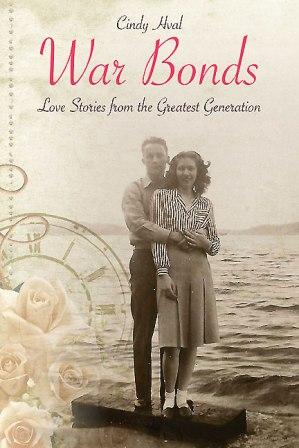
Host Erin Bishop and I covered a lot of ground. Her grandparents are the beautiful couple on the cover of War Bonds: Love Stories from the Greatest Generation.

War Bonds Cover Photo

We talked about how the women of that generation revolutionized the workplace and what it takes to have lasting relationships.
Then we talked about writing. How I got started and what’s coming up next. Of course, if you asked me a writing, I’ll talk about reading. The best writers are the best readers!

And then the heart of the podcast– the value of female friendships and how we can empower each other by elevating the conversation.

You can listen to the podcast here.

The-Whatever-Girls


War Bonds

RIP Pat McManus

Letter from Pat McManus

So sad to learn of the death of Patrick McManus.

When I had the crazy idea that maybe I could write a book, Pat McManus read an early draft of my proposal. Then he took me out to lunch and told me it was “the best book proposal” he’d ever read and he was absolutely positive “War Bonds” would be published.
A week later, he sent me the above letter of recommendation and introduction that I could send with my proposal to agents and publishers.
He believed in me and in my book when it was still just a maybe, someday…..

Having someone believe in you and your project when it’s just a glimmer, a wisp of a hope, is incredibly powerful.

I wish every author could have someone like Patrick McManus in their corner. I am humbled beyond words that he considered himself my fan, because like millions of others I was certainly his.

Rest in peace my friend. Thank you for the joy that you brought to the world and for the life-changing encouragement you gave to me.

War Bonds

Visiting my three year-old at the bookstore

Every author will tell you it’s a nail-biting moment.

Your book has been out for some time and you pop in a bookstore for a visit. Just to see how its doing– maybe sign a few copies.

There’s always the fear that you’ll find the book you labored over with blood, sweat and tears languishing in the clearance bin. Or worse. You won’t find it at all.

That’s what happened to me last week. Kind of.

I’m getting ready to pitch my second book, so stopped by my local Barnes and Noble to scan the shelves for similar titles. Of course, I checked on my firstborn.

But War Bonds was nowhere to be found!

The book launched February 22, 2015 and is still generating sales, but still it’s three years-old.

Gathering my courage I approached a bookseller and offered to sign any copies– if they had any.

“What’s the title?” he asked.

I told him.

“Oh, War Bonds! We always have copies on hand. Let me check.”

Nervously, I watched him click the keys of his computer.

“Wow! We sold out again. That’s a happy problem to have.”

I took a breath.

“Are you going to…?”

“Yep,” he interrupted. “We’ve already ordered more.”

I said thank you and left with my purchases. Amazed, thrilled and blessed that readers are still finding the love stories of the Greatest Generation worth reading. And worth purchasing.

Thank you dear readers. And Happy 3rd birthday War Bonds!”

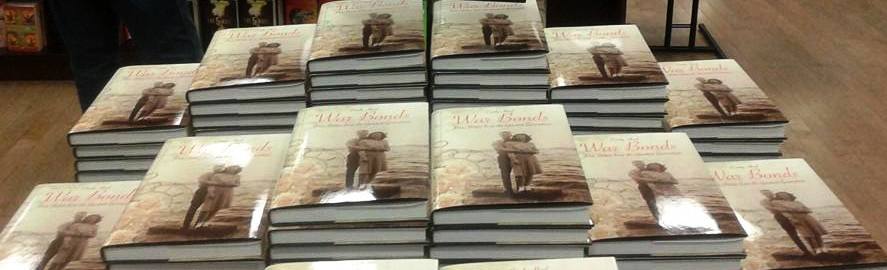
10929058_10203559455213962_6120318413619356176_n[1]War Bonds at Barnes and Noble Northtown


War Bonds

Birthday letter from my son

My heart is full and I am so thankful.
Cindy

Dear Mom,

I don’t think I’ve ever posted on your Facebook for your birthday before. But that’s just one of the many mistakes I have made, and continue to make. I’m not a perfect son. Sometimes I don’t fold the laundry when I’m told. Sometimes I leave dirty dishes in the sink. Sometimes I say things I shouldn’t. Sometimes I lie. Sometimes I make you cry. Sometimes I make you furious.
But despite all of my faults, you have never once stopped loving me with all of your being every second I’m alive. You spent sleepless nights wondering if you would ever be able to see your son healthy and living before I could even speak or understand what that meant. You’ve had to listen to me rant, rave, and ramble. You’ve given me harsh, but much needed advice. You don’t mince words, or hold back the truth. You’re the first one to ask me what’s wrong when I’m gloomy. You’re the first one to make me laugh when I’ve had a bad day.
Sometimes I’ll attempt to walk past you, eyes on the ground, grumpy and angry, and you’ll quickly grab me and wrap your arms around me. You’re the strongest person I know, and also the funniest. Your words have touched the hearts of me and people all over the country. You inspire me, challenge me, and keep me alive with love and hope.
I want you to know that every hug in the morning was real, that every compliment was the truth, and that a Facebook post, a card, or a present will never be able to describe how important you are to not just me, but to thousands of other people.

Happy Birthday, and thank you for giving me life and all that it entails. Your existence has been one of the best gifts in the world.

Sam

13321809_1092433834128576_3299394244899114261_n[1]

War Bonds

Good Cooking Fueled 70 Years of Wedded Bliss

26196120_1649405191764768_4694252748791861013_n[2]

Logging in the Olympic Peninsula is hard, hungry work, and hearty meals provide essential tree-felling fuel. If those meals are cooked by a pretty girl, well, that added inspiration can give a young man something to dream about while he works.

At least that was James Hollandsworth’s experience. He’d taken a job felling trees in 1945 and quickly noticed the camp cook.

He recalled thinking, “There’s a gal that when she gets old enough, I might see if I could entice her to marry me, ’cuz I know she can cook.”

Melba Hollandsworth was just 16 at the time. Born in a log cabin, near Osburn, Idaho, she quit school in the sixth grade, plagued by health issues caused by the nearby smelter.

As the oldest of seven from a large extended family, in addition to cooking at the logging camp, Melba traveled from relative to relative, helping out when a new baby was born or when someone was ill.

James’ family knew hers, and he’d see her occasionally at church in Spokane Valley when she was visiting.

“I probably had eyes for him, too,” she admitted.

It would have been hard to miss him, since he and his brother played guitar and sang special numbers at the church.

“When I found out she’d turned 18, I decided to ask her out,” James said.

He called on her at her Aunt Cora’s home and took her for a drive. However, her aunt was concerned that he wasn’t moving quickly enough.

“Aunt Cora knew I thought a lot of Melba,” recalled James. “She told me, you’d better get serious if you want Melba because she’s going to leave the area.”

Indeed, she moved to Kalispell to help another family member, so James drove to Montana to see her.

“She wasn’t expecting me,” he said, smiling. “You don’t want ’em to know you’re coming.”

Melba liked him well enough to ask him to buy her a guitar.

She laughed.

“I got the guitar, but I had to learn to play it.”

On another visit, James said, “Let’s go look at rings.”

Melba agreed to marry him, but with one stipulation.

“I didn’t want kids right away,” she said. “I wanted time to get more acquainted – we didn’t really have a courtship.”

On Dec. 20, 1947, the two married at a relative’s home in north Spokane. There was a lot of snow that winter and family members from Kalispell had a hard time getting off Tea Kettle Mountain to go to the wedding.

“So, they got a logging truck and put a wooden shack on the back of it and made a makeshift camper,” James said, chuckling.

There was no time for a honeymoon as James was due back at work at MorrisonKnudsen Monday morning, but their first breakfast as husband and wife has never been forgotten.

James took his bride out for hamburgers at a diner in Spokane Valley.

“That was a new wrinkle for me,” Melba said, shaking her head. “I’m used to breakfast. I didn’t know what to order because I wasn’t used to restaurants.”

James grinned.

“She was upset, but we lived through it.”

Soon, they bought their first home on East 12th Avenue in the Perry District. The house cost $5,000, and James earned $1 per hour.

Their home came fully furnished.

“I bought it from a widower who was going to live with his son and said all he wanted to take with him was a suitcase,” James said. “He sold me all the furnishings for $500.”

Melba was thrilled.

“It had everything,” she said. “All we needed were groceries.”

They lived there until they bought their present Spokane Valley home in 1955.

Work kept James busy, and Melba was ready to start a family. She’d wanted to wait to have children but had no way of knowing they’d have to wait 11 long years.

“It was baffling to wait so long,” she said. “We saw doctors, had tests. So many people had babies, but I didn’t.”

Finally, in December 1958, their daughter, Cindy, arrived. The proud parents took her everywhere from bowling leagues to backpacking trips.

James loved nothing more than discovering new lakes and places to fish.

“I took a map and laid out all the lakes north of Sandpoint to the Canadian border,” he said. “I wanted to see the country. Each week we went to a different lake. Lots of times there were no roads or trails, so we just bushwhacked.”

And often his wife and daughter went along.

“I wasn’t a very good hiker, but I liked camping,” Melba said.

She enjoyed fishing and marveled at James’ skill.

“He had a feeling about fish – a special touch,” she said.

The irony was he wouldn’t eat fish – couldn’t even stand the smell of fish on his fingers.

He shrugged.

“I got poisoned by canned salmon when I was a kid.”

James worked for MorrisonKnudsen for 20 years and for N.A. Degerstrom for 25, before retiring in 1989.

The first thing they did was buy a motor home and hit the road, crossing the country from Mexico to Alaska. For many years, they traveled thousands of miles, stopping to hike, fish or visit friends and relatives.

Their adventures were curtailed when James, then 85, suffered a heart attack at the bottom of the Grand Canyon. He’d been on the trip with a friend and felt some discomfort but still drove home.

“Melba called the doctor, and the next day I had five bypasses,” he said.

They recently celebrated their 70th anniversary, and Melba, 88, offered this bit of advice to couples: “Learn to go with the flow,” she said. “Learn about each others’ interests.”

For example, when she couldn’t do the hikes James wanted to do, she encouraged his love of photography.

“I enjoyed his pictures when he came back.”

James, 93, said, “She never puts up much of a fuss. She’s got a lot of patience.”

His advice to future husbands?

Grinning at Melba, he said, “Check and see if she cooks.”

26231627_1649405268431427_1621373818153809780_n[1]

War Bonds

The Face that Graced the Book Cover

She never thought her face would be on a book cover.

That a snapshot taken on her honeymoon would become the face of War Bonds: Love Stories From the Greatest Generation. After all, the marriage and the honeymoon might never have happened if Mary Grayhek hadn’t said to heck with vanity, tied a scarf over her hair set in pin curls, and agreed to a blind date.

But at the insistence of her friend, in 1946, Mary agreed to a double date with a handsome Marine. The date with Roy Grayhek changed her life.  Six weeks later, they wed in the Naval Chapel in Bremerton, WA.

The photo snapped of Roy and Mary standing on a piece of driftwood in the Puget Sound, became the cover of book filled with stories of people who married during, or shortly after World War Two.


War Bonds

The Grayheks enjoyed 68 years of wedded bliss before Roy’s death in 2014.
Sadly, he passed away before the book’s release. But Mary was able to enjoy  seeing their faces on the cover. Even more importantly, she got to see the book in the hands of her great-granddaughter Grace, and her soldier husband, Ryan, shortly before he was deployed.

17343003_10212372518894610_2039309731450254785_n[1]

Mary Grayhek died December 20, surrounded by her family.Grayhek wedding low res

I’m quite confident that Roy was the first one to greet her, and that he hasn’t taken his arm from around her shoulders. And that they picked up their story right where they left off– with happily ever after.


Columns, War Bonds

Their Stories are Now a Part of Mine

As I sat down at my desk to write this week’s column, an email notification popped up on my screen. I opened it to read of Audrey Bixby’s upcoming funeral.

I’d interviewed Audrey and her husband, Dick, several years ago for my Love Story series, and included their story in my book “War Bonds: Love Stories from the Greatest Generation.”

The timing of the email stunned me. I’d already planned to write about the loss of so many of the people featured in “War Bonds.”

Seventy-two. That’s how many individuals made the final cut of the book.

Twenty-four. That’s how many people died before “War Bonds” made it into print.

Twenty. That’s how many goodbyes I’ve had to say since its 2015 publication.

A colleague shrugged when I bemoaned yet another loss.

“What did you expect when all your subjects are World War ll veterans over 80?” he’d asked.

He has a point.

It’s not that I expected them to live forever; it’s just that I’ve been unprepared for how much each loss affects me.

In the past few months, in addition to Audrey, I’ve said farewell to Jack Rogers, Dick Eastburg, Barbara Anderson and Myrt Powers.

It seems fitting to honor them today on the 76th anniversary of the attack on Pearl Harbor.

Jack Rogers wasn’t at Pearl Harbor, but he enlisted in the Army in 1943, when he was just 19. He had a hard time believing we were at war against Japan.

“I grew up with a bunch of Japanese kids,” he said in “War Bonds.”

Before being shipped out to the Pacific, he traveled to California to see a Japanese friend from high school, only to find his friend and his family had been confined in an internment camp.

I met Jack many years ago when he taught art at Northwest Christian School. He taught all four of my kids, and each one remembers him well.

Eleven years ago, I wrote an article about his art career. Since then, I revisited him in print many times. A story about his 71-year marriage to Fran, a feature about how following a debilitating stroke, he still continued to give back – painting tailgates on Personal Energy Transporters through Inland Northwest PET Project.

And I wrote about one of his final art shows at Spokane Art Supply. That’s where I saw him last. He and Fran sat side by side, as friends, fans and former students perused his paintings, buying a piece of Jack to take home and remember him by.

My own piece of Rogers’ art watches over me as I write. It’s a whimsical print of a terrier that Fran sent as a thank you note, following the funeral.

Next to it is a photo of Louis Anderson and his flight crew taken in 1944, just before they shipped out to Europe.

The last time I saw Louis and Barbara at their retirement center apartment, she insisted I take home a memento – a water glass from Air Force One. She was so proud of her late grandson who served as President Obama’s pilot.

She also kept me grounded in real life. Every time I left their place she’d say, “Do you need to use the restroom? Are you sure?”

Audrey Bixby was strictly down-to-earth as well. When I interviewed her and Dick, he kept me in stitches with jokes and sly puns. While we laughed, Audrey feigned exasperation and then told her own funny stories.

When Dick enumerated her wonderful qualities, he said, “She’s an awfully nice person and she laughs at my jokes!”

Dick died five years ago. I like to think that now they’re laughing together again.

Dale Eastburg passed away last month. He and his wife, Eva, had been married 75 years. When last I spoke to them, they were still going to the gym every week!

They’d been married just a short time before he was sent to China as part of the famed Flying Tigers. The thought of saying goodbye to his bride proved unbearable to Dale, so he didn’t. He slipped out of their apartment while she slept.

I hope this time Dale was able to say goodbye.

And today, I think of darling Myrt Powers. I never thought I’d describe a Marine as darling, but that exactly describes this tiny dynamo.

Though already employed as a teacher, she enlisted in the Marines following the attack on Pearl Harbor, because so many of her students told her they were worried about their fathers who were going off to war.

“I wanted to take care of my students’ dads,” she explained in “War Bonds.”

She met Walt Powers, a sailor stationed at Marine Corps Air Station Santa Barbara. They were married 71 years at the time of her death.

I last saw Myrt two years ago, in Hawaii, of all places.

It was 8:15 in the morning at the Hale Koa Hotel, an Armed Forces Recreation Center resort on Waikiki. My husband and I were preparing to make our first pilgrimage to Pearl Harbor, and stopped for coffee before the tour bus picked us up.

Myrt was grabbing a cup while waiting for Walt to finish his regular swim at the hotel pool.

“Hello, honey,” she said, reaching up to embrace me.

It was the best hug I’ve ever received from a Marine, and sadly it was the last one from Myrt.

Today, while the world remembers the more than 2,000 lives lost at Pearl Harbor, I remember five souls who endured the trauma of a world war. The lives they led in its aftermath, the families they raised, the marriages they cherished, bear witness to the resiliency of the human spirit.

While I’m sad at their passing, I’m so very glad that their stories are now a part of mine.

Contact Cindy Hval at dchval@juno.com. She is the author of “War Bonds: Love Stories From the Greatest Generation.” You can listen to her podcast “Life, Love and Raising Sons” at SpokaneTalksOnline.com. Her previous columns are available online at spokesman.com/ columnists. Follow her on Twitter at @CindyHval

War Bonds

Celebrating 70 years of a marriage that is “so much more than friendship”

Barbara and Ray Lewis have a lot of reasons to be thankful this Thanksgiving – 70 of them, to be exact.

The couple married Nov. 23, 1947, so in addition to the traditional turkey day feast, they’ll be celebrating 70 years of wedded bliss.

She was born in Texas, he in Ohio, but they met in Indiana, and 3 1/2 months later, they married.

Barbara was traveling with a group of students who were going door to door inviting people to special church services. It just so happened that the services were being held at the church Ray attended in Fort Wayne.

“He made a point of meeting all the girls,” Barbara, 94, said, smiling.

Ray, 92, was finishing up his engineering degree at Indiana Tech and had indeed met all the girls in the traveling group, with one exception. An exception he rectified as quickly as possible.

“He saw me because I was wearing a big black hat,” she said.

Ray doesn’t recall the hat, but he does remember approaching her and saying, “I believe your name is Barbara.”

He’d done some reconnaissance.

When he discovered Barbara was staying with a couple who’d asked him to photograph their newborn son, Ray an avid amateur photographer, decided now would be the perfect time to take that photo – even though the child was now a year old.

The family asked him to stay for dinner, and he didn’t hesitate. He also invited Barbara on a triple date the next night.

“There wasn’t much to do in Fort Wayne in those days,” recalled Barbara. “We went to the drugstore and had a soda and then walked to the park where they had a lighted fountain. We watched the colors change.”

She still has a postcard featuring the park and the fountain.

The next day, his sister, Mary, came to visit. She was dating Ray’s roommate, Ted. Eventually Mary and Ted would wed as well.

They arranged a double date.

“Ray thought that gave him an excuse to sit by me in church Sunday morning,” Barbara said.

The church meetings concluded, and it was time to say goodbye. Ray went to the station with her.

“Barbara had to be the last one out of town,” Ray said.

That was fine with him.

“I wasn’t ready to turn loose of her just yet,” he admitted.

In fact, he made her promise to write to him. She agreed on the condition that he would write back.

As the train began to pull away, he stood outside her window and used his finger to trace the words “please write!” in the dust.

Back home in Texas, Barbara checked her mailbox every day.

“If there wasn’t a letter, I let him have it,” she said.

But Ray was taking his finals and the pressure of the letter-writing got to him.

“I got tired of that kind of romance,” he said.

So, when Barbara told him that she and her parents were moving to Erie, Pennsylvania, to help establish a church, Ray was delighted. Erie wasn’t far from his Ohio hometown. He quickly hopped on bus to visit her. Well, she did most of the visiting.

“She did all the conversation, just like she does now,” he said, grinning.

They both got jobs at General Electric, and one September evening Ray borrowed her father’s car and took her to see Lake Erie.

“It was a moonlit night, and the waves were breaking over the shore,” Barbara recalled.

It was the perfect place for a proposal. When she said yes, Ray went straight home to borrow money from his mother to buy an engagement ring.

They married on a Sunday night, just after evening service in the middle of a snowstorm.

She wore a dress and headpiece made by her mother and the preacher’s wife, and they caught the last train of the evening to Cleveland for their honeymoon.

While there, a duck nearly derailed their happy future.

They went roller-skating, and the rink was giving away live ducks and turkeys.

“Wouldn’t you know it – my name got called for a duck,” Barbara said.

Now, she happened to love ducks and even had pet ducks while growing up on her Texas farm. They resolved to ship the duck home.

“It was going to be our first possession,” she said.

Alas, there were no shipping crates to be found, and they finally had to sell the duck for a dollar to a guy at the Express Station. He said his family would be having duck for dinner the next day.

“That broke my heart,” Barbara said.

She shot a glance at her husband.

“I’ve never forgiven him!”

But they both chuckled at the memory.

That sense of humor got them through many moves in the next seven decades. Ray was a mechanical engineer for oil refineries, and they lived in 13 states and four Canadian provinces.

“Every place we were sent, I decided that’s where we’d retire,” Ray said. “I’m happy anywhere I am.”

His happiness grew along with their family. Daughter Linna was born in 1950, followed by Kent in 1952, Leslie in 1954, Laurie in 1959 and Lorinda in 1964.

Since they lived in so many snowy places, the family developed a passion for skiing. Great skiing opportunities led their son to move to Spokane, and 11 years ago when Ray finally retired, the couple joined him.

“I retired many different times, but they kept asking me back,” he said.

When it comes to advice for those who wish to achieve their own happily-ever-after, Barbara proved practical, Ray philosophical.

“Always make the bed together as soon as you get out of it,” Barbara said. “Making the bed takes five minutes instead of 10, and it’s very effective in introducing your husband to household chores.”

Ray said, “Don’t think about it (marriage) in terms of 70 years – think of it in terms of one year at a time, and go with the flow.”

Then he grinned.

“I’m still finding problems with her,” he teased.

Barbara smiled, acknowledging that Ray is her friend “most of the time,” but then grew serious.

“Marriage is so much more than friendship,” she said.

She looked at Ray.

“He’s one of the best men who ever lived.”

23621408_1591013590937262_1513994905519849698_n[1]


War Bonds

Still Celebrating

23456584_1750195468387694_7681833426586637853_o[1]

I was so delighted to see this photo of Harold (Tom) and Shirley Tucker celebrating their 72nd wedding anniversary on November 12 at North Hill Christian Church in Spokane.

The Tuckers are featured in chapter 36 of War Bonds: Love Stories From the Greatest Generation.

Long may they love!

War Bonds

Every Time We Say Goodbye

72.

That’s how many individuals made the final cut of War Bonds: Love Stories from the Greatest Generation.

24.

That’s how many people died before the book went to print.

19.

That’s how many goodbyes I’ve had to say since War Bonds 2015 publication.

In the past month, Barbara Anderson and Dale Eastburg passed away.

Barbara’s loss hit me especially hard. The Anderson’s story is featured in chapter 28 “Keeping Time.” They  met in 1945 when Louis came into her father’s jewelry store to get his watch repaired. When War Bonds was published, he still wore the watch and it still kept time.

The Love Lesson Barbara shared at the end of the chapter resonates.

“You can’t take back bad words. We’ve never said one thing we’ve had to take back.”

.facebook_1510783440734

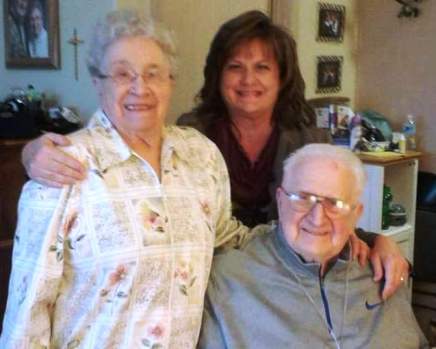
This photo was taken 11/16/16, the last time I saw Barbara. She wanted more signed copies of the book to send to a family that was grieving the loss of a wife/mom/grandma.

She always thought of others. When I left she insisted I on giving me a water glass from Air Force One. Her late grandson had served as pilot for President Obama.

She also always asked if I needed to use the restroom before I left!

Her spirit and generosity are simply irreplaceable and I worry how Louie will do without his bride.

Dale and Eva Eastburg had been married for 75 years when he died earlier this month. When last I spoke with them, they were still going to the gym regularly!

009

The title of their chapter seems especially poignant today. It’s titled “Hard to Say Goodbye.”

And it is. It really is.