Blog

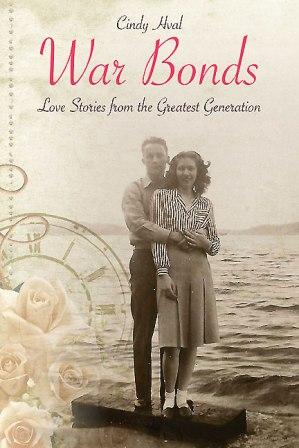
War Bonds

RIP Pat McManus

Letter from Pat McManus

So sad to learn of the death of Patrick McManus.

When I had the crazy idea that maybe I could write a book, Pat McManus read an early draft of my proposal. Then he took me out to lunch and told me it was “the best book proposal” he’d ever read and he was absolutely positive “War Bonds” would be published.
A week later, he sent me the above letter of recommendation and introduction that I could send with my proposal to agents and publishers.
He believed in me and in my book when it was still just a maybe, someday…..

Having someone believe in you and your project when it’s just a glimmer, a wisp of a hope, is incredibly powerful.

I wish every author could have someone like Patrick McManus in their corner. I am humbled beyond words that he considered himself my fan, because like millions of others I was certainly his.

Rest in peace my friend. Thank you for the joy that you brought to the world and for the life-changing encouragement you gave to me.

Columns

Name that car!

My friend Sarah loves her car. Seriously loves it. So when a rogue deer did significant damage to it one dark February night, she was heartsick.

When she finally got it back from the body shop, she posted a photo of it on Instagram, rejoicing that her Honda Accord’s sleek midnight blue body had been restored.

A friend commented that she loved her car too, and asked Sarah if her car had a name.

Regular readers of this column won’t be surprised by her answer.

Some months ago I wrote about Sarah’s cat – a boy named Rose, with no middle name to give his feline status some dignity.

I suggested Rose Henry. Sarah’s husband balked.

“His name is Rose. Just Rose,” he insisted.

So, of course her beautiful blue car is currently nameless.

Our family vehicles have always had names. After all, sometimes I feel like I spend more time with my car than with my family. I can’t have that kind of intimate relationship with some nameless hunk of metal.

Currently, I drive a gold Oldsmobile Intrigue. Her name is Golda MyDear.

She wasn’t my idea.

When I was finally ready to downsize from the minivan mama life, I imagined my next car would be a ’65 cherry red Mustang convertible. Or a sporty SUV.

But my sister-in-law’s mother could no longer drive, and they wanted to get rid of her car, so as not to tempt her. It was in great condition, with very few miles, and it ended up in our driveway.

A four-door sedan formerly owned by a granny wasn’t what I’d planned, but after a few days behind the wheel, I began to appreciate her tight turn radius and easy ride.

Golda and I hit the road when my book, “War Bonds,” came out. She faithfully took me to bookstores across the state.

I thought everyone named their cars, and judging from the response to my social media post about Sarah’s nameless Honda, lots of people do christen their rides.

My friend, Annie, drives a Pilot named Pontius.

“When it was brand new, I became irritated with how concerned I was with it and to humble myself I named it Pontius,” she wrote.”I realize it’s not a Pilate, but Amelia Earhart seemed too long.”

Betsy has a Subaru named Ruby Sue.

Just reading that makes me happy.

The Curless rigs have more prosaic monikers. “Our truck is the Big Nasty, and the SUV is Grocery Getter,” wrote Gail.

Candy said her first car was a Ford Pinto named Bean.

Some folks give a nod to pop culture. Fans of the “Guardians of the Galaxy” films will recognize the origin of Rob Brewer’s Sequoia. Its name is Groot.

His wife calls their Acadia, Katie.

Go ahead. Say it out loud.

My friend Denise said she calls her car Honey, because when it tries to go up a hill without slowing down, she just has to say, “Oh, honey. …”

Susie says her car is “Andretti, because I’m Mario!”

Steven drives “Vandola,” a cross between a van and a gondola, and Kris has Flo the Ford Flex, and Sven the Volvo V70.

Our family fleet included the Red Dragon, my ’75 Pontiac LeMans that one hot summer in our glorious BC (before children) years, took Derek and me all the way to Disneyland with frequent stops due to vapor lock.

The first minivan I drove was christened The Miracle.

With a third child’s birth imminent, we desperately needed a bigger, more reliable vehicle than my aging Ford Tempo.

We couldn’t afford a car payment, so each night during bedtime prayers, our oldest sons prayed for God to send us a minivan.

A few weeks before Zachary’s birth, Derek’s brother and sister surprised us with a used Dodge Caravan.

“We just felt God wanted you to have this car,” his sister said.

“It’s our miracle!” our firstborn said.

Miraculous or not, our cars get us where we need to go. They help us provide for our families. If that’s not deserving of a name, I don’t know what is.

Alas, Sarah’s beloved Honda is still nameless.

My husband suggested she call it The Deer Slayer, but I haven’t had the heart to mention that to her. She’s dealing with far more important issues at the moment.

“Seriously,” she said. “I’ve been too busy trying to think of a middle name for our cats.”

Well. You have to respect her priorities.

Contact Cindy Hval at dchval@juno.com. She is the author of “War Bonds: Love Stories From the Greatest Generation.” Her previous columns are available online at http://www.spokesman.com/staff/cindy-hval/. Follow her on Twitter at @CindyHval.

War Bonds

She found love in the right place

When Janet Hegdahl, 16, found out her family was moving from Portland to Spokane in the fall of 1955, she didn’t jump for joy.

“I’d just gotten a job at the library,” she recalled.

She’d also discovered boys.

“I was really interested in boys, a little too interested,” Janet said. “I was looking for boyfriends in all the wrong places.”

Her unhappiness about the move melted away the first Sunday her family attended Trinity United Presbyterian Church. That’s when she saw Jack Arkills singing in the choir and thought church just might be the right place to meet a guy.

Jack noticed her as well and made a beeline for her as soon as the service ended. He was the youth director and Sunday School superintendent, and he wanted to invite her to the youth meeting that evening.

“The Italians have what they call a thunderbolt,” Jack said. “It’s when you see someone, and it’s instant recognition.”

He smiled at Janet.

“It was instant for me,” he said.

She felt the same way.

They both attended Lewis and Clark High School and saw each other between classes and after school. On one of their first dates, they saw the movie “High Society,” and when Bing Crosby crooned “True Love” to Grace Kelly, it became their song.

From their Riverview Retirement Community apartment in Spokane, Jack sang, “I give to you and you give to me, true love, true love …”

Jack already had a connection to Bing Crosby – he’d caddied for Crosby at Indian Canyon in the late ’40s.

“Bing was a big tipper,” he recalled.

In May 1957, Jack dashed into the downtown library where Janet was working. It was the day of the Armed Forces Torchlight Parade, and he was scheduled to march with his National Guard unit.

It was also Janet’s 18th birthday.

“I had a ring in my pocket,” Jack said.

He proposed.

She said yes.

And off he ran to march in the parade.

Jack had graduated from high school and was working for the Great Northern Railroad.

“I wanted to go to Whitworth and be a minister, but pretty soon I was making more than my friends who were teachers,” he said.

Janet had received a scholarship to Eastern Washington University, so they married March 21, 1958, during spring break.

She sewed her tea-length lace wedding gown, and they said their wedding was the last one held at Trinity United Presbyterian, which soon closed its doors.

They settled in an apartment in Browne’s Addition, and almost a year after their wedding, their son, Chris, was born.

“We had a 2-week-old on our first anniversary,” Janet said, smiling.

Thirteen months later, son Scott arrived and Janet’s college education was put on hold.

Daughter, Amy, completed the family in 1962, and they settled into a house in the Garland District.

The family made First Presbyterian their church and it quickly became the center of their lives. Janet became the church librarian, a position she still holds, 55 years later, and Jack joined the choir, and yes, he still sings in it.

Their lives took a drastic turn in 1966 when Jack was severely injured in a train derailment. He was on top of the train to tie a handbrake and got knocked off during the derailment.

“I landed on my back on the track,” he said.

He broke his arm and had six fractures in his sacrum. For two long weeks, he had no sensation in his legs.

“They said I’d never walk again.”

Janet, 25, didn’t know how to drive, but a neighbor taught her during her frequent trips to the hospital.

With three children, a mortgage and her husband’s recuperation uncertain, Janet returned to work at Spokane Public Library. She ended up working at all three Shadle branch locations, as well as the Indian Trail branch.

“I’ve always been addicted to reading and to studying,” she said.

Indeed. She started night school, picking up a class here and there, until 25 years after she began her college career, she graduated from EWU.

Meanwhile, Jack was able to return to work on the railroad. Not only was he able to walk, he started to run. And run. And run some more. Eventually, he ran five marathons.

The family moved to the South Hill in 1979, and when the kids flew the nest, Jack and Janet built their dream house – a passive solar home on Moran Prairie.

In 1987, Jack was diagnosed with polymyostis, a rare inflammatory disease that causes muscle weakness. He retired from the railroad in 1991, though the disease eventually went into remission.

He’s always been the head cook in the family.

Janet laughed.

“I’d put something on and go off and read and wouldn’t you know it? It burned,” she said.

She retired from the library in 2004. Her career spanned the years from handwritten check out cards, to bar codes. From card catalogs to digital catalogs, and she relished every minute.

For many years, the couple have been members of Friendship Force International, a nonprofit organization and hospitality service with the mission of improving intercultural relations, cultural diplomacy, and intercultural competence via homestays.

The Arkills have traveled across the globe, including stops in Australia, France, Germany and Tasmania.

“We love to travel,” Janet said. “We’re both extroverts, so we love to host people here, too.”

Jack survived a bout of esophageal cancer, and 14 years ago they moved to Riverview, where they continue to be active and involved.

Janet marvels that the move to Spokane which she so despaired of, ended up giving her the love of her life, and she sees the hand of the Divine at work.

“The Lord led us together and He’s kept us together,” she said.

Looking at Jack, she smiled.

“We’re best friends.”

As for Jack, the thunderbolt that hit him more than 60 years ago, hasn’t worn off.

“So many couples say they fall out of love,” he said. “I don’t get it. I guess I never fell out of love.”

War Bonds

When Opposites Attract

She was an only child. He was one of seven.

He was a Catholic. She was a Protestant.

She joined the Air Force. He joined the Navy.

He’s an extrovert. She’s an introvert.

The adage “opposites attract” certainly applies to Becky and Harry Flanigan.

They met as children growing up in the same neighborhood in New Albany, Indiana. But Becky had no intention of dating Harry, two years her junior, let alone marrying him.

Harry, however, had other ideas.

In their Kendall Yards apartment, he grinned as he recalled his first sight of Becky. His speech has been impaired by a stroke, but he communicates with hand gestures and short sentences.

“I was 4 years old when I met her. I was 11 when I knew I wanted to marry her,” he said.

It seems when he was 4, a button popped off his snow pants, and Becky’s mother sewed it back on for him. That’s how they met.

At 11, he was stricken by polio and from his bed near the living room window; he watched Becky and his older brother walk to school each day.

“I told Mom I was going to marry her,” he said.

But marriage would have to wait.

After high school, Becky went to nursing school at Ball State University. When an Air Force recruiter came to talk to the soon-to-graduate nurses, she and three friends signed up, and were soon sent to Minot, North Dakota.

Meanwhile, Harry, who hoped to be a doctor, attended St. Louis University until he ran out of funds. After working for the Army Corps of Engineers for a couple years, he enlisted in the Navy.

In 1966, he was attached to the Marine Corps unit in Chu Lai, Vietnam. He and his fellow corpsmen sent up and ran the field hospital there. He doesn’t talk about his experiences in Chu Lai.

When asked if he lost friends during the war, he hung his head and buried his face in his hands.

Becky said, “He brought home a machete and once I asked him where he got it. He said, ‘You don’t want to know.’”

One of the first things he did after returning home was to call Becky and ask her for a date.

“I said yes,” she recalled. “Then I told my mother, ‘What have I done?’ I’m older than he is. I’m taller than he is. And now he knows I was sitting home alone on a Saturday night.’”

It was March 25, 1967, and when Harry picked her up, she was relieved and surprised to find he’d grown.

“He was 5 feet, 2 inches tall, the last time I’d seen him,” she said.

Her mother waited up for her, and when Becky returned she told her mom she’d had a nice time, but wasn’t interested in seeing him again. Harry planned a career in medicine, and she definitely didn’t want to marry a doctor.

The next day he brought her an Easter card.

“He was charming as all get out,” Becky said, smiling.

He must have been, because they got engaged on April 16.

Coming from a large family had its disadvantages – namely little sisters.

“I had no idea he was going to propose,” Becky said. “But we stopped by his house and his little sister said, ‘Do you like your ring?’”

There went the surprise.

The boisterous Flanigans were a bit overwhelming.

“He invited me to a family party, and there were 100 people there,” she recalled. “I wanted to run away.”

She didn’t, and they married Aug. 12.

“His mother told people at our reception, we wouldn’t last six months,” Becky said.

Then she grinned.

“She did eventually apologize, but it took her 30 years.

Harry enrolled at Indiana University, but was disappointed when he wasn’t admitted to medical school. Even though his grades were excellent, he was told the university had no interest in retraining him from his military experience.

He studied business instead and took a job with Union Carbide after graduating in 1970.

Becky gave birth to their daughter, Amy, in 1971, and the family embarked in a series of moves across the country as Harry rose in rank and responsibility within the corporation.

Tragedy struck while they were living in California. Harry, age 46, suffered a stroke. His carotid artery had dissected and life as they knew it changed forever.

The stroke affected his speech and partially paralyzed his right side.

“The last thing he said to us was ‘I’m sorry,’” she recalled.

His prognosis was grim, but Becky said, “He felt since he beat polio, he could beat this.”

Harry, a driven, Type A, workaholic, channeled all of his energy into recovery, making it his full-time job. He learned to walk, to drive and to care for himself, though speech remained an issue.

But despite his amazing strides, he couldn’t resume his career.

“The worst day of his life wasn’t the day of his stroke, but the day they retired him,” Becky said. “He loved his job, the people, the travel. …”

Harry nodded.

Their daughter was attending law school at Gonzaga University, so they decided to move to Spokane. They’ve never looked back, because soon they had three grandchildren to dote on, including a grandson who is now attending the United States Air Force Academy.

When he could speak more clearly, Harry told Becky, “I think the stroke is the best thing that happened to me. It slowed me down, brought me to a stop and allowed me to appreciate my family.”

With his left hand, Harry, 75, gestured upward.

“My grandkids and Amy lift me up,” he said.

As to his wife of 50 years, well, he’s always believed marrying her was his destiny.

He curled his left arm into a muscle-flexing pose.

“She’s strong,” he said.

Becky, 77, said, “People ask me if I’d do it again and I say, ‘Yes, in a heartbeat.’”

When asked why, her eyes filled with tears.

“I guess it’s just true love,” she said.

“Yes,” Harry said, nodding. “Yes.”

28279531_1691479704223983_1015308065099536062_n


War Bonds

Visiting my three year-old at the bookstore

Every author will tell you it’s a nail-biting moment.

Your book has been out for some time and you pop in a bookstore for a visit. Just to see how its doing– maybe sign a few copies.

There’s always the fear that you’ll find the book you labored over with blood, sweat and tears languishing in the clearance bin. Or worse. You won’t find it at all.

That’s what happened to me last week. Kind of.

I’m getting ready to pitch my second book, so stopped by my local Barnes and Noble to scan the shelves for similar titles. Of course, I checked on my firstborn.

But War Bonds was nowhere to be found!

The book launched February 22, 2015 and is still generating sales, but still it’s three years-old.

Gathering my courage I approached a bookseller and offered to sign any copies– if they had any.

“What’s the title?” he asked.

I told him.

“Oh, War Bonds! We always have copies on hand. Let me check.”

Nervously, I watched him click the keys of his computer.

“Wow! We sold out again. That’s a happy problem to have.”

I took a breath.

“Are you going to…?”

“Yep,” he interrupted. “We’ve already ordered more.”

I said thank you and left with my purchases. Amazed, thrilled and blessed that readers are still finding the love stories of the Greatest Generation worth reading. And worth purchasing.

Thank you dear readers. And Happy 3rd birthday War Bonds!”

10929058_10203559455213962_6120318413619356176_n[1]War Bonds at Barnes and Noble Northtown


Columns

Painting over art-shaming scars

My reaction might have been a little over the top.

“I would rather have my eyelashes plucked out one by one while listening to alpine yodeling and drinking beet juice mixed with cod liver oil,” I said.

My friend raised her hands in surrender.

“Wow! OK then. We’ll skip paint night and just go to happy hour someplace.”

Some people might think a suggestion to have a glass of wine and create art with a good friend sounds delightful.

I’m not those people, and I have Mrs. Pendergast to thank for that.

Mrs. Pendergast was my second-grade teacher. While my reading skills soared under her tutelage, my art skills plummeted.

I dreaded art time more than I dreaded dodge ball during PE, and that’s saying something. My undiagnosed nearsightedness meant I never saw that pink rubber ball coming till it smacked me silly.

When Mrs. P. directed us to don our paint shirts, I groaned. Wearing my dad’s old button-down dress shirt was mortifying. It was dirty for heaven’s sake! It was crusty and stained, and it didn’t match my carefully coordinated outfit!

Of course, the reason it was stained was because I could never seem to gauge the right amount of paint. I would think I had just the right quantity of yellow for my sun, only to watch in dismay as golden globs streaked down the paper and smeared into my already-crusty sleeves.

“Oh, for Pete’s sake!” Mrs. P. scolded. “Your sun is bleeding all over your paper!”

With that she snatched my art attempt off the easel, crumpling it in disgust, commanding me to start over.

Her bleeding-sun comment inspired me.

I dipped my brush into what I hoped was just the right amount of scarlet, and painted a red sun, dripping droplets of blood from the sky.

“Good grief!” shouted Mrs. P. “That is disgraceful! What is the matter with you!?”

My classmates tittered as once again she ripped my paper from the easel.

When the class went out to recess, I stayed behind, waiting for the paint to dry so I could place my painting at the bottom of the stack, safe from mocking eyes.

So, you can see why my reaction to a friend’s suggestion of paint night was a tad vehement.

But a couple of years passed, and recently my husband came home and announced that we’d been invited to go to Pinot’s Palette with some friends.

Much to his surprise, I agreed.

It was time to silence the shaming voice of Mrs. Pendergast once and for all. My painting might stink, but at least I’d have a glass of wine to ease the sting.

On Jan. 26, I donned a paint-spattered apron, sat at an easel and picked up a brush.

To my joy I discovered we were going to replicate a painting of the northern lights. No sun in sight. And a perfect choice since we’d invited Derek’s sister and her Norwegian husband to join us. They’ve actually seen the northern lights.

I listened carefully to the instructor.

“The first lesson is you must learn the difference between your wine glass and your water glass,” she said.

That was easy. My wine glass was the one without any paintbrushes in it. Yet.

The next lesson covered what to do if we accidentally got paint on our clothes. It seemed like the instructions were tailored just for me.

In the event of a paint emergency, our teacher told us to, “Run to the sink, scream, flail, and use Murphy’s Oil Soap.”

She paused. “But if it’s been more than 15 minutes you have a new outfit.”

With that we were ready to begin.

I panicked a bit. But my husband’s friend said, “Just dip your brush into your wine and drink your water.”

I did the opposite, and soon I was well on my way.

My brother-in-law wandered over to check out my progress.

“Cindy, you are a born artist!” he exclaimed.

He is a bit of a hogwash artist, but his encouragement was appreciated nonetheless.

“By now your canvas is covered with paint,” the instructor said.

And mine was. I’d followed instructions. I’d mixed blue and green and made teal. And I hadn’t dipped my sleeve in my palette. Yet.

Shades of doubt seeped in when I had trouble blending the first swooshes of white into the night sky, but soon we were on to stippling stars and my true talents emerged.

“I am the BEST at stars,” I proclaimed.

Of course, one glass of wine had turned into two at this point, but isn’t that why they call it liquid courage?

At the end of the evening my evergreens were a bit wonky, and I hadn’t mastered blending, but by golly, my stars sparkled.

I sat at the easel and lifted my glass in silent salute.

Good night Mrs. Pendergast, wherever you are.

artist_Hval

Contact Cindy Hval at dchval@juno.com. She is the author of “War Bonds: Love Stories From the Greatest Generation.” You can listen to her podcast “Life, Love and Raising Sons” at SpokaneTalksOnline.com. Her previous columns are available online at http://www.spokesman.com/staff/cindy-hval/ Follow her on Twitter at @CindyHval

War Bonds

A love that encompassed 600+ boys

27752281_1681363845235569_8711793506394066114_n[1]

They met in eighth grade.

Fell in love while attending West Valley High School.

And eventually Betty and Brian O’Donnell’s love would grow to encompass their own children, plus more than 600 boys.

Betty vividly remembers her first encounters with Brian.

“He had so much charm!” she said.

He was also impossible to miss on the football field. He played fullback and sported the No. 1 jersey all through high school.

They graduated from West Valley in 1946, and three months later, Brian went overseas.

“I volunteered to be part of the American occupation of Japan,” he said.

Before he left he gave Betty a ring and a promise.

“He told me, ‘Don’t worry about me, because I’m coming back,’” Betty recalled.

While they were apart they wrote letters to each other every day.

“I still have all of them,” Betty said, smiling.

Brian enjoyed his time in Japan. While there, he and some friends scaled Mount Fuji. But it was the citizens who captivated him.

“I’ll always remember the people of Japan – they were the nicest people. I almost feel like in another life I was Japanese,” he said.

After 18 months, he returned to Spokane, ready to embark on his life with Betty.

“We were sitting on the davenport in her mother’s house,” he recalled. “Betty said, ‘My mother keeps asking me when we’re going to get married.’ So, I told her to set the date.”

Twenty-four days later, on Jan. 24, 1948, they married at Millwood Presbyterian Church. Betty’s mother made her gown.

The 19-year-olds settled into an apartment in Browne’s Addition. Betty worked at the Paulsen Center, and Brian attended Kinman Business University.

By the time their first child was on the way, Brian was working in the payroll department at Washington Water Power Co.. They moved to Millwood and lived in a trailer in his parent’s backyard, and that’s where they brought son, Kurt, home in September 1949.

Daughter Colleen arrived in 1951, and Brian wanted to attend college. Betty’s father encouraged them to join him in Texas and offered to help. They moved to Beaumont, Texas, and Brian enrolled at Lamar State College.

One year in Texas was enough. The couple found the racial prejudice of the area intolerable, and as soon as Brian finished his first year, they left.

Son, Rory, arrived in 1956, and the young family moved to Seattle, where Brian enrolled at the University of Washington.

“We got faculty housing and paid $85 a quarter because we had three kids and a dog,” he said. “I went to school from 8 to 12, then worked at Boeing from 3 to 11.”

Brian graduated with an education degree, and was quickly offered a job teaching seventh grade in Otis Orchards.

He served as president of the PTA and Betty was the vice president. One evening at a PTA meeting, a counselor spoke about a troubled 14-year-old boy who desperately needed a home.

Betty’s hand shot up.

“I’ll take him,” she said.

They became licensed foster parents and eventually adopted their son, Ray.

After a year at Otis Orchards, Brian transferred to East Valley High School where he taught business classes, and became the school’s first wrestling coach and eventually, its first special education teacher.

“It was love at first sight,” he said of his special ed students. “The kids were so needy. They just needed someone to love them, to help them.”

Meanwhile, Betty was finding more and more troubled boys to love. By the time daughter Heidi arrived in 1965, they regularly had up to four foster boys living with them and knew they needed more space.

They purchased 140 acres at Newman Lake that had once been the Circle KD Ranch, a kids’ summer camp.

“The original owners wanted the property to be used for children,” Brian said.

They had plenty of those. They renamed the property Shamrock Acres Boys Ranch, and it became one of the first group homes in the state.

Betty took charge, doing the cooking, cleaning, shopping and supervising for 10 to 14 teenage boys, as well her own five children.

“It didn’t seem like work,” she said.

Brian grinned. “Betty’s philosophy was everybody will eat breakfast together, and everyone will come down with a smile on their face.”

The diminutive lady didn’t bat an eye when boys twice her size rebelled. If there was a discipline issue, she’d ask the boy, “Do you want to settle this with me? Or do you want to wait till Brian comes home?”

They almost always chose to settle the issue with Betty.

Their property didn’t only house kids. A wide array of animals including llamas, emus, chickens, dogs, cats, goats, rabbits and even a wallaby made the ranch their home.

In 1979, the ranch became Shamrock Educational Alternative, a private boys home, and teenagers from across the country lived with the O’Donnells.

“Some stayed for dinner, some stayed four years,” Brian said. “If you give kids love and a family, they’ll be OK.”

They hired additional counselors and were able to take time off to travel each summer.

When their youngest child graduated from East Valley, Brian retired at age 55, after a 25-year teaching career.

“Then I worked full time for Betty,” he said, chuckling.

In 1987, he built a house across the road from the boys’ home. But his wife had one stipulation.

“I had to put the pool in first because Betty didn’t like swimming in the lake,” Brian said.

They traveled often, taking 12 cruises, including a return visit to Japan for Brian.

“We’ve felt so fortunate in every turn we’ve made,” Betty said.

In 1995, they closed the group home, but they still hear from boys who lived there.

The celebration of their 70th anniversary last month, brought back many memories of the boys who came through their doors, and they expressed gratitude that their love ample enough to include so many.

But now they enjoy the simple pleasure of time together.

“He still has lots of humor. He makes me laugh,” said Betty. “He was and is the one for me.”

When asked how others can achieve such lasting love, Brian answered succinctly.

“One day at a time,” he said, smiling. “One day at a time.”

27867318_1681363905235563_7516173971414838964_n[1]

War Bonds

Birthday letter from my son

My heart is full and I am so thankful.
Cindy

Dear Mom,

I don’t think I’ve ever posted on your Facebook for your birthday before. But that’s just one of the many mistakes I have made, and continue to make. I’m not a perfect son. Sometimes I don’t fold the laundry when I’m told. Sometimes I leave dirty dishes in the sink. Sometimes I say things I shouldn’t. Sometimes I lie. Sometimes I make you cry. Sometimes I make you furious.
But despite all of my faults, you have never once stopped loving me with all of your being every second I’m alive. You spent sleepless nights wondering if you would ever be able to see your son healthy and living before I could even speak or understand what that meant. You’ve had to listen to me rant, rave, and ramble. You’ve given me harsh, but much needed advice. You don’t mince words, or hold back the truth. You’re the first one to ask me what’s wrong when I’m gloomy. You’re the first one to make me laugh when I’ve had a bad day.
Sometimes I’ll attempt to walk past you, eyes on the ground, grumpy and angry, and you’ll quickly grab me and wrap your arms around me. You’re the strongest person I know, and also the funniest. Your words have touched the hearts of me and people all over the country. You inspire me, challenge me, and keep me alive with love and hope.
I want you to know that every hug in the morning was real, that every compliment was the truth, and that a Facebook post, a card, or a present will never be able to describe how important you are to not just me, but to thousands of other people.

Happy Birthday, and thank you for giving me life and all that it entails. Your existence has been one of the best gifts in the world.

Sam

13321809_1092433834128576_3299394244899114261_n[1]

Columns

All alone, but not lonely at all

I heard them before I saw them. A small group of kids on the playground, laughing, shouting, jostling as they let off steam in the afternoon chill.

As I walked past the schoolyard, a solitary figure on the swings caught my eye. The boy scuffed at the gravel with his shoes and the swing barely moved.

Slowing my stride, I took in the scene and I wondered at the social dynamics at work. Was the boy on the lower rungs of the grade school popularity ladder? Had he been deemed to have “cooties” by the others? Or was he just grabbing a quiet spot – overwhelmed by the sheer volume a small amount of kids can make during a brief recess?

When I was his age, I could relate to both scenarios.

Because we moved frequently due to my dad’s career, I was always the new kid. The daunting task of finding a spot at the lunch table and navigating new social networks and established hierarchies meant loneliness was a constant companion until we settled in Spokane when I was a teen. I didn’t even have the built-in companionship of siblings because my brothers and sister were much older, and all out of the house by the time I was 12.

That upbringing created a resiliency that has served me well in adulthood. I learned how to adapt, how to forge new connections and how to turn strangers into friends. I also learned self-sufficiency and how to be content with my own company.

There’s a profound difference between being alone and being lonely. Alone is a state of being, while loneliness describes a pain, a sadness, a feeling that something is missing.

I learned to love being alone and have developed a profound need for solitude. That’s something that’s proven hard to come by when married to an extrovert and raising four sons.

As my writing career grew, solitude became even more imperative. I’ve become adept at creating it, whether by renting an office or borrowing a friend’s house.

The writing I do from my friends’ home while they travel south for the winter is different than the writing I do at my desk in the family room at home.

I hammer out columns and news stories at home while family members come and go, the landline rings, the doorbell peals, the cats clamor to be fed. But in my friend’s empty, silent house, books are born, short stories submitted and my craving for solitude is satiated.

My weekly walks are another way of creating quiet for my mind and soul. I was contemplating this when two days later; I again encountered the solitary child.

It was the same time, same place and same scene. A group of kids shouting, laughing and tossing a basketball back and forth. The boy alone on a swing.

And I wondered if instead of listless and lonely, he was enjoying a moment of respite from the noise and crush of elementary school. As he toed at the gravel, perhaps the slight movement of the swing soothed him and allowed him time to think – to dream. Maybe this child, like me, wasn’t lonesome, he was simply alone and relishing it.

This time I paused at the fence and lifted my hand to wave. Just in case he did feel isolated and invisible, I wanted him to know I’d seen him. I’d noticed his existence.

I waited mid-wave until he looked up and saw me. He slowly lifted his hand in acknowledgment, a small smile tilting at the corners of his mouth.

Then I continued my walk while he sat in the gently swaying swing. Two solitary souls – alone, but maybe not lonely.

Contact Cindy Hval at dchval@juno.com. She is the author of “War Bonds: Love Stories From the Greatest Generation.” You can listen to her podcast “Life, Love and Raising Sons” at SpokaneTalksOnline.com. Her previous columns are available online at http://www.spokesman.com/staff/cindy-hval/ Follow her on Twitter at @CindyHval.


War Bonds

The Bomber Pilot’s Secret

Conaways low res

Constance (Connie) and Wilson (Bill) Conaway on right

The first time I interviewed Bill and Connie Conaway, Bill didn’t talk much about serving overseas as a B-17 pilot during WWll, but his eyes lit up when he talked about the planes.

He recalled every aircraft he flew and who trained him on it.

But on a subsequent interview he told stories of harrowing missions over Germany, of how he nearly froze when a piece of shrapnel pierced his flight suit as he soared miles above the ground.

And then he told the story that has haunted him for 70 years.

His radio operator, Lynn, a good friend, was killed on a mission.

“The night before we left, we all had dinner together, and his wife and little baby came– that was the last time she saw him.”

He sighed, shaking his head.

“The airplane floor was covered with his blood,” he said, rubbing his eyes with the back of his hand. “I tried to get in touch with his wife for many, many years. I wanted to tell Lynn’s daughter about her dad.”

He was never able to find her when he returned to the States.

Bill Conaway died January 11.

His widow, Connie who served in the WAVES called to tell me the news. He died just days before their 71st anniversary.

She’s never forgotten how fortunate they’ve been. Many B-17 pilots never returned.  She said, “I’ve told him many times, ‘I’m lucky to have you, honey.'”

And I’m lucky that I was able to include their story in War Bonds: Love Stories from the Greatest Generation. 

But mostly I’m grateful that this gruff pilot, turned school teacher, turned artist, trusted me with his secret.

During an interview he leaned forward in his chair, glanced at Connie and said, “I’ll tell you a secret; I love her more today than I ever have.”

CONAWAY LOVE