Columns, War Bonds

Their Stories are Now a Part of Mine

As I sat down at my desk to write this week’s column, an email notification popped up on my screen. I opened it to read of Audrey Bixby’s upcoming funeral.

I’d interviewed Audrey and her husband, Dick, several years ago for my Love Story series, and included their story in my book “War Bonds: Love Stories from the Greatest Generation.”

The timing of the email stunned me. I’d already planned to write about the loss of so many of the people featured in “War Bonds.”

Seventy-two. That’s how many individuals made the final cut of the book.

Twenty-four. That’s how many people died before “War Bonds” made it into print.

Twenty. That’s how many goodbyes I’ve had to say since its 2015 publication.

A colleague shrugged when I bemoaned yet another loss.

“What did you expect when all your subjects are World War ll veterans over 80?” he’d asked.

He has a point.

It’s not that I expected them to live forever; it’s just that I’ve been unprepared for how much each loss affects me.

In the past few months, in addition to Audrey, I’ve said farewell to Jack Rogers, Dick Eastburg, Barbara Anderson and Myrt Powers.

It seems fitting to honor them today on the 76th anniversary of the attack on Pearl Harbor.

Jack Rogers wasn’t at Pearl Harbor, but he enlisted in the Army in 1943, when he was just 19. He had a hard time believing we were at war against Japan.

“I grew up with a bunch of Japanese kids,” he said in “War Bonds.”

Before being shipped out to the Pacific, he traveled to California to see a Japanese friend from high school, only to find his friend and his family had been confined in an internment camp.

I met Jack many years ago when he taught art at Northwest Christian School. He taught all four of my kids, and each one remembers him well.

Eleven years ago, I wrote an article about his art career. Since then, I revisited him in print many times. A story about his 71-year marriage to Fran, a feature about how following a debilitating stroke, he still continued to give back – painting tailgates on Personal Energy Transporters through Inland Northwest PET Project.

And I wrote about one of his final art shows at Spokane Art Supply. That’s where I saw him last. He and Fran sat side by side, as friends, fans and former students perused his paintings, buying a piece of Jack to take home and remember him by.

My own piece of Rogers’ art watches over me as I write. It’s a whimsical print of a terrier that Fran sent as a thank you note, following the funeral.

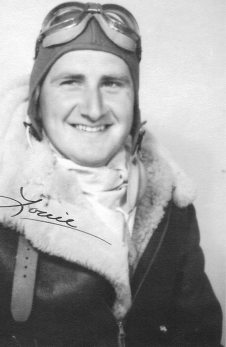
Next to it is a photo of Louis Anderson and his flight crew taken in 1944, just before they shipped out to Europe.

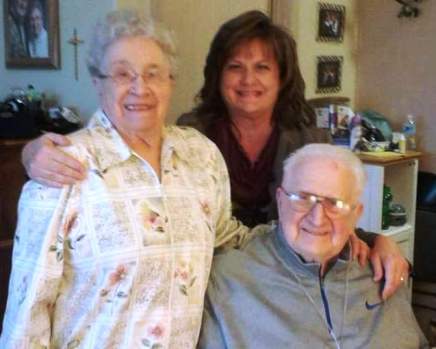
The last time I saw Louis and Barbara at their retirement center apartment, she insisted I take home a memento – a water glass from Air Force One. She was so proud of her late grandson who served as President Obama’s pilot.

She also kept me grounded in real life. Every time I left their place she’d say, “Do you need to use the restroom? Are you sure?”

Audrey Bixby was strictly down-to-earth as well. When I interviewed her and Dick, he kept me in stitches with jokes and sly puns. While we laughed, Audrey feigned exasperation and then told her own funny stories.

When Dick enumerated her wonderful qualities, he said, “She’s an awfully nice person and she laughs at my jokes!”

Dick died five years ago. I like to think that now they’re laughing together again.

Dale Eastburg passed away last month. He and his wife, Eva, had been married 75 years. When last I spoke to them, they were still going to the gym every week!

They’d been married just a short time before he was sent to China as part of the famed Flying Tigers. The thought of saying goodbye to his bride proved unbearable to Dale, so he didn’t. He slipped out of their apartment while she slept.

I hope this time Dale was able to say goodbye.

And today, I think of darling Myrt Powers. I never thought I’d describe a Marine as darling, but that exactly describes this tiny dynamo.

Though already employed as a teacher, she enlisted in the Marines following the attack on Pearl Harbor, because so many of her students told her they were worried about their fathers who were going off to war.

“I wanted to take care of my students’ dads,” she explained in “War Bonds.”

She met Walt Powers, a sailor stationed at Marine Corps Air Station Santa Barbara. They were married 71 years at the time of her death.

I last saw Myrt two years ago, in Hawaii, of all places.

It was 8:15 in the morning at the Hale Koa Hotel, an Armed Forces Recreation Center resort on Waikiki. My husband and I were preparing to make our first pilgrimage to Pearl Harbor, and stopped for coffee before the tour bus picked us up.

Myrt was grabbing a cup while waiting for Walt to finish his regular swim at the hotel pool.

“Hello, honey,” she said, reaching up to embrace me.

It was the best hug I’ve ever received from a Marine, and sadly it was the last one from Myrt.

Today, while the world remembers the more than 2,000 lives lost at Pearl Harbor, I remember five souls who endured the trauma of a world war. The lives they led in its aftermath, the families they raised, the marriages they cherished, bear witness to the resiliency of the human spirit.

While I’m sad at their passing, I’m so very glad that their stories are now a part of mine.

Contact Cindy Hval at dchval@juno.com. She is the author of “War Bonds: Love Stories From the Greatest Generation.” You can listen to her podcast “Life, Love and Raising Sons” at SpokaneTalksOnline.com. Her previous columns are available online at spokesman.com/ columnists. Follow her on Twitter at @CindyHval

War Bonds

Celebrating 70 years of a marriage that is “so much more than friendship”

Barbara and Ray Lewis have a lot of reasons to be thankful this Thanksgiving – 70 of them, to be exact.

The couple married Nov. 23, 1947, so in addition to the traditional turkey day feast, they’ll be celebrating 70 years of wedded bliss.

She was born in Texas, he in Ohio, but they met in Indiana, and 3 1/2 months later, they married.

Barbara was traveling with a group of students who were going door to door inviting people to special church services. It just so happened that the services were being held at the church Ray attended in Fort Wayne.

“He made a point of meeting all the girls,” Barbara, 94, said, smiling.

Ray, 92, was finishing up his engineering degree at Indiana Tech and had indeed met all the girls in the traveling group, with one exception. An exception he rectified as quickly as possible.

“He saw me because I was wearing a big black hat,” she said.

Ray doesn’t recall the hat, but he does remember approaching her and saying, “I believe your name is Barbara.”

He’d done some reconnaissance.

When he discovered Barbara was staying with a couple who’d asked him to photograph their newborn son, Ray an avid amateur photographer, decided now would be the perfect time to take that photo – even though the child was now a year old.

The family asked him to stay for dinner, and he didn’t hesitate. He also invited Barbara on a triple date the next night.

“There wasn’t much to do in Fort Wayne in those days,” recalled Barbara. “We went to the drugstore and had a soda and then walked to the park where they had a lighted fountain. We watched the colors change.”

She still has a postcard featuring the park and the fountain.

The next day, his sister, Mary, came to visit. She was dating Ray’s roommate, Ted. Eventually Mary and Ted would wed as well.

They arranged a double date.

“Ray thought that gave him an excuse to sit by me in church Sunday morning,” Barbara said.

The church meetings concluded, and it was time to say goodbye. Ray went to the station with her.

“Barbara had to be the last one out of town,” Ray said.

That was fine with him.

“I wasn’t ready to turn loose of her just yet,” he admitted.

In fact, he made her promise to write to him. She agreed on the condition that he would write back.

As the train began to pull away, he stood outside her window and used his finger to trace the words “please write!” in the dust.

Back home in Texas, Barbara checked her mailbox every day.

“If there wasn’t a letter, I let him have it,” she said.

But Ray was taking his finals and the pressure of the letter-writing got to him.

“I got tired of that kind of romance,” he said.

So, when Barbara told him that she and her parents were moving to Erie, Pennsylvania, to help establish a church, Ray was delighted. Erie wasn’t far from his Ohio hometown. He quickly hopped on bus to visit her. Well, she did most of the visiting.

“She did all the conversation, just like she does now,” he said, grinning.

They both got jobs at General Electric, and one September evening Ray borrowed her father’s car and took her to see Lake Erie.

“It was a moonlit night, and the waves were breaking over the shore,” Barbara recalled.

It was the perfect place for a proposal. When she said yes, Ray went straight home to borrow money from his mother to buy an engagement ring.

They married on a Sunday night, just after evening service in the middle of a snowstorm.

She wore a dress and headpiece made by her mother and the preacher’s wife, and they caught the last train of the evening to Cleveland for their honeymoon.

While there, a duck nearly derailed their happy future.

They went roller-skating, and the rink was giving away live ducks and turkeys.

“Wouldn’t you know it – my name got called for a duck,” Barbara said.

Now, she happened to love ducks and even had pet ducks while growing up on her Texas farm. They resolved to ship the duck home.

“It was going to be our first possession,” she said.

Alas, there were no shipping crates to be found, and they finally had to sell the duck for a dollar to a guy at the Express Station. He said his family would be having duck for dinner the next day.

“That broke my heart,” Barbara said.

She shot a glance at her husband.

“I’ve never forgiven him!”

But they both chuckled at the memory.

That sense of humor got them through many moves in the next seven decades. Ray was a mechanical engineer for oil refineries, and they lived in 13 states and four Canadian provinces.

“Every place we were sent, I decided that’s where we’d retire,” Ray said. “I’m happy anywhere I am.”

His happiness grew along with their family. Daughter Linna was born in 1950, followed by Kent in 1952, Leslie in 1954, Laurie in 1959 and Lorinda in 1964.

Since they lived in so many snowy places, the family developed a passion for skiing. Great skiing opportunities led their son to move to Spokane, and 11 years ago when Ray finally retired, the couple joined him.

“I retired many different times, but they kept asking me back,” he said.

When it comes to advice for those who wish to achieve their own happily-ever-after, Barbara proved practical, Ray philosophical.

“Always make the bed together as soon as you get out of it,” Barbara said. “Making the bed takes five minutes instead of 10, and it’s very effective in introducing your husband to household chores.”

Ray said, “Don’t think about it (marriage) in terms of 70 years – think of it in terms of one year at a time, and go with the flow.”

Then he grinned.

“I’m still finding problems with her,” he teased.

Barbara smiled, acknowledging that Ray is her friend “most of the time,” but then grew serious.

“Marriage is so much more than friendship,” she said.

She looked at Ray.

“He’s one of the best men who ever lived.”

23621408_1591013590937262_1513994905519849698_n[1]


War Bonds

Every Time We Say Goodbye

72.

That’s how many individuals made the final cut of War Bonds: Love Stories from the Greatest Generation.

24.

That’s how many people died before the book went to print.

19.

That’s how many goodbyes I’ve had to say since War Bonds 2015 publication.

In the past month, Barbara Anderson and Dale Eastburg passed away.

Barbara’s loss hit me especially hard. The Anderson’s story is featured in chapter 28 “Keeping Time.” They  met in 1945 when Louis came into her father’s jewelry store to get his watch repaired. When War Bonds was published, he still wore the watch and it still kept time.

The Love Lesson Barbara shared at the end of the chapter resonates.

“You can’t take back bad words. We’ve never said one thing we’ve had to take back.”

.facebook_1510783440734

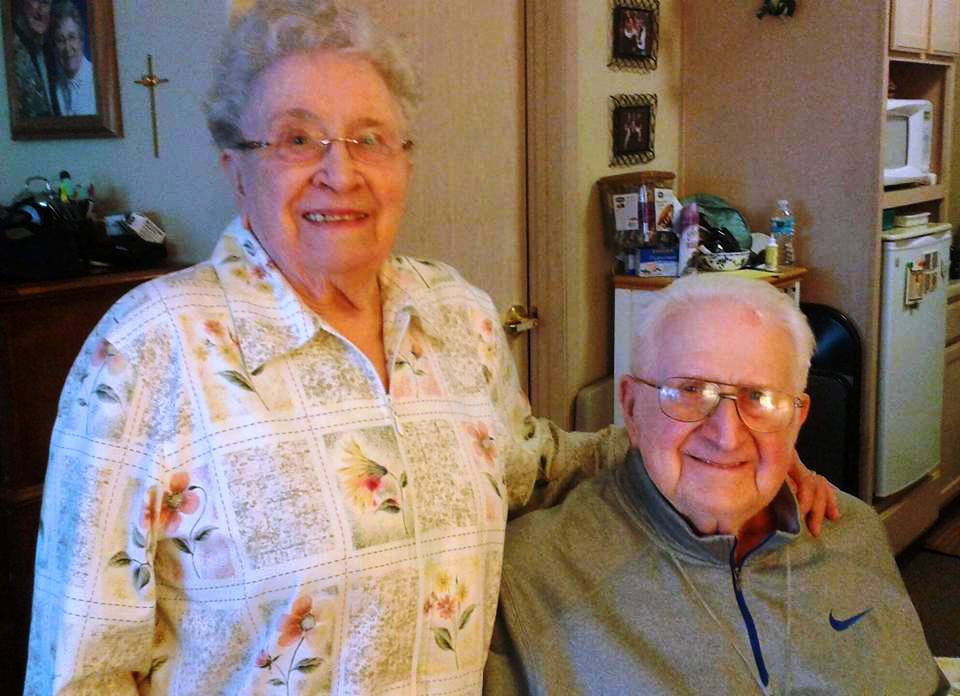
This photo was taken 11/16/16, the last time I saw Barbara. She wanted more signed copies of the book to send to a family that was grieving the loss of a wife/mom/grandma.

She always thought of others. When I left she insisted I on giving me a water glass from Air Force One. Her late grandson had served as pilot for President Obama.

She also always asked if I needed to use the restroom before I left!

Her spirit and generosity are simply irreplaceable and I worry how Louie will do without his bride.

Dale and Eva Eastburg had been married for 75 years when he died earlier this month. When last I spoke with them, they were still going to the gym regularly!

009

The title of their chapter seems especially poignant today. It’s titled “Hard to Say Goodbye.”

And it is. It really is.

Columns, War Bonds

Who Needs Prince Charming?

I didn’t really think he’d show up on a white horse. I’ve never been a great rider and city streets aren’t welcoming to skittish steeds.

Instead, my Prince Charming borrowed his father’s Ford Tempo for our first date. “I’m in the middle of restoring a ’67 Mustang,” he explained.

Thirty-one years later, he’s still in the middle of restoring that same ’67 Mustang. I no longer sing “Someday My Prince Will Come;” instead I mutter, “Someday my prince will be done – with something. Anything!”

After three decades of marriage I’ve had ample time to rethink my original dreams of Prince Charming.

My prince has never waltzed me around glittering ballrooms, and I’m not in the habit of losing any shoes. But sometimes he sneaks into the kitchen while I’m cooking, takes my hand, and spins me into a slow dance across the dining room floor.

“There they go again,” one of our sons will say, groaning with embarrassment.

As if dining room dancing wasn’t enough, several years ago, Derek decided to add guitar-playing to his romantic resume.

“I’m going to learn to play ‘Can’t Help Falling in Love With You’ for your birthday,” he announced.

My birthday came and went. As did Valentine’s Day, our anniversary and Christmas.

Finally, I schlepped the two guitars and the amp he’d purchased downstairs, and shoved them in a closet. His musical ardor may have dimmed, but his passion for me has yet to wane.

I know this, because several times a month he’ll text me: Date night?

He makes reservations at one of our favorite restaurants. And we don’t stare at our phones over dinner – we talk about anything and everything. We’ve yet to run out of words.

It turns out my prince didn’t have a castle to offer me, but that’s OK . I’ve heard the upkeep on palaces is brutal. And I’ve never been a damsel in distress in need of rescue.

In fact, the demur, soft-spoken girl in white satin he married, grew up into a confident woman with opinions that often differ from his, and a newspaper column in which to express them.

Instead of being threatened, Derek applauded and encouraged my evolution. Willingly, he picked up the slack at home when my work took me out of town – or more often inside my head.

Writers are rarely easy to live with, especially when a new project swallows every waking thought and even haunts our dreams. But he is uncomplaining, knowing that my glazed eyes will eventually light on him, recognition will dawn, and I will invariably smile.

He hasn’t ruled a kingdom. His birthright is more plastic spork than silver spoon, but for over 20 years he’s run a successful small business. His reputation for integrity remains sterling, even in tough economic times.

When our children grew, and rebellion brewed with teens eager to topple the home regime, he handled those painful transitions with grace, dignity and infinite patience. Watching him parent our sons made me fall in love with him all over again.

Time has changed us. My prince has lost some hair, gained some weight, lost that weight and gained some wrinkles. And I’ve done the same, except my hair has grayed instead of thinned.

His unfinished projects still drive me crazy. The Mustang rusts in our driveway; the guitars gather dust in the closet, and the long-promised home office remains elusive. I never know what he’ll start next, but I’m confident it probably won’t be completed.

And just when my frustration reaches its zenith, I catch his eye across a crowded room (all of our rooms are crowded, now) and my heart skips a beat.

He holds out his hand to me. I take it and he pulls me into an embrace that still takes my breath away.

We sway together, and he hums in my ear. “Wise men say, only fools rush in, but I can’t help falling in love with you.”

I don’t need Prince Charming. Or a ballroom. I don’t really even need the tiara he bought me.

I just need this man.

And I’m profoundly grateful that our marriage is still an unfinished project.

23131848_1580341082004513_2624145754997905891_n[2]

Contact Cindy Hval at dchval@juno.com. She is the author of “War Bonds: Love Stories From the Greatest Generation.” You can listen to her podcast “Life, Love and Raising Sons” at SpokaneTalksOnline.com. Her previous columns are available online at spokesman.com/ columnists. Follow her on Twitter at @CindyHval.

War Bonds

70 Years of Adventure

20708109_1498992003472755_632359020316113008_n[1]John and Amy Roberson

Amy and John Roberson grew up in the same small community of Woodland, Washington, on farms about 2 miles apart. They attended the same school grades K-12, yet it took a world war to bring the couple together.

That’s not to say Amy went unnoticed by John.

“I had my eye on her,” he said. “She was very attractive.”

In their Greenacres home, Amy shushed him.

“Now, now,” she said, smiling.

But neither of them can recall a single conversation between them until they met again in 1945 in Washington, D.C., where both were serving in the Navy.

John had been accepted to the V-12 Navy College Training Program in 1943. The program was designed to supplement the force of commissioned officers in the Navy during World War II.

He thought the Navy would be a great fit for him.

“I loved the water,” he said. “I built my own boat on the Columbia River.”

It came as quite a surprise when the first place the Navy sent him was to the University of Kansas.

He shrugged.

“I studied engineering at the University of Kansas.”

Amy had to wait until she was 20 to enlist.

“My uncle was in the Navy in World War I,” she said. “I wanted to join the Navy, too.”

After basic training, she was sent to the U.S. capital to study decoding. Meanwhile, John was stationed nearby, in Norfolk, Virginia.

A mail carrier in Woodland kept track of the local youths in the service. He discovered there were eight Woodland youths in the Washington, D.C., area where his daughter was stationed, and he connected them.

They all got together and had a great time talking about home, and that’s when Amy truly noticed John.

“John asked me for a date,” she recalled. “We were supposed to meet at the movie theater. It was pouring rain, and I showed up with drippy hair.”

Wet hair didn’t deter him from asking for another date.

Soon John left for what would be the only cruise of his Navy stint.

“My sea duty consisted of taking a ship from San Diego to Charleston (South Carolina),” he said.

They stayed in touch and both returned to Woodland when they were discharged in 1946.

“We both qualified for the GI Bill, and I told him I was going to WSU,” Amy recalled. “John said, ‘I think I will, too.’ ”

They got engaged in April 1947 and returned home in August for their wedding.

Amy made her wedding gown and bridesmaid dresses from parachute silk.

“I got a whole bolt for $10, so we all wore white,” she said.

On Aug. 17, 1947, they were married at the Presbyterian church in Woodland. They honeymooned in British Columbia and then returned to WSU where John received a Bachelor of Science in civil engineering in 1948.

Amy, too, would eventually earn a degree in home economics, but first busy years ensued.

Son, Roger, arrived in 1950, followed by twins David and Janice in 1951.

The young family moved numerous times as John pursued a master’s degree, followed by a doctorate.

“It was hectic,” Amy said.

She recalled many late nights and early mornings when John would place Janice across his knees and jiggle her to sleep while he studied.

He taught at WSU, and their children were active in Camp Fire and Boy Scouts.

In 1963, they moved to Thailand when John accepted a teaching position with the SEATO Graduate School of Engineering.

Two years later the family set out to visit the famous Bridge over the River Kwai and the POW Memorial. As they crossed the bridge used by pedestrians, carts and bicycles, a train approached.

Roger and David took refuge on a pedestrian platform on one side of the bridge while Amy, Janice and John perched on the other side. As the train drew near, John reached out to help a Thai man on bicycle with a large metal ice cream box balanced on the back. As the train passed it hit the metal box which knocked the bicycle into the three of them. Amy, Janice and John were thrown against the bridge railing which broke, sending them plunging into the dry riverbed beneath.

“We hit hard,” John recalled.

Their sons scrambled to help.

“The first aid training they received in Scouts really paid off,” Amy said.

The boys cautioned the locals not to move them, checked for bleeding and signs of concussion and summoned an ambulance.

“I do think they saved our lives or at least made our injuries less severe,” said Amy.

As it was their injuries were substantial. All three suffered numerous broken bones. Janice recovered first, but her parents were in for a long hospital stay.

“We shared a tiny hospital room for 90 days and 90 nights,” Amy recalled. Then she grinned. “And we came out as friends.”

The severity of John’s injuries curtailed their stay in Thailand and the family returned to Pullman, where more surgery awaited. He was bedridden for months as his battered body healed. Amy took care of him and their three teenagers while her own broken bones mended.

Eventually, he resumed his teaching career at WSU and authored two textbooks: “Engineering Fluid Mechanics,” with Clayton Crowe and “Hydraulic Engineering.” Both books are still in print and used in universities here and abroad.

“Without Amy’s typing, editing and encouraging, the books may never have been completed,” he said.

For several years Amy taught ESL classes in Pullman for wives of foreign students.

Their adventures continued when John retired in 1980. They enjoyed more than 50 Elderhostel trips and visited 45 countries and all 50 states.

As they celebrate their 70th anniversary Thursday, the Robersons, both 92, marvel at the way the years have flown.

“She’s been a tremendous partner – we’re good friends,” said John. “I could not have been luckier.”

Amy smiled at him.

“I learn new things about him every day.”


War Bonds

Thankful for 70 years of devotion

15027565_1226709157367709_2378719597193119110_n1

I got a call last week from Barbara Anderson. She wanted to let me know that her husband of 70 years had suffered a stroke and that they were now in an assisted living facility. She also told me that her grandson-in-law, Col. David Banholzer had passed away on November 4 at age 47. She wanted to send some copies of War Bonds to his family.

Banholzer was the commander of Air Force One until cancer forced his early retirement. He and Louis loved to talk about flying. As told in chapter 28 of War Bonds, Louis was a B-17 pilot during WWll.


.War Bonds Louie AndersonI was so happy to visit with this dear couple. Louis’ speech has been somewhat affected by the stroke and his vision is poor. But he knew me and gave me his characteristic grin. His blue eyes still sparkle and he kept my hand firmly tucked in his.

As I prepared to leave, Barbara insisted on giving me some mementos from Banholzer’s time on Air Force One.

20161116_124255

But for me the true gift was more time and one more visit with these shining examples from the Greatest Generation.

15055636_1226709130701045_8102769455675943025_n2

War Bonds

It Never Gets Easier

It never gets easier.
The notes from friends. From family. From readers.

“Dear Cindy, We just wanted you to know….”

And I learn another beloved person featured in War Bonds: Love Stories From the Greatest Generation has died.

Recently, two lovely War Bonds brides passed away within a month of each other.

Christine Jasley died on September 16th. She was anxious to be reunited with her husband, John, who died in October of last year.

jasley-wedding-low-res

Christine and John Jasley, 1944

Their story is told in Chapter 4 “Have a Little Faith.” A friend wrote, “Their marriage was truly a blueprint for all of us to follow.”

Then last week I learned of the death of Helen Loer.

chpt-7-helen-miller-19

Helen Miller Loer

On Saturday I will be at her Memorial Service and will read Chapter 7 “From Sailor to Preacher.” Her husband James, that sailor/preacher will be sitting in the front row, and my heart aches for him. The Loers had been married 68 years.

Our world is diminished with each loss, but I’m so very thankful that their stories remain.


War Bonds

Bicycle Built for Two

They rode through life together.

When Chuck and Harriet began dating, he didn’t have a car, so she’d perch on the handlebars of his bike and off they’d go. That’s why I titled their chapter in War Bonds, “Bicycle Built for Two.”

They were married January 16, 1944 by a Navy chaplain at a YMCA and a dozen eager sailors served as their witnesses. After two months together, Chuck was sent to France and they spent 17 months apart. That was too much for both of them.

And so for the next 72 years they were inseparable.

Chuck died August 7 and Harriet passed away September 10th.

Today I received this note from their family.

Your book was such a blessing to our family. We had several copies that we passed around at their celebration Sunday. A copy always sat on their dressing table which we showed to all their many health care providers. If Mom was having a bad day, they would sing “Bicycle Built for Two” and that would cheer her up. Thank you for writing such a meaningful book.

But I’m the one who has been blessed to meet such amazing people and to share just a small part of their lives.

Their stories have become part of my own story and I’m forever thankful.

soliday-honeymoon-low-res

Chuck and Harriet Soliday, 1945

War Bonds

And They Said He Wouldn’t Last

12717183_1021783834526910_3479326674103224818_n[1]

Had a wonderful time at yesterday’s War Bonds reading. My special guests were Dean and Betty Ratzman, from Chapter 18.

Here’s an excerpt from their story:

While Dean wasn’t injured during the invasion, his health still took a beating. He contracted dengue fever several times during his stint in the islands. While in Saipan he got a hernia from lifting a large battery. Following surgery, he was sent to a hospital ship, the USS Sanctuary. There he received some startling news. Doctors aboard ship discovered Dean’s heart had been damaged during his bouts with fever.

When the ship docked in Oakland, physicians at the naval hospital diagnosed the 20-year-old sailor with two leaky heart valves. “The doctors said there wasn’t anything they could do,” Dean recalled. “They told me I probably wouldn’t live past middle age.”

…Betty recalled his proposal. “He told me the doctors said he wouldn’t live past 40. Then he asked me to marry him! I told him, ‘You’re not going to get out of it that easily!'”

Almost seven decades later, she smiled at her husband. “When you’re 20, 40 seems like forever. I figured I’d get another one (husband) after that.”

In June they’ll celebrate their 70th anniversary, so it looks like it will be awhile before Betty can replace him, and you know what? She’s just fine with that!


War Bonds

War Bonds and the Mitsons on Spokane Talks Online

12208714_972894296082531_6089470719808649265_n[1]

Charlie and Mable Mitson and I were featured on the program Let’s Talk Spokane produced by Spokane Talks Online, today.

The Mitsons’ story is told in chapter 31 of War Bonds: Love Stories From the Greatest Generation. They celebrated their 73rd anniversary in July.

The video of this adorable couple will be posted on YouTube soon, and I’ll share that link when it’s available. The Mitsons are both 91 and witty, sharp and beautiful.

Such a privilege to share their story.
Here’s a link to the podcast. You can download it or listen online.

Mitson wedding photo low res