Columns

A Matter of Perspective

40377670_1940200546018563_4782982881993555968_n[1]

Derek and Cindy Hval at the beach in Crescent City, California

When your youngest child who recently graduated from high school with honors utters such a simple wish, well, what parent wouldn’t want to fulfill it?

Sam is 18, and the window for family road trips is rapidly closing. His desire to see the redwood forest quickly became the focus of our family vacation.

Derek looked at maps and I booked hotels, and last week we returned from a trip that included the ocean, Shakespeare, waterfalls, the Columbia River Gorge and of course, ancient trees.

First I’d like to know what happened to all the Volkswagen Beetles? Every road trip from my childhood resulted in sore shoulders as my siblings and I played “Slugbug” or, as we called it, “Bugslug.” Our kids played it on family trips, too. But we traveled hundreds of miles and didn’t see a single Beetle till we returned to Spokane.

It’s probably just as well, because Sam was the only kid on this trip and you really shouldn’t punch your parents. Or your kids.

We picked Ashland, Oregon, as our central destination, making the grueling drive in one day. Smoke shrouded the landscape across Washington and into Oregon.

Speaking of Oregon, we thought the recently-passed gas law meant we could pump our own gas. Nope. Apparently, it varies by city or county. Derek opted to try at every fill-up, but was rarely successful.

Ashland is home to the Oregon Shakespeare Festival. Derek and I had enjoyed a trip there several years ago, and had been anxious to return. We wanted Sam to see a play and mulled the options. The outdoor Allen Elizabethan Theatre is iconic and offers a fabulous experience, so we bought tickets for “The Book of Will,” which was slated for that theater during our stay.

The smoke-filled skies had me worried. The theater had canceled several performances due to poor air quality. Our hotel clerk said in the event of bad air, they move the play to the high school auditorium. Not at all what we were hoping for.

But first the redwoods. The Jedediah Smith Redwoods State Park is just a two-hour drive from Ashland, so we crossed our fingers as we set off from the smoky city in the morning.

As we crossed the border into California the skies cleared. Who knew we’d have to drive to California to breathe fresh air?

We wound our way through the primeval forest, carefully avoiding gawkers who pulled over on the side of the narrow road to take pictures. Stopping at the Hiouchi Visitor Center 9 miles east of Crescent City, California, we picked up a map and directions to Stout Grove, a half-mile loop walking trail.

The stillness of the redwood forest is surreal. The immensity of the towering trees, the soft sunlight filtering through ancient branches, adds a unique hush, making the grove seem more like a church than a forest.

Indeed, a short time later while exploring a side trail, I happened upon a partially hidden makeshift memorial – a small cross made of sticks and a photo of a bearded man. I imagine this must have been his favorite place.

40030518_1933041683401116_3198280579883728896_n[1]

Sam and I did get the giggles counting how many times Derek said the word “huge.”

Crescent City is a short drive from Jedediah Smith Redwoods State Park. We cruised into the sleepy town looking for a lunch spot with an ocean view.

“Why don’t you drive that way?” I suggested to Derek, pointing at the ocean in the distance.

Amazingly, the street ended at small parking lot with steps leading down to the beach. Even more amazing, we had the whole beach to ourselves! From old growth forest to tide pools, sand, waves and driftwood in 20 minutes.

After beachcombing, we found a harbor-side restaurant, and a chorus of barking seals serenaded us while we ate.

The smoke was clearing in Ashland the next morning, so we spent the day shopping and walking through Lithia Park. I hesitantly made reservations at an outdoor dining spot, but I needn’t have worried. We sat down to dinner under brilliant blue skies and later, stars twinkled above us as we watched the play in the outdoor theater.

In fact, the only rain we encountered was a light drizzle at Multnomah Falls on the way to Hood River the following day.

The rain didn’t dim the beauty of the falls, but it did close the path to the highest point.

We spent the last day of our trip exploring downtown Hood River, and then relaxing in the sun and the wind on the beach, marveling at the windsurfers, riding the waves.

Like most busy families, we’d started vacation tired and stressed. Each of us wrestling with worries both big and small.

But something happened.

Was it when we sat on a piece of driftwood, staring out at the vast blueness of the Pacific Ocean while the waves lapped the shore at our feet?

Was it when we walked through the silence of the ancient redwoods while the sun filtered through the foliage of God’s cathedral?

All I know is the cares and concerns that once loomed so large seemed to shrink, to lighten, to dissipate into the wonder and beauty of nature.

It’s all a matter of perspective, isn’t it?

40406674_1940828055955812_1355976202468196352_n[1]

Cindy and Derek walk through the redwoods

Columns

The Night the Lights Went Out in North Spokane

Our family recently went through a very dark time.

It came on suddenly, without warning. One minute we were relaxing after dinner, taking respite from the heat of the day in our cool air-conditioned home, discussing our Netflix pick of the evening, and the next minute our world stopped.

My reading lamp flicked off. The fans and air-conditioner stilled, and the wails from downstairs let us know our sons’ electronics had been disrupted.

Power outages are rare in our neighborhood. The power lines are underground, so when outages do occur it’s usually something on Avista’s end and we’re quickly back online.

Neither Ice Storm 1996 nor any of the recent windstorms disrupted our happy home. While all over the city food spoiled in freezers and propane lanterns flew of the shelves at sporting goods stores, we merrily went on our well-lit way.

So. Nobody panicked Thursday evening.

I mean, the most recent blip in our grid lasted all of a minute.

We peered out the window and saw our neighbors’ porch lights were off, and no lights shone from any windows. Our street lamp was out.

“Looks like it’s the whole neighborhood,” my husband said.

Feeling confident that the outage had been called in, the four of us gathered in the living room to await the resumption of our normal routines.

It was 7:45.

Thirty minutes later, Sam, 18, said, “Well. This sucks.”

His brother sighed. “I just got my new guitar pedal set up.”

We scanned our phones for Twitter posts about the outage, but nothing appeared.

I updated my Facebook status.

“No power in North Spokane. We’ve been forced to sit in our living room and talk to each other. #HELP!”

My friend, Beth, replied, “Surely your phones have some charge left in them.”

“Obviously,” I replied. “But we’re conserving our batteries for social media. #priorities”

The thought of being cut off from the world chilled us. We hastily checked the charges on our phones and Kindles and reported the results.

“We should be OK for a few hours,” Derek, my husband, said.

Slowly the Twitter and Facebook responses trickled in from other North Side folks. Apparently, our little corner of Spokane was the only area affected.

As the sun started to set in the smoky sky, I gathered candles and piled them on the dining table.

And not a moment too soon. Darkness fell quickly. Our son, Zack, put new batteries in my three pillar candles, as I fumbled in the dark cabinet for candleholders for my motley collection of wax tapers and votives.

Flickering candles don’t emit much heat, but it had been a really hot day. The house grew stuffy. We opened the windows, but there was no breeze, just smoke.

“Everybody to the gazebo,” I announced. “If the power’s still out at 10, we’ll make s’mores.”

This mom always has s’mores ingredients on hand during the summer months, and suddenly the boys were rooting for continued darkness.

Derek had wisely installed solar lights along our deck and stairs, so nobody stumbled on the way to the gazebo.

I remembered we had a battery-operated light that can be attached to outdoor umbrellas. Using our cellphone flashlights, we ransacked the storage room until we found it. Derek went out to light the fireplace while I gathered chocolate bars, marshmallows, graham crackers, paper plates and napkins.

We roasted marshmallows and enjoyed our sticky snacks as music from Zack’s iPhone filled the night. Our flickering fireplace was an oasis of light in a neighborhood shrouded in dark.

A big truck rumbled past, and we hurried to the front yard to see an Avista crew examining the box across the street. After a few minutes they got back in the truck and drove away.

We were still in the dark, but no one wanted to go to bed without some information.

At 10:45, I finally called Avista.

A nice man confirmed that they were aware of the outage and had sent a truck out, but the crew had to return for supplies to fix the problem.

The reason I hadn’t seen anything on social media is because only 45 homes had been affected.

“We estimate power should be restored in two to three hours,” he said.

The boys and Derek were ready for bed, but I had a problem. I can’t go to sleep unless I read for at least 30 minutes.

We’d recently bought a rocking chair for the deck. I scooted it over to the solar light on the railing, and Derek affixed the umbrella lamp low enough on the stand so I could see the pages of my novel.

Around midnight, I went indoors, carefully snuffing out the few candles still lit. I brushed my teeth in the dark and climbed into bed.

An hour or so later, the blinding glare of my reading lamp jolted me awake, and the rumble of the air conditioner filled the house.

We had survived the Great Spokane Power Outage of 2018 with marshmallows to spare.

I think our pioneer ancestors would be proud.

All Write, TV

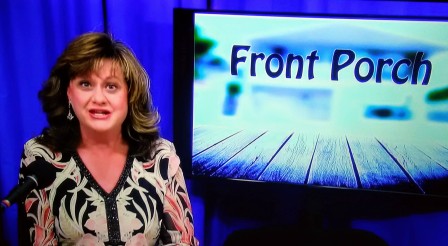
What’s a newspaper columnist doing on TV?

IMG_20180821_220347

Now, that’s a great question.

When the folks at Spokane Talks invited me to try my hand at television commentary. I thought about how I’d fit this in with my weekly newspaper deadlines, monthly deadlines for a marketing client, finishing up my second book (Tiaras & Testosterone), and keeping up with my husband, sons and two cats.

Two episodes in and I’m still thinking about it.  Obviously, I’m thinking on air:)

IMG_20180821_220404

This week I tallied the results of my childhood wish list. If you want to hear about ’70’s fashion, bikes with banana seats, and the Second Coming click here. The Front Porch starts at the 22 minute mark.

Next week I’ll tackle the devil’s music!

Tune into Spokane Talks, Sunday nights at 6 on KAYU Fox 28.

All Write, Columns

Rock on! And I don’t mean in a chair

18882142_1433976726640950_512120073299930773_n[1]Derek and I had a peaceful easy feeling in May when we joined several thousand of our closest friends to hear the Eagles in concert at the Spokane Arena.

From the moment the opening a cappella strains of “Seven Bridges Road” soared through the venue, till the final sweet notes of “Desperado” echoed, we were enthralled and entertained.

The Eagles are a band even my parents would have approved of … except for the somewhat controversial “Hotel California.”

When I was growing up parental approval did not extend to the “devil’s music,” so I started rocking later than most of my peers.

Our home was filled with the music of the Gaither Vocal Band and Dottie Rambo, and of course, Elvis – gospel and hymn recordings only.

In the ’80s backward masking was on the nightly news. We teens were told the subliminal messages contained in albums by certain bands would turn us into devil worshippers.

We attended seminars at the Spokane Convention Center where speakers warned us that subliminal messages weren’t limited to records. Even eating crackers could send one spiraling into sin due to the word “SEX” being spelled out in the dots of a Ritz cracker.

That explains why I still prefer Wheat Thins, and why my first concert was Ronnie Milsap. I’d never heard of him, but my best friend really wanted to go. My parents thought country music wasn’t as dangerous as rock ’n’ roll.

Of course, I listened to the American Top 40 on the radio so I could keep current with the sinful state of the world. That radio rebellion must have corrupted me. How else to explain the first album I purchased was Quiet Riot’s “Metal Health.”

But metal never moved me much, especially once I discovered Bon Jovi. Their music was the soundtrack of my teen and young adult years.

My husband was an avid concertgoer in his teens, and when we met he was astonished by my rock ’n’ roll ignorance.

“Just think if you hadn’t married me you would know nothing about Van Halen. Nothing!” he often says.

During our early married years, the cost of raising four kids put concert attendance out of our reach.

We did splurge on Jim Brickman tickets when he came to the INB Performing Arts Center around the time of our anniversary one year. My parents would also approve of Jim; our children, however, were mortified.

“My gosh! If John Denver was still alive, you’d probably pay money to see him, too!” our teenager groaned.

“Well, duh!” I replied, and launched into a spirited rendition of “Grandma’s Feather Bed.”

As our kids grew older, our wallets grew less lean, but I was still shocked when five years ago Derek surprised me with tickets to Bon Jovi.

He’d already taken the boys to see Van Halen when they were in Tacoma the previous year, and he wanted me to be able to hear my favorite band in concert, too.

But the biggest surprise was how much Derek, a Bon Jovi-scoffer, loved the show.

“That was absolutely amazing! Best concert I’ve ever attended!” he said afterward.

Since then we’ve seen a slew of bands and performers. Our son treated us to Bob Dylan in Seattle. And we got our ’80s groove on with Foreigner, Styx, Loverboy, Joan Jett (twice), Pat Benatar and Melissa Etheridge when they’ve performed at Northern Quest.

But it was seeing Blondie in 2015 that reminded Derek of the passage of time.

“Debbie Harry is still so hot!” he enthused.

I grinned.

“Not bad for 70, huh?”

Stricken, Derek gasped, “She’s almost as old as my mother!”

Time has not been good for all bands, however.

Derek was delighted when the newspaper asked me to review Def Leppard when they came to town last summer with Tesla and Poison.

The show was fine, and Leppard fans were pleased, but there was a lot of sweat and a lot of screaming – both on stage and in the audience. For the first time, we both had to wear ear plugs.

The difference between metal bands and more mellow bands becomes apparent as the members age.

“You can actually understand the lyrics when the Eagles and Bon Jovi sing,” he said. “Van Halen and Def Leppard just play louder to compensate for their fading vocals.”

There you have it. We’ve reached the age where the words matter just as much as the music.

Some folks do their rocking in chairs, but we’re going to keep doing ours at concert venues – at least while we can still hear the lyrics.

Columns

Sometimes the Simplest Prayers Mean Most

We eagerly scanned the swarms of blue-robed students filing into the McCarthey Athletic Center on Friday evening. The strains of “Pomp and Circumstance” swelled, and then we spotted our baby boy – not much of a baby anymore.

As Sam received his diploma and was recognized as an honors student who’s already earned 87 credits through the Running Start program at Eastern Washington University, another chapter in our parenting lives closed.

Our fourth and final son graduated from high school.

It was an occasion I couldn’t even imagine 18 years ago when he struggled for every breath in the Neonatal Intensive Care Unit at now-Providence Sacred Heart Medical Center.

On a golden September day, Sam, our grand finale, had entered the world weighing in at a whopping 9 pounds, 9 ounces. He had his father’s broad shoulders and the trace of a dimple in his chin.

He also had a hole in his diaphragm.

Within hours of his birth we were told our baby had congenital diaphragmatic hernia. A hole in his diaphragm hadn’t closed early in gestation. As a result, his internal organs pushed into his chest cavity, squashing his developing lungs. Only Sam’s right lung was fully formed. Our newborn was given a 50/50 chance of survival.

Milestones like a commencement ceremony remind us of how close we came to losing this child.

Late Friday night following the celebration, while the rest of the household slept, Derek and I quietly recalled Sam’s desperate first days.

He’d been flown by helicopter from Holy Family Hospital to Sacred Heart Medical Center an hour after his birth. Having just given birth I was forced to stay behind while Derek drove downtown.

“When I walked into the NICU, they had Sam restrained on a table,” he recalled. “His back was arched, his face red. He was screaming his head off. They told me he was a fighter, but that I needed to leave the room for a minute. They said they were going to sedate him, that his blood pressure was dangerously high. When they let me back in, Sam was silent and still. So very still.”

And 18 years later, the tears fell as he remembered his helplessness in the face of his son’s need.

My own memories of that day still haunt.

Twelve hours after his birth, I stood next to Sam’s bed. Tubes and wires protruded from the top of his head to the soles of his feet. The ominous whooshing of the ventilator and the beeping and whirring of machines filled the room. He was so fragile that the sound of a voice raised above a whisper sent his blood pressure skyrocketing.

I believe in the power of prayer. I always have. But that morning I could find no words. So I reached two fingers under the maze of wires, rested them on his laboring chest and whispered, please. When he exhaled I whispered thank you.

In the weeks that followed those words became a ritual.

Even as he grew healthy and strong, with no lingering complications, each breath simply seemed miraculous to me. Life is a gift, but how casually we treat it, until we’re forced to confront its fragility.

More nights than I can count, I’d slip into Sam’s room, lay my hand on his chest and whisper please and thank you as he breathed. Over the years that prayer grew to encompass much more than his physical health.

Like his dad, Sam’s going to continue his education at EWU. He plans to become a high school English teacher and will live at home for a while, so our nest won’t be empty anytime soon.

Following the commencement ceremony, we posed for photos. Sam now towers above me, and when I wrap my arms around him, my head rests near his heart.

Once again I found myself whispering please when he inhaled, thank you when he exhaled.

It’s a prayer that’s served me well.

Sam's graduation

Columns

Low-Tech Cindy Meets High-Tech Ruby Sue

The newest member of our family arrived just in time for Mother’s Day. Her name is Ruby Sue, and I’m absolutely in love.

I’m worried my friends will tire of hearing me extol her virtues, but she just has so darn many! She’s helpful, easygoing, and so far has been remarkably patient with me as we get to know each other.

What’s odd is I’ve never found black leather and tinted shades particularly attractive. Until now.

Ruby Sue is a 2015 Ford Escape Titanium.

Our youngest has been driving the 1995 Dodge Caravan that his three older brothers drove. The slider door doesn’t open. The passenger door opens from the inside only. There’s no radio. No air-conditioning. It’s been wrecked at least once by each driver, but the Green Monster seems impossible to kill.

Still my husband said the beast won’t live forever, and it was time to pass Golda MyDear, my 2011 Oldsmobile Intrigue, down to Sam.

“It isn’t manly,” Sam protested.

Who knew aging minivans with peeling paint were manly?

Anyway, Derek diligently searched the internet and found the Ford Escape at a local Subaru dealership.

He showed me the photo and the specs.

“What do you think?” he asked. “Shall we take her for a drive?”

I smiled, already enthralled by her sparkly red paint job and sporty trim.

Ruby Sue drove like a dream, but the back-up camera proved disconcerting. Both Derek and I swiveled our heads and peered at the side mirrors while ignoring the screen in front of us.

The salesman left us to discuss the purchase. Taking a car for a test drive is like going to a shelter to “look” at cats or dogs. You’d better be prepared to shell out some cash and take one home because chances are you will fall in love.

Our discussion was brief thanks to the research Derek had already done. All he needed to know was would low-tech Cindy be happy driving high-tech Ruby Sue.

I nodded.

“I’ll read the manual,” I said.

After a sheaf of paperwork completed the adoption, Derek asked if I wanted to drive her home while he drove Golda back to work.

“Of course!” I said, as I kissed him goodbye and approached my new red ride.

The salesman had already explained the keyless ignition meant I just had to be within a few feet of the door and when I touched the handle it would unlock, which it did. What he failed to demonstrate was how to start the car.

Sliding behind the wheel, I adjusted the mirrors and the lumbar support on the smooth leather seat. Then I pushed the start button. Nothing happened. I fiddled with some things and tried again. The radio came on. I pushed more things on the touch screen. The air conditioner came on.

Finally, I read the screen. “Push brake to start car.”

“Thank you, Ruby Sue,” I said.

It’s been two weeks since I drove her home, and I must admit the learning curve is a bit steeper than I anticipated. I did scan the manual, but I’ve always been a learn-by-doing person.

This rig comes not so much with bells and whistles, but with beeps and bleeps, that I’m still deciphering.

For example, when I pulled into a parking space, Ruby Sue started beeping. I slammed the brake and looked around. No lights were flashing. Auto self-destruct mode hadn’t been activated. It took a few more trips for me to realize the car was just alerting me to the proximity of the curb.

Ruby Sue is quite chatty. Bluetooth technology enabled her to sync with my phone automatically. No more ear pieces or headsets to lose! I can receive and send calls and texts using the buttons on the steering wheel. In fact, everything in the Escape Titanium operates through voice command – the radio, the climate control, even the built-in navigation system.

So far, Ruby and I haven’t had any arguments about the best way to get somewhere.

But we’re still working out a few glitches – mine, not her’s. The trunk is supposed to open and close when I swipe my foot under the tailgate – no more juggling grocery bags and fiddling with keys. Alas, only Derek has figured out how to activate the sensor with one swipe of his foot.

And frankly, the self-parking option freaks us both out. Last night we decided to try it for the first time in the safety of our neighborhood.

We pushed the parking assist button and watched, stunned, as Ruby Sue ably parallel parked herself between our son’s car and our garbage cans.

It’s a surreal experience to sit in the driver’s seat and watch the steering wheel spin as your car parks itself, but I have to say this could be a game-changer and a solution for my frequent downtown parking dilemmas.

My least favorite part of my job used to be all the driving. But now, I take the long way everywhere just to spend more time with Ruby Sue.

It’s safe to say I’ve left Intrigue behind, and now that I’ve Escaped there’s no turning back.

32116251_1776354392403180_5959018547672776704_n[1]


Contact Cindy Hval at dchval@juno.com. She is the author of “War Bonds: Love Stories From the Greatest Generation.” Her previous columns are available online at http://www.spokesman.com/staff/cindy-hval/ Follow her on Twitter at @CindyHval

Columns

Auditing my childhood wish list

Nothing brings life into focus like finding a list of things you wanted when you were a kid, and measuring it against the reality of your adult life.

That happened to me recently while going through a box of “Cindy” things my Mom has kept since my childhood.

But first can we talk about those locks of hair? I mean, why?

What am I supposed to do with the locks of honey gold hair in the Ziploc sandwich bag? My mother has saved these for 50 years. They’ve traveled across the ocean and back, not even attached to my head.

The artsy-craftsy among you might suggest making some kind of shadow box, so that my once-golden hair will be forever preserved behind glass. I guess I could stick my baby teeth in there, too. Yes. Mom also saved my teeth.

I have to admit that I saved my oldest child’s first tooth as well, and I can’t seem to toss it. I saved another son’s first tooth, but didn’t label it, so now it’s in a sandwich bag in my jewelry box.

And no, I don’t know why it seemed important to save those teeth. I blame my mother.

But back to my hair.

Facebook friends suggested the hair and teeth can be used for DNA purposes. I hope they meant tracing my genetic heritage, and they’re not referring to making a positive ID of my corpse, or using the DNA to tie me to a crime scene.

That’s almost as creepy as the friend who suggested I use it to make a voodoo doll.

The fishermen of my acquaintance suggested my golden locks might be used to make fishing lures. Also creepy.

Others suggested making a keychain or using it to make a clone of myself. And one fashion-retro friend said I could weave it in my hair to make a mini rat tail.

For now, it’s in my jewelry box with my kid’s unlabeled tooth.

While the hair and the teeth were a bit disturbing, Mom also saved quite a bit of my early writing – including a list titled “Things I Want.”

I suspect the list was written during a church service. My parents took us to church every Wednesday night and twice on Sunday, so I had ample time to hone my “sit still, be quiet” skills, and Mom kept a sheaf of scratch paper in her purse to keep me occupied.

I drew a lot of pictures and did even more writing. The writing took. The art, not so much.

The list reads as follows (remember I was 8, I spell much better now.)

A puple bike with training wheels

A 1000 dollars

A Maroon body shirt whith an Aqua skirk. And white go-go boots.

Some corel lipstik. And some peach lipclos. And some pink blosh. And some ponds lemon cold cream,

And some toys.

And a laveder dress with pink and lavender flowers.

But most of all I want God to come! Yas!

Obviously, I was 8 going on 18. Or I wanted to be my mother. Probably both.

Also apparent, I must have been hedging my bets on my wish list by making the good Lord’s return my most heartfelt desire.

So here’s the round-up.

I did NOT get a purple bike with training wheels. I got a blue bike with a red, white and blue striped banana seat. I tried to be grateful, but I was positive the patriotic color scheme meant it was a boys’ bike.

I did get $1,000, at some point in my life, but it was not gifted to me in any magical way. I had to work for it.

I did get a maroon body shirt. For those not familiar with ’70s fashion, body shirts were tight-fitting knit shirts with snap crotches. I suppose the idea was that your shirt would stay nicely tucked in, but let me tell you those snaps were awful, if you drank too much fruit punch at a birthday party and had to wait in line for the bathroom. That’s all I’m saying about that.

I don’t think I had an aqua skirt, but Mom had white plastic go-go boots that ended up in our dress-up box. I loved those boots. In fact, I just might find a pair online, so I’ll be prepared when they come back into fashion.

As for the makeup, I did wear coral lipstick topped with peach lip gloss in middle school, and I still wear pink blush. The Pond’s cold cream? Never used it, but Mom still does.

I don’t remember a lavender dress with pink flowers, but I did have some toys.

All in all, most of the things I longed for as an 8-year-old have come my way, so I can’t complain.

I folded the list and tucked in with the lock of hair and my baby teeth.

Someday my sons can figure out what to do with them. Cloning may be an option by then, and I’m sure having their mother cloned is every son’s dream.

30653059_1745585758813377_1843967560551235584_n[1]

Contact Cindy Hval at dchval@juno.com. She is the author of “War Bonds: Love Stories From the Greatest Generation.” Her previous columns are available online at www.spokesman.com/staff/ cindy-hval/ Follow her on Twitter at @CindyHval.


War Bonds

She found love in the right place

When Janet Hegdahl, 16, found out her family was moving from Portland to Spokane in the fall of 1955, she didn’t jump for joy.

“I’d just gotten a job at the library,” she recalled.

She’d also discovered boys.

“I was really interested in boys, a little too interested,” Janet said. “I was looking for boyfriends in all the wrong places.”

Her unhappiness about the move melted away the first Sunday her family attended Trinity United Presbyterian Church. That’s when she saw Jack Arkills singing in the choir and thought church just might be the right place to meet a guy.

Jack noticed her as well and made a beeline for her as soon as the service ended. He was the youth director and Sunday School superintendent, and he wanted to invite her to the youth meeting that evening.

“The Italians have what they call a thunderbolt,” Jack said. “It’s when you see someone, and it’s instant recognition.”

He smiled at Janet.

“It was instant for me,” he said.

She felt the same way.

They both attended Lewis and Clark High School and saw each other between classes and after school. On one of their first dates, they saw the movie “High Society,” and when Bing Crosby crooned “True Love” to Grace Kelly, it became their song.

From their Riverview Retirement Community apartment in Spokane, Jack sang, “I give to you and you give to me, true love, true love …”

Jack already had a connection to Bing Crosby – he’d caddied for Crosby at Indian Canyon in the late ’40s.

“Bing was a big tipper,” he recalled.

In May 1957, Jack dashed into the downtown library where Janet was working. It was the day of the Armed Forces Torchlight Parade, and he was scheduled to march with his National Guard unit.

It was also Janet’s 18th birthday.

“I had a ring in my pocket,” Jack said.

He proposed.

She said yes.

And off he ran to march in the parade.

Jack had graduated from high school and was working for the Great Northern Railroad.

“I wanted to go to Whitworth and be a minister, but pretty soon I was making more than my friends who were teachers,” he said.

Janet had received a scholarship to Eastern Washington University, so they married March 21, 1958, during spring break.

She sewed her tea-length lace wedding gown, and they said their wedding was the last one held at Trinity United Presbyterian, which soon closed its doors.

They settled in an apartment in Browne’s Addition, and almost a year after their wedding, their son, Chris, was born.

“We had a 2-week-old on our first anniversary,” Janet said, smiling.

Thirteen months later, son Scott arrived and Janet’s college education was put on hold.

Daughter, Amy, completed the family in 1962, and they settled into a house in the Garland District.

The family made First Presbyterian their church and it quickly became the center of their lives. Janet became the church librarian, a position she still holds, 55 years later, and Jack joined the choir, and yes, he still sings in it.

Their lives took a drastic turn in 1966 when Jack was severely injured in a train derailment. He was on top of the train to tie a handbrake and got knocked off during the derailment.

“I landed on my back on the track,” he said.

He broke his arm and had six fractures in his sacrum. For two long weeks, he had no sensation in his legs.

“They said I’d never walk again.”

Janet, 25, didn’t know how to drive, but a neighbor taught her during her frequent trips to the hospital.

With three children, a mortgage and her husband’s recuperation uncertain, Janet returned to work at Spokane Public Library. She ended up working at all three Shadle branch locations, as well as the Indian Trail branch.

“I’ve always been addicted to reading and to studying,” she said.

Indeed. She started night school, picking up a class here and there, until 25 years after she began her college career, she graduated from EWU.

Meanwhile, Jack was able to return to work on the railroad. Not only was he able to walk, he started to run. And run. And run some more. Eventually, he ran five marathons.

The family moved to the South Hill in 1979, and when the kids flew the nest, Jack and Janet built their dream house – a passive solar home on Moran Prairie.

In 1987, Jack was diagnosed with polymyostis, a rare inflammatory disease that causes muscle weakness. He retired from the railroad in 1991, though the disease eventually went into remission.

He’s always been the head cook in the family.

Janet laughed.

“I’d put something on and go off and read and wouldn’t you know it? It burned,” she said.

She retired from the library in 2004. Her career spanned the years from handwritten check out cards, to bar codes. From card catalogs to digital catalogs, and she relished every minute.

For many years, the couple have been members of Friendship Force International, a nonprofit organization and hospitality service with the mission of improving intercultural relations, cultural diplomacy, and intercultural competence via homestays.

The Arkills have traveled across the globe, including stops in Australia, France, Germany and Tasmania.

“We love to travel,” Janet said. “We’re both extroverts, so we love to host people here, too.”

Jack survived a bout of esophageal cancer, and 14 years ago they moved to Riverview, where they continue to be active and involved.

Janet marvels that the move to Spokane which she so despaired of, ended up giving her the love of her life, and she sees the hand of the Divine at work.

“The Lord led us together and He’s kept us together,” she said.

Looking at Jack, she smiled.

“We’re best friends.”

As for Jack, the thunderbolt that hit him more than 60 years ago, hasn’t worn off.

“So many couples say they fall out of love,” he said. “I don’t get it. I guess I never fell out of love.”

War Bonds

When Opposites Attract

She was an only child. He was one of seven.

He was a Catholic. She was a Protestant.

She joined the Air Force. He joined the Navy.

He’s an extrovert. She’s an introvert.

The adage “opposites attract” certainly applies to Becky and Harry Flanigan.

They met as children growing up in the same neighborhood in New Albany, Indiana. But Becky had no intention of dating Harry, two years her junior, let alone marrying him.

Harry, however, had other ideas.

In their Kendall Yards apartment, he grinned as he recalled his first sight of Becky. His speech has been impaired by a stroke, but he communicates with hand gestures and short sentences.

“I was 4 years old when I met her. I was 11 when I knew I wanted to marry her,” he said.

It seems when he was 4, a button popped off his snow pants, and Becky’s mother sewed it back on for him. That’s how they met.

At 11, he was stricken by polio and from his bed near the living room window; he watched Becky and his older brother walk to school each day.

“I told Mom I was going to marry her,” he said.

But marriage would have to wait.

After high school, Becky went to nursing school at Ball State University. When an Air Force recruiter came to talk to the soon-to-graduate nurses, she and three friends signed up, and were soon sent to Minot, North Dakota.

Meanwhile, Harry, who hoped to be a doctor, attended St. Louis University until he ran out of funds. After working for the Army Corps of Engineers for a couple years, he enlisted in the Navy.

In 1966, he was attached to the Marine Corps unit in Chu Lai, Vietnam. He and his fellow corpsmen sent up and ran the field hospital there. He doesn’t talk about his experiences in Chu Lai.

When asked if he lost friends during the war, he hung his head and buried his face in his hands.

Becky said, “He brought home a machete and once I asked him where he got it. He said, ‘You don’t want to know.’”

One of the first things he did after returning home was to call Becky and ask her for a date.

“I said yes,” she recalled. “Then I told my mother, ‘What have I done?’ I’m older than he is. I’m taller than he is. And now he knows I was sitting home alone on a Saturday night.’”

It was March 25, 1967, and when Harry picked her up, she was relieved and surprised to find he’d grown.

“He was 5 feet, 2 inches tall, the last time I’d seen him,” she said.

Her mother waited up for her, and when Becky returned she told her mom she’d had a nice time, but wasn’t interested in seeing him again. Harry planned a career in medicine, and she definitely didn’t want to marry a doctor.

The next day he brought her an Easter card.

“He was charming as all get out,” Becky said, smiling.

He must have been, because they got engaged on April 16.

Coming from a large family had its disadvantages – namely little sisters.

“I had no idea he was going to propose,” Becky said. “But we stopped by his house and his little sister said, ‘Do you like your ring?’”

There went the surprise.

The boisterous Flanigans were a bit overwhelming.

“He invited me to a family party, and there were 100 people there,” she recalled. “I wanted to run away.”

She didn’t, and they married Aug. 12.

“His mother told people at our reception, we wouldn’t last six months,” Becky said.

Then she grinned.

“She did eventually apologize, but it took her 30 years.

Harry enrolled at Indiana University, but was disappointed when he wasn’t admitted to medical school. Even though his grades were excellent, he was told the university had no interest in retraining him from his military experience.

He studied business instead and took a job with Union Carbide after graduating in 1970.

Becky gave birth to their daughter, Amy, in 1971, and the family embarked in a series of moves across the country as Harry rose in rank and responsibility within the corporation.

Tragedy struck while they were living in California. Harry, age 46, suffered a stroke. His carotid artery had dissected and life as they knew it changed forever.

The stroke affected his speech and partially paralyzed his right side.

“The last thing he said to us was ‘I’m sorry,’” she recalled.

His prognosis was grim, but Becky said, “He felt since he beat polio, he could beat this.”

Harry, a driven, Type A, workaholic, channeled all of his energy into recovery, making it his full-time job. He learned to walk, to drive and to care for himself, though speech remained an issue.

But despite his amazing strides, he couldn’t resume his career.

“The worst day of his life wasn’t the day of his stroke, but the day they retired him,” Becky said. “He loved his job, the people, the travel. …”

Harry nodded.

Their daughter was attending law school at Gonzaga University, so they decided to move to Spokane. They’ve never looked back, because soon they had three grandchildren to dote on, including a grandson who is now attending the United States Air Force Academy.

When he could speak more clearly, Harry told Becky, “I think the stroke is the best thing that happened to me. It slowed me down, brought me to a stop and allowed me to appreciate my family.”

With his left hand, Harry, 75, gestured upward.

“My grandkids and Amy lift me up,” he said.

As to his wife of 50 years, well, he’s always believed marrying her was his destiny.

He curled his left arm into a muscle-flexing pose.

“She’s strong,” he said.

Becky, 77, said, “People ask me if I’d do it again and I say, ‘Yes, in a heartbeat.’”

When asked why, her eyes filled with tears.

“I guess it’s just true love,” she said.

“Yes,” Harry said, nodding. “Yes.”

28279531_1691479704223983_1015308065099536062_n


War Bonds

Good Cooking Fueled 70 Years of Wedded Bliss

26196120_1649405191764768_4694252748791861013_n[2]

Logging in the Olympic Peninsula is hard, hungry work, and hearty meals provide essential tree-felling fuel. If those meals are cooked by a pretty girl, well, that added inspiration can give a young man something to dream about while he works.

At least that was James Hollandsworth’s experience. He’d taken a job felling trees in 1945 and quickly noticed the camp cook.

He recalled thinking, “There’s a gal that when she gets old enough, I might see if I could entice her to marry me, ’cuz I know she can cook.”

Melba Hollandsworth was just 16 at the time. Born in a log cabin, near Osburn, Idaho, she quit school in the sixth grade, plagued by health issues caused by the nearby smelter.

As the oldest of seven from a large extended family, in addition to cooking at the logging camp, Melba traveled from relative to relative, helping out when a new baby was born or when someone was ill.

James’ family knew hers, and he’d see her occasionally at church in Spokane Valley when she was visiting.

“I probably had eyes for him, too,” she admitted.

It would have been hard to miss him, since he and his brother played guitar and sang special numbers at the church.

“When I found out she’d turned 18, I decided to ask her out,” James said.

He called on her at her Aunt Cora’s home and took her for a drive. However, her aunt was concerned that he wasn’t moving quickly enough.

“Aunt Cora knew I thought a lot of Melba,” recalled James. “She told me, you’d better get serious if you want Melba because she’s going to leave the area.”

Indeed, she moved to Kalispell to help another family member, so James drove to Montana to see her.

“She wasn’t expecting me,” he said, smiling. “You don’t want ’em to know you’re coming.”

Melba liked him well enough to ask him to buy her a guitar.

She laughed.

“I got the guitar, but I had to learn to play it.”

On another visit, James said, “Let’s go look at rings.”

Melba agreed to marry him, but with one stipulation.

“I didn’t want kids right away,” she said. “I wanted time to get more acquainted – we didn’t really have a courtship.”

On Dec. 20, 1947, the two married at a relative’s home in north Spokane. There was a lot of snow that winter and family members from Kalispell had a hard time getting off Tea Kettle Mountain to go to the wedding.

“So, they got a logging truck and put a wooden shack on the back of it and made a makeshift camper,” James said, chuckling.

There was no time for a honeymoon as James was due back at work at MorrisonKnudsen Monday morning, but their first breakfast as husband and wife has never been forgotten.

James took his bride out for hamburgers at a diner in Spokane Valley.

“That was a new wrinkle for me,” Melba said, shaking her head. “I’m used to breakfast. I didn’t know what to order because I wasn’t used to restaurants.”

James grinned.

“She was upset, but we lived through it.”

Soon, they bought their first home on East 12th Avenue in the Perry District. The house cost $5,000, and James earned $1 per hour.

Their home came fully furnished.

“I bought it from a widower who was going to live with his son and said all he wanted to take with him was a suitcase,” James said. “He sold me all the furnishings for $500.”

Melba was thrilled.

“It had everything,” she said. “All we needed were groceries.”

They lived there until they bought their present Spokane Valley home in 1955.

Work kept James busy, and Melba was ready to start a family. She’d wanted to wait to have children but had no way of knowing they’d have to wait 11 long years.

“It was baffling to wait so long,” she said. “We saw doctors, had tests. So many people had babies, but I didn’t.”

Finally, in December 1958, their daughter, Cindy, arrived. The proud parents took her everywhere from bowling leagues to backpacking trips.

James loved nothing more than discovering new lakes and places to fish.

“I took a map and laid out all the lakes north of Sandpoint to the Canadian border,” he said. “I wanted to see the country. Each week we went to a different lake. Lots of times there were no roads or trails, so we just bushwhacked.”

And often his wife and daughter went along.

“I wasn’t a very good hiker, but I liked camping,” Melba said.

She enjoyed fishing and marveled at James’ skill.

“He had a feeling about fish – a special touch,” she said.

The irony was he wouldn’t eat fish – couldn’t even stand the smell of fish on his fingers.

He shrugged.

“I got poisoned by canned salmon when I was a kid.”

James worked for MorrisonKnudsen for 20 years and for N.A. Degerstrom for 25, before retiring in 1989.

The first thing they did was buy a motor home and hit the road, crossing the country from Mexico to Alaska. For many years, they traveled thousands of miles, stopping to hike, fish or visit friends and relatives.

Their adventures were curtailed when James, then 85, suffered a heart attack at the bottom of the Grand Canyon. He’d been on the trip with a friend and felt some discomfort but still drove home.

“Melba called the doctor, and the next day I had five bypasses,” he said.

They recently celebrated their 70th anniversary, and Melba, 88, offered this bit of advice to couples: “Learn to go with the flow,” she said. “Learn about each others’ interests.”

For example, when she couldn’t do the hikes James wanted to do, she encouraged his love of photography.

“I enjoyed his pictures when he came back.”

James, 93, said, “She never puts up much of a fuss. She’s got a lot of patience.”

His advice to future husbands?

Grinning at Melba, he said, “Check and see if she cooks.”

26231627_1649405268431427_1621373818153809780_n[1]