War Bonds

Thankful for 70 years of devotion

15027565_1226709157367709_2378719597193119110_n1

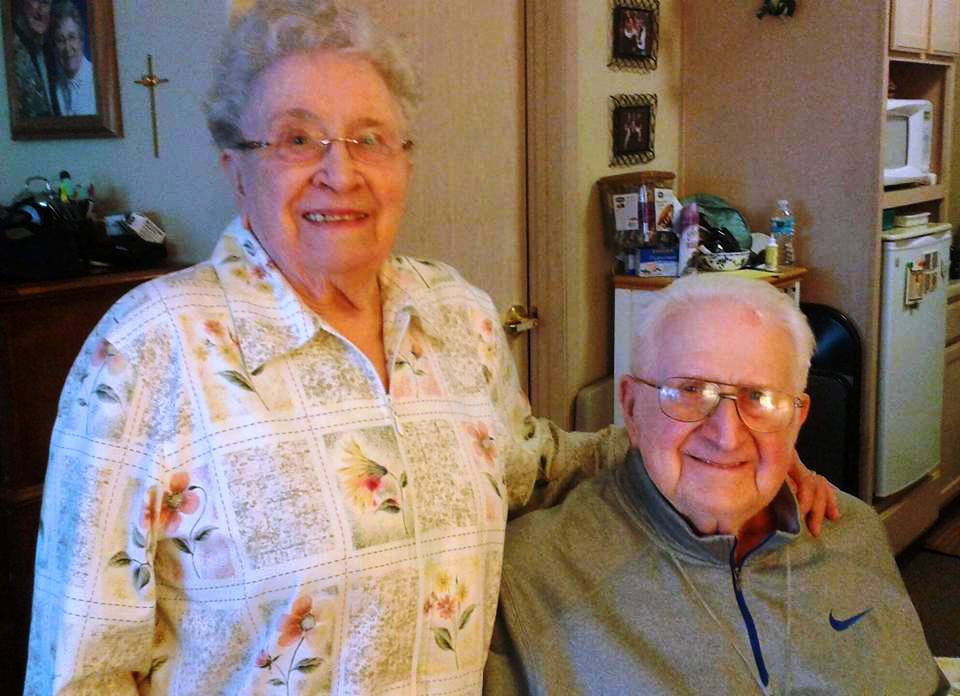
I got a call last week from Barbara Anderson. She wanted to let me know that her husband of 70 years had suffered a stroke and that they were now in an assisted living facility. She also told me that her grandson-in-law, Col. David Banholzer had passed away on November 4 at age 47. She wanted to send some copies of War Bonds to his family.

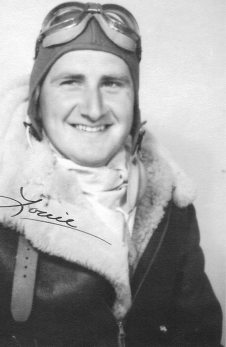
Banholzer was the commander of Air Force One until cancer forced his early retirement. He and Louis loved to talk about flying. As told in chapter 28 of War Bonds, Louis was a B-17 pilot during WWll.


.War Bonds Louie AndersonI was so happy to visit with this dear couple. Louis’ speech has been somewhat affected by the stroke and his vision is poor. But he knew me and gave me his characteristic grin. His blue eyes still sparkle and he kept my hand firmly tucked in his.

As I prepared to leave, Barbara insisted on giving me some mementos from Banholzer’s time on Air Force One.

20161116_124255

But for me the true gift was more time and one more visit with these shining examples from the Greatest Generation.

15055636_1226709130701045_8102769455675943025_n2

War Bonds

Taking home a memory: Jack Rogers’ last exhibition

14937478_1215340578504567_4292611546806285626_n1

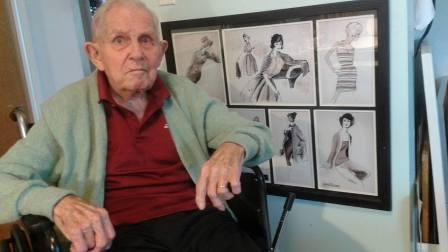
In 1943, at 19, Jack Rogers joined the Army. He was assigned to the amphibious engineers unit and spent 3 years on active duty, most of it in the Philippines.

“Our whole company was made up of kids– dressed up as soldiers,” he said. “At 19 I was in charge of 55 men.” He shrugged. “You grew into the job.”

After the war he became a commercial artist and a founding member of the Spokane Watercolor Society. He started the art department at Spokane Falls Community College in 1963 and taught there for 26 years.

On Saturday, Rogers, 93, had what will likely be his final art show/sale.

15036504_1222862637752361_6274636252733593314_n1

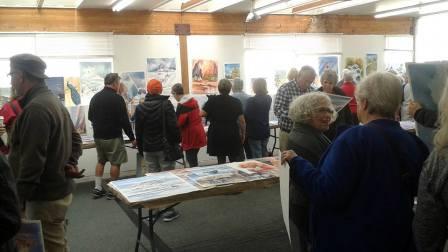
People had lined up before the doors even opened. Anxious to take home a signed painting. Anxious to thank Rogers for his service to our country. Anxious to thank him for his devotion to teaching and to art.

15036231_1222862601085698_6863558846864460798_n1

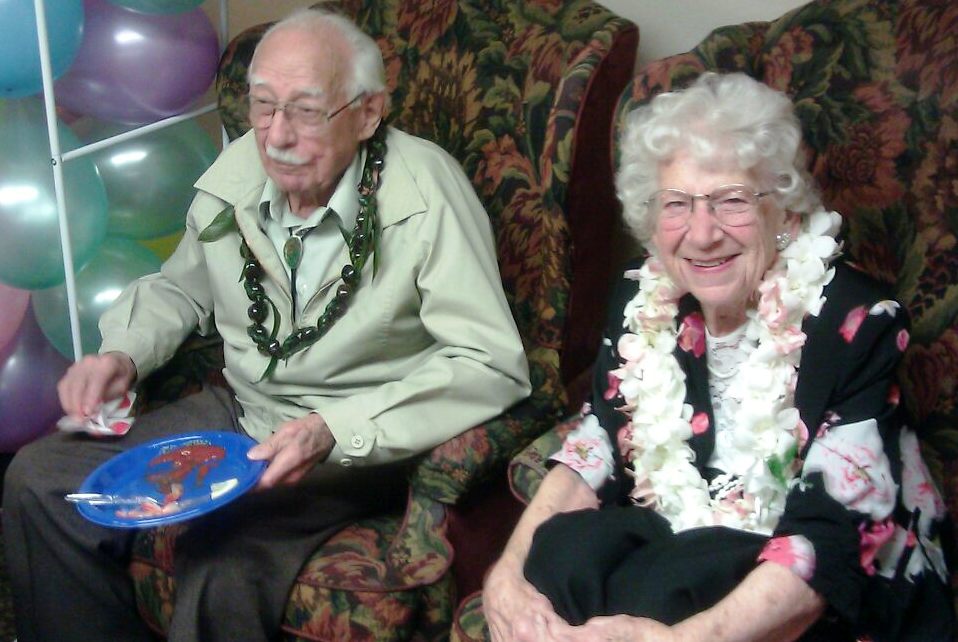
He and Fran, his wife of 70 years, greeted the crowd. When asked the reason for the show Rogers said. “I was given a gift and I want to share it,” he said. “Why put it all back in the drawers? I’m hoping people will take home a memory.”

My memories of Jack Rogers exist in more than just watercolors. They exist in hours spent interviewing him. They exist in War Bonds: Love Stories From the Greatest Generation. Time spent with he and Fran is precious to me, now and I was glad to see the community turn out to shake his hand and to tell him thank you.

War Bonds

Sharing space with C.S. Lewis

war-bonds-on-bookshelf

A friend posted this picture on Facebook the other day. His home had been badly damaged in a fire and the remodel is almost complete.

He just got his new bookshelves in his library and is happily placing his collection on the shelves.

So. There’s War Bonds nestled between The Screwtape Letters and The Inspirational Writings of C. S. Lewis.

As far as bookshelf real estate goes, nothing could make me happier.

A spot on the New York Times Bestseller List might be nice. A Pulitzer Prize? Well, that would be swell. But for now, sharing space with one of my all-time favorite authors feels mighty fine!

How do you arrange your bookshelves? By author? Subject? Color? Favorites? Genre?

War Bonds

Nostalgia? There’s an app for that.

Hungry for history? In love with the past?
Now you can indulge that interest anytime and anywhere.
My friends at Nostalgia Magazine recently launched an app available for android and iOS devices.

They’ve also included an excerpt from War Bonds: Love Stories from the Greatest Generation.

“The Luck of the Draw” can be accessed via the app or the website.

vi-shipman-and-fenton-ross-roskelley-d

Happy scrolling!


Columns, War Bonds

Of Boys Lost and Boys Found

Spoiler alert: This week’s column has a happy ending. I wish all stories about lost children could end the same.

Stepping lively, I dodged traffic cones dotting the street, thankful the end of roadwork season is almost here.

I savored the glorious October sun, knowing my regular treks around the neighborhood will soon be replaced by boring indoor workouts at the gym.

Adjusting my headphones, I cranked up my walking music and my pace. A tug on my arm startled me. I’d been so focused on boosting my heart rate, I had failed to notice the approach of two small boys.

“Do you know where Standard Street is?” one of them asked. “We’re lost.”

If this scenario sounds familiar to readers, I’m not surprised. I seem to collect lost boys the way other folks collect license plates or trading cards. From a tiny autistic boy who’d escaped from his house to play on a busy street one Sunday morning, to Ricky who got confused when he got off the school bus one afternoon, I seem to be a lost-boy magnet. This time there were two of them looking at me with anxious eyes.

I’m embarrassed to admit my route is so familiar I don’t pay attention to street names.

“I think we’re on Standard,” I replied. “But there’s a sign on the corner – let’s check.”

We approached the sign and verified we were on Standard, but the boys weren’t reassured.

“Actually, we need to know where Lyons Street is,” the spokesboy said.

“What’s your address?” I asked.

Two pairs of eyes stared at me blankly.

“I don’t know it,” the smaller boy said.

“Me either,” his friend admitted. “But it’s apartments.”

Taking a deep breath, I asked them their names and ages.

“I’m Marc with a ‘c,’ and I’m 9,” the taller boy said.

“I’m Luis, and I’m 8,” his friend replied.

I asked them how they got lost.

“Well, we got off the bus at a friend’s house after school,” Marc said. “But he couldn’t play, so we decided to walk home, but we don’t really know where we are now.”

“What school do you go to?” I asked.

“Linwood Elementary,” he replied.

Linwood is about 2 miles away from my Shiloh Hills neighborhood and across bustling Division Street. They couldn’t remember where they’d gotten off the bus.

As we chatted, we kept walking because I assured them that Lyons was north of Standard, and if we kept walking north hopefully they would be able to spot their apartment building.

“How about I call your parents?” I offered as we walked. “Maybe one of them can come pick you up.”

It was 4:20 and the boys said the bus usually had them home by 3:30.

“We’ve probably been walking for HOURS,” opined Luis, who didn’t know his phone number.

Marc said his mom was home and gave me her number. I called repeatedly from my cellphone as we walked, but no one answered.

“She has MS and sometimes she doesn’t answer the phone,” he said. “Especially if she doesn’t know who’s calling.”

By this time we were almost to my house, and I estimated they still had at least a half-mile to walk.

“If I give you guys a ride do you think you could show me your apartment building?” I asked.

“Yes!” said Marc.

“My legs are really tired,” Luis admitted.

I offered them some water, but they declined.

“I’d like some crackers if you have some,” said Luis.

I dashed inside to grab my purse and discovered we were out of crackers.

“What are you doing?” my son, Sam, asked.

“Taking some lost boys home,” I replied.

“What? Again!?” he said, shaking his head.

The boys buckled up and Marc opined that my car was similar to his mom’s. He knew the make and model of her car. It would have been more helpful if he knew her address.

However, as we approached the neighborhood park, they got excited.

“Hey! I know where we are now!” Marc yelled. “We’re almost home!”

Sure enough, he spotted their apartment building and I dropped them off.

When I wrote about my afternoon adventure on Facebook, a friend said, “I hope you gave them a lecture about getting in cars with strangers once you safely delivered them home!”

Honestly, I was just so relieved I’d been able to get them home; I never thought to scold them. I did lecture them about learning their addresses.

“You need to know the name of the apartment complex and the street address,” I’d chided.

They’d both just shrugged and nodded.

My relief at the happy outcome gave way to dismay. I wished I’d scolded them about getting off the school bus at someone else’s house without first making sure they had permission. I was horrified that they seemed to think it was acceptable to go to a stranger’s house and then get into her car.

They were so trusting and sweet and had absolute confidence in my ability to get them home. And that’s what really made me sad.

Because I’d like to think we live in a world where grown-ups are trustworthy. Where parents have confidence that when their children are out of their sight, other adults are watching out for them.

And mostly, I want to believe that all lost boys return home safe and sound.

Contact Cindy Hval at dchval@juno.com. She is the author of “War Bonds: Love Stories From the Greatest Generation.” You can listen to her podcast “Life, Love and Raising Sons” at SpokaneTalksOnline.com. Her previous columns are available online at spokesman.com/ columnists. Follow her on Twitter at @CindyHval.

War Bonds

It Never Gets Easier

It never gets easier.
The notes from friends. From family. From readers.

“Dear Cindy, We just wanted you to know….”

And I learn another beloved person featured in War Bonds: Love Stories From the Greatest Generation has died.

Recently, two lovely War Bonds brides passed away within a month of each other.

Christine Jasley died on September 16th. She was anxious to be reunited with her husband, John, who died in October of last year.

jasley-wedding-low-res

Christine and John Jasley, 1944

Their story is told in Chapter 4 “Have a Little Faith.” A friend wrote, “Their marriage was truly a blueprint for all of us to follow.”

Then last week I learned of the death of Helen Loer.

chpt-7-helen-miller-19

Helen Miller Loer

On Saturday I will be at her Memorial Service and will read Chapter 7 “From Sailor to Preacher.” Her husband James, that sailor/preacher will be sitting in the front row, and my heart aches for him. The Loers had been married 68 years.

Our world is diminished with each loss, but I’m so very thankful that their stories remain.


War Bonds

War Bonds helped kids go to camp

You never know where your book will end up.

Today I got a note from a reader who purchased a copy of War Bonds to donate to her church auction.

“Spokane Valley United Methodist Church raised enough money to send 35 children to camp, including some from Hearth Homes and Family Promise who were homeless,” she wrote. “Your book was part of making that happen.”

That’s something that would delight each of the 36 couples in War Bonds as much as it delights me.

Books can make a difference in the most unexpectedly wonderful ways!

Young War Bonds reader

War Bonds

Bicycle Built for Two

They rode through life together.

When Chuck and Harriet began dating, he didn’t have a car, so she’d perch on the handlebars of his bike and off they’d go. That’s why I titled their chapter in War Bonds, “Bicycle Built for Two.”

They were married January 16, 1944 by a Navy chaplain at a YMCA and a dozen eager sailors served as their witnesses. After two months together, Chuck was sent to France and they spent 17 months apart. That was too much for both of them.

And so for the next 72 years they were inseparable.

Chuck died August 7 and Harriet passed away September 10th.

Today I received this note from their family.

Your book was such a blessing to our family. We had several copies that we passed around at their celebration Sunday. A copy always sat on their dressing table which we showed to all their many health care providers. If Mom was having a bad day, they would sing “Bicycle Built for Two” and that would cheer her up. Thank you for writing such a meaningful book.

But I’m the one who has been blessed to meet such amazing people and to share just a small part of their lives.

Their stories have become part of my own story and I’m forever thankful.

soliday-honeymoon-low-res

Chuck and Harriet Soliday, 1945

War Bonds

Hey! I’m collectible!

I hadn’t checked my Amazon author page in awhile, but two new reviews prompted me to take a look.

While I’m thrilled War Bonds: Love Stories From the Greatest Generation  is still generating reviews 18 months after publication, what caught my eye was that the list of copies available from Amazon now includes “collectible” editions!

Having no clue as to what makes recently-published books, collectible, I clicked on the copies offered.

To my delight it was the signed copies that were deemed collectible and offered at higher prices than the unsigned copies.

This first-time author is tickled to find the signature that graces school report cards and field trip permission slips is now “value-added.”

What a wonderful world 🙂13254332_1088081834563776_7878354948230130632_n[2]

War Bonds

The house that love built

The other night I had a reading/signing event at Touchmark Retirement Community.

An employee approached me and said while she hadn’t read War Bonds: Love Stories From the Greatest Generation, her daughter had.

It seems her daughter and her husband were looking for home and found one they really wanted in Millwood, WA.

“It wasn’t the house so much, it was what they felt when they were inside it,” the woman said. “There was such love in that house.”

A neighbor chatted with them and told them the couple who had lived there had built the house and had been married for more than 70 years.

“Their story is in a book,” he said.

Alas, the couple didn’t get the house, but they did buy a copy of War Bonds. And they fell in love with Warren and Betty Schott, just like the rest of us.

Betty 3

Warren and Betty on their 75th anniversary