Columns

From the courtroom to the emergency room

Recently, I had a week that began with jury duty and ended in a catastrophic car crash. I swear, my headlines write themselves.

Let’s start with the courtroom.

Unlike some, I’ve always been eager to serve on a jury. I own a copy of “Twelve Angry Men,” I ask questions for a living, and my note-taking is level expert. Yet, I’ve never been picked.

Honestly, I wondered if the court system has some kind of media bias.

That changed on Sept. 3. I reported to Spokane County Superior Court with 40-plus fellow residents as required. After watching a couple of videos and listening to information about how to get my whopping $10 per day, I was issued a badge.

Farewell, Cindy Hval – hello Juror No. 6.

After a lunch break long enough for me to rush home and snuggle my new kitten, I returned to the courthouse for voir dire. That’s a fancy term meaning attorneys on both sides of a case question prospective jurors to determine if they can be fair and impartial.

We were given the bare bones of the case and told that a jury trial in a civil case is extremely rare in Washington.

Fascinated, I listened as attorneys from both sides asked pointed questions of prospective jurors.

Then the defendant’s attorney called on me and asked what publications I wrote for and what topics I covered.

When I described this column, the attorney asked, “So, once this case is concluded, should we expect a column about your experience?”

I looked at him and at the judge and shrugged.

“Well, I’m here. This is my life.”

Despite that, I was included in the jury.

When I sat down, the woman seated in front of me, asked, “Did you review my husband’s book?”

Indeed I had.

The trial commenced. It was a big business versus a very big business and the jury’s task involved assessing damages (if any).

As a courtroom drama fan, a few things stood out – mainly the lack of drama. The objection process seemed subdued. No one stood up and yelled “OBJECTION!” No gavels were pounded, and the judge never once called for “order in the court.”

Every time things got tense between the opposing sides, the jury got ushered out. I felt like a kid being sent to her room so the grown-ups could chat.

The jury room was nice and we had private bathrooms to prevent us from accidentally encountering any parties in the lawsuit. We also had snacks that were a bit better than airline snacks.

But there was sitting. A lot of sitting. We were relieved to learn our presence wouldn’t be required in court on Friday.

So that day, I drove to an interview in Otis Orchards. I almost made it.

As I neared my destination, I slowed and switched on my turn indicator. The next thing I knew, there was a terrific smashing sound – dust, gravel and glass flew.

I’d been rear-ended by a semi.

Shakily, I exited Ruby Sue (my Ford Escape) and surveyed the damage. My car was obviously totaled.

A witness saw the accident and pulled over to call 911.

In the adrenalin rush that followed I called my husband, called the couple I was supposed to interview, and answered the state trooper’s questions. I didn’t care to watch him cite the driver.

At the urging of responding firefighters, I let Derek take me to the emergency room. I was bruised and shaken but cleared to go home. It could have been so much worse.

If I’d been at a complete stop.

If I’d been making my left turn.

If the semi had been hauling a load.

It’s been a little over two weeks since the accident. My bruises have faded. The insurance companies are doing what they’re supposed to do. I’m following up with my physician as advised.

But gosh, I miss Ruby Sue. She was the first car that I got just for me. The only one I didn’t have to use to haul kids to school and sporting events.

“We’ll get you a newer and better Ruby Sue,” Derek said. “Cars are replaceable, you aren’t.”

So, I’m choosing gratitude. I’m thankful I’m here for our son’s wedding next week. I’m thankful that soon I’ll be in Ohio visiting our grandkids, and I’m grateful for seven years and lots of miles with my sparkly Ruby Sue.

It turns out she lived up to her model name – Escape.

As the witness stood with me at the accident scene, looking at the wreckage, he said, “I saw how hard he hit you. That little car saved your life.”

On the way to the hospital, I called the courthouse.

Being rear-ended by a semi is one way to get out of jury duty, but I sure don’t recommend it.
All Write

Note from a War Bonds Reader

Sometimes writing feels like slogging away in solitary confinement.
Since “War Bonds” was published in 2015, I’ve completed an as-yet unsold manuscript and pitched another full-length book that garnered some interest from agents, but not enough for me to commit to writing it.

And there’s my children’s picture book still looking for a home…

That’s why this note I received a couple of days ago was so encouraging. It reminded me (as do my tiny twice-yearly royalty checks) that people are reading and enjoying a book I wrote!

Maybe I can write and sell another one:-)

Dear Cindy,

I am halfway through your book.  It is so enjoyable.  I really enjoy biographies and autobiographies.   

It came at a perfect time.  Our married Grandson/ Wife are moving out to their own apartment shortly.  As a Grandmother,  I want to jump into action and provide for them.  Your book has reminded me that the best time is to “let go”.    Couples starting out need to have that struggle at the beginning. 

The book is delightful.  I was born in 1944 and my uncles went to war.  I can recall their visits. 

The title of your book is super appropriate.

Thank you, Cindy.

All the Best ,

Pam

All Write

Link to Chicken Soup for the Soul Workshop

A few weeks ago I presented “How to Get a Bowl Full of Chicken Soup” at the Spokane County Library District’s 6th annual Spokane Writers Conference.

If you were unable to attend, you can view the presentation here for a limited time.

This soup’s for you. Happy writing!

All Write

How to Get a Bowl Full of Chicken Soup

Publication credits can be hard to come by for budding authors, but The Chicken Soup for the Soul franchise offers a smorgasbord of publishing opportunities for writers to offer the world a taste of their work.

The franchise produces dozens of volumes each year, offering a paying market for novice and experienced writers alike

My stories have been featured in 13 Chicken Soup for the Soul books, and I’m delighted to share my recipe for a good soup story.

Learn how to get your writing published by this franchise and increase your publication credits on Saturday, October 29, at this free workshop sponsored by the Spokane County Library District’s 6th annual Spokane Writers Conference.

Sign up here today!

All Write, Columns

The Final Reunion

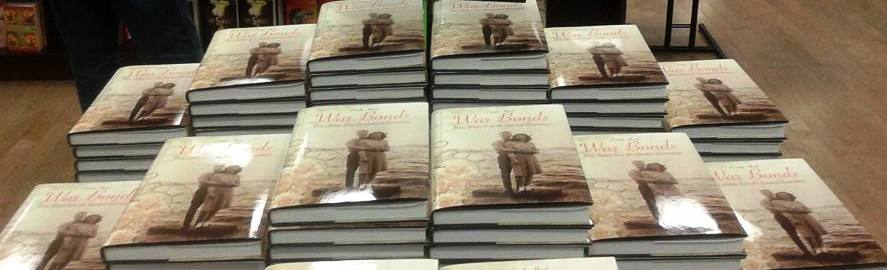
Military spouses are experts at saying goodbye. Separation is a fact of life, and no one knew this better than the men and women featured in my book “War Bonds: Love Stories from the Greatest Generation.”

During World War II, these couples’ farewells were fraught with fear. There would be no emails. No texts. No FaceTime with the family. Letters and scant phone calls or occasional telegrams had to suffice.

But, oh, the reunions! Most of the 36 couples profiled in “War Bonds,” vividly remembered and described the moment they saw their spouses when they finally came home.

In the past six weeks, three of those brides experienced their final reunions with their husbands. This time they won’t have to say goodbye again.

Melba Jeanne Barton died Nov. 30. She and Don were married 67 years before he died in 2013. That eight-year separation marks the longest time they’d spent apart.

She’d met Don at a Grange dance two months after he’d returned from flying B-29s in the Pacific theater. He’d endured a horrific loss when the plane he piloted was hit in battle, and his young navigator was killed. Decades after the experience his eyes still filled with tears when he spoke of it.

“He was a nice kid – a real nice kid,” he’d said.

You might think Melba Jeanne would be immediately smitten by the dashing pilot. After all, he shared her Christian faith, and he was a great dancer. But Don was a farmer, and Melba Jeanne swore she’d never marry a farmer.

“Feeding chickens and milking cows – none of that stuff appealed to me,” she said.

But Don’s patient persistence and promises that she’d never have to do farm chores won her hand and her heart.

They raised three daughters on their family farm. And Melba Jeanne discovered the best benefit to being a farmer’s wife.

“On the farm, your husband is never far away. We’ve always done everything together,” she’d said.

Bonnie Shaw died on Dec. 5. She met her husband, Harvey at Central Valley High School when he was home on leave and visiting his siblings.

Despite his uniform, Harvey was just a boy himself. “I got stupid and quit school right in the middle of my sophomore year,” he recalled. “I just didn’t think. A few months later, I was in the Navy.”

He said goodbye to his family and set sail on the USS Kwajalein, but Bonnie didn’t forget about him. He returned home in 1946, and when Bonnie and her boyfriend broke up, Harvey wasted no time.

“When we finally got together, we just really fell in love,” she recalled.

And just like sailing the Pacific, their courtship wasn’t without bumps. Bonnie was a devout Catholic and Harvey was not. Unbeknownst to her, he began taking instruction at St. John Vianney, and they wed there in August 1950.

They spent 64 years together. Harvey died in 2014, not long before “War Bonds” was published.

When I’d called Bonnie shortly before his death she said. “He’s not doing very well, but he asks me to read him your column, and every time I do, he smiles.”

We both cried a bit then.

Bonnie gave Harvey nightly back rubs and the last words they whispered before falling asleep were “I love you.”

“Harvey is my heart,” she said.

Bonnie and Harvey Shaw, 2014

Lastly, Betty Ratzman died Dec. 26.

To know Betty was to love her. A prolific writer and avid letter-writer, Betty’s fierce intelligence and sharp wit delighted all who knew her. I treasure the letters I received from her.

Bett Ratzman with Cindy Hval at a taping of “Spokane Talks,” 2016.

In fact, she won her husband’s heart through the mail.

They’d met on a blind date in 1943, and when Dean Ratzman shipped out with the Navy, she told him not to get his hopes up.

He ignored her warning and treasured both her photo and the letters she wrote to him while he was at sea.

“You can find so much more about someone in letters,” he’d said.

They married in 1946 and spent 73 years together until Dean died in 2019.

Fit and active, the couple attended many “War Bonds” events, gladly meeting folks who marveled at their lasting love.

The last time I spoke with Betty shortly after Dean’s death, she wanted to know all about my sons and my cats. Then her quavery voice broke a bit.

“Oh, I miss Dean. I miss him so much,” she said.

Betty Ratzman, Cindy Hval, Dean Ratzman at a “War Bonds” event, 2015.

I miss Betty, and Bonnie and Melba Jeanne.

The “War Bonds” brides are at the heart of what made our country great. They endured separations and rationing. They tackled nontraditional jobs and learned new skills, to keep our country going during the war. They gave their husbands something to fight for and a reason to come home.

While I celebrate each couple’s heavenly reunion, I can’t help but think our world is diminished by their absence. I know my little corner of it is.

All Write

Turning Tables

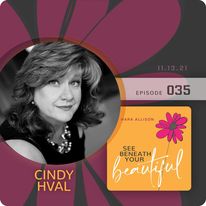
It’s always a bit surreal to be the interviewee instead of the interviewer, but I had fun chatting with Hara Allison on her podcast “See Beneath Your Beautiful.”

See Beneath Your Beautiful podcast is raw and intimate, sometimes funny and always entertaining. With new episodes every Saturday, Hara explores our loves, fears and hopes with a delicious combination of depth and lightness.

We chatteed about writing, parenting, grandparenting and lots of stuff in between.

You can click here https://bit.ly/3okAtTe to listen to the episode, or find it on any podcast streaming service.

*Disclaimer* I utter the 3 forbidden “p” words!

Columns

Still afloat on the pond of English 101

I am absolutely not going to tell you how many years ago I took English 101.

For one thing, I’m not good at math – something my college transcript verifies. For another thing, it was a really long time ago. How long ago? Well, let’s just say all of my essays were handwritten. In cursive. In pen. No, not with quill and ink.

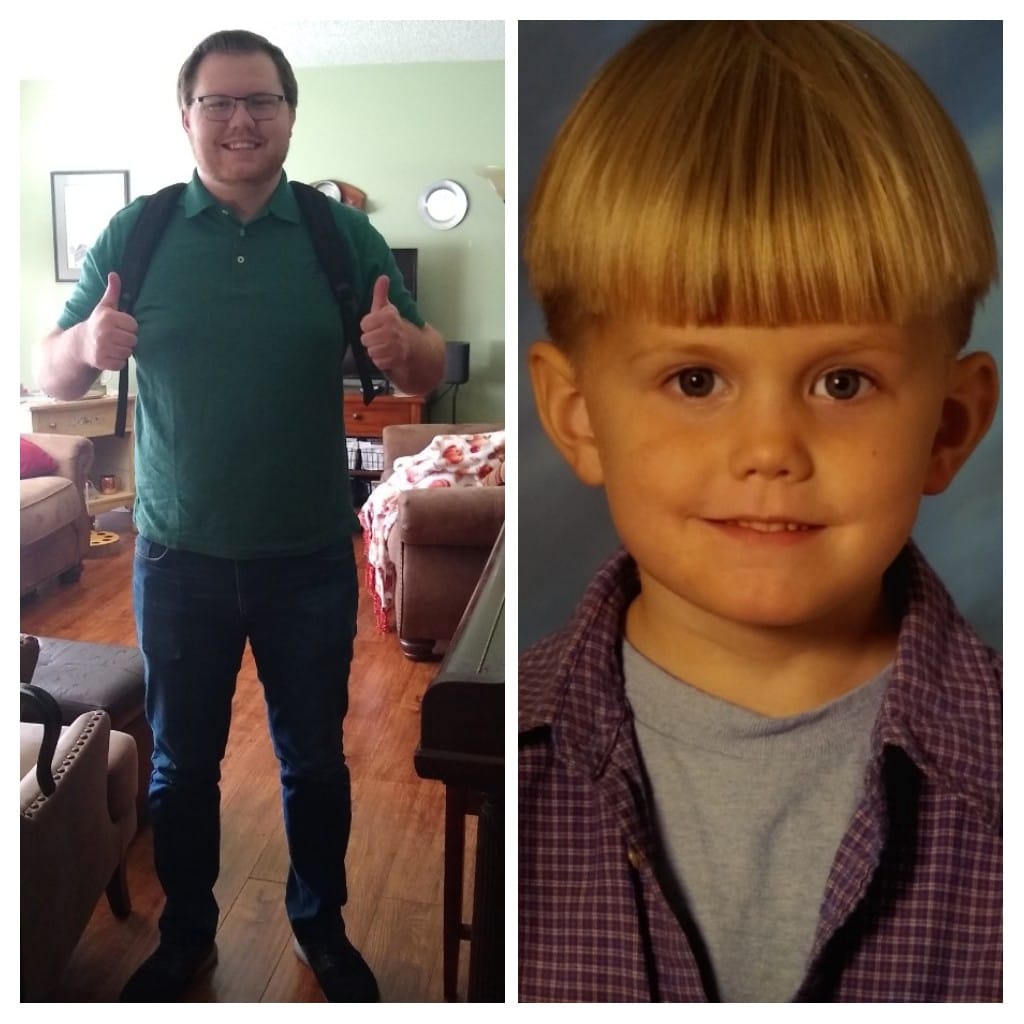
Memories of that class were triggered when our youngest son headed out the door to Eastern Washington University last week. He’s not taking 101 – he’s teaching it.

Sam’s first day of teaching English 101/First day of kindergarten.

Sam is in the final year of his graduate degree and is a composition instructor in the English Graduate Student Assistantship Program. His 22nd birthday was Friday, but he’s already teaching a class of 24 students.

He’s relishing his new role, and I’m sure his students will benefit from his enthusiasm. For many of them, English 101 will be just another required class to get out of the way, but perhaps for some the class will trigger a desire to learn more about writing.

That’s exactly what happened to me at Spokane Falls Community College.

At 18, I still wasn’t sure what I wanted to be when I grew up. The career aptitude tests I took my senior year of high school pointed me toward fashion merchandising. I’m pretty sure that’s just a fancy way to say retail sales clerk, but I could be wrong.

Dad said college would be a better place to discover my aptitudes and paid for my first quarter at SFCC. I’d been the editor of our school newspaper and co-editor of the yearbook, so English classes didn’t scare me. I was far more terrified of classes involving math – a justified fear as evidenced in the above-mentioned transcripts.

I’m sorry to say, I don’t remember the name of my English 101 instructor. I do remember he was also the tennis coach and often wore his tennis whites to class. Maybe fashion merchandising should have been my thing, after all.

Yet, he’s the one who lit the spark of interest – who first made me wonder if perhaps writing was something I could actually be good at. To be sure, 101 is the most basic of college classes. Students typically learn the different stages of writing: gathering material, drafting ideas, revising drafts, editing and proofreading.

Sitting on my desk is one of the first essays I wrote for that class. The title? “From Duckling to Swan,” in which I related my middle school to high school transformation.

Honestly, reading it now is cringe-inducing, but I’ve saved it all these years because of the comment the instructor wrote in pencil on the title page.

“An essay like this can keep you afloat in the pond of 101.”

When that paper landed on my desk, after he first read it to the class, it was an a-ha moment for me. I thought, “This is it! This is what I want to do. I want to write and I want people to read what I’ve written.”

And here we are.

Now, it’s Sam’s turn to make a difference.

Who knows? Maybe someday a writer will sit down to pen a newspaper column or write a book, and remember an English 101 class at EWU, and the instructor who encouraged her to believe that she had a way with words. And perhaps that teacher’s name will be Sam Hval.

It wouldn’t surprise me a bit.

Columns

Procrastination: it’s keeping me waiting

I would tell you how many times I started this column, but somewhere along the way, I lost count.

What no one warns you about working from home is that if you’re prone to procrastination, your house will give you ample opportunities for postponing pesky deadlines.

In more than 15 years in journalism, I’ve never missed a deadline, nor even been significantly late, but that doesn’t mean I haven’t cut it close to the wire.

Not long ago I wrote a column about anticipation, referencing the Carly Simon classic hit song “Anticipation.”

Guess what? That tune works fine if you substitute procrastination for anticipation. (You know you just tried it.)

I hummed that tune as I started a load of laundry after typing the header on this column. Since the washer is next to the freezer, I thought I might as well grab the roast I was planning to cook for dinner.

I set the frozen slab on my desk and typed my byline. Then I checked Facebook and time melted as I scrolled through a friend’s vacation photos. The roast also started melting, so I hustled it upstairs to the kitchen.

Opening a cupboard, I searched for the seasonings I’d need for the roast. Searched, because tall bottles of cooking wine, vinegars and oils had hidden the basil and oregano.

Then I eyed the cupboard with baking supplies. We’re in the middle of zucchini season, and every week I’m churning out breads, cookies and muffins. Why was the baking powder on a shelf so high I had to climb on a chair to reach it?

Obviously, the cabinets desperately needed organizing. I pulled everything out of each cupboard and wiped down the shelves, racks and lazy Susans.

Hysterical meowing broke my cleaning reverie as my cats, Thor and Walter, notified me lunchtime was past due. I filled their bowls and heard the timer on the dryer ringing. When you don’t iron, you can’t afford to let your clothes sit in the dryer.

My blinking monitor reminded me I’d barely started this column, so I sat down and wrote the first sentence. That’s when I noticed my email flag waving. After answering and categorizing a multitude of messages, I realized I’d left everything out on the kitchen counters.

Organizing puts me in an absolute Zen state of mind. The beauty of a well-stocked kitchen delights me. By the time I was done, all of the baking and cooking spices were within easy reach, and I’d rearranged the canned and box goods, too.

It was picture-perfect, so of course, I grabbed my phone and took some photos. I posted the pictures on Instagram and congratulated myself on work well done. Then I remembered my paying job. I’d only written about 50 words. Back to the basement I trudged.

As I finish this, it’s almost time to start dinner. Which has me thinking about my pots and pans. Why are the baking sheets so hard to reach? Wouldn’t the colanders and mixing bowls work better in a larger cupboard?

That’s when I started humming. Feel free to sing along.

Procrastination,

Procrastination

Is making me late

Is keeping me waiting

All Write, Columns

Framing your story

Meme makers had lots of fun with 2020.

To be clear, there is nothing funny about a global pandemic, murder hornets and horrific wildfires, but honestly, it seemed the year was one disaster after another. The great thing about humans is our ability to use humor to diffuse our angst.

Take this meme for example: “2020 is a unique Leap Year. It has 29 days in February, 300 days in March and five years in April.”

Or this one: “If 2020 was a math problem: If you’re going down a river at two m.p.h. and your canoe loses a wheel, how much pancake mix would you need to re-shingle your roof?”

Everyone is hoping 2021 will be better (I refuse to ask how it could be worse), and signs are promising. The vaccine is rolling out. The election is over. And most of us never saw a single murder hornet.

Someday, we’ll be on the other side of COVID-19, and I wonder what stories we will tell our children and grandchildren about our experience.

Maybe something like this:

“Once upon a time, in 2020, a horrible plague swept over the world. Many people died. Many more got sick. We couldn’t go anywhere. We couldn’t hug people, and everyone wore masks. Stores ran out of toilet paper and flour. Schools closed, and most of us learned to work from home.”

It’s a grim narrative, fit for a grim disease, but it’s not the whole story. In 2020, babies were born, businesses launched, books written, bread baked and outdoor treks enjoyed.

For me, one of the best things about the year has been writing the Pandemic Project series for this newspaper.

The idea started simply. A reader wrote, sending pictures of a quilt she’d finally had time to refurbish and she asked, “I wonder what projects others are tackling during this time?”

My editor forwarded me the note.

“Do you think this could be a series?” she asked.

So, I wrote a call out for stories, and the responses flooded my inbox. People eagerly shared how they’ve been using their unexpected down time.

From small needlework projects, to elegant patios and decks. From quilts, to chicken coops. From flower gardens, to greenhouses, to cookbooks, people proved that staying home didn’t stifle creativity. In fact, it unleashed it.

I think the reason these stories struck such a chord is that they stand in stark contrast against the daily roster of things we can’t do.

We can’t go to concerts.

We can’t go to movies.

We can’t visit our parents in retirement homes.

The ever-changing rules and information often results in fear, an unexpected side effect of the virus. Fear isn’t a bad thing. It’s hardwired into humans and warns us of impending danger. It can keep us safe, but it can also cripple us.

I’ve seen fear-induced rants turn to rage on social media. For example: anger at those who balk at the mask mandate, and anger at those who comply with it. The flip side of the same coin.

It reminds me of what I told my sons about anger when they were small.

“It’s OK to feel mad. Everyone gets mad sometimes. It’s what you do with your angry feelings that matters.”

The same thing applies to fear.

That’s why I enjoy writing the Pandemic Project series so much. Every week I get to talk with people who’ve channeled their worry, their fear, their sadness, into creating something new, or trying something they didn’t have time to pursue until a pandemic slowed their pace.

Perhaps one day I’ll tell my grandchildren this:

“Once upon a time, in 2020, a horrible plague swept over the world. Many people died. Many more got sick. We couldn’t go anywhere. We couldn’t hug people, and everyone wore masks.

But every week we had family dinner, and I fed your uncles the meals they loved when they were little. We watched movies, played cards and made memories.

I couldn’t visit great-grandma Shirley, but we waved at each other from windows while we talked on the phone.

Papa went to work every day, so people could buy the tools they needed to build and fix things, and I wrote stories about the wonderful things people did with their time at home.

It was scary, but in the quiet and slowness of a careful world, we finally had time to appreciate the small things – things that in the busy, noisy times, seemed to slip through our fingers.”

So much of a story is in how it’s framed. Beautiful things shine all the brighter against the darkest backgrounds. Every breath offers an opportunity to add to our story. What will you add to yours?

All Write, Columns

Readers make writer’s job enjoyable

While tidying up end-of-the-year paperwork, I dislodged an overflowing folder from the top of the filing cabinet.

It was my reader feedback folder, filled with printed emails, cards and letters I’ve received from newspaper readers this year.

Sifting through them, I’m amazed anew at how columns pounded out from my windowless, basement home office, find their way to readers across the region and prompt response.

Before COVID-19, I did a fair number of writing workshops and speaking events, and at almost every one I’m asked, “Where do you get the ideas for your column?”

After all these years, I still haven’t found a pithy answer, because writing a personal column is well, pretty personal. That’s why it’s such a joy to find something I’ve written resonates with others.

Thumbing through the notes, I found a response to a column I’d written when I discovered what the phrase “Netflix and Chill” means in contemporary culture.

The note was from Dean, 73, who said, “You rascal, you!”

I’ve never been called a rascal before. It was epic!

An email from Stan, a fellow author, and former teacher, said, “You really know your vowels and consonants.”

I immediately forwarded that one to my editor, whom I’m sure has wondered at times.

A column about anticipation drew this response from Gina, who said, “I do have the feeling of your words in my soul today.”

No writer could wish for more.

Publishing a segment of my quarantine diary prompted a comparison to Erma Bombeck that absolutely thrilled me.

When I bemoaned in print that the shutdown order had limited my wardrobe to gray yoga pants or gray sweatpants, Bob wrote, “I look forward to Thursday’s for your articles. Please don’t ever stop. Stay healthy and wear whatever you want at home.”

I’m confident, Bob would approve of today’s usual deadline attire – a fluffy pink bathrobe and matching bunny slippers.

Sometimes reader mail offers important validation on critical issues. When I wrote of my horror at discovering my husband had used MY MONDAY MUG, Marcia wrote, “By the way, the mug thing made sense to me.”

I forwarded that one to Derek.

He didn’t reply, but he hasn’t used my Monday mug since.

Cards and letters sent to me at the newsroom are now forwarded to me at home.

When I wrote about a benefit of pandemic life was discovering the joy of the newspaper crosswords, a thoughtful reader enclosed a pencil with her card.

An elegant typewritten note on gold-trimmed stationery proved delightful, especially since it was written in response to a column about my cats.

Arlene wrote, “When there is so much sadness in these difficult times, you brightened my day on October 22 with your cleverly written article about Thor and Walter Scott.”

I don’t know if the column was clever, but I do know that my cats are.

Jan sent an email that made me smile.

“Thanks for your column – one of the few items I can BELIEVE IN THE SPOKESMAN!! (caps courtesy of the writer). Hang in there.”

I’m hanging in there, and I hope Jan is, too.

Bombeck once wrote, “There is a thin line that separates laughter and pain, comedy and tragedy, humor and hurt.”

It’s a line I’m privileged to walk twice a month.

In fact, the column that generated the most feedback this year blurred those lines a bit.

I wrote about my first masked, socially distant outdoor visit with my 89-year-old mom. She lives in a retirement facility just blocks from my home, but six months had passed since I’d been able to see her in person.

Readers shared their own stories of being separated from family members during the pandemic.

Bill wrote he’d been apart from his bride of 53 years for 22 weeks.

“If some of my friends read your article, they may now have a better understanding of what I’m experiencing,” he said.

Humans weren’t made to live in isolation. This year more than ever, I value the feedback of faithful newspaper readers.

Thank you for reminding me that even in the midst of a global pandemic, our stories can still connect us.

Here’s to a brighter, better, and healthier New Year.