All Write, Columns

Apology Accepted?

The crash happened in a split second. One minute my husband was driving down North Monroe Street, and in a flash a sedan darted out in front of him from a side street.

By the time he hit the brakes, he had hit the car, which spun 180 degrees, ending up with its back end in the southbound lane and its front end in the northbound.

Stunned and shaken, he pulled over in a nearby church parking lot. An off-duty fireman stopped to see if he was OK while others checked on the teenage girl and her passenger.

Derek drives an F-150 truck, and it hit the rear passenger door of the small sedan. All of the car’s airbags deployed. Amazingly, no one was injured.

“What were you thinking?” Derek asked the driver.

She said she had seen him signal to change lanes on the busy four-lane section of Monroe and thought he was turning. She thought she had time to make it across the intersection.

She thought wrong on all counts, and her mistake could have had a much higher price than just the inconvenience of damaged vehicles and time spent on insurance paperwork.

In the following days, Derek wavered between anger and relief. Several weeks later when the dust and the insurance had settled and his truck repaired, he received a letter from the girl.

“I’m sincerely sorry for the accident I caused. I’m very grateful you’re OK. This accident made me realize how very short life is – your life could be taken in any minute.”

The note seemed genuine and heartfelt, and whether her mother made her write it or not, the effect on Derek was liberating. He had already moved past anger, but her words allowed him to think more kindly of her.

A sincere apology will do that.

Wouldn’t the world be a better place if that happened more often?

Instead, sorry/not sorry has become a hashtag on Twitter, a popular Demi Lovato song, and a featured phrase in everyday conversation. Sorry/not sorry is what you say when you acknowledge your words or actions may have upset someone, but you really don’t care.

Huckleberries columnist Dave Oliveria refers to insincere mea-culpas as “ap-hollow-gies.”

It’s like when my boys were fighting and someone’s feelings, body, or toy had been hurt, and I’d admonish the offender to tell his brother he was sorry.

“Sorry,” the culprit would mumble.

The word was right, but often the body-language – arms folded, eyes-rolling, shoulders shrugging – revealed the kid was less than repentant.

That kind of apology usually resulted in further consequences. Even so, an “I’m sorry” rendered because a kid doesn’t want his video game privileges revoked, doesn’t get to the heart of the matter.

And speaking of hearts, there are times when even the most genuine mea culpa cannot mend or alleviate the pain of damage done.

Think of the courtroom apologies proffered by people who have killed or maimed someone while driving drunk. Or the relationships broken by betrayal. Or the workplace gossip that results in job loss.

While saying sorry may be the right thing to do, it doesn’t automatically translate into forgiveness.

And sometimes we can be haunted by the apology we never received.

Many years ago, someone close to Derek treated him very badly. Harsh words and untruths were spoken. He waited for an apology or even an acknowledgement of wrongs done.

It never came.

Eventually, Derek chose to forgive this person. It had little to do with the offender and everything to do with my husband’s peace of mind.

Forgiveness is a choice, and so is asking for it.

The letter from the young driver demonstrates what it means to acknowledge harm done and accept responsibility for it.

“I know I’m young and learning. I know that this was my fault, and I take full blame,” she wrote. “This has helped me look at life from a different perspective. I appreciate every moment for what it is. Once again I apologize.”

Apology accepted.

War Bonds

Empowering Women through Elevating the Conversation

30124111_1740399709331982_8569728879701262336_o

I was delighted to be a guest on the Whatever Girls podcast “Elevating the Conversation,” though as a journalist it was odd to be on the other side of the Q&A!

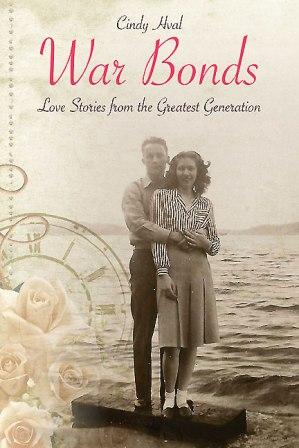
Host Erin Bishop and I covered a lot of ground. Her grandparents are the beautiful couple on the cover of War Bonds: Love Stories from the Greatest Generation.

War Bonds Cover Photo

We talked about how the women of that generation revolutionized the workplace and what it takes to have lasting relationships.
Then we talked about writing. How I got started and what’s coming up next. Of course, if you asked me a writing, I’ll talk about reading. The best writers are the best readers!

And then the heart of the podcast– the value of female friendships and how we can empower each other by elevating the conversation.

You can listen to the podcast here.

The-Whatever-Girls


War Bonds

RIP Pat McManus

Letter from Pat McManus

So sad to learn of the death of Patrick McManus.

When I had the crazy idea that maybe I could write a book, Pat McManus read an early draft of my proposal. Then he took me out to lunch and told me it was “the best book proposal” he’d ever read and he was absolutely positive “War Bonds” would be published.
A week later, he sent me the above letter of recommendation and introduction that I could send with my proposal to agents and publishers.
He believed in me and in my book when it was still just a maybe, someday…..

Having someone believe in you and your project when it’s just a glimmer, a wisp of a hope, is incredibly powerful.

I wish every author could have someone like Patrick McManus in their corner. I am humbled beyond words that he considered himself my fan, because like millions of others I was certainly his.

Rest in peace my friend. Thank you for the joy that you brought to the world and for the life-changing encouragement you gave to me.

Columns

All alone, but not lonely at all

I heard them before I saw them. A small group of kids on the playground, laughing, shouting, jostling as they let off steam in the afternoon chill.

As I walked past the schoolyard, a solitary figure on the swings caught my eye. The boy scuffed at the gravel with his shoes and the swing barely moved.

Slowing my stride, I took in the scene and I wondered at the social dynamics at work. Was the boy on the lower rungs of the grade school popularity ladder? Had he been deemed to have “cooties” by the others? Or was he just grabbing a quiet spot – overwhelmed by the sheer volume a small amount of kids can make during a brief recess?

When I was his age, I could relate to both scenarios.

Because we moved frequently due to my dad’s career, I was always the new kid. The daunting task of finding a spot at the lunch table and navigating new social networks and established hierarchies meant loneliness was a constant companion until we settled in Spokane when I was a teen. I didn’t even have the built-in companionship of siblings because my brothers and sister were much older, and all out of the house by the time I was 12.

That upbringing created a resiliency that has served me well in adulthood. I learned how to adapt, how to forge new connections and how to turn strangers into friends. I also learned self-sufficiency and how to be content with my own company.

There’s a profound difference between being alone and being lonely. Alone is a state of being, while loneliness describes a pain, a sadness, a feeling that something is missing.

I learned to love being alone and have developed a profound need for solitude. That’s something that’s proven hard to come by when married to an extrovert and raising four sons.

As my writing career grew, solitude became even more imperative. I’ve become adept at creating it, whether by renting an office or borrowing a friend’s house.

The writing I do from my friends’ home while they travel south for the winter is different than the writing I do at my desk in the family room at home.

I hammer out columns and news stories at home while family members come and go, the landline rings, the doorbell peals, the cats clamor to be fed. But in my friend’s empty, silent house, books are born, short stories submitted and my craving for solitude is satiated.

My weekly walks are another way of creating quiet for my mind and soul. I was contemplating this when two days later; I again encountered the solitary child.

It was the same time, same place and same scene. A group of kids shouting, laughing and tossing a basketball back and forth. The boy alone on a swing.

And I wondered if instead of listless and lonely, he was enjoying a moment of respite from the noise and crush of elementary school. As he toed at the gravel, perhaps the slight movement of the swing soothed him and allowed him time to think – to dream. Maybe this child, like me, wasn’t lonesome, he was simply alone and relishing it.

This time I paused at the fence and lifted my hand to wave. Just in case he did feel isolated and invisible, I wanted him to know I’d seen him. I’d noticed his existence.

I waited mid-wave until he looked up and saw me. He slowly lifted his hand in acknowledgment, a small smile tilting at the corners of his mouth.

Then I continued my walk while he sat in the gently swaying swing. Two solitary souls – alone, but maybe not lonely.

Contact Cindy Hval at dchval@juno.com. She is the author of “War Bonds: Love Stories From the Greatest Generation.” You can listen to her podcast “Life, Love and Raising Sons” at SpokaneTalksOnline.com. Her previous columns are available online at http://www.spokesman.com/staff/cindy-hval/ Follow her on Twitter at @CindyHval.


War Bonds

The Bomber Pilot’s Secret

Conaways low res

Constance (Connie) and Wilson (Bill) Conaway on right

The first time I interviewed Bill and Connie Conaway, Bill didn’t talk much about serving overseas as a B-17 pilot during WWll, but his eyes lit up when he talked about the planes.

He recalled every aircraft he flew and who trained him on it.

But on a subsequent interview he told stories of harrowing missions over Germany, of how he nearly froze when a piece of shrapnel pierced his flight suit as he soared miles above the ground.

And then he told the story that has haunted him for 70 years.

His radio operator, Lynn, a good friend, was killed on a mission.

“The night before we left, we all had dinner together, and his wife and little baby came– that was the last time she saw him.”

He sighed, shaking his head.

“The airplane floor was covered with his blood,” he said, rubbing his eyes with the back of his hand. “I tried to get in touch with his wife for many, many years. I wanted to tell Lynn’s daughter about her dad.”

He was never able to find her when he returned to the States.

Bill Conaway died January 11.

His widow, Connie who served in the WAVES called to tell me the news. He died just days before their 71st anniversary.

She’s never forgotten how fortunate they’ve been. Many B-17 pilots never returned.  She said, “I’ve told him many times, ‘I’m lucky to have you, honey.'”

And I’m lucky that I was able to include their story in War Bonds: Love Stories from the Greatest Generation. 

But mostly I’m grateful that this gruff pilot, turned school teacher, turned artist, trusted me with his secret.

During an interview he leaned forward in his chair, glanced at Connie and said, “I’ll tell you a secret; I love her more today than I ever have.”

CONAWAY LOVE

War Bonds

Good Cooking Fueled 70 Years of Wedded Bliss

26196120_1649405191764768_4694252748791861013_n[2]

Logging in the Olympic Peninsula is hard, hungry work, and hearty meals provide essential tree-felling fuel. If those meals are cooked by a pretty girl, well, that added inspiration can give a young man something to dream about while he works.

At least that was James Hollandsworth’s experience. He’d taken a job felling trees in 1945 and quickly noticed the camp cook.

He recalled thinking, “There’s a gal that when she gets old enough, I might see if I could entice her to marry me, ’cuz I know she can cook.”

Melba Hollandsworth was just 16 at the time. Born in a log cabin, near Osburn, Idaho, she quit school in the sixth grade, plagued by health issues caused by the nearby smelter.

As the oldest of seven from a large extended family, in addition to cooking at the logging camp, Melba traveled from relative to relative, helping out when a new baby was born or when someone was ill.

James’ family knew hers, and he’d see her occasionally at church in Spokane Valley when she was visiting.

“I probably had eyes for him, too,” she admitted.

It would have been hard to miss him, since he and his brother played guitar and sang special numbers at the church.

“When I found out she’d turned 18, I decided to ask her out,” James said.

He called on her at her Aunt Cora’s home and took her for a drive. However, her aunt was concerned that he wasn’t moving quickly enough.

“Aunt Cora knew I thought a lot of Melba,” recalled James. “She told me, you’d better get serious if you want Melba because she’s going to leave the area.”

Indeed, she moved to Kalispell to help another family member, so James drove to Montana to see her.

“She wasn’t expecting me,” he said, smiling. “You don’t want ’em to know you’re coming.”

Melba liked him well enough to ask him to buy her a guitar.

She laughed.

“I got the guitar, but I had to learn to play it.”

On another visit, James said, “Let’s go look at rings.”

Melba agreed to marry him, but with one stipulation.

“I didn’t want kids right away,” she said. “I wanted time to get more acquainted – we didn’t really have a courtship.”

On Dec. 20, 1947, the two married at a relative’s home in north Spokane. There was a lot of snow that winter and family members from Kalispell had a hard time getting off Tea Kettle Mountain to go to the wedding.

“So, they got a logging truck and put a wooden shack on the back of it and made a makeshift camper,” James said, chuckling.

There was no time for a honeymoon as James was due back at work at MorrisonKnudsen Monday morning, but their first breakfast as husband and wife has never been forgotten.

James took his bride out for hamburgers at a diner in Spokane Valley.

“That was a new wrinkle for me,” Melba said, shaking her head. “I’m used to breakfast. I didn’t know what to order because I wasn’t used to restaurants.”

James grinned.

“She was upset, but we lived through it.”

Soon, they bought their first home on East 12th Avenue in the Perry District. The house cost $5,000, and James earned $1 per hour.

Their home came fully furnished.

“I bought it from a widower who was going to live with his son and said all he wanted to take with him was a suitcase,” James said. “He sold me all the furnishings for $500.”

Melba was thrilled.

“It had everything,” she said. “All we needed were groceries.”

They lived there until they bought their present Spokane Valley home in 1955.

Work kept James busy, and Melba was ready to start a family. She’d wanted to wait to have children but had no way of knowing they’d have to wait 11 long years.

“It was baffling to wait so long,” she said. “We saw doctors, had tests. So many people had babies, but I didn’t.”

Finally, in December 1958, their daughter, Cindy, arrived. The proud parents took her everywhere from bowling leagues to backpacking trips.

James loved nothing more than discovering new lakes and places to fish.

“I took a map and laid out all the lakes north of Sandpoint to the Canadian border,” he said. “I wanted to see the country. Each week we went to a different lake. Lots of times there were no roads or trails, so we just bushwhacked.”

And often his wife and daughter went along.

“I wasn’t a very good hiker, but I liked camping,” Melba said.

She enjoyed fishing and marveled at James’ skill.

“He had a feeling about fish – a special touch,” she said.

The irony was he wouldn’t eat fish – couldn’t even stand the smell of fish on his fingers.

He shrugged.

“I got poisoned by canned salmon when I was a kid.”

James worked for MorrisonKnudsen for 20 years and for N.A. Degerstrom for 25, before retiring in 1989.

The first thing they did was buy a motor home and hit the road, crossing the country from Mexico to Alaska. For many years, they traveled thousands of miles, stopping to hike, fish or visit friends and relatives.

Their adventures were curtailed when James, then 85, suffered a heart attack at the bottom of the Grand Canyon. He’d been on the trip with a friend and felt some discomfort but still drove home.

“Melba called the doctor, and the next day I had five bypasses,” he said.

They recently celebrated their 70th anniversary, and Melba, 88, offered this bit of advice to couples: “Learn to go with the flow,” she said. “Learn about each others’ interests.”

For example, when she couldn’t do the hikes James wanted to do, she encouraged his love of photography.

“I enjoyed his pictures when he came back.”

James, 93, said, “She never puts up much of a fuss. She’s got a lot of patience.”

His advice to future husbands?

Grinning at Melba, he said, “Check and see if she cooks.”

26231627_1649405268431427_1621373818153809780_n[1]

War Bonds

The Face that Graced the Book Cover

She never thought her face would be on a book cover.

That a snapshot taken on her honeymoon would become the face of War Bonds: Love Stories From the Greatest Generation. After all, the marriage and the honeymoon might never have happened if Mary Grayhek hadn’t said to heck with vanity, tied a scarf over her hair set in pin curls, and agreed to a blind date.

But at the insistence of her friend, in 1946, Mary agreed to a double date with a handsome Marine. The date with Roy Grayhek changed her life.  Six weeks later, they wed in the Naval Chapel in Bremerton, WA.

The photo snapped of Roy and Mary standing on a piece of driftwood in the Puget Sound, became the cover of book filled with stories of people who married during, or shortly after World War Two.


War Bonds

The Grayheks enjoyed 68 years of wedded bliss before Roy’s death in 2014.
Sadly, he passed away before the book’s release. But Mary was able to enjoy  seeing their faces on the cover. Even more importantly, she got to see the book in the hands of her great-granddaughter Grace, and her soldier husband, Ryan, shortly before he was deployed.

17343003_10212372518894610_2039309731450254785_n[1]

Mary Grayhek died December 20, surrounded by her family.Grayhek wedding low res

I’m quite confident that Roy was the first one to greet her, and that he hasn’t taken his arm from around her shoulders. And that they picked up their story right where they left off– with happily ever after.


Columns, War Bonds

Their Stories are Now a Part of Mine

As I sat down at my desk to write this week’s column, an email notification popped up on my screen. I opened it to read of Audrey Bixby’s upcoming funeral.

I’d interviewed Audrey and her husband, Dick, several years ago for my Love Story series, and included their story in my book “War Bonds: Love Stories from the Greatest Generation.”

The timing of the email stunned me. I’d already planned to write about the loss of so many of the people featured in “War Bonds.”

Seventy-two. That’s how many individuals made the final cut of the book.

Twenty-four. That’s how many people died before “War Bonds” made it into print.

Twenty. That’s how many goodbyes I’ve had to say since its 2015 publication.

A colleague shrugged when I bemoaned yet another loss.

“What did you expect when all your subjects are World War ll veterans over 80?” he’d asked.

He has a point.

It’s not that I expected them to live forever; it’s just that I’ve been unprepared for how much each loss affects me.

In the past few months, in addition to Audrey, I’ve said farewell to Jack Rogers, Dick Eastburg, Barbara Anderson and Myrt Powers.

It seems fitting to honor them today on the 76th anniversary of the attack on Pearl Harbor.

Jack Rogers wasn’t at Pearl Harbor, but he enlisted in the Army in 1943, when he was just 19. He had a hard time believing we were at war against Japan.

“I grew up with a bunch of Japanese kids,” he said in “War Bonds.”

Before being shipped out to the Pacific, he traveled to California to see a Japanese friend from high school, only to find his friend and his family had been confined in an internment camp.

I met Jack many years ago when he taught art at Northwest Christian School. He taught all four of my kids, and each one remembers him well.

Eleven years ago, I wrote an article about his art career. Since then, I revisited him in print many times. A story about his 71-year marriage to Fran, a feature about how following a debilitating stroke, he still continued to give back – painting tailgates on Personal Energy Transporters through Inland Northwest PET Project.

And I wrote about one of his final art shows at Spokane Art Supply. That’s where I saw him last. He and Fran sat side by side, as friends, fans and former students perused his paintings, buying a piece of Jack to take home and remember him by.

My own piece of Rogers’ art watches over me as I write. It’s a whimsical print of a terrier that Fran sent as a thank you note, following the funeral.

Next to it is a photo of Louis Anderson and his flight crew taken in 1944, just before they shipped out to Europe.

The last time I saw Louis and Barbara at their retirement center apartment, she insisted I take home a memento – a water glass from Air Force One. She was so proud of her late grandson who served as President Obama’s pilot.

She also kept me grounded in real life. Every time I left their place she’d say, “Do you need to use the restroom? Are you sure?”

Audrey Bixby was strictly down-to-earth as well. When I interviewed her and Dick, he kept me in stitches with jokes and sly puns. While we laughed, Audrey feigned exasperation and then told her own funny stories.

When Dick enumerated her wonderful qualities, he said, “She’s an awfully nice person and she laughs at my jokes!”

Dick died five years ago. I like to think that now they’re laughing together again.

Dale Eastburg passed away last month. He and his wife, Eva, had been married 75 years. When last I spoke to them, they were still going to the gym every week!

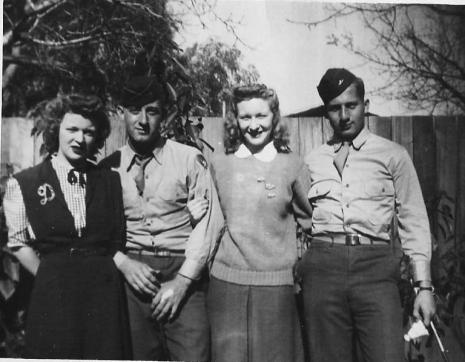
They’d been married just a short time before he was sent to China as part of the famed Flying Tigers. The thought of saying goodbye to his bride proved unbearable to Dale, so he didn’t. He slipped out of their apartment while she slept.

I hope this time Dale was able to say goodbye.

And today, I think of darling Myrt Powers. I never thought I’d describe a Marine as darling, but that exactly describes this tiny dynamo.

Though already employed as a teacher, she enlisted in the Marines following the attack on Pearl Harbor, because so many of her students told her they were worried about their fathers who were going off to war.

“I wanted to take care of my students’ dads,” she explained in “War Bonds.”

She met Walt Powers, a sailor stationed at Marine Corps Air Station Santa Barbara. They were married 71 years at the time of her death.

I last saw Myrt two years ago, in Hawaii, of all places.

It was 8:15 in the morning at the Hale Koa Hotel, an Armed Forces Recreation Center resort on Waikiki. My husband and I were preparing to make our first pilgrimage to Pearl Harbor, and stopped for coffee before the tour bus picked us up.

Myrt was grabbing a cup while waiting for Walt to finish his regular swim at the hotel pool.

“Hello, honey,” she said, reaching up to embrace me.

It was the best hug I’ve ever received from a Marine, and sadly it was the last one from Myrt.

Today, while the world remembers the more than 2,000 lives lost at Pearl Harbor, I remember five souls who endured the trauma of a world war. The lives they led in its aftermath, the families they raised, the marriages they cherished, bear witness to the resiliency of the human spirit.

While I’m sad at their passing, I’m so very glad that their stories are now a part of mine.

Contact Cindy Hval at dchval@juno.com. She is the author of “War Bonds: Love Stories From the Greatest Generation.” You can listen to her podcast “Life, Love and Raising Sons” at SpokaneTalksOnline.com. Her previous columns are available online at spokesman.com/ columnists. Follow her on Twitter at @CindyHval

War Bonds

Slinging Books and Shopping Small

DPbZt9KUEAAzyRJ[1]

Take a group of authors. Give them name badges. Turn them loose in a bookstore. That’s the recipe for Indies First held each year on Small Business Saturday.

The event brings together authors, readers, and publishers in support of independent bookstores. Authors and local celebrities volunteer at events across the country, and publishers offer special terms on books and exclusives.

I had a blast as usual at Auntie’s Bookstore. Chatting with readers, helping them find great gift ideas and catching up with these great authors is always fun.

DPgw34rUEAAG8Et[1]

Sam Ligon, Kate Lebo, Cindy Hval, Jack Nisbet

DPgimptVQAEfuSZ[1]

Stephanie Oakes, Cindy Hval, Sharma Shields

One Spokesman Review reader said she came in just to see Jack Nisbet and me, but she walked out with Shop Small shopping bag filled with books. That’s the danger and delight of hanging out in a bookstore!
Another reader stopped by to make sure I was alright. My Thanksgiving column about sometimes finding it hard to be grateful, prompted her concern.

At the end of my shift I rewarded myself with a copy of the delightful anthology Pie & Whiskey: Writers under the Influence of Butter & Booze. My husband and I are reading it aloud every night before bed. It’s a hoot. Honestly, Sam Ligon’s whiskey cocktail recipes are my favorite part. Some drink recipes call for things like a soul, a pistol, a Bible and a sword, but you can still make the drinks without them.

Indies First offers a great way to get customers into independent bookstores, but it’s even more important to support local businesses and Shop Small all year long.

After all, Santa does!

23843069_1602183639820257_6274803145774913316_n[1]


War Bonds

Every Time We Say Goodbye

72.

That’s how many individuals made the final cut of War Bonds: Love Stories from the Greatest Generation.

24.

That’s how many people died before the book went to print.

19.

That’s how many goodbyes I’ve had to say since War Bonds 2015 publication.

In the past month, Barbara Anderson and Dale Eastburg passed away.

Barbara’s loss hit me especially hard. The Anderson’s story is featured in chapter 28 “Keeping Time.” They  met in 1945 when Louis came into her father’s jewelry store to get his watch repaired. When War Bonds was published, he still wore the watch and it still kept time.

The Love Lesson Barbara shared at the end of the chapter resonates.

“You can’t take back bad words. We’ve never said one thing we’ve had to take back.”

.facebook_1510783440734

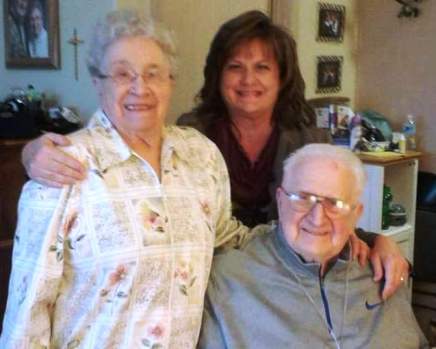
This photo was taken 11/16/16, the last time I saw Barbara. She wanted more signed copies of the book to send to a family that was grieving the loss of a wife/mom/grandma.

She always thought of others. When I left she insisted I on giving me a water glass from Air Force One. Her late grandson had served as pilot for President Obama.

She also always asked if I needed to use the restroom before I left!

Her spirit and generosity are simply irreplaceable and I worry how Louie will do without his bride.

Dale and Eva Eastburg had been married for 75 years when he died earlier this month. When last I spoke with them, they were still going to the gym regularly!

009

The title of their chapter seems especially poignant today. It’s titled “Hard to Say Goodbye.”

And it is. It really is.