Columns, War Bonds

Keeping my promise: A personal Pearl Harbor reflection

This week The Spokesman Review published a special keepsake section commemorating the 75th anniversary of the attack on Pearl Harbor. For the past nine years, I’ve been interviewing Pearl Harbor survivors for newspaper and was pleased to have many of those stories included.

In addition I wrote the following piece describing what it meant for me to visit the place I’d written about so often.

Never forget.

Cindy Hval, who wrote “War Bonds: Love Stories From the Greatest Generation,” visited Pearl Harbor in March. She explored places she had learned about in nine years of interviewing Pearl Harbor survivors.

Stretching out, I pressed my cheek into the hot sand, its gritty heat almost too much to bear. Closing my eyes, I imagined the shriek of airplane engines and the spitting sound of machine gun fire hitting the beach, while the air around me burned.

I covered my head with my arms, and could almost hear the whistling sound of bullets whizzing past my ear.

A shadow loomed. “Are you okay?” my husband asked.

Slowly, I sat up and scooted back onto my brightly-colored beach towel.

“Just thinking about Nick,” I said, while I slipped on my sunglasses.

The beauty of being married 30 years is I didn’t have to explain what I meant.

Derek and I visited Oahu in March to celebrate our anniversary, but the trip was part pilgrimage for me. After nine years of interviewing Pearl Harbor survivors, I was at last visiting the place I’d written about so often.

Here on Waikiki, I was just 12 miles away from Hickham Field where Nick Gaynos almost lost his life on Dec. 7, 1941.
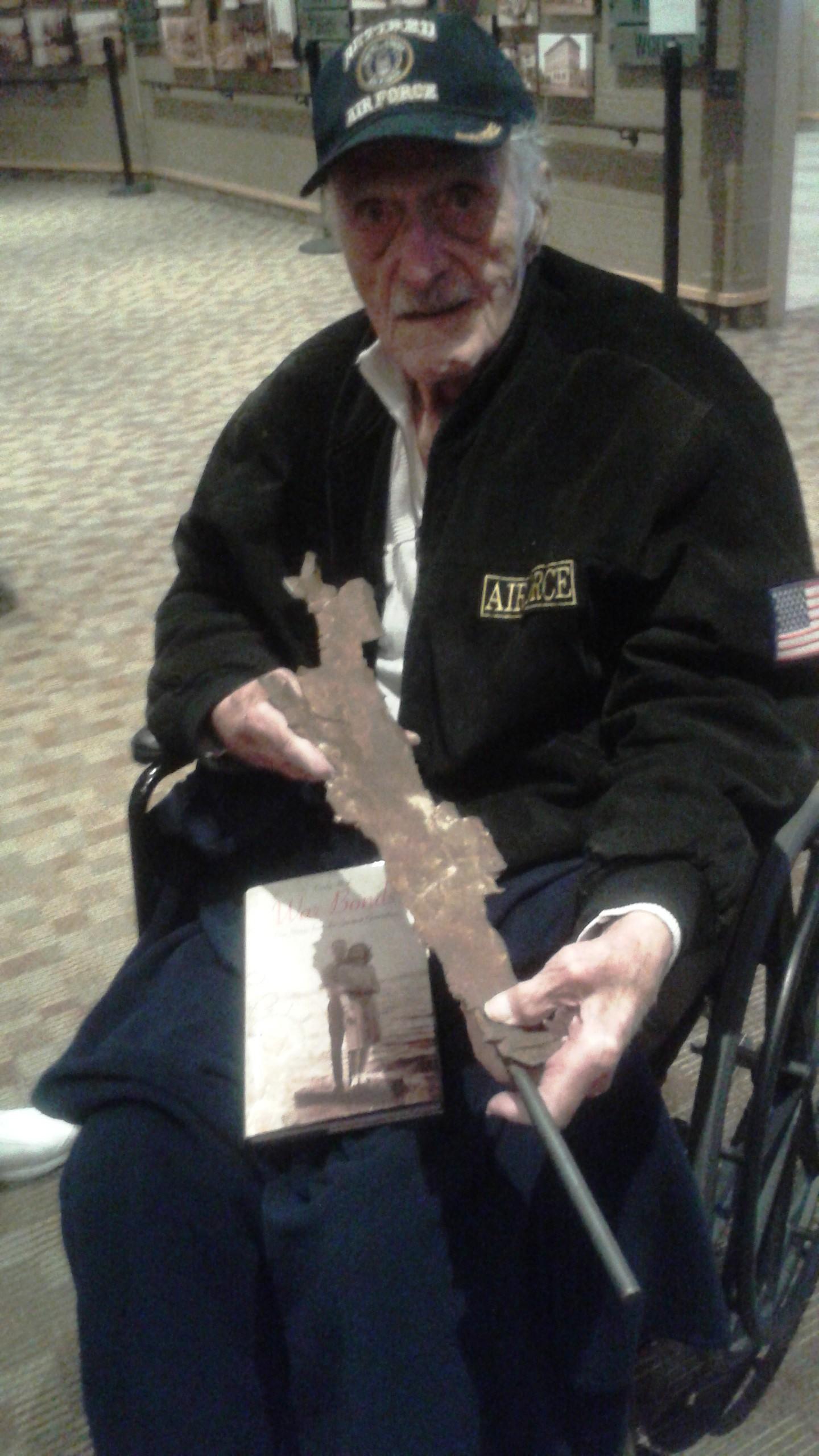
Nick Gaynos holding the piece of shrapnel that landed near him while under fire during the attack on Pearl Harbor 75 years ago. Gaynos died 20 days after this March 11, 2015, photograph. (Courtesy Cindy Hval)

During the attack on Pearl Harbor, Nick had been running toward his duty station when a Japanese pilot targeted him. He’d told me of looking up as he ran and seeing the grin on the pilot’s face as he fired at him.

Nick hit the beach and covered his head with his arms as the bullets flew. When he got up he discovered a large piece of shrapnel next to him.

“I grabbed it,” he said. “It was still hot from the explosion.”

When my book “War Bonds: Love Stories From the Greatest Generation” was released, Nick attended a reading at the Coeur d’Alene Public Library in March 2015. He brought that piece of shrapnel with him. It was jagged and more than 2 feet long. He died a few weeks later.

Now, on the island that had been so devastated by the horrific attack, I carried his memories with me as well as those of Warren and Betty Schott. The Schotts had quarters on Ford Island and were eyewitnesses to the attack.

When Derek and I walked through the entrance of the Pearl Harbor Visitor Center, I wanted nothing more than to talk to Betty, to tell her I was here. But Betty passed away in July 2015.

At the center, we watched a short film featuring actual footage of the attack. A scene of sailors and soldiers pulling the wounded and dead from the harbor made me gasp. That’s what Warren had done in the aftermath – it was the one thing he didn’t want to discuss with me over the course of many interviews. It was the only thing he refused to speak of with his wife of 76 years. Now, watching the footage through tear-filled eyes, I finally understood why he was loath to speak of it.

That horror was also all too real for my friend Ray Daves. During the attack, he hustled to a rooftop and handed ammo to two sailors who were manning a .30-caliber machine gun. He had his own brush with death when a Japanese plane exploded 20 feet from that rooftop before crashing into the sea below. His left hand was lacerated by shrapnel.

Like Warren Schott, Ray spent time pulling wounded men from the harbor, his blood mingling with the red splashes in the water around him. In his biography, “Radioman,” he described the bodies and body parts floating in the harbor. “We had to push them aside to get to the wounded,” he said.

Despite those gruesome memories, what really choked him up was recalling the bombing of the USS Arizona.

“My friend George Maybee was on the Arizona,” Ray said. “We’d gone through radio school together. Sat beside each other every day and were bunkmates at night.”

Ray Daves

“My friend George Maybee was on the Arizona,” Ray said. “We’d gone through radio school together. Sat beside each other every day and were bunkmates at night.”

He watched as the Arizona burst into a huge fireball. He knew his friend was gone.

Over the years, Ray and I grew close. He reminded me so much of my dad. They were both from Arkansas and had joined the military seeking a way out of the poverty of the rural south. Both had tender hearts and shared a wickedly funny sense of humor.

The last time I spoke to Ray before his June 2011 death, I told him I longed to visit Pearl Harbor.

“George is there,” he said, his eyes filling.

“I’ll look for his name,” I said. “I’ll say a prayer.”

Ray took my hand. “You do that, sweetheart.”

Five years later, I boarded the boat that took us to the USS Arizona. As we stepped from the boat onto the memorial, the throng of tourists quieted. The only sound was the snapping of the flag in the wind and the clicking of cameras.

We were somber with the knowledge that we were standing on the final resting place of 1,102 of the 1,177 sailors and Marines killed on the Arizona.

1913753_1047614618610498_5611130893995793483_n[1]A rainbow of undulating color in the water below caught my eye. Some 500,000 gallons of oil are still slowly seeping out of the ship’s submerged wreckage, and it continues to spill up to nine quarts into the harbor each day.

Slowly, I entered the shrine. A marble wall bearing the names of those entombed beneath us stretched out behind a velvet rope.

So. Many. Names.

Overwhelmed, I looked at Derek. “I’ll never find him,” I whispered.

The day had been overcast, but suddenly a shaft of sunlight illuminated the marble.

“There,” Derek said. “There he is – G.F. Maybee.”
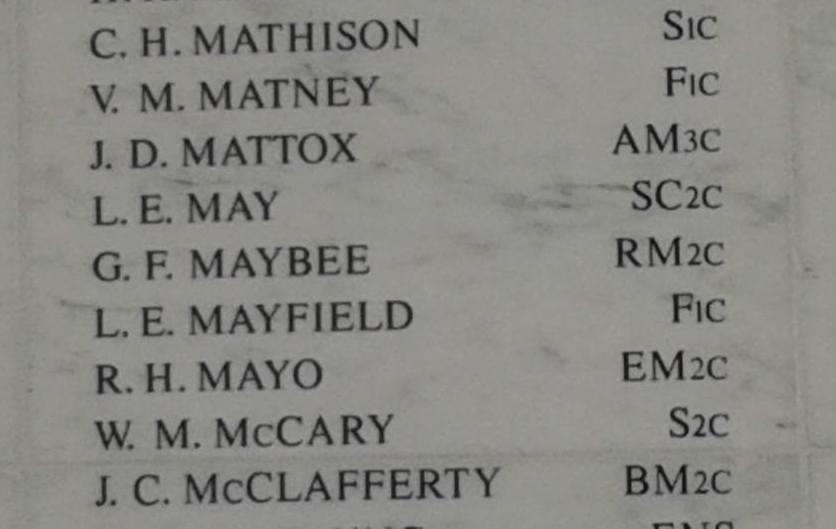
George Frederick Maybee was a radioman, second class, aboard the USS Arizona when the battleship was bombed on Dec. 7, 1941, at Pearl Habor. Maybee, whose name is etched in a marble wall at the Arizona memorial, had been a friend of Ray Daves, a Pearl Harbor survivor from Deer Park who died in 2011. (Courtesy Cindy Hval)

Bowing my head, I wept for the sailor I’d never met and for my friend who knew and loved him.

I hope that somehow Ray knows I kept my promise.

George Maybee hasn’t been forgotten. Neither has Ray Daves.


Columns

Shopping small has big impact

By 10:15 Saturday morning, the line at the counter at Auntie’s Bookstore was several people deep. Shoppers juggled stacks of books while reaching for their wallets. A toddler clutched a board book, unwilling to part with her find even for the minute it took to ring it up. Teens milled around in small herds, jostling each other in the aisles, while parents pondered coloring books and consulted Christmas lists.

As a reader and an author, nothing makes me happier than spending time with book lovers. These are my people – my tribe, and in their company surrounded by bookshelves, I am happiest.

While I love to browse at Auntie’s, I wasn’t there to shop, but to take a shift as an honorary bookseller during Small Business Saturday. The day is also a designated Indies First event. Indies First, a collaboration between authors, publishers, retailers and readers, celebrates independent bookstores and local communities. Speaking of local, this national movement was launched by author Sherman Alexie, who was born and raised on the Spokane Indian Reservation.

I have a vested interest in the success of bookstores, and as the wife of a small-business owner, I’m passionate about seeing locally owned companies succeed. I’ve helped out at my husband’s store on occasion, but I have to admit I’m better at selling books than cutting tools. I may not know a drill bit from a tap or a reamer, but I do know mysteries from memoirs.

In addition to interacting with customers, I got to hang out with some pretty cool local authors. When I arrived Jess Walter was already there, and he’d brought donuts a la “Citizen Vince.” Walter fans will remember the protagonist in that novel was in the witness protection program and worked at a Spokane donut shop.

Walter dispensed donuts, recommended books and offered writing advice to an aspiring writer.

“Writing is more like a religion than a career,” he said.

And writers around the world whispered, Amen.

Author Bruce Holbert joined us, and when I mentioned how much I’d enjoyed, “The Mountains and the Fathers: Growing Up in the Big Dry,” by Joe Wilkins, he said, “Oh yeah, I know Joe.”

Turns out he also knows Craig Johnson, author of the Longmire books; the books on which my husband’s favorite television show is based.

I admit to having a geeked-out, fan girl moment or two, but then Shawn Vestal showed up.

I’m sure Shawn knows some awesome authors too, but we mainly discussed surviving a post-election/post-apocalypse Thanksgiving meal – which could be the basis for a hair-raising short story. Stay tuned.

When a customer asked if there was a coffee shop nearby, it was fun to be able to point them to Madeleine’s and Atticus, both nearby, while there wasn’t a corporate coffee shop in sight.

After my stint at bookselling ended, I headed out for my own shopping spree. I stopped to take a photo of the Clocktower against the background of Saturday’s blue skies, when a scraping sound jarred my ears.

I caught a movement out of the corner of my eye and watched in amazement as an elderly woman pulled out of the parking lot and onto the sidewalk! Pedestrians hollered and jumped out of the way as she slowly proceeded down the sidewalk along Spokane Falls Boulevard.

Sometimes shopping is scary, but I made it safely to Boo Radley’s where I purchased some Spokane-themed items to send to my son in Columbus, Ohio. When the clerk rang up my purchases she said, “By the way, I really enjoyed your nonfiction panel at Get Lit this year.”

Shopping small put a smile on my face. It makes business owners happy, too.

John Waite, owner of Auntie’s Bookstore and Merlyn’s Comics and Games, said of Saturday’s event, “We were up from last year at both Auntie’s and Merlyn’s.”

While it’s great to have a day dedicated to supporting local businesses that help create jobs and boost the economy, shopping at small businesses can have a far greater impact if we patronize them more than once a year.

“I can’t stress enough what it means to our local economy and local jobs,” said Waite.

That sounds like a big reason to shop small all year long.

Contact Cindy Hval at dchval@juno.com. She is the author of “War Bonds: Love Stories From the Greatest Generation.” You can listen to her podcast “Life, Love and Raising Sons” at SpokaneTalksOnline.com. Her previous columns are available online at spokesman.com/ columnists. Follow her on Twitter at @CindyHval

War Bonds

Indies First a boon to authors and booksellers


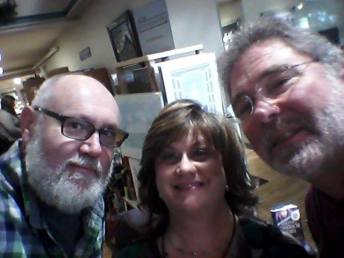
This weekend during Small Business Saturday, I got to spend a few hours as an honorary bookseller at Auntie’s Bookstore in Spokane. Saturday was a designated Indies First event.

cxvb-souoaawwly1


Indies First is a collaboration between authors, publishers, retailers, and readers, and it celebrates independent bookstores and local communities. Speaking of local, this national movement was launched by author Sherman Alexie, who was born and raised on the Spokane Indian Reservation.

Authors/honorary booksellers signed copies of their books, visited with shoppers and offered book recommendations. I was thrilled to see scores of shoppers buying stacks of books!

15181562_1237250082980283_256605854000626170_n2

Plus I got to hang out with brilliant authors like Jess Walter.

My shift also overlapped with Bruce Holbert and Shawn Vestal.

15241802_10154706250234720_4392236594074648283_n1

Bottom line? When you support your local bookstores, everyone wins.

War Bonds

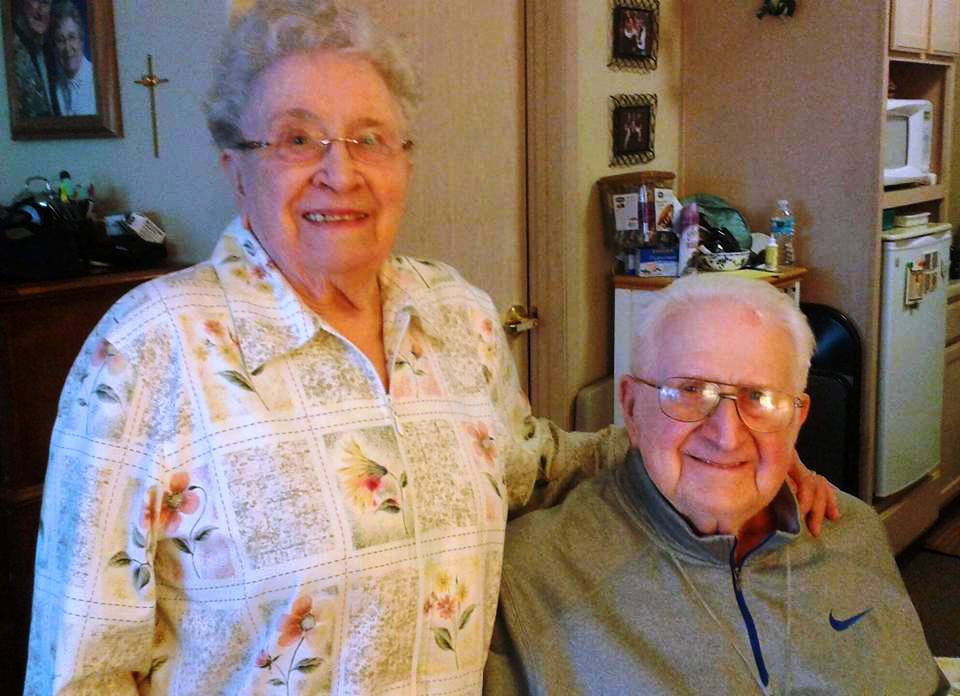
Thankful for 70 years of devotion

15027565_1226709157367709_2378719597193119110_n1

I got a call last week from Barbara Anderson. She wanted to let me know that her husband of 70 years had suffered a stroke and that they were now in an assisted living facility. She also told me that her grandson-in-law, Col. David Banholzer had passed away on November 4 at age 47. She wanted to send some copies of War Bonds to his family.

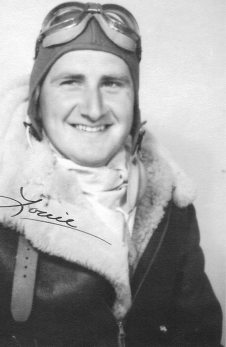
Banholzer was the commander of Air Force One until cancer forced his early retirement. He and Louis loved to talk about flying. As told in chapter 28 of War Bonds, Louis was a B-17 pilot during WWll.


.War Bonds Louie AndersonI was so happy to visit with this dear couple. Louis’ speech has been somewhat affected by the stroke and his vision is poor. But he knew me and gave me his characteristic grin. His blue eyes still sparkle and he kept my hand firmly tucked in his.

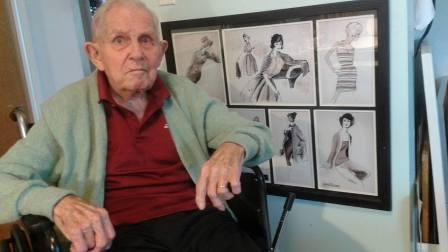
As I prepared to leave, Barbara insisted on giving me some mementos from Banholzer’s time on Air Force One.

20161116_124255

But for me the true gift was more time and one more visit with these shining examples from the Greatest Generation.

15055636_1226709130701045_8102769455675943025_n2

Columns

Family, friends, foes and Facebook: Election 2016

There’s a reason I keep my Facebook page politics-free, and it has little to do with being a journalist.

I don’t like conflict. I don’t like name-calling, and I really, really don’t like intolerance and ignorance.

Sadly, there’s nothing like a contentious election season to bring out all of the above. But I purposely keep my political views to myself. In fact, for someone who’s written a column about her underwear, I’m actually an intensely private person. Imagine my surprise when I found myself unfriended by a family member following the election.

My apparent offense? I “liked” a comment another family member had left that repudiated a label often used during passionate political posts. The label? “Privileged white male.” The PWM in question explained why he was tired of his opinions being dismissed with this label and I liked his explanation.

Bam. Apparently, hitting the like button on that comment exceeded her tolerance level. Keep in mind I’d never disagreed or argued with anything this person had posted.

I’m not alone in my experience. A friend was banished from Facebook friendship by a family member because he admitted he’d left the presidential spot blank on his ballot. He couldn’t stomach either option, so he did what he felt was honorable.

He was accused of being a sexist, racist jerk and told that he should … well, I can’t print the rest of the rant in a family newspaper.

When imagined incorrect interpretations are applied to Facebook likes, when rage and rhetoric rule the day, how then can our country and our community move forward? Is it possible to stand and fight for causes and people we’re passionate about without dipping buckets into wells of hatred and splattering others with venom and vitriol?

I’d like to think it is. Perhaps part of the solution is getting to know the “other” among us.

In the weeks preceding the election I had coffee with a friend who said she honestly didn’t know anyone who would vote for Donald Trump. She was joyfully planning a small voting victory party for election night.

That same week I had lunch with a friend who said she didn’t know anyone who would actually vote for Hillary Clinton. “Of course, that doesn’t mean she won’t win,” my friend said. “It’s just that I can’t imagine anyone I know choosing her.”

My reticence renders me like Switzerland, so both of these friends felt comfortable tossing around labels about people who would vote for the candidates they opposed.

“Underclass, undereducated, sexist bigots,” my liberal friend opined.

“Sensitive snowflakes, elitists and whiny millennials,” my conservative friend asserted.

And therein lays the problem. The minute we apply a blanket label to anyone who may vote differently from us, we’ve ensured our bubble is intact. We have become so comfortable in our social and political isolation that we have lost touch with the wider world.

This past week I’ve seen an outpouring of grieving and gloating on social media, and while the hateful rhetoric of some shocked and saddened me, I was relieved that my closest circle of friends had more measured thoughtful reactions.

Whether frightened or hopeful about the next few years, I hope the path forward will include listening and learning from those who differ from us. Hatred can never be part of the solution.

Violence won’t beget tolerance or peace. Rage doesn’t lead to enlightenment.

Our children are watching. They’re listening to our words. They’re reading our posts on social media. If we truly want to create a safe world for them to thrive in, we owe it to them to forge ahead with courage and to take every opportunity to choose love.

The words of Martin Luther King Jr. have never been more apt, “I have decided to stick with love. Hate is too great a burden to bear.”

Contact Cindy Hval at dchval@juno.com. She is the author of “War Bonds: Love Stories From the Greatest Generation.” You can listen to her podcast “Life, Love and Raising Sons” at SpokaneTalksOnline.com. Her previous columns are available online at spokesman.com/ columnists. Follow her on Twitter at @CindyHval.

War Bonds

Taking home a memory: Jack Rogers’ last exhibition

14937478_1215340578504567_4292611546806285626_n1

In 1943, at 19, Jack Rogers joined the Army. He was assigned to the amphibious engineers unit and spent 3 years on active duty, most of it in the Philippines.

“Our whole company was made up of kids– dressed up as soldiers,” he said. “At 19 I was in charge of 55 men.” He shrugged. “You grew into the job.”

After the war he became a commercial artist and a founding member of the Spokane Watercolor Society. He started the art department at Spokane Falls Community College in 1963 and taught there for 26 years.

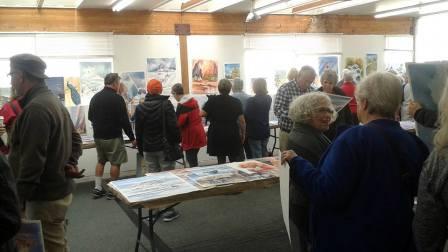
On Saturday, Rogers, 93, had what will likely be his final art show/sale.

15036504_1222862637752361_6274636252733593314_n1

People had lined up before the doors even opened. Anxious to take home a signed painting. Anxious to thank Rogers for his service to our country. Anxious to thank him for his devotion to teaching and to art.

15036231_1222862601085698_6863558846864460798_n1

He and Fran, his wife of 70 years, greeted the crowd. When asked the reason for the show Rogers said. “I was given a gift and I want to share it,” he said. “Why put it all back in the drawers? I’m hoping people will take home a memory.”

My memories of Jack Rogers exist in more than just watercolors. They exist in hours spent interviewing him. They exist in War Bonds: Love Stories From the Greatest Generation. Time spent with he and Fran is precious to me, now and I was glad to see the community turn out to shake his hand and to tell him thank you.

War Bonds

Sharing space with C.S. Lewis

war-bonds-on-bookshelf

A friend posted this picture on Facebook the other day. His home had been badly damaged in a fire and the remodel is almost complete.

He just got his new bookshelves in his library and is happily placing his collection on the shelves.

So. There’s War Bonds nestled between The Screwtape Letters and The Inspirational Writings of C. S. Lewis.

As far as bookshelf real estate goes, nothing could make me happier.

A spot on the New York Times Bestseller List might be nice. A Pulitzer Prize? Well, that would be swell. But for now, sharing space with one of my all-time favorite authors feels mighty fine!

How do you arrange your bookshelves? By author? Subject? Color? Favorites? Genre?

War Bonds

Nostalgia? There’s an app for that.

Hungry for history? In love with the past?
Now you can indulge that interest anytime and anywhere.
My friends at Nostalgia Magazine recently launched an app available for android and iOS devices.

They’ve also included an excerpt from War Bonds: Love Stories from the Greatest Generation.

“The Luck of the Draw” can be accessed via the app or the website.

vi-shipman-and-fenton-ross-roskelley-d

Happy scrolling!


Columns, War Bonds

Of Boys Lost and Boys Found

Spoiler alert: This week’s column has a happy ending. I wish all stories about lost children could end the same.

Stepping lively, I dodged traffic cones dotting the street, thankful the end of roadwork season is almost here.

I savored the glorious October sun, knowing my regular treks around the neighborhood will soon be replaced by boring indoor workouts at the gym.

Adjusting my headphones, I cranked up my walking music and my pace. A tug on my arm startled me. I’d been so focused on boosting my heart rate, I had failed to notice the approach of two small boys.

“Do you know where Standard Street is?” one of them asked. “We’re lost.”

If this scenario sounds familiar to readers, I’m not surprised. I seem to collect lost boys the way other folks collect license plates or trading cards. From a tiny autistic boy who’d escaped from his house to play on a busy street one Sunday morning, to Ricky who got confused when he got off the school bus one afternoon, I seem to be a lost-boy magnet. This time there were two of them looking at me with anxious eyes.

I’m embarrassed to admit my route is so familiar I don’t pay attention to street names.

“I think we’re on Standard,” I replied. “But there’s a sign on the corner – let’s check.”

We approached the sign and verified we were on Standard, but the boys weren’t reassured.

“Actually, we need to know where Lyons Street is,” the spokesboy said.

“What’s your address?” I asked.

Two pairs of eyes stared at me blankly.

“I don’t know it,” the smaller boy said.

“Me either,” his friend admitted. “But it’s apartments.”

Taking a deep breath, I asked them their names and ages.

“I’m Marc with a ‘c,’ and I’m 9,” the taller boy said.

“I’m Luis, and I’m 8,” his friend replied.

I asked them how they got lost.

“Well, we got off the bus at a friend’s house after school,” Marc said. “But he couldn’t play, so we decided to walk home, but we don’t really know where we are now.”

“What school do you go to?” I asked.

“Linwood Elementary,” he replied.

Linwood is about 2 miles away from my Shiloh Hills neighborhood and across bustling Division Street. They couldn’t remember where they’d gotten off the bus.

As we chatted, we kept walking because I assured them that Lyons was north of Standard, and if we kept walking north hopefully they would be able to spot their apartment building.

“How about I call your parents?” I offered as we walked. “Maybe one of them can come pick you up.”

It was 4:20 and the boys said the bus usually had them home by 3:30.

“We’ve probably been walking for HOURS,” opined Luis, who didn’t know his phone number.

Marc said his mom was home and gave me her number. I called repeatedly from my cellphone as we walked, but no one answered.

“She has MS and sometimes she doesn’t answer the phone,” he said. “Especially if she doesn’t know who’s calling.”

By this time we were almost to my house, and I estimated they still had at least a half-mile to walk.

“If I give you guys a ride do you think you could show me your apartment building?” I asked.

“Yes!” said Marc.

“My legs are really tired,” Luis admitted.

I offered them some water, but they declined.

“I’d like some crackers if you have some,” said Luis.

I dashed inside to grab my purse and discovered we were out of crackers.

“What are you doing?” my son, Sam, asked.

“Taking some lost boys home,” I replied.

“What? Again!?” he said, shaking his head.

The boys buckled up and Marc opined that my car was similar to his mom’s. He knew the make and model of her car. It would have been more helpful if he knew her address.

However, as we approached the neighborhood park, they got excited.

“Hey! I know where we are now!” Marc yelled. “We’re almost home!”

Sure enough, he spotted their apartment building and I dropped them off.

When I wrote about my afternoon adventure on Facebook, a friend said, “I hope you gave them a lecture about getting in cars with strangers once you safely delivered them home!”

Honestly, I was just so relieved I’d been able to get them home; I never thought to scold them. I did lecture them about learning their addresses.

“You need to know the name of the apartment complex and the street address,” I’d chided.

They’d both just shrugged and nodded.

My relief at the happy outcome gave way to dismay. I wished I’d scolded them about getting off the school bus at someone else’s house without first making sure they had permission. I was horrified that they seemed to think it was acceptable to go to a stranger’s house and then get into her car.

They were so trusting and sweet and had absolute confidence in my ability to get them home. And that’s what really made me sad.

Because I’d like to think we live in a world where grown-ups are trustworthy. Where parents have confidence that when their children are out of their sight, other adults are watching out for them.

And mostly, I want to believe that all lost boys return home safe and sound.

Contact Cindy Hval at dchval@juno.com. She is the author of “War Bonds: Love Stories From the Greatest Generation.” You can listen to her podcast “Life, Love and Raising Sons” at SpokaneTalksOnline.com. Her previous columns are available online at spokesman.com/ columnists. Follow her on Twitter at @CindyHval.