All Write, Columns

No more goodbyes for the Gleesings

This time, he had to wait for her—14 long years.

Her wait for him in 1945 may have been shorter, but it was terrifying.

When I interviewed Jerry and Nancy Gleesing in March 2010, they were looking forward to celebrating their 66th anniversary in June.

They’d met in LaMoure, North Dakota, in 1940. Four years later, the high school sweethearts married.

They used Jerry’s two-week leave from the Army Air Force for their honeymoon. When he received orders to deploy to Italy as a flight officer with the 15th Air Force, 459th Bomb Group, Nancy was expecting their first child.

On Jan. 15, 1945, his B-24 was shot down, and he and his crew bailed out over Hungary. It was only his second mission.

 During the interview, Jerry laughed as he described his predicament.

“We never learned how to bail out, just how to fly the plane!”

But he grew somber when recalling how locals armed with pickaxes and shovels quickly surrounded him and his crew.

“I thought they were going to kill us,” he said.

Instead, the captives were handed over to the Germans and taken to a prisoner of war camp in Moosburg, Germany.

Meanwhile, back in North Dakota, Nancy worried.

“The letters stopped on Jan. 5,” she said.

For 10 days, there was no word. Then, a telegram arrived, reporting Jerry as missing in action.

As he was being processed at the POW camp, a guard pointed to his wedding ring and motioned for him to remove it. And that’s where Jerry drew the line.

“You get to the point where the initial fear is gone,” he said. “Whatever happens, happens. I didn’t give up my wedding ring. I said, ‘I vowed to never take it off. I’m not taking it off.’”

The guard let him keep it.

In February 1945, Nancy gave birth to a daughter she wasn’t sure her husband would get to meet. But in April, after 3 ½ months as a prisoner of war, the camp at Moosburg was liberated.

“We saw the tanks come over the hill,” Jerry recalled. “Everyone was whooping and hollering. Then the American flag was raised, and it was dead silent.” His voice broke. “It was like coming home.”

And come home he did, just in time to celebrate their first wedding anniversary. He and Nancy raised seven children together.

Their story ran in the newspaper on March 25, 2010. A month later, Jerry died suddenly.

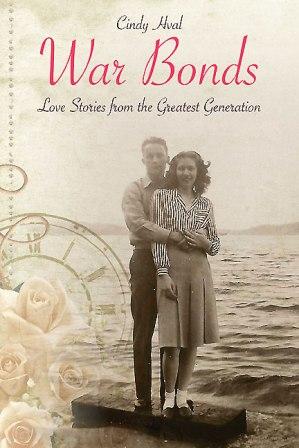
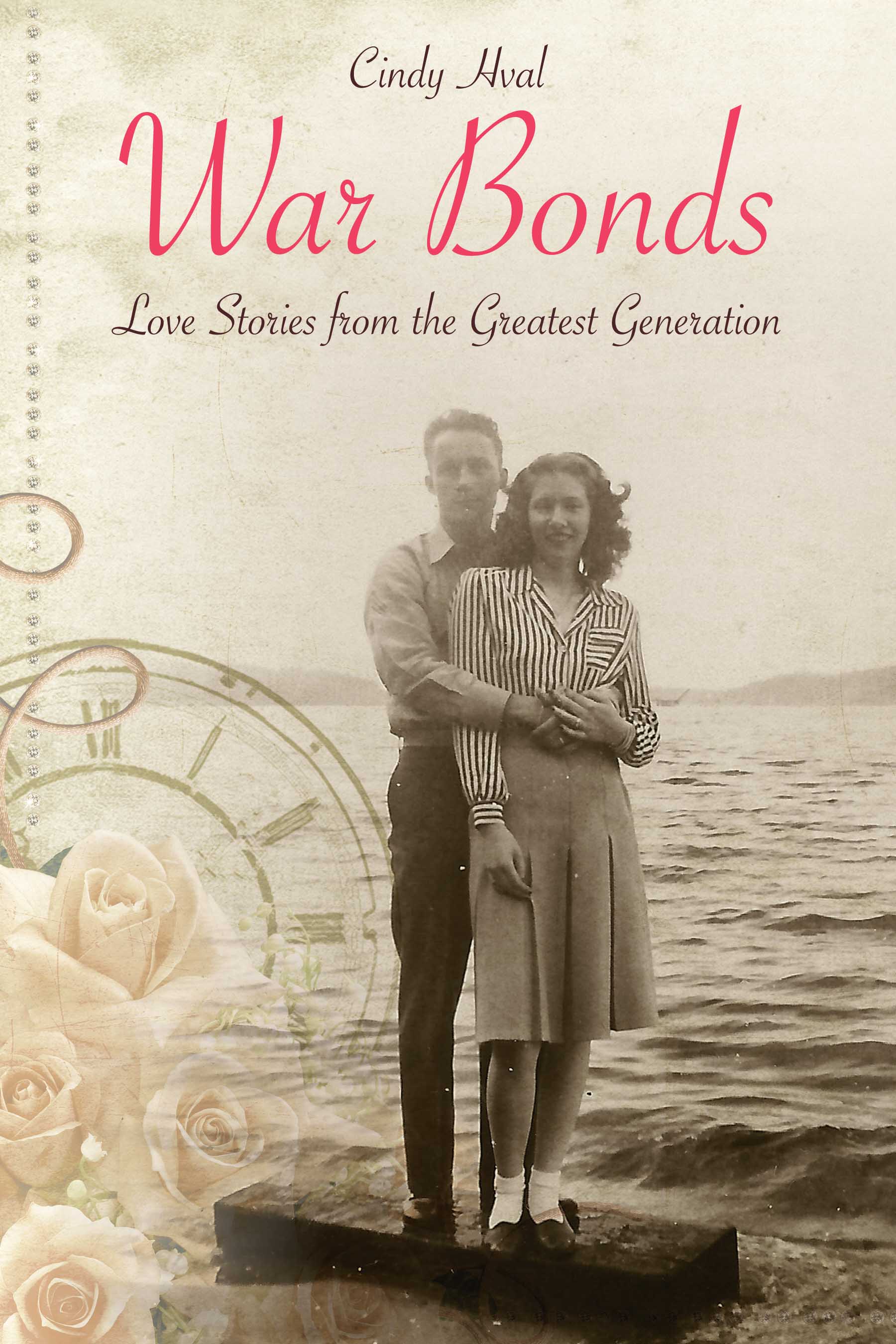
They didn’t get to celebrate their 66th anniversary, but their story stayed with me. In fact, it became chapter one of “War Bonds: Love Stories from the Greatest Generation.”

Since its 2015 publication, I’ve done approximately 100 reading, signing and speaking events and I’ve shared the Gleesings’ story at most of them.

No matter how many times I’ve told it, I can’t get through a reading without tearing up when I share Jerry’s reaction to seeing the American flag raised in that POW camp.

Their chapter ends with him looking at the wedding band he’d refused to remove.

 “It’s still there,” he said. “I’ve never taken it off.”

On Dec. 1, 2024, Nancy died at the age of 100, and his long wait ended.

Something tells me this reunion was even better than the one they had in 1945.

Following Jerry’s death, Nancy had worn his wedding ring on a chain around her neck. I like to think that when Jerry reached out to welcome her, she took his hand and slipped that thin gold band back where it belonged.
All Write

“I just want to look at you.”

Eva was such a delight!

Out of all the couples I featured in “War Bonds” I believe only one or two widows remain.

From Chapter 14: Hard to Say Goodbye

Eva smiled, “Sometimes he tells me, ‘Come here and sit down a minute.’ When I ask him why, he says, ‘Cause I just want to look at you.'”

I’m happy to know there are no more goodbyes for them.

All Write

War Bonds Reaches New Zealand

I got a note from my publisher this morning forwarding me this message from a reader in New Zealand. Still in awe that “War Bonds” is being read around the world!

“Could you please pass on my thanks to Mrs. Hval for this book?
It was a privilege to read the stories of ordinary couples living through and doing extraordinary things.

My late father was an ordinary soldier in WWII who fortunately left a memoir (which I didn’t know about till after his death) and together with my mother they left behind their wartime letters which have been wonderful to read.I wonder if she knows about the US Marine War Memorial here in New Zealand at Queen Elizabeth Park, Paraparaumu, Wellington. The Marines were based there, training, before going to fight in the Pacific. Sadly ten of them drowned in a landing practice.”

Yours sincerely,
Julie

All Write

What Better Way to Say I Love You?

My publisher tweeted this sweet blurb.

Happy Valentine’s Day! Be inspired by the romantic love stories of America’s greatest generation in ‘War Bonds’ by @CindyHval.

🛒Order -> https://t.co/CKQZunJl8N
#ww2#historyhttps://t.co/C04PN4TnTM

All Write, Columns, War Bonds

Diminished by their loss, bolstered by their legacy

On a chilly November afternoon, I said goodbye to another veteran featured in my book “War Bonds: Love Stories From the Greatest Generation.”

James Loer died on Oct. 17. His wife, Helen, preceded him in death four years earlier.

Just as I’d done at her service, I read their chapter “From Sailor to Preacher” at his funeral.

The author at James Loer’s funeral, November 2020.

Theirs was a simple story of plain people who worked hard and served every community they lived in with quiet devotion. As James said in our first interview, “I can tell you right now this isn’t going to be romantic!”

Indeed, romantic might be too flowery a word to describe their lifelong bond. They married in 1948 in a small ceremony at the home of their pastor while James was attending Bible school.

He’d felt called to the ministry after surviving several harrowing skirmishes when he served in the Navy during World War II. The 13 battle stars on the cap he always wore told more of story than James liked to discuss.

During his funeral, the pastor, used a flag, a hammer, a Bible, and a seed to tell James’ story. The flag for the country he loved, the hammer for the work he did as a carpenter, the Bible for the God he served and the seed that represented his farmer’s heart, as well as all that he’d sown into lives during his many years as a pastor.

At 96, James Billy Loer had lived a full, rich life, and longed to be reunited with his bride.

And then, on the first day of the New Year, another “War Bonds” reunion took place.

Zelma Garinger joined her beloved husband of 65 years, David, who passed away in 2014, before “War Bonds” was published.

Unlike James Loer, David Garinger was an avowed romantic.

In fact, this is how he described the first time he kissed Zelma on Valentine’s Day 1947.

“I had my arm around Zelma, sitting close. I smelled her sweetness. Her dark shining hair and sparkling blue eyes worked their magic on me. Our lips met for the very first time … it seemed so right. Truly she was my Valentine.”

David had served in the Marine Corps during World War II, and after returning home and marrying Zelma, he became a pastor, and later a master carpenter and contractor. He loved art, music, poetry and most of all, Zelma. Each morning, he’d deliver a cup of coffee to her bedside.

The years without him had been long. Zelma had chronic respiratory issues and suffered with chronic back pain, but she still made it to a reading of “War Bonds” at the South Hill Library in 2015.

Zelma Garinger with the author, 2015

After Zelma’s death, her daughter, Janice, wrote me a beautiful letter, sharing memories of her mom.

Zelma had returned to college and earned a teaching degree when Becky, her youngest daughter was little.

Janice wrote, “During hard times teaching children of migrant workers in California’s Central Valley, she shared with us that all her efforts were worth it if she could make a difference in the life of even one child. She was always more than just their teacher. She prayed for them and quietly reached out when there was need. Many books and supplies were personally purchased to enrich her students.

We vividly remember a tiny first-grader who was rescued many nights from her alcoholic mother, then put to bed in our parents’ home, so she could attend school the next day.”

Reading Janice’s memories of Zelma and hearing the pastor speak of James Loer’s life of service at his funeral, brought home just how much we lose as a society when another member of the Greatest Generation leaves us.

The lives they led filled with hard work, hope, courage and sacrifice are simply irreplaceable. We would do well to honor their memories by following the examples they set.

I think the inscription on James’ headstone beautifully sums up both he and Zelma’s lives.

“Life’s work well done.”

All Write, War Bonds

Last ‘War Bonds’-featured couple die 18 days apart

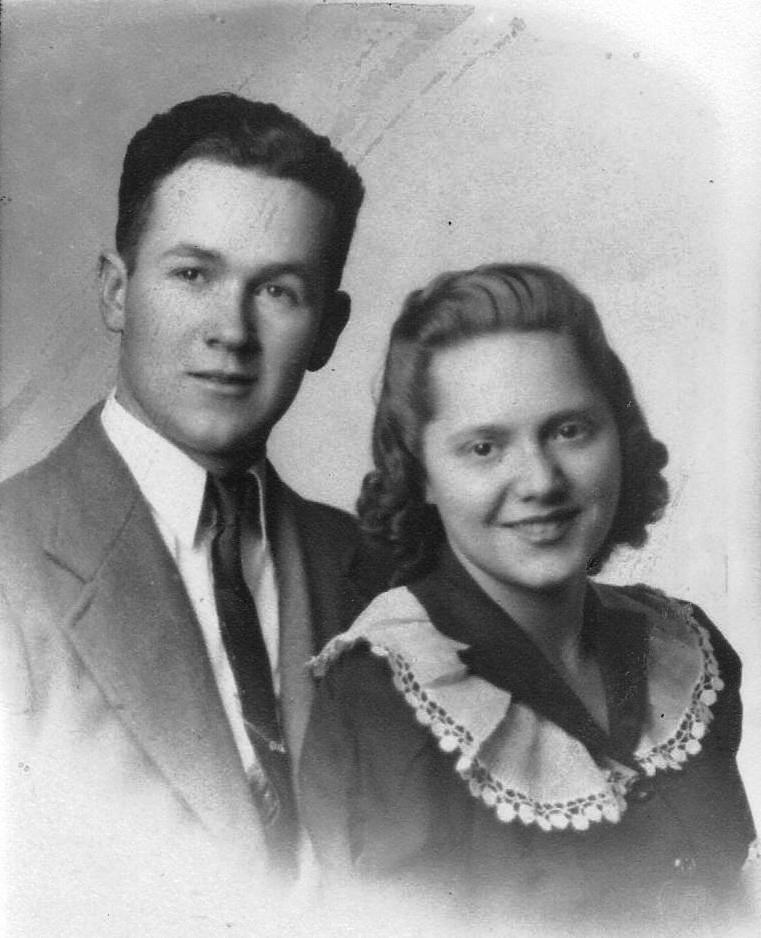
Mitson wedding photo low res

He thought she was a skinny kid, and he didn’t want to be seen with her.

She thought he was “just another boy.”

But first impressions aren’t always lasting. On July 11, Charlie and Mable Mitson would have celebrated their 78th wedding anniversary – and for all we know they did, just not here on this earth.

Mable died on June 3 and Charlie followed 18 days later on June 21. Finally, Mable got to go somewhere new before her husband. After all, she’d followed him through 22 moves, during his many years of military service.

I first met the Mitsons in 2010 when I featured them in my “Love Story” series for The Spokesman Review. I followed up with them a few years later, when I included their story in my book “War Bonds: Love Stories from the Greatest Generation.”

Visiting them in their South Hill home was always a delight. They were both quick with a quip, finishing each other’s stories, and teasing each other when one remembered something differently.

Charlie sometimes deferred to her because he said, “she’s older than me.”

Mable was born in July 1924, Charlie in September.

They met at church in Coeur d’ Alene, and when those first impressions wore off, they quickly became a couple. They married when they were both just 17.

Charlie had landed a $40 per week job at the newly opened Farragut Naval Station and said, “I decided I could afford to get married.”

He was drafted into the U.S. Army in 1943, leaving his wife and infant son behind.

Charlie served with the 517th Parachute Regimental Combat Team. His World War II service included a grueling Italian ground fight, the invasion of Southern France, the Battle of the Bulge and the occupation of Berlin at war’s end.

Mable said, “I remember him telling me, ‘You just had to go over the dead and dying and keep moving.’”

Still, Charlie counted himself lucky. His only injury came from a piece of shrapnel that struck his leg. He shrugged. “I didn’t even know I was hit, ’til someone said, ‘You’re bleeding!’ They put a bandage on it, and I just kept going.”

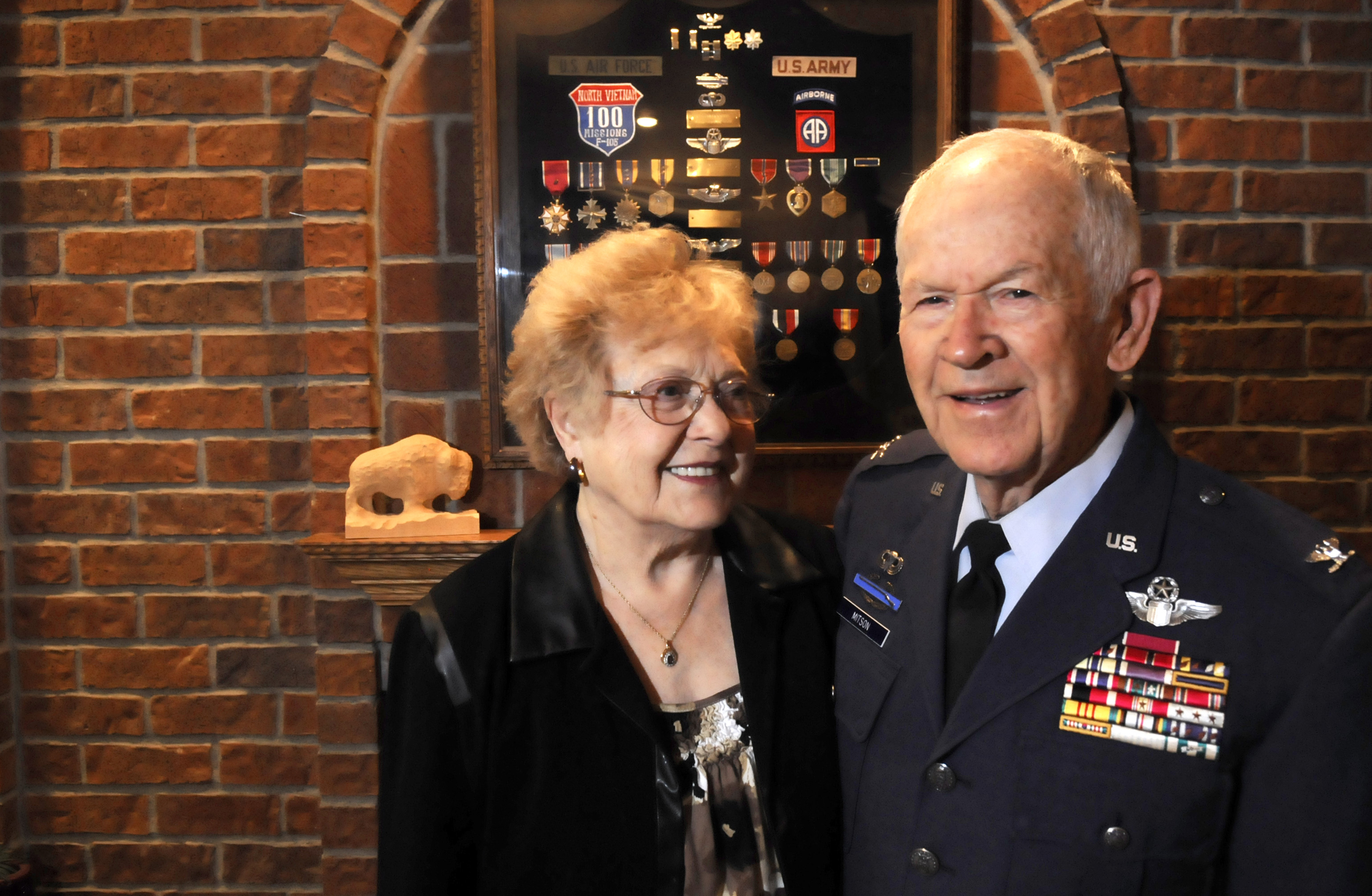
He mustered out in 1945, but he didn’t stay out long. In 1949, he was accepted into the Air Force Aviation Cadet program and launched a 30-year career as a military fighter pilot. He flew 100 combat missions as an F-86 pilot during the Korean War, and 100 combat missions over North Vietnam as an F-105 pilot, before retiring as a colonel at 54.

And Mable?

“I followed him everywhere,” she said.

She did more than just follow. She was a consummate hostess, often entertaining military personnel all over the globe. And she was the ever-present centerpiece of their family, which grew to include five children.

Their retirement years were just as busy as their military years, as they deeply invested in their church, their grandchildren and in numerous volunteer activities.

Charlie credited their abiding friendship as the key to their loving marriage.

“Make sure you have a good solid friendship before you get married,” he’d advised.

Mable said having a positive attitude helped her endure their many wartime separations.

“Wherever he was I always knew he was coming home,” she said.

So, I’ve no doubt she was expecting Charlie to arrive at any moment during the 18 days that passed between their deaths.

In “War Bonds” Mable recalled how they were separated for a year and a half during World War ll. She went to meet him at the train station, wondering how the war had changed him, wondering if she’d recognize him.

“Did you spot him among all those soldiers?” I’d asked.

Her face lit up.

“I did. Oh, I did!”

And Charlie never forgot that first glimpse of her after their long separation.

Though the station must have been bustling with travelers, he said, “I saw her standing on the staircase. As I remember it, she was the only one there.”

I can’t help but wonder if that’s exactly what Charlie experienced on June 21 when once again he was reunited with his bride.

CHARLIE AND MABEL
Mabel and Charlie Mitson Nov. 16, 2010. JESSE TINSLEY jesset@spokesman.com

Order your copy of War Bonds: Love Stories from the Greatest Generation here. 


All Write, War Bonds

Oh my stars! Love Goodreads reviews!

I’ve been working so hard on my latest book project that sometimes I neglect to check on my first book baby.

Thankfully, my youngest son is a Goodreads user and prompted me to read this latest review.

Here’s an excerpt:

I started reading War Bonds a few weeks ago, and began to read just one story each night as a way to end the day on a happy note. Cindy Hval wrote a series about the Pearl Harbor Survivors Associations for the Spokane Spokesman Review. What people couldn’t get enough of were the stories that featured couples married 6 or 7 decades, so she compiled 30 of these stories into a book. These are couples who met or married during or shortly after WWII, building a life together and keeping love alive in their marriages. Each story is only a few pages (with wonderful then and now pictures), but each speaks volumes. These are people who lived through uncertain times, but knew what they wanted, what they needed and pursued it. They were brave and courageous in tumultuous times, and faced adversity matter of factly. Most importantly, they did all this together. This was indeed the Greatest Generation, and maybe they still have something to teach us. The advice seems so simplistic, maybe we really do overthink things sometimes. Some advice:

When you get married, you stay married.
Be considerate and respectful of each other, but don’t forget to have some joy and laugh a little.
Why squabble with the love of your life?

You can read the full review on Candy’s Planet or on Goodreads.

Thank you for taking the time to post your thoughts about War Bonds: Love Stories from the Greatest Generation. 

And for readers who just post stars– those are fantastic, too!

It’s wonderful to know War Bonds is being read, enjoyed and talked about.

All Write, Columns

It’s the hardest part…

I sat in her kitchen, surrounded by fragrant braids of garlic. Plump and juicy just-picked tomatoes spilled from a bowl on her counter.

The garlic was famous, grown from seeds her father-in-law had sewn into his coat when he emigrated from Italy to the United States.

It was supposed to be a quick visit – just long enough to give her a hug and return some photos. But you didn’t visit Connie Disotell DiLuzio without being fed.

Connie died Nov. 23. When I saw her obituary, I remembered our last visit six years ago.

“Sit,” she insisted. “Have some biscotti.”

So, I sat.

She placed freshly baked biscotti on a plate and filled a ceramic mug with coffee.

“Eat,” she said. “You’re so busy with the book and those boys. You need to take care of yourself.”

“War Bonds: Love Stories from the Greatest Generation,” had just been accepted for publication. Connie and her husband’s story is featured, and I was returning photos I’d included in the manuscript.

Ray had died not long after I interviewed them, and Connie loved to talk about their courtship.

They met in 1942, when he was home on leave from the Navy. Connie was just 15, but they corresponded as best they could during the war. He wanted to marry her when he got another brief leave, but she insisted they waited until she graduated from Rogers High School.

He waited, and they enjoyed 66 years together.

She told me how much she missed Ray.

“It’s hard, honey,” she said, as she hugged me goodbye. “It’s real hard.”025

Ray and Connie, January 2012

She wasn’t the only “War Bonds” bride I lost last year. In September, Marie Clemons died. Her husband, Rusty, preceded her in death in 2018. They were married 72 years.

They met when he was hanging out at his brother’s Colville restaurant. Rusty had just returned from 42 months of serving in the Pacific theater with the Army during World War ll.

Marie waitressed at the restaurant, but on this night the dishwasher hadn’t shown up, so she offered to scrub pots.

To Rusty’s surprise, he volunteered to help her.

“I don’t have a clue why I did that,” he recalled. “I never did like to wash dishes.”

That offer changed both of their lives.

“We got to holding hands,” Rusty said. “I don’t know whether it was during the wash or rinse cycle.”

After the interview I snapped their picture in their beautiful backyard, and Rusty pulled Marie close for a kiss.

Chpt 6 Clemons 2011 full view

Rusty and Marie

My schedule filled with “War Bonds” events after the book’s 2015 release, and when they heard I would be doing a signing at the Spokane Valley Barnes and Noble, they showed up to give me a hug.

“You did good, kid,” Rusty said.

Marie beamed.

“We’re just so proud of you,” she said.

It felt like I’d received my grandparents’ blessing.

Cindy with Rusty and Marie Clemons April, 2015

Rusty Clemons, Cindy Hval, Marie Clemons, April 2015

Scanning these obituaries reminds me of how many goodbyes I’ve said in recent years. I’m so aware that every point of contact might be the last.

That’s why I was delighted to see Walt Powers honored before an Eastern Washington University football game last fall. He and his wife, Myrt, were proud supporters of the university where he had taught for so long. He checked in with me via email after Myrt died in 2017.

“I’m healing daily, but I have a long way to go,” he wrote.

And I received a lovely letter from Betty Ratzman in September, not long after she lost her husband, Dean.

“I do miss him so much,” she wrote.

Betty also wanted to tell me that a copy of “War Bonds” had been placed in the new Orofino Historical Museum.

“Not my Auntie’s February 2015 autographed by Cindy Hval copy,” she assured me.

She concluded with a reminder.

“Watch the obits for me.”

How I dread seeing her name there. Out of the 36 couples featured in “War Bonds,” only 13 widows and widowers and one surviving couple remain.

Each loss feels like saying goodbye to a beloved family member.

I think of what Connie DiLuzio said about losing Ray.

“It’s hard, honey. It’s real hard.”

And I know exactly what she meant.

All Write

Book Lover’s Tea in Kettle Falls

On Saturday, I’m delighted to be sharing from War Bonds: Love Stories from the Greatest Generation at the Friends of the Kettle Falls Library Book Lover’s Tea.

The event is from 1 PM- 3 PM in the Community Center addition at the Kettle Falls Library, 605 Meyers St.

My friends from Barnes & Noble Northtown Mall will be on hand to sell books.

I love libraries and as a member of the Friends of  Spokane County Libraries, it gives me great joy to help raise funds for other library groups.

If you’re in the area, please join me Saturday, April 13.

10929058_10203559455213962_6120318413619356176_n[1]

All Write, War Bonds

New War Bonds Review on Goodreads

I’m so appreciative of readers who take the time to share their thoughts about War Bonds: Love Stories from the Greatest Generation on sites like Goodreads or Amazon.

Mar 14, 2019 Mel rated it really liked it

Each chapter of this book is based on a couple; how they met, how they became engaged, married, experience in WWII, and how they’ve made their marriages last 60-70 years.
With each couple photos are shown in black and white, and a song that means something to them. I started listening to the songs while reading about the couple.
pg.203 The weight of the explosives made an already tricky landing more difficult, and as they made their approach, Robbie knew they were in trouble. “Without warning th
Each chapter of this book is based on a couple; how they met, how they became engaged, married, experience in WWII, and how they’ve made their marriages last 60-70 years.
With each couple photos are shown in black and white, and a song that means something to them. I started listening to the songs while reading about the couple.
pg.203 The weight of the explosives made an already tricky landing more difficult, and as they made their approach, Robbie knew they were in trouble. “Without warning the plane lurched and trembled. Like a goose hit in the wing by a volley of shot, we plummeted into the Pacific with terrifying finality.”
The plane smashed into the water, shattering on impact. Cascades of water tossed him about like limp seaweed…..
Some gruesome details are shared, but not many. Obviously some of the men had PTSD, something that wasn’t really known about or properly dealt with back then.
pg. 207 Tom says, “That’s where I kissed her for the first time. The wind came up and blew my hat off. Down it went, into the sand pit. She’s a powerful kisser to blow my hat right off!”

In the Afterward, the author tries to define what is so special about these couples. She says she found several qualities the couples shared: friendship, respect and commitment.

The couples definitely had a mettle that couples today do not seem to have. We currently, sadly, live in a throw away society and that seems to go for relationships as well; not just marriages, but long lasting friendships. Something that also stuck out to me in this book, was the strong familial relationships, which I think also reflected in the strong marriages. Also, the women didn’t freely give themselves away, if you know what I mean.

I highly recommend this book.