All Write, Columns

No more goodbyes for the Gleesings

This time, he had to wait for her—14 long years.

Her wait for him in 1945 may have been shorter, but it was terrifying.

When I interviewed Jerry and Nancy Gleesing in March 2010, they were looking forward to celebrating their 66th anniversary in June.

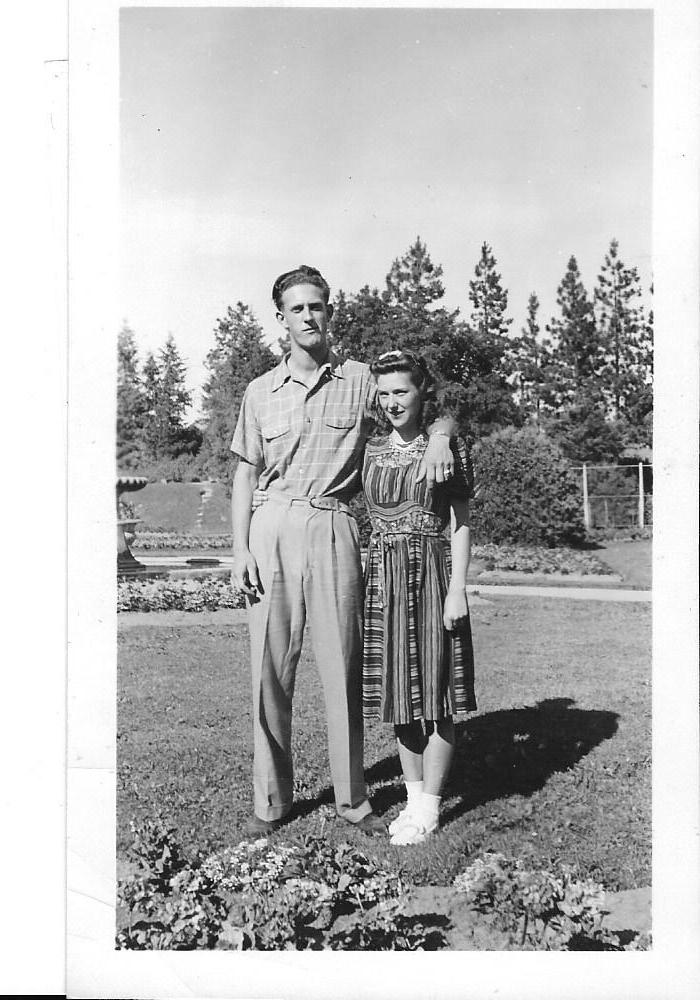
They’d met in LaMoure, North Dakota, in 1940. Four years later, the high school sweethearts married.

They used Jerry’s two-week leave from the Army Air Force for their honeymoon. When he received orders to deploy to Italy as a flight officer with the 15th Air Force, 459th Bomb Group, Nancy was expecting their first child.

On Jan. 15, 1945, his B-24 was shot down, and he and his crew bailed out over Hungary. It was only his second mission.

 During the interview, Jerry laughed as he described his predicament.

“We never learned how to bail out, just how to fly the plane!”

But he grew somber when recalling how locals armed with pickaxes and shovels quickly surrounded him and his crew.

“I thought they were going to kill us,” he said.

Instead, the captives were handed over to the Germans and taken to a prisoner of war camp in Moosburg, Germany.

Meanwhile, back in North Dakota, Nancy worried.

“The letters stopped on Jan. 5,” she said.

For 10 days, there was no word. Then, a telegram arrived, reporting Jerry as missing in action.

As he was being processed at the POW camp, a guard pointed to his wedding ring and motioned for him to remove it. And that’s where Jerry drew the line.

“You get to the point where the initial fear is gone,” he said. “Whatever happens, happens. I didn’t give up my wedding ring. I said, ‘I vowed to never take it off. I’m not taking it off.’”

The guard let him keep it.

In February 1945, Nancy gave birth to a daughter she wasn’t sure her husband would get to meet. But in April, after 3 ½ months as a prisoner of war, the camp at Moosburg was liberated.

“We saw the tanks come over the hill,” Jerry recalled. “Everyone was whooping and hollering. Then the American flag was raised, and it was dead silent.” His voice broke. “It was like coming home.”

And come home he did, just in time to celebrate their first wedding anniversary. He and Nancy raised seven children together.

Their story ran in the newspaper on March 25, 2010. A month later, Jerry died suddenly.

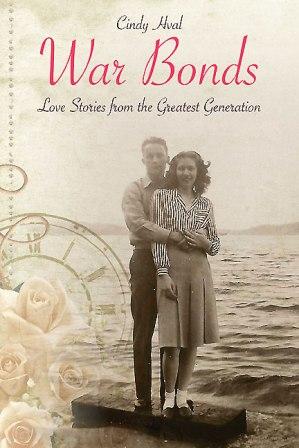
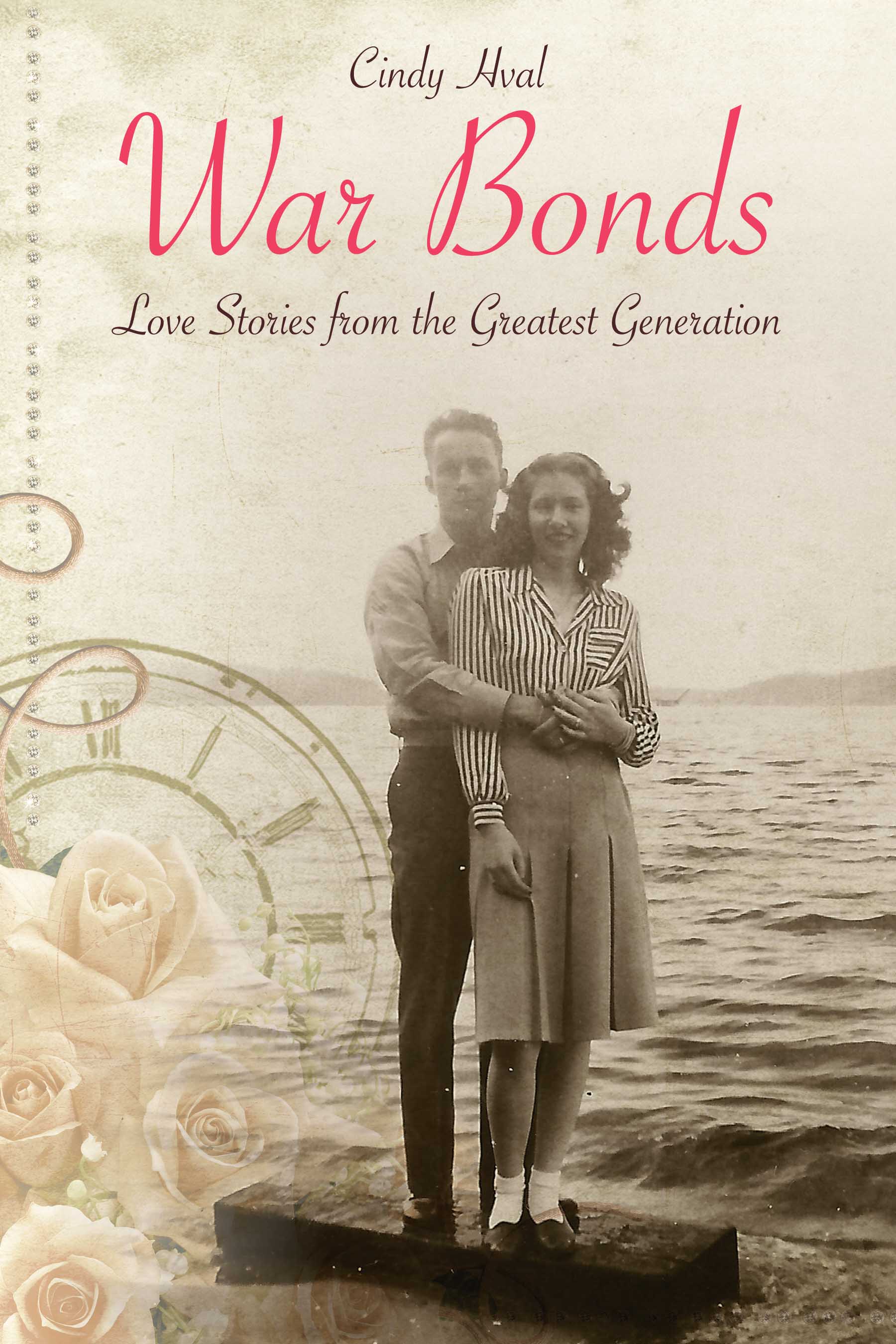
They didn’t get to celebrate their 66th anniversary, but their story stayed with me. In fact, it became chapter one of “War Bonds: Love Stories from the Greatest Generation.”

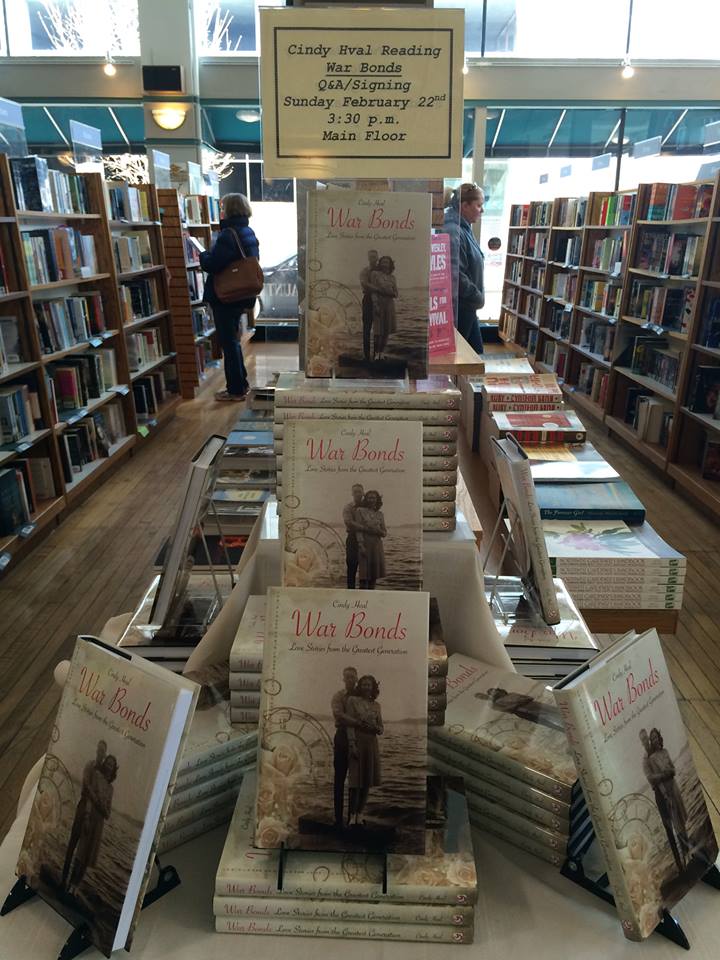
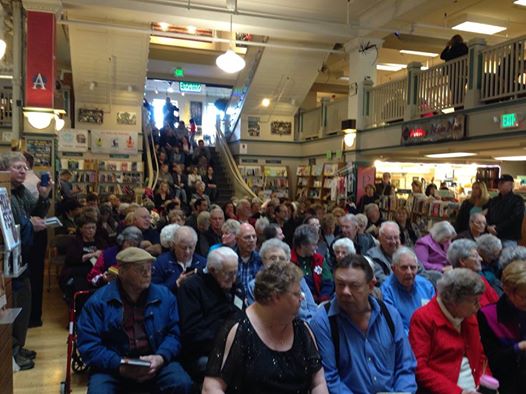
Since its 2015 publication, I’ve done approximately 100 reading, signing and speaking events and I’ve shared the Gleesings’ story at most of them.

No matter how many times I’ve told it, I can’t get through a reading without tearing up when I share Jerry’s reaction to seeing the American flag raised in that POW camp.

Their chapter ends with him looking at the wedding band he’d refused to remove.

 “It’s still there,” he said. “I’ve never taken it off.”

On Dec. 1, 2024, Nancy died at the age of 100, and his long wait ended.

Something tells me this reunion was even better than the one they had in 1945.

Following Jerry’s death, Nancy had worn his wedding ring on a chain around her neck. I like to think that when Jerry reached out to welcome her, she took his hand and slipped that thin gold band back where it belonged.
All Write

“I just want to look at you.”

Eva was such a delight!

Out of all the couples I featured in “War Bonds” I believe only one or two widows remain.

From Chapter 14: Hard to Say Goodbye

Eva smiled, “Sometimes he tells me, ‘Come here and sit down a minute.’ When I ask him why, he says, ‘Cause I just want to look at you.'”

I’m happy to know there are no more goodbyes for them.

All Write

War Bonds Reaches New Zealand

I got a note from my publisher this morning forwarding me this message from a reader in New Zealand. Still in awe that “War Bonds” is being read around the world!

“Could you please pass on my thanks to Mrs. Hval for this book?
It was a privilege to read the stories of ordinary couples living through and doing extraordinary things.

My late father was an ordinary soldier in WWII who fortunately left a memoir (which I didn’t know about till after his death) and together with my mother they left behind their wartime letters which have been wonderful to read.I wonder if she knows about the US Marine War Memorial here in New Zealand at Queen Elizabeth Park, Paraparaumu, Wellington. The Marines were based there, training, before going to fight in the Pacific. Sadly ten of them drowned in a landing practice.”

Yours sincerely,
Julie

All Write, Columns

The Final Reunion

Military spouses are experts at saying goodbye. Separation is a fact of life, and no one knew this better than the men and women featured in my book “War Bonds: Love Stories from the Greatest Generation.”

During World War II, these couples’ farewells were fraught with fear. There would be no emails. No texts. No FaceTime with the family. Letters and scant phone calls or occasional telegrams had to suffice.

But, oh, the reunions! Most of the 36 couples profiled in “War Bonds,” vividly remembered and described the moment they saw their spouses when they finally came home.

In the past six weeks, three of those brides experienced their final reunions with their husbands. This time they won’t have to say goodbye again.

Melba Jeanne Barton died Nov. 30. She and Don were married 67 years before he died in 2013. That eight-year separation marks the longest time they’d spent apart.

She’d met Don at a Grange dance two months after he’d returned from flying B-29s in the Pacific theater. He’d endured a horrific loss when the plane he piloted was hit in battle, and his young navigator was killed. Decades after the experience his eyes still filled with tears when he spoke of it.

“He was a nice kid – a real nice kid,” he’d said.

You might think Melba Jeanne would be immediately smitten by the dashing pilot. After all, he shared her Christian faith, and he was a great dancer. But Don was a farmer, and Melba Jeanne swore she’d never marry a farmer.

“Feeding chickens and milking cows – none of that stuff appealed to me,” she said.

But Don’s patient persistence and promises that she’d never have to do farm chores won her hand and her heart.

They raised three daughters on their family farm. And Melba Jeanne discovered the best benefit to being a farmer’s wife.

“On the farm, your husband is never far away. We’ve always done everything together,” she’d said.

Bonnie Shaw died on Dec. 5. She met her husband, Harvey at Central Valley High School when he was home on leave and visiting his siblings.

Despite his uniform, Harvey was just a boy himself. “I got stupid and quit school right in the middle of my sophomore year,” he recalled. “I just didn’t think. A few months later, I was in the Navy.”

He said goodbye to his family and set sail on the USS Kwajalein, but Bonnie didn’t forget about him. He returned home in 1946, and when Bonnie and her boyfriend broke up, Harvey wasted no time.

“When we finally got together, we just really fell in love,” she recalled.

And just like sailing the Pacific, their courtship wasn’t without bumps. Bonnie was a devout Catholic and Harvey was not. Unbeknownst to her, he began taking instruction at St. John Vianney, and they wed there in August 1950.

They spent 64 years together. Harvey died in 2014, not long before “War Bonds” was published.

When I’d called Bonnie shortly before his death she said. “He’s not doing very well, but he asks me to read him your column, and every time I do, he smiles.”

We both cried a bit then.

Bonnie gave Harvey nightly back rubs and the last words they whispered before falling asleep were “I love you.”

“Harvey is my heart,” she said.

Bonnie and Harvey Shaw, 2014

Lastly, Betty Ratzman died Dec. 26.

To know Betty was to love her. A prolific writer and avid letter-writer, Betty’s fierce intelligence and sharp wit delighted all who knew her. I treasure the letters I received from her.

Bett Ratzman with Cindy Hval at a taping of “Spokane Talks,” 2016.

In fact, she won her husband’s heart through the mail.

They’d met on a blind date in 1943, and when Dean Ratzman shipped out with the Navy, she told him not to get his hopes up.

He ignored her warning and treasured both her photo and the letters she wrote to him while he was at sea.

“You can find so much more about someone in letters,” he’d said.

They married in 1946 and spent 73 years together until Dean died in 2019.

Fit and active, the couple attended many “War Bonds” events, gladly meeting folks who marveled at their lasting love.

The last time I spoke with Betty shortly after Dean’s death, she wanted to know all about my sons and my cats. Then her quavery voice broke a bit.

“Oh, I miss Dean. I miss him so much,” she said.

Betty Ratzman, Cindy Hval, Dean Ratzman at a “War Bonds” event, 2015.

I miss Betty, and Bonnie and Melba Jeanne.

The “War Bonds” brides are at the heart of what made our country great. They endured separations and rationing. They tackled nontraditional jobs and learned new skills, to keep our country going during the war. They gave their husbands something to fight for and a reason to come home.

While I celebrate each couple’s heavenly reunion, I can’t help but think our world is diminished by their absence. I know my little corner of it is.

All Write, Columns

From Pop Art to Bomber Boys

With so many favorite venues shuttered during the pandemic, each reopening is worthy of celebration. That’s why my husband Derek and I were thrilled to stroll through the new exhibits at the Northwest Museum of Arts and Culture.

The MAC opened its doors again in August at 25% capacity, but Saturday marked our first visit since the shutdown. Enjoying something so normal is a welcome breath of fresh air, even if those breaths are taken behind masks.

The star attraction features the work of pop art icons like Andy Warhol, Roy Lichtenstein and James Rosenquist, as well as contemporary artists including Jeff Koons, Damien Hirst and Takashi Murakami.

“Pop Power from Warhol to Koons: Masterworks from the Collections of Jordan D. Schnitzer and His Family Foundation” continues through Jan. 24.

If you’ve ever wanted to see one of Warhol’s famous Campbell Soup works in person, here’s your opportunity. This colorful chronology of pop art traces the movement from its genesis to the present day, and unlike some art collections, this one offers fun for the younger set, too.

“Mickey! It’s Mickey!” yelled a girl when she discovered prints of the famous mouse.

Derek and I aren’t big fans of pop art, and some of the contemporary creations left us puzzled, which is part of gallery fun. However, he did find something he’d like to hang at home – “Fiesta Pig” by Andy Warhol.

The screen-print pig with his nose in a bowl of food looks like he’s enjoying the aftermath of a great disco party. Speaking of swine, Derek was also taken with Jeff Koons’ portrait of himself with a pig. The work of art is on a plate.

Thankfully, our budget doesn’t stretch to famous pieces of pop art.

Our budget does include an occasional Spokane Symphony concert. “Music Finds a Way: The Spokane Symphony” opened this weekend and continues through Jan. 10.

The exhibit traces the evolution of the symphony, which is celebrating its 75th year.

The Conductors Wall of Fame follows the organization’s sometimes tumultuous relationships with its conductors. Since we haven’t been able to see them in person this year, it was wonderful to see photos of the current symphony members.

But the exhibit that caused us to linger longest was “Bomber Boys: Portraits from the Front,” which continues through May 23.

Bomber Boys at the Northwest Museum of Arts and Culture

The exhibit features photographs of the combat, crew and camp life of the 445th Bomb Squadron of the 12th Army Air Corps, which was based in Washington and stationed on Corsica and in Italy. The images, ephemera and a diary were discovered in the hayloft of a horse barn in 1996, by two daughters of the tail gunner who’d stashed them there.

It’s a fascinating walk through the daily life of a 21-year-old soldier who would eventually fly 59 missions over Europe.

Yet the story we found even more compelling was that of an Idaho boy who was shot down over Yugoslavia and spent nine days behind enemy lines. He documented his harrowing adventure and the story is told in his own words.

The exhibit also features a replica of what a typical airman’s bunk area looked like during the war. Be sure to pick up a photo card of a soldier and see if you can discover his name and rank while you tour the exhibit.

If you haven’t ventured out to the museum yet, you can now do so safely. Masks are required and with the venue still at 25% capacity, social distancing is easy to maintain. In addition, the galleries are cleaned several times a day. Also new: You must purchase tickets online in advance.

In light of the pandemic and election-induced turmoil around us, it’s important to support valuable quiet sanctuaries like the MAC.

Enjoying the vibrancy of pop art, celebrating 75 years of the Spokane Symphony, and honoring those who sacrificed much for our nation during World War II all offer timely much-needed reminders about the creativity and resiliency of the human spirit.

For more information or to purchase tickets visit northwestmuseum.org.

Columns

A soldier’s letters home

46140801_2045426378829312_4732976740974985216_o[1].jpg

Dear Mom and Dad,

I’m now in the barracks and have just a short time to write before the lights go off. I wanted to ask you to send my clarinet. They are forming a band in the company and I want to join it. The commander is very strong for anything musical. He said if we send for our instruments, the army would take care of them for us. They will ship them any place we go….

Please write soon.

Your “Private” Son,

Love Jack xxx

The letters came from Fort Devens, Massachusetts, from Camp Pontchartrain, Louisiana, from Dutch East Indies, New Guinea, and the Philippines – approximately 150 in all.

Jack Rogers enlisted in the Army in 1943, at age 19. He was assigned to the amphibious engineers unit and spent three years on active duty, two of them in the South Pacific.

When he returned from the military, he embarked on a lifelong career as an artist, illustrator and teacher. I met him many years ago when he taught art at my sons’ elementary school.

A founding member of the Spokane Watercolor Society, Jack started the art department at Spokane Falls Community College in 1963 and taught there for 26 years. He never actually retired. In fact, he was still painting and teaching the last week of his life.

He was an amazing, inspiring man, and I wrote several articles about him for this newspaper. I also included Jack and Fran Rogers’ story in my book “War Bonds: Love Stories from the Greatest Generation.”

Recently, I went to Fran’s 95th birthday party. As I was leaving, their daughter Nancy asked if I’d like to read some of the letters Jack wrote home while serving during World War ll.

I eagerly pored over them when Nancy dropped them off. I thought I knew Jack and World War ll history pretty well, but these letters offered a new glimpse of military life during the war and they also reveal Jack’s wit and talent for telling a tale. Many of the envelopes are illustrated with his whimsical sketches and drawings.

Boy Mom, you ought to see me sew my insignias on. I can almost thread the needle every time. And as for my laundry, well they give you plenty of G.I. soap. We have plenty of water the rest is just plain elbow grease….

Please write real often.

Love Your Private Son Jack

Even the more serious anecdotes feature Jack’s flair.

Last Thursday Red was on guard. He felt a little sick, so he sat down and went to sleep and the O.D. caught him. Well, if you don’t know it that is a very serious offense in the Army. Friday they had a court marshell (sic) but no one would testify that he was actually asleep, so they charged him with sitting down while on duty.

Lots of Love, Your son Jack, good nite Mom xxx

He often couldn’t tell them exactly where he was or what his training entailed.

“You know, military secrets,” he wrote.

But in one letter he enclosed a small card emblazoned “Ancient Order of the Deep” that certified he’d crossed the equator aboard the S.S. Extavia on May 10, 1944.

Last night we slept on deck as it was too stuffy below. Although the steel deck didn’t have much spring, it was a lot cooler.

He asked his mom to send him things like white handkerchiefs, jockey shorts and coat hangers. She dutifully noted his requests on the backs of the envelopes.

In a 1944 letter from New Guinea, Jack already sounds like an old soldier instead of a young recruit.

Company had a rifle and personal inspection. It was the first we have had since leaving the States. How I remember the days when you shined your boots ’til you could shave in them, stood in ranks thinking of all the things that could hold up that weekend pass. Did you remember to tuck your handkerchief all the way in the pocket? Could you have missed a button, or could some dust have gotten on your rifle?

But a letter from Dutch East Indies shows that he and his buddies were still kids at heart.

They got a bulldozer and fixed up a softball field. And we have a league started in the company, playing in the evenings and Sundays. It sure roused a lot of company spirit.

It reminded me of what he’d said in an interview.

“Our whole company was made up of kids – kids dressed up as soldiers,” he’d said.

On Dec. 23, 1944, Jack wrote of Christmas plans.

Cornie is now fixing up a little java for us and we broke down and opened one of our fruit cakes. We were talking tonight that we would get us a small palm and decorate it, but I’ll be darned if I know what we’d use for decorations.

Jack’s unit was the first one back into Manila, Philippines, after Gen. Douglas MacArthur’s famous landing, and they served as part of the occupational forces in Japan. They were torpedoed by subs and shot at by kamikazes.

The letters from home served as their lifeline – their connection to the world they’d left behind and the world they wanted to come back to.

Good nite Mom and don’t worry about anything on this end. Write soon. Your loving son, Jack.

All Write, War Bonds

The Guernsey Literary and Potato Peel Pie Society

 39832183[1]

I rarely blog book reviews, but this lovely book has a World War II theme and I adore a good love story with some deeper historical contexts.

Plus, we just watched the recently-released Netflix movie and to my joy the movie was wonderful and very much in keeping with the book.

Until I sat down to write this, I hadn’t realized that the author, Mary Ann Shaffer, died before the book was published and that her niece helped her finish it.

The added poignancy made the story feel that much sweeter.

So. Surprise!

This isn’t a book review. Just a recommendation to read The Guernsey Literary and Potato Peel Pie Society AND watch the movie. You’ll be glad you did.


War Bonds

Every Time We Say Goodbye

72.

That’s how many individuals made the final cut of War Bonds: Love Stories from the Greatest Generation.

24.

That’s how many people died before the book went to print.

19.

That’s how many goodbyes I’ve had to say since War Bonds 2015 publication.

In the past month, Barbara Anderson and Dale Eastburg passed away.

Barbara’s loss hit me especially hard. The Anderson’s story is featured in chapter 28 “Keeping Time.” They  met in 1945 when Louis came into her father’s jewelry store to get his watch repaired. When War Bonds was published, he still wore the watch and it still kept time.

The Love Lesson Barbara shared at the end of the chapter resonates.

“You can’t take back bad words. We’ve never said one thing we’ve had to take back.”

.facebook_1510783440734

This photo was taken 11/16/16, the last time I saw Barbara. She wanted more signed copies of the book to send to a family that was grieving the loss of a wife/mom/grandma.

She always thought of others. When I left she insisted I on giving me a water glass from Air Force One. Her late grandson had served as pilot for President Obama.

She also always asked if I needed to use the restroom before I left!

Her spirit and generosity are simply irreplaceable and I worry how Louie will do without his bride.

Dale and Eva Eastburg had been married for 75 years when he died earlier this month. When last I spoke with them, they were still going to the gym regularly!

009

The title of their chapter seems especially poignant today. It’s titled “Hard to Say Goodbye.”

And it is. It really is.

War Bonds

Happy 2nd birthday War Bonds!

1798867_10203559455453968_7245892183934310853_n[1]

Two years ago today, I was humbled and amazed by the turnout for the launch of my first book.

10409258_10152758717494576_5333093873657784944_n1

In the five years it took to write and publish War Bonds: Love Stories From the Greatest Generation, I lost so many of the couples featured. It broke my heart that some weren’t there to see their stories in print.

In the two years since publication, I’ve lost several more. Each death leaves an ache in my heart.

Yet at the front row of the book launch party many of my War Bonds couples were present as well as widows and widowers. They were in awe of the size of the crowd and watched with joy as every single copy of War Bonds sold out at Auntie’s Bookstore.

11001778_10153237444536807_18744094380434334_n1

I’ve learned a lot about publishing, publicity, book tours and public speaking over the last two years– knowledge I know will serve me well when my next book  comes out.

Today I’m still somewhat disbelieving that War Bonds is on bookshelves, in libraries and for sale in bookstores all over the world.

I’m so thankful for those who stood with me during the long journey from idea to pub party.

Thankful for readers who bought the book, read the book, reviewed the book and recommended it to others.

Thankful for bookstore owners, civic groups and organizations who invited me to share the message that true love can survive anything– even a world war.

But more than anything I’m thankful for my War Bonds family. They opened their hearts, homes and lives to me and allowed me to poke around. Then they trusted me to share their stories with the world.

What a journey.

What a blessing.

What a privilege.

10922781_10205535666138376_4139031365667251241_n[1]

War Bonds

It Never Gets Easier

It never gets easier.
The notes from friends. From family. From readers.

“Dear Cindy, We just wanted you to know….”

And I learn another beloved person featured in War Bonds: Love Stories From the Greatest Generation has died.

Recently, two lovely War Bonds brides passed away within a month of each other.

Christine Jasley died on September 16th. She was anxious to be reunited with her husband, John, who died in October of last year.

jasley-wedding-low-res

Christine and John Jasley, 1944

Their story is told in Chapter 4 “Have a Little Faith.” A friend wrote, “Their marriage was truly a blueprint for all of us to follow.”

Then last week I learned of the death of Helen Loer.

chpt-7-helen-miller-19

Helen Miller Loer

On Saturday I will be at her Memorial Service and will read Chapter 7 “From Sailor to Preacher.” Her husband James, that sailor/preacher will be sitting in the front row, and my heart aches for him. The Loers had been married 68 years.

Our world is diminished with each loss, but I’m so very thankful that their stories remain.