War Bonds

The Bomber Pilot’s Secret

Conaways low res

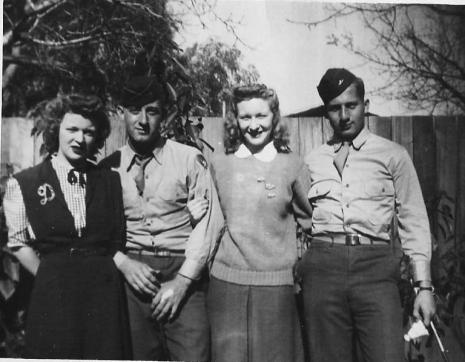
Constance (Connie) and Wilson (Bill) Conaway on right

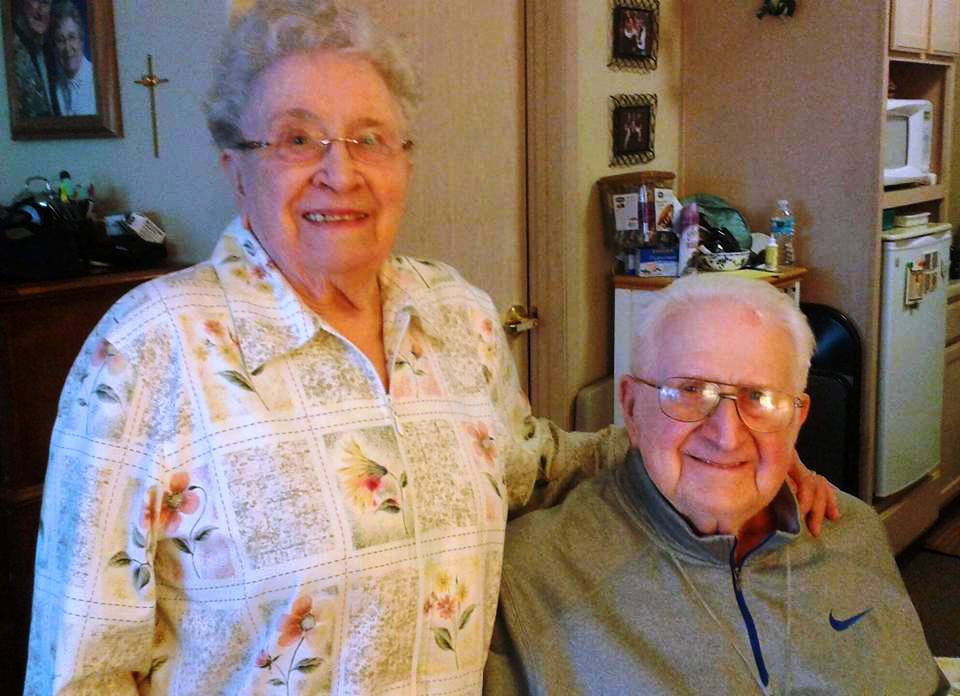
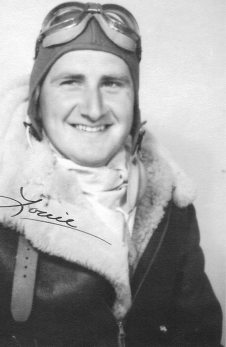
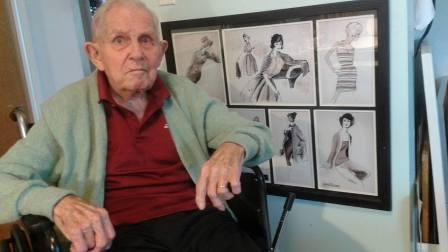
The first time I interviewed Bill and Connie Conaway, Bill didn’t talk much about serving overseas as a B-17 pilot during WWll, but his eyes lit up when he talked about the planes.

He recalled every aircraft he flew and who trained him on it.

But on a subsequent interview he told stories of harrowing missions over Germany, of how he nearly froze when a piece of shrapnel pierced his flight suit as he soared miles above the ground.

And then he told the story that has haunted him for 70 years.

His radio operator, Lynn, a good friend, was killed on a mission.

“The night before we left, we all had dinner together, and his wife and little baby came– that was the last time she saw him.”

He sighed, shaking his head.

“The airplane floor was covered with his blood,” he said, rubbing his eyes with the back of his hand. “I tried to get in touch with his wife for many, many years. I wanted to tell Lynn’s daughter about her dad.”

He was never able to find her when he returned to the States.

Bill Conaway died January 11.

His widow, Connie who served in the WAVES called to tell me the news. He died just days before their 71st anniversary.

She’s never forgotten how fortunate they’ve been. Many B-17 pilots never returned.  She said, “I’ve told him many times, ‘I’m lucky to have you, honey.'”

And I’m lucky that I was able to include their story in War Bonds: Love Stories from the Greatest Generation. 

But mostly I’m grateful that this gruff pilot, turned school teacher, turned artist, trusted me with his secret.

During an interview he leaned forward in his chair, glanced at Connie and said, “I’ll tell you a secret; I love her more today than I ever have.”

CONAWAY LOVE

War Bonds

The Face that Graced the Book Cover

She never thought her face would be on a book cover.

That a snapshot taken on her honeymoon would become the face of War Bonds: Love Stories From the Greatest Generation. After all, the marriage and the honeymoon might never have happened if Mary Grayhek hadn’t said to heck with vanity, tied a scarf over her hair set in pin curls, and agreed to a blind date.

But at the insistence of her friend, in 1946, Mary agreed to a double date with a handsome Marine. The date with Roy Grayhek changed her life.  Six weeks later, they wed in the Naval Chapel in Bremerton, WA.

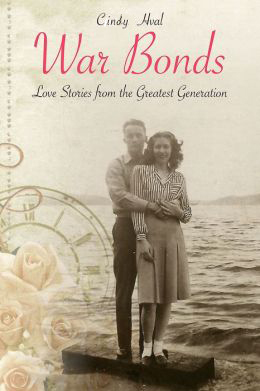
The photo snapped of Roy and Mary standing on a piece of driftwood in the Puget Sound, became the cover of book filled with stories of people who married during, or shortly after World War Two.


War Bonds

The Grayheks enjoyed 68 years of wedded bliss before Roy’s death in 2014.
Sadly, he passed away before the book’s release. But Mary was able to enjoy  seeing their faces on the cover. Even more importantly, she got to see the book in the hands of her great-granddaughter Grace, and her soldier husband, Ryan, shortly before he was deployed.

17343003_10212372518894610_2039309731450254785_n[1]

Mary Grayhek died December 20, surrounded by her family.Grayhek wedding low res

I’m quite confident that Roy was the first one to greet her, and that he hasn’t taken his arm from around her shoulders. And that they picked up their story right where they left off– with happily ever after.


Columns, War Bonds

Their Stories are Now a Part of Mine

As I sat down at my desk to write this week’s column, an email notification popped up on my screen. I opened it to read of Audrey Bixby’s upcoming funeral.

I’d interviewed Audrey and her husband, Dick, several years ago for my Love Story series, and included their story in my book “War Bonds: Love Stories from the Greatest Generation.”

The timing of the email stunned me. I’d already planned to write about the loss of so many of the people featured in “War Bonds.”

Seventy-two. That’s how many individuals made the final cut of the book.

Twenty-four. That’s how many people died before “War Bonds” made it into print.

Twenty. That’s how many goodbyes I’ve had to say since its 2015 publication.

A colleague shrugged when I bemoaned yet another loss.

“What did you expect when all your subjects are World War ll veterans over 80?” he’d asked.

He has a point.

It’s not that I expected them to live forever; it’s just that I’ve been unprepared for how much each loss affects me.

In the past few months, in addition to Audrey, I’ve said farewell to Jack Rogers, Dick Eastburg, Barbara Anderson and Myrt Powers.

It seems fitting to honor them today on the 76th anniversary of the attack on Pearl Harbor.

Jack Rogers wasn’t at Pearl Harbor, but he enlisted in the Army in 1943, when he was just 19. He had a hard time believing we were at war against Japan.

“I grew up with a bunch of Japanese kids,” he said in “War Bonds.”

Before being shipped out to the Pacific, he traveled to California to see a Japanese friend from high school, only to find his friend and his family had been confined in an internment camp.

I met Jack many years ago when he taught art at Northwest Christian School. He taught all four of my kids, and each one remembers him well.

Eleven years ago, I wrote an article about his art career. Since then, I revisited him in print many times. A story about his 71-year marriage to Fran, a feature about how following a debilitating stroke, he still continued to give back – painting tailgates on Personal Energy Transporters through Inland Northwest PET Project.

And I wrote about one of his final art shows at Spokane Art Supply. That’s where I saw him last. He and Fran sat side by side, as friends, fans and former students perused his paintings, buying a piece of Jack to take home and remember him by.

My own piece of Rogers’ art watches over me as I write. It’s a whimsical print of a terrier that Fran sent as a thank you note, following the funeral.

Next to it is a photo of Louis Anderson and his flight crew taken in 1944, just before they shipped out to Europe.

The last time I saw Louis and Barbara at their retirement center apartment, she insisted I take home a memento – a water glass from Air Force One. She was so proud of her late grandson who served as President Obama’s pilot.

She also kept me grounded in real life. Every time I left their place she’d say, “Do you need to use the restroom? Are you sure?”

Audrey Bixby was strictly down-to-earth as well. When I interviewed her and Dick, he kept me in stitches with jokes and sly puns. While we laughed, Audrey feigned exasperation and then told her own funny stories.

When Dick enumerated her wonderful qualities, he said, “She’s an awfully nice person and she laughs at my jokes!”

Dick died five years ago. I like to think that now they’re laughing together again.

Dale Eastburg passed away last month. He and his wife, Eva, had been married 75 years. When last I spoke to them, they were still going to the gym every week!

They’d been married just a short time before he was sent to China as part of the famed Flying Tigers. The thought of saying goodbye to his bride proved unbearable to Dale, so he didn’t. He slipped out of their apartment while she slept.

I hope this time Dale was able to say goodbye.

And today, I think of darling Myrt Powers. I never thought I’d describe a Marine as darling, but that exactly describes this tiny dynamo.

Though already employed as a teacher, she enlisted in the Marines following the attack on Pearl Harbor, because so many of her students told her they were worried about their fathers who were going off to war.

“I wanted to take care of my students’ dads,” she explained in “War Bonds.”

She met Walt Powers, a sailor stationed at Marine Corps Air Station Santa Barbara. They were married 71 years at the time of her death.

I last saw Myrt two years ago, in Hawaii, of all places.

It was 8:15 in the morning at the Hale Koa Hotel, an Armed Forces Recreation Center resort on Waikiki. My husband and I were preparing to make our first pilgrimage to Pearl Harbor, and stopped for coffee before the tour bus picked us up.

Myrt was grabbing a cup while waiting for Walt to finish his regular swim at the hotel pool.

“Hello, honey,” she said, reaching up to embrace me.

It was the best hug I’ve ever received from a Marine, and sadly it was the last one from Myrt.

Today, while the world remembers the more than 2,000 lives lost at Pearl Harbor, I remember five souls who endured the trauma of a world war. The lives they led in its aftermath, the families they raised, the marriages they cherished, bear witness to the resiliency of the human spirit.

While I’m sad at their passing, I’m so very glad that their stories are now a part of mine.

Contact Cindy Hval at dchval@juno.com. She is the author of “War Bonds: Love Stories From the Greatest Generation.” You can listen to her podcast “Life, Love and Raising Sons” at SpokaneTalksOnline.com. Her previous columns are available online at spokesman.com/ columnists. Follow her on Twitter at @CindyHval

War Bonds

70 Years of Adventure

20708109_1498992003472755_632359020316113008_n[1]John and Amy Roberson

Amy and John Roberson grew up in the same small community of Woodland, Washington, on farms about 2 miles apart. They attended the same school grades K-12, yet it took a world war to bring the couple together.

That’s not to say Amy went unnoticed by John.

“I had my eye on her,” he said. “She was very attractive.”

In their Greenacres home, Amy shushed him.

“Now, now,” she said, smiling.

But neither of them can recall a single conversation between them until they met again in 1945 in Washington, D.C., where both were serving in the Navy.

John had been accepted to the V-12 Navy College Training Program in 1943. The program was designed to supplement the force of commissioned officers in the Navy during World War II.

He thought the Navy would be a great fit for him.

“I loved the water,” he said. “I built my own boat on the Columbia River.”

It came as quite a surprise when the first place the Navy sent him was to the University of Kansas.

He shrugged.

“I studied engineering at the University of Kansas.”

Amy had to wait until she was 20 to enlist.

“My uncle was in the Navy in World War I,” she said. “I wanted to join the Navy, too.”

After basic training, she was sent to the U.S. capital to study decoding. Meanwhile, John was stationed nearby, in Norfolk, Virginia.

A mail carrier in Woodland kept track of the local youths in the service. He discovered there were eight Woodland youths in the Washington, D.C., area where his daughter was stationed, and he connected them.

They all got together and had a great time talking about home, and that’s when Amy truly noticed John.

“John asked me for a date,” she recalled. “We were supposed to meet at the movie theater. It was pouring rain, and I showed up with drippy hair.”

Wet hair didn’t deter him from asking for another date.

Soon John left for what would be the only cruise of his Navy stint.

“My sea duty consisted of taking a ship from San Diego to Charleston (South Carolina),” he said.

They stayed in touch and both returned to Woodland when they were discharged in 1946.

“We both qualified for the GI Bill, and I told him I was going to WSU,” Amy recalled. “John said, ‘I think I will, too.’ ”

They got engaged in April 1947 and returned home in August for their wedding.

Amy made her wedding gown and bridesmaid dresses from parachute silk.

“I got a whole bolt for $10, so we all wore white,” she said.

On Aug. 17, 1947, they were married at the Presbyterian church in Woodland. They honeymooned in British Columbia and then returned to WSU where John received a Bachelor of Science in civil engineering in 1948.

Amy, too, would eventually earn a degree in home economics, but first busy years ensued.

Son, Roger, arrived in 1950, followed by twins David and Janice in 1951.

The young family moved numerous times as John pursued a master’s degree, followed by a doctorate.

“It was hectic,” Amy said.

She recalled many late nights and early mornings when John would place Janice across his knees and jiggle her to sleep while he studied.

He taught at WSU, and their children were active in Camp Fire and Boy Scouts.

In 1963, they moved to Thailand when John accepted a teaching position with the SEATO Graduate School of Engineering.

Two years later the family set out to visit the famous Bridge over the River Kwai and the POW Memorial. As they crossed the bridge used by pedestrians, carts and bicycles, a train approached.

Roger and David took refuge on a pedestrian platform on one side of the bridge while Amy, Janice and John perched on the other side. As the train drew near, John reached out to help a Thai man on bicycle with a large metal ice cream box balanced on the back. As the train passed it hit the metal box which knocked the bicycle into the three of them. Amy, Janice and John were thrown against the bridge railing which broke, sending them plunging into the dry riverbed beneath.

“We hit hard,” John recalled.

Their sons scrambled to help.

“The first aid training they received in Scouts really paid off,” Amy said.

The boys cautioned the locals not to move them, checked for bleeding and signs of concussion and summoned an ambulance.

“I do think they saved our lives or at least made our injuries less severe,” said Amy.

As it was their injuries were substantial. All three suffered numerous broken bones. Janice recovered first, but her parents were in for a long hospital stay.

“We shared a tiny hospital room for 90 days and 90 nights,” Amy recalled. Then she grinned. “And we came out as friends.”

The severity of John’s injuries curtailed their stay in Thailand and the family returned to Pullman, where more surgery awaited. He was bedridden for months as his battered body healed. Amy took care of him and their three teenagers while her own broken bones mended.

Eventually, he resumed his teaching career at WSU and authored two textbooks: “Engineering Fluid Mechanics,” with Clayton Crowe and “Hydraulic Engineering.” Both books are still in print and used in universities here and abroad.

“Without Amy’s typing, editing and encouraging, the books may never have been completed,” he said.

For several years Amy taught ESL classes in Pullman for wives of foreign students.

Their adventures continued when John retired in 1980. They enjoyed more than 50 Elderhostel trips and visited 45 countries and all 50 states.

As they celebrate their 70th anniversary Thursday, the Robersons, both 92, marvel at the way the years have flown.

“She’s been a tremendous partner – we’re good friends,” said John. “I could not have been luckier.”

Amy smiled at him.

“I learn new things about him every day.”


Columns, War Bonds

Keeping my promise: A personal Pearl Harbor reflection

This week The Spokesman Review published a special keepsake section commemorating the 75th anniversary of the attack on Pearl Harbor. For the past nine years, I’ve been interviewing Pearl Harbor survivors for newspaper and was pleased to have many of those stories included.

In addition I wrote the following piece describing what it meant for me to visit the place I’d written about so often.

Never forget.

Cindy Hval, who wrote “War Bonds: Love Stories From the Greatest Generation,” visited Pearl Harbor in March. She explored places she had learned about in nine years of interviewing Pearl Harbor survivors.

Stretching out, I pressed my cheek into the hot sand, its gritty heat almost too much to bear. Closing my eyes, I imagined the shriek of airplane engines and the spitting sound of machine gun fire hitting the beach, while the air around me burned.

I covered my head with my arms, and could almost hear the whistling sound of bullets whizzing past my ear.

A shadow loomed. “Are you okay?” my husband asked.

Slowly, I sat up and scooted back onto my brightly-colored beach towel.

“Just thinking about Nick,” I said, while I slipped on my sunglasses.

The beauty of being married 30 years is I didn’t have to explain what I meant.

Derek and I visited Oahu in March to celebrate our anniversary, but the trip was part pilgrimage for me. After nine years of interviewing Pearl Harbor survivors, I was at last visiting the place I’d written about so often.

Here on Waikiki, I was just 12 miles away from Hickham Field where Nick Gaynos almost lost his life on Dec. 7, 1941.

Nick Gaynos holding the piece of shrapnel that landed near him while under fire during the attack on Pearl Harbor 75 years ago. Gaynos died 20 days after this March 11, 2015, photograph. (Courtesy Cindy Hval)

During the attack on Pearl Harbor, Nick had been running toward his duty station when a Japanese pilot targeted him. He’d told me of looking up as he ran and seeing the grin on the pilot’s face as he fired at him.

Nick hit the beach and covered his head with his arms as the bullets flew. When he got up he discovered a large piece of shrapnel next to him.

“I grabbed it,” he said. “It was still hot from the explosion.”

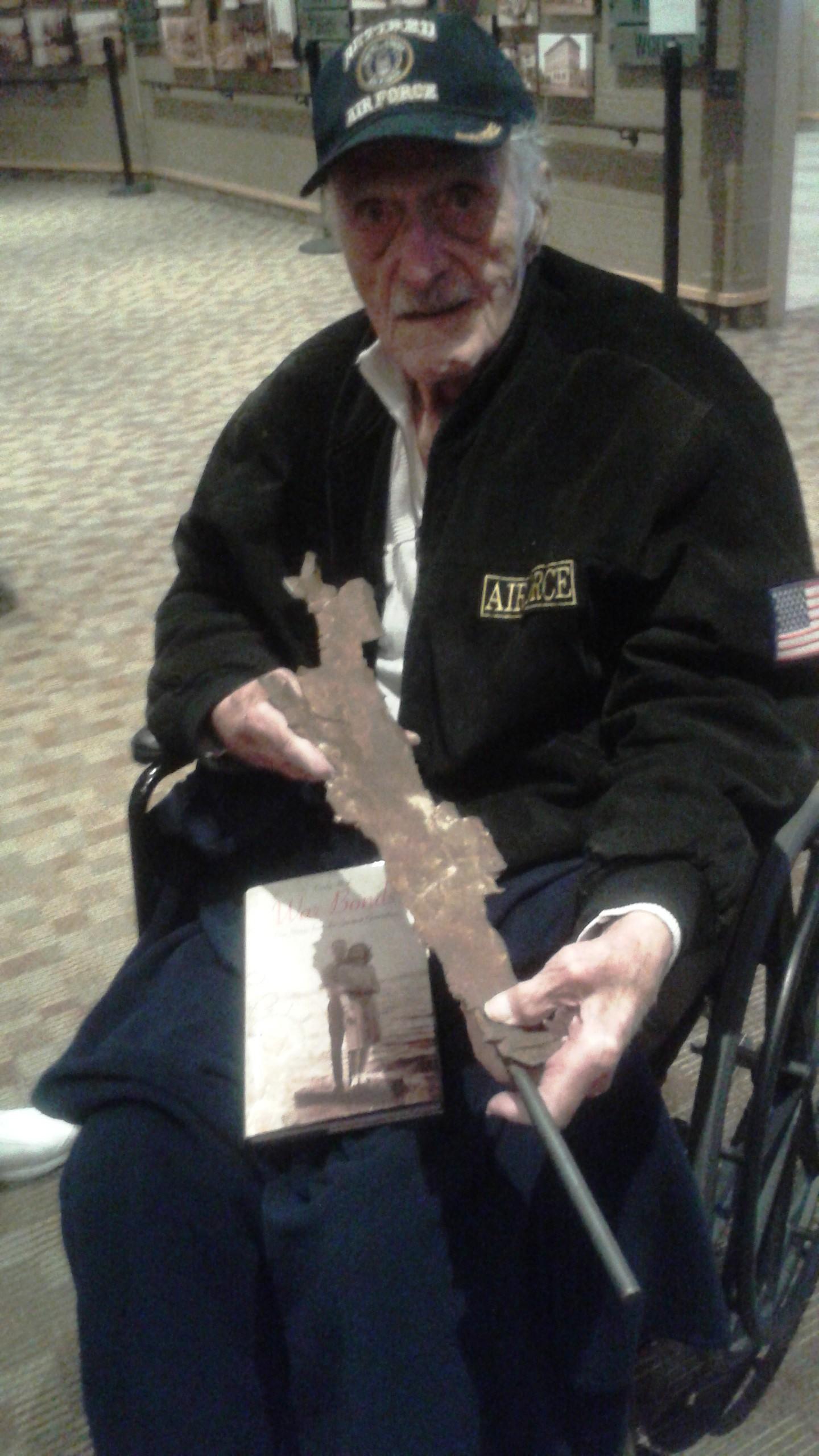
When my book “War Bonds: Love Stories From the Greatest Generation” was released, Nick attended a reading at the Coeur d’Alene Public Library in March 2015. He brought that piece of shrapnel with him. It was jagged and more than 2 feet long. He died a few weeks later.

Now, on the island that had been so devastated by the horrific attack, I carried his memories with me as well as those of Warren and Betty Schott. The Schotts had quarters on Ford Island and were eyewitnesses to the attack.

When Derek and I walked through the entrance of the Pearl Harbor Visitor Center, I wanted nothing more than to talk to Betty, to tell her I was here. But Betty passed away in July 2015.

At the center, we watched a short film featuring actual footage of the attack. A scene of sailors and soldiers pulling the wounded and dead from the harbor made me gasp. That’s what Warren had done in the aftermath – it was the one thing he didn’t want to discuss with me over the course of many interviews. It was the only thing he refused to speak of with his wife of 76 years. Now, watching the footage through tear-filled eyes, I finally understood why he was loath to speak of it.

That horror was also all too real for my friend Ray Daves. During the attack, he hustled to a rooftop and handed ammo to two sailors who were manning a .30-caliber machine gun. He had his own brush with death when a Japanese plane exploded 20 feet from that rooftop before crashing into the sea below. His left hand was lacerated by shrapnel.

Like Warren Schott, Ray spent time pulling wounded men from the harbor, his blood mingling with the red splashes in the water around him. In his biography, “Radioman,” he described the bodies and body parts floating in the harbor. “We had to push them aside to get to the wounded,” he said.

Despite those gruesome memories, what really choked him up was recalling the bombing of the USS Arizona.

“My friend George Maybee was on the Arizona,” Ray said. “We’d gone through radio school together. Sat beside each other every day and were bunkmates at night.”

Ray Daves

“My friend George Maybee was on the Arizona,” Ray said. “We’d gone through radio school together. Sat beside each other every day and were bunkmates at night.”

He watched as the Arizona burst into a huge fireball. He knew his friend was gone.

Over the years, Ray and I grew close. He reminded me so much of my dad. They were both from Arkansas and had joined the military seeking a way out of the poverty of the rural south. Both had tender hearts and shared a wickedly funny sense of humor.

The last time I spoke to Ray before his June 2011 death, I told him I longed to visit Pearl Harbor.

“George is there,” he said, his eyes filling.

“I’ll look for his name,” I said. “I’ll say a prayer.”

Ray took my hand. “You do that, sweetheart.”

Five years later, I boarded the boat that took us to the USS Arizona. As we stepped from the boat onto the memorial, the throng of tourists quieted. The only sound was the snapping of the flag in the wind and the clicking of cameras.

We were somber with the knowledge that we were standing on the final resting place of 1,102 of the 1,177 sailors and Marines killed on the Arizona.

1913753_1047614618610498_5611130893995793483_n[1]A rainbow of undulating color in the water below caught my eye. Some 500,000 gallons of oil are still slowly seeping out of the ship’s submerged wreckage, and it continues to spill up to nine quarts into the harbor each day.
Slowly, I entered the shrine. A marble wall bearing the names of those entombed beneath us stretched out behind a velvet rope.

So. Many. Names.

Overwhelmed, I looked at Derek. “I’ll never find him,” I whispered.

The day had been overcast, but suddenly a shaft of sunlight illuminated the marble.

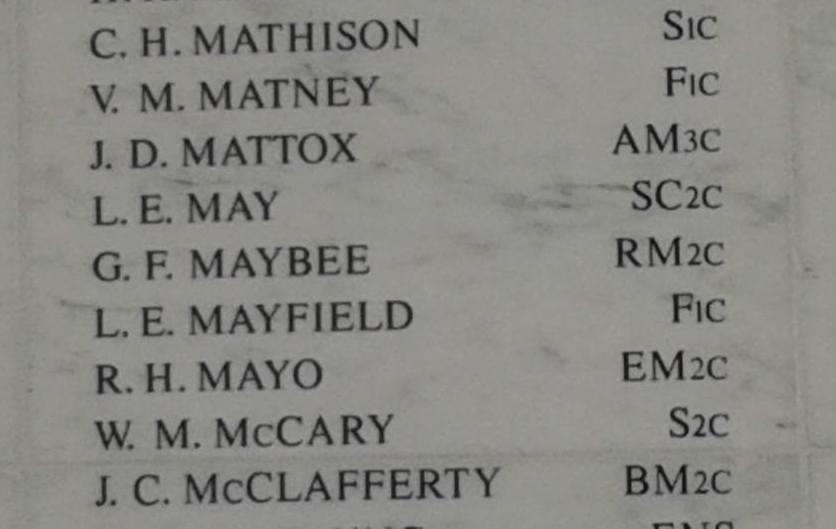
“There,” Derek said. “There he is – G.F. Maybee.”

George Frederick Maybee was a radioman, second class, aboard the USS Arizona when the battleship was bombed on Dec. 7, 1941, at Pearl Habor. Maybee, whose name is etched in a marble wall at the Arizona memorial, had been a friend of Ray Daves, a Pearl Harbor survivor from Deer Park who died in 2011. (Courtesy Cindy Hval)

Bowing my head, I wept for the sailor I’d never met and for my friend who knew and loved him.

I hope that somehow Ray knows I kept my promise.

George Maybee hasn’t been forgotten. Neither has Ray Daves.


War Bonds

Thankful for 70 years of devotion

15027565_1226709157367709_2378719597193119110_n1

I got a call last week from Barbara Anderson. She wanted to let me know that her husband of 70 years had suffered a stroke and that they were now in an assisted living facility. She also told me that her grandson-in-law, Col. David Banholzer had passed away on November 4 at age 47. She wanted to send some copies of War Bonds to his family.

Banholzer was the commander of Air Force One until cancer forced his early retirement. He and Louis loved to talk about flying. As told in chapter 28 of War Bonds, Louis was a B-17 pilot during WWll.


.War Bonds Louie AndersonI was so happy to visit with this dear couple. Louis’ speech has been somewhat affected by the stroke and his vision is poor. But he knew me and gave me his characteristic grin. His blue eyes still sparkle and he kept my hand firmly tucked in his.

As I prepared to leave, Barbara insisted on giving me some mementos from Banholzer’s time on Air Force One.

20161116_124255

But for me the true gift was more time and one more visit with these shining examples from the Greatest Generation.

15055636_1226709130701045_8102769455675943025_n2

War Bonds

Taking home a memory: Jack Rogers’ last exhibition

14937478_1215340578504567_4292611546806285626_n1

In 1943, at 19, Jack Rogers joined the Army. He was assigned to the amphibious engineers unit and spent 3 years on active duty, most of it in the Philippines.

“Our whole company was made up of kids– dressed up as soldiers,” he said. “At 19 I was in charge of 55 men.” He shrugged. “You grew into the job.”

After the war he became a commercial artist and a founding member of the Spokane Watercolor Society. He started the art department at Spokane Falls Community College in 1963 and taught there for 26 years.

On Saturday, Rogers, 93, had what will likely be his final art show/sale.

15036504_1222862637752361_6274636252733593314_n1

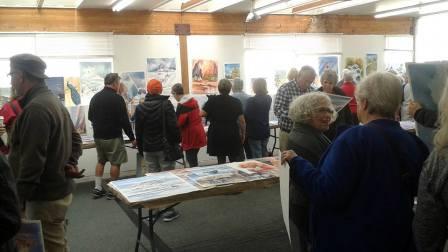
People had lined up before the doors even opened. Anxious to take home a signed painting. Anxious to thank Rogers for his service to our country. Anxious to thank him for his devotion to teaching and to art.

15036231_1222862601085698_6863558846864460798_n1

He and Fran, his wife of 70 years, greeted the crowd. When asked the reason for the show Rogers said. “I was given a gift and I want to share it,” he said. “Why put it all back in the drawers? I’m hoping people will take home a memory.”

My memories of Jack Rogers exist in more than just watercolors. They exist in hours spent interviewing him. They exist in War Bonds: Love Stories From the Greatest Generation. Time spent with he and Fran is precious to me, now and I was glad to see the community turn out to shake his hand and to tell him thank you.

War Bonds

It Never Gets Easier

It never gets easier.
The notes from friends. From family. From readers.

“Dear Cindy, We just wanted you to know….”

And I learn another beloved person featured in War Bonds: Love Stories From the Greatest Generation has died.

Recently, two lovely War Bonds brides passed away within a month of each other.

Christine Jasley died on September 16th. She was anxious to be reunited with her husband, John, who died in October of last year.

jasley-wedding-low-res

Christine and John Jasley, 1944

Their story is told in Chapter 4 “Have a Little Faith.” A friend wrote, “Their marriage was truly a blueprint for all of us to follow.”

Then last week I learned of the death of Helen Loer.

chpt-7-helen-miller-19

Helen Miller Loer

On Saturday I will be at her Memorial Service and will read Chapter 7 “From Sailor to Preacher.” Her husband James, that sailor/preacher will be sitting in the front row, and my heart aches for him. The Loers had been married 68 years.

Our world is diminished with each loss, but I’m so very thankful that their stories remain.


War Bonds

Bicycle Built for Two

They rode through life together.

When Chuck and Harriet began dating, he didn’t have a car, so she’d perch on the handlebars of his bike and off they’d go. That’s why I titled their chapter in War Bonds, “Bicycle Built for Two.”

They were married January 16, 1944 by a Navy chaplain at a YMCA and a dozen eager sailors served as their witnesses. After two months together, Chuck was sent to France and they spent 17 months apart. That was too much for both of them.

And so for the next 72 years they were inseparable.

Chuck died August 7 and Harriet passed away September 10th.

Today I received this note from their family.

Your book was such a blessing to our family. We had several copies that we passed around at their celebration Sunday. A copy always sat on their dressing table which we showed to all their many health care providers. If Mom was having a bad day, they would sing “Bicycle Built for Two” and that would cheer her up. Thank you for writing such a meaningful book.

But I’m the one who has been blessed to meet such amazing people and to share just a small part of their lives.

Their stories have become part of my own story and I’m forever thankful.

soliday-honeymoon-low-res

Chuck and Harriet Soliday, 1945

War Bonds

The house that love built

The other night I had a reading/signing event at Touchmark Retirement Community.

An employee approached me and said while she hadn’t read War Bonds: Love Stories From the Greatest Generation, her daughter had.

It seems her daughter and her husband were looking for home and found one they really wanted in Millwood, WA.

“It wasn’t the house so much, it was what they felt when they were inside it,” the woman said. “There was such love in that house.”

A neighbor chatted with them and told them the couple who had lived there had built the house and had been married for more than 70 years.

“Their story is in a book,” he said.

Alas, the couple didn’t get the house, but they did buy a copy of War Bonds. And they fell in love with Warren and Betty Schott, just like the rest of us.

Betty 3

Warren and Betty on their 75th anniversary